
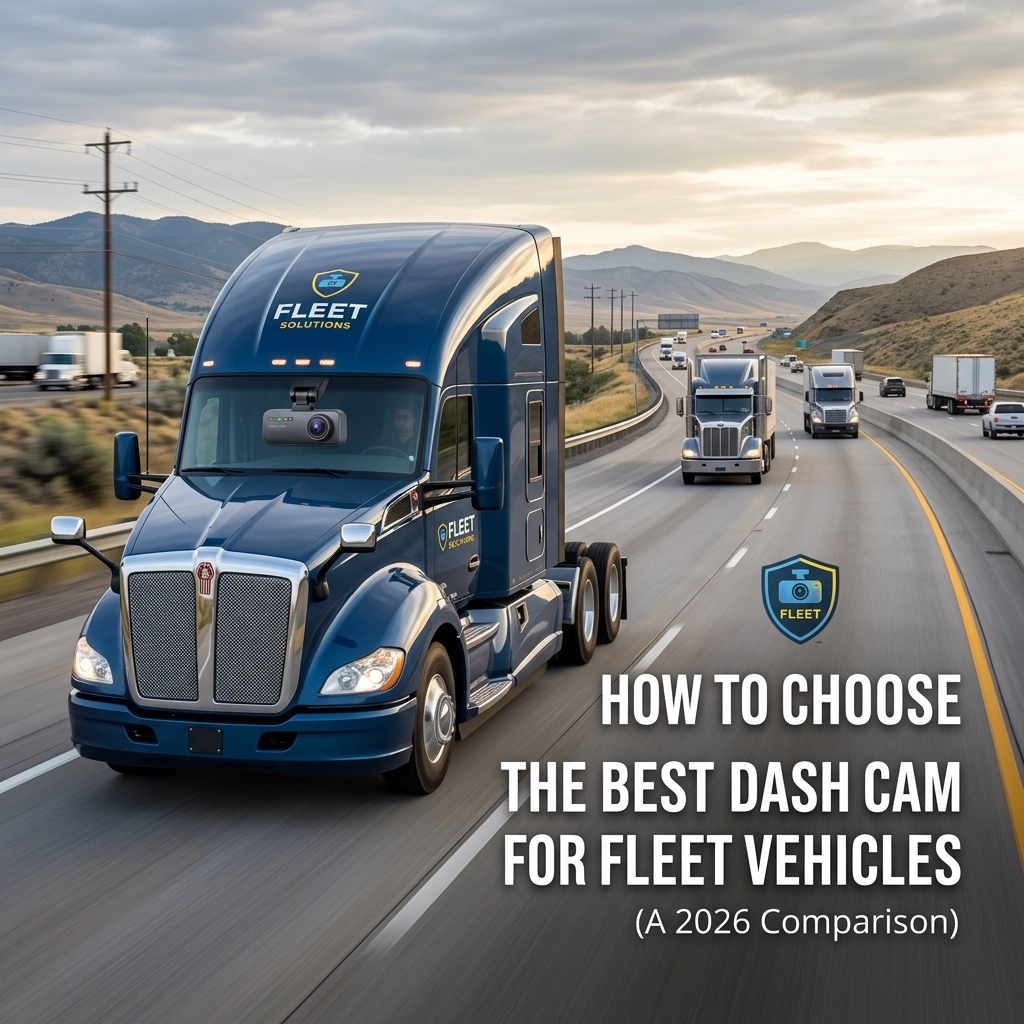
Dual Dash Cams for Fleets: 5 Steps to Earn Driver Trust

The introduction of inward-facing cameras often triggers an immediate reaction from drivers: “Big Brother is watching.” In a profession that prides itself on independence and the open road, the addition of a lens pointed toward the driver’s seat can feel like a violation of privacy. For fleet managers, however, the perspective is different. A dual dash cam for fleets is a tool for protection, liability reduction, and professional development.
The gap between these two perspectives can lead to tension, high turnover, and a lack of cooperation. However, when implemented correctly, AI fleet safety cameras become a driver’s most powerful ally. Bridging this gap requires moving beyond the “surveillance” narrative and establishing a culture of trust.
This deep dive explores how fleet managers can overcome the “Big Brother” stigma and implement a dual dash cam system that protects the business while empowering the driver.
Understanding the Dual Dash Cam for Fleets
To build trust, everyone must understand what the technology actually does. A dual dash cam system features two lenses: one facing the road and one facing the cab. Modern systems, like those offered by Safety Track, are significantly more advanced than basic recording devices. They are integrated AI fleet safety cameras that act as a second set of eyes.
The road-facing lens captures external events: traffic conditions, signal status, and the behavior of other drivers. The inward-facing lens monitors for high-risk behaviors such as distracted driving, fatigue, or mobile phone usage.
Crucially, these systems are not designed for constant live streaming. Most modern fleet management solutions use “event-based” recording. The camera only saves and uploads footage when a specific safety trigger occurs: such as hard braking, rapid acceleration, or a collision. This distinction is vital for driver buy-in.

The Exoneration Factor: A Driver’s Best Defense
The strongest argument for inward-facing cameras is exoneration. In many commercial vehicle accidents, the passenger vehicle driver is at fault, yet the commercial driver is often blamed by default. Without video evidence, insurance companies and legal teams struggle to prove innocence, often resulting in massive settlements or “nuclear verdicts.”
A dual dash cam for fleets provides the missing piece of the puzzle. While a road-facing camera shows what happened outside the truck, the inward-facing camera shows what the driver was doing at the time of impact.
Consider a scenario where a passenger car cuts off a semi-truck and slams on the brakes. The road-facing camera captures the collision. However, the opposing legal counsel might argue that the truck driver was distracted by their phone or was nodding off. Inward-facing footage from AI fleet safety cameras can prove that the driver was focused on the road, had both hands on the wheel, and reacted as quickly as possible.
Exoneration isn’t just about saving the company money; it’s about saving the driver’s career and reputation. A single “at-fault” accident on a CDL record can end a career. When drivers realize the camera is there to prove they did everything right, the “Big Brother” fear begins to fade.
Addressing Privacy and Data Security
Privacy concerns are the primary source of resistance. Drivers spend their lives in these cabs; for long-haul drivers, the cab is their bedroom and living room. Asking them to accept a camera in that space is a significant request.
Fleet managers must address these concerns with concrete policies and technical safeguards:
- Event-Based Access: Emphasize that management only reviews footage triggered by safety events. The goal is not to monitor the driver’s choice of lunch or their singing voice during a quiet stretch of highway.
- Audio Controls: Many fleets choose to disable audio recording in the cab to further protect driver privacy, focusing solely on visual safety cues.
- Data Encryption: Ensure that all video data is encrypted and stored securely. Only authorized personnel: such as the Safety Director or Claims Manager: should have access to the footage.
- In-Cab Alerts: AI fleet safety cameras provide real-time, in-cab alerts. This allows the driver to self-correct a behavior (like following too closely) before an incident occurs and before a manager ever needs to see the footage.
5 Steps to Building Driver Trust
Building trust is a process, not a single meeting. Following these five steps ensures that your fleet sees the dual dash cam as a tool for success rather than a tool for punishment.
1. Transparency from Day One
The worst way to implement dash cams is to install them over a weekend and surprise the drivers on Monday morning. Transparency is the foundation of trust.
Start by holding “town hall” meetings or small group sessions. Explain the “why” behind the decision. Lead with safety, protection from lawsuits, and insurance requirements. Be honest about what the cameras can and cannot do. Showing the hardware and explaining the AI features helps demystify the technology. When drivers feel informed, they feel respected.
2. Co-Create a Fair Camera Policy
A written policy is essential. However, a policy created in a vacuum is rarely well-received. Involve your most experienced and respected drivers in the policy-drafting process.
Your policy should explicitly define:
- Triggers: What specific events cause the camera to save and upload footage?
- Access: Who in the company is allowed to view the video?
- Storage: How long is the footage kept?
- Usage: Will the footage be used for disciplinary action, or is it strictly for coaching and exoneration?
By giving drivers a seat at the table, you ensure the policy is practical and addresses their real-world concerns.
3. Use Positive Reinforcement and Coaching
If the only time a driver hears about the dash cam is when they have done something wrong, they will view it as a threat. To build trust, you must use the technology to catch them doing something right.
Implement a “Driver of the Month” program based on safety scores. Use the AI fleet safety cameras to identify “heroic” moments: such as a driver successfully avoiding a collision caused by a negligent passenger vehicle. Share these videos (with the driver’s permission) to demonstrate best practices and celebrate professional skill.
When coaching is necessary, keep it collaborative. Instead of a disciplinary meeting, frame it as a “game film” review. Ask the driver, “What were you seeing here?” and “How can we handle this differently next time?”

4. Implement a Pilot Program
Resistance is often rooted in fear of the unknown. A pilot program allows a small group of volunteer drivers to test the system first.
Choose “driver champions”, well-respected veterans who are skeptical but open to improvement. Let them use the dual dash cam for fleets for 30 to 60 days. Encourage them to give honest feedback on the in-cab alerts and the coaching process.
Once these champions see the benefits: perhaps an exoneration or a helpful coaching moment: they will become your best advocates. Drivers trust their peers more than they trust management or technology vendors.
5. Focus on Technology as a Co-Pilot
Modern AI fleet safety cameras are designed to support the driver, not replace their judgment. Emphasize the “Co-Pilot” aspect of the technology.
The real-time AI alerts for distraction or fatigue are meant to help the driver stay safe during long shifts. These alerts happen in the cab, giving the driver a chance to fix the issue privately. It is only when patterns of risky behavior persist that management needs to intervene.
When drivers realize the system is there to help them get home safely every night, the “surveillance” mindset shifts to a “safety” mindset.
The Financial Impact of Fleet Camera Systems
While trust is the human element, the business case for a dual dash cam for fleets is undeniable. The costs associated with fleet operations are rising, and technology is the most effective way to control them.
Reducing Insurance Costs
Insurance providers are increasingly requiring video telematics. Companies that use AI fleet safety cameras often see significant reductions in premiums: up to 25% in some cases. This is because video evidence reduces the “unknown” risk for the underwriter. When you have a record of safe driving and a system for coaching, you are a lower-risk client.
Avoiding Nuclear Verdicts
The trucking industry is facing a crisis of “nuclear verdicts”: jury awards that exceed $10 million. These often stem from accidents where the fleet is portrayed as negligent. Having dual-facing footage is your best defense against such claims. It allows your legal team to settle legitimate claims quickly and fight false claims with undeniable evidence. At Safety Track, we help fleets protect themselves against these soaring legal costs.
Fuel and Maintenance Savings
Safety and efficiency are two sides of the same coin. Harsh braking and rapid acceleration don’t just increase accident risk; they also waste fuel and put unnecessary wear and tear on the vehicle. By using fleet management solutions to monitor and improve driving behavior, companies can see up to 30% fuel savings and significantly lower maintenance costs.

Choosing the Right Solution
Not all camera systems are created equal. A “cheap” camera that lacks AI features or reliable data storage will not provide the exoneration or coaching benefits you need.
When evaluating a dual dash cam for fleets, look for:
- High-Definition Video: Essential for capturing license plates and facial details.
- AI Enhancement: To detect fatigue, distraction, and phone use in real-time.
- Integrated GPS: To correlate video with location and speed data.
- Night Vision: For clear footage during the high-risk 3:00 AM shifts.
- Ease of Use: A dashboard that allows fleet managers to quickly find the footage they need without sifting through hours of video.
Safety Track specializes in custom-tailored solutions that fit the specific needs of your operations, whether you manage five trucks or five hundred.
Conclusion: Safety is a Shared Goal
The transition to dual dash cams doesn’t have to be a battle. By focusing on transparency, fairness, and the undeniable benefit of exoneration, fleet managers can build a culture where safety technology is welcomed.
The goal isn’t to watch the driver; it’s to protect the driver. In an era of high litigation and rising costs, a dual dash cam for fleets is no longer a luxury; it is a necessity for any professional fleet. By following these five steps, you can turn your AI fleet safety cameras from a point of contention into a pillar of your safety culture.
Protect your drivers, protect your business, and bring everyone home safe.


Tyler Schneider is the IT Director at Safety Track, overseeing the company’s technological infrastructure and innovations. With a strong background in information technology and systems management, Tyler ensures that Safety Track stays at the forefront of tech solutions in fleet management. His strategic expertise supports the seamless integration of technology across the company’s operations.