
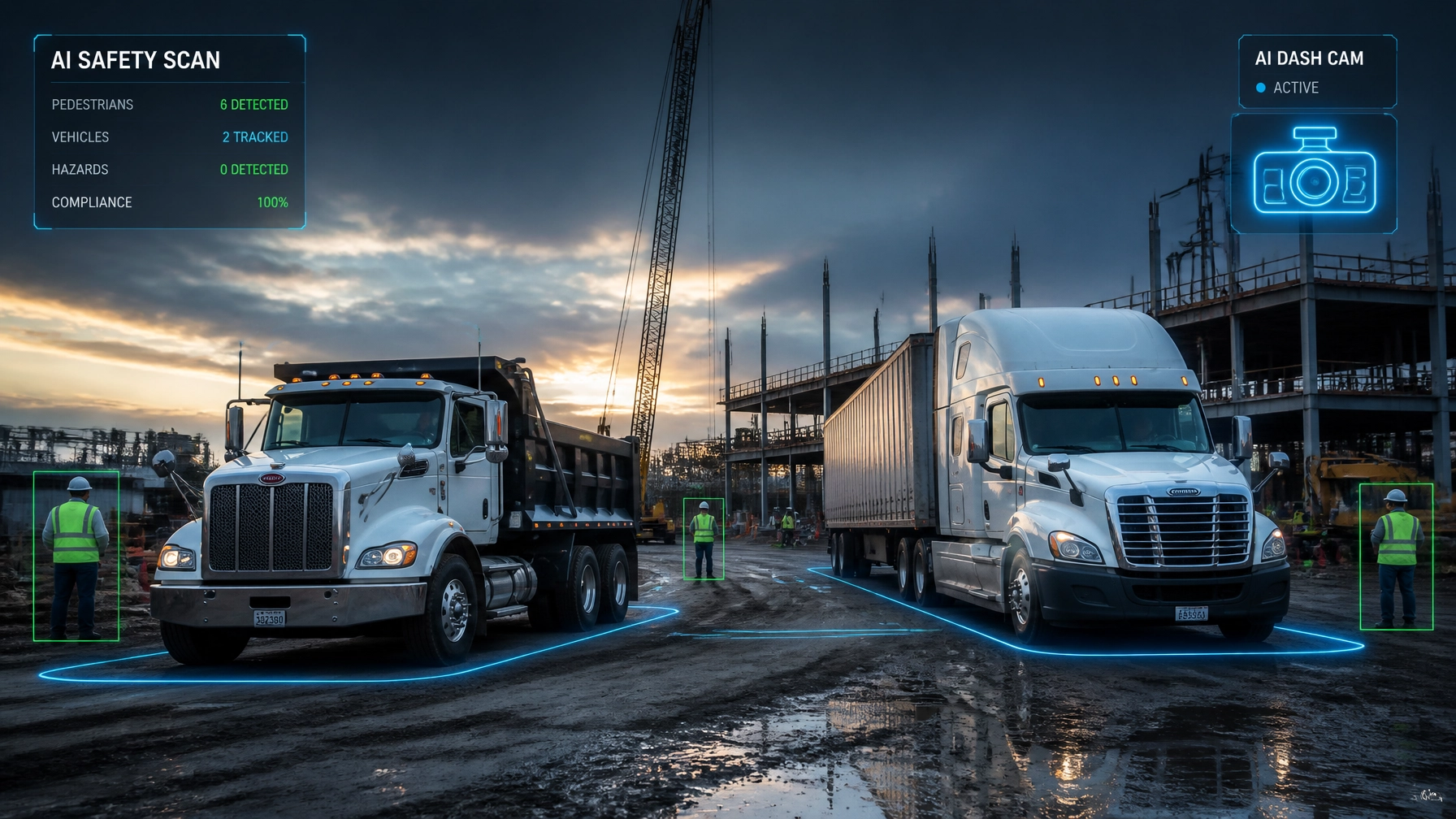
AI Fleet Safety Cameras: A Guide for Construction and Logistics
Operating a fleet in 2026 involves navigating a landscape of high stakes, rising insurance premiums, and increasingly complex regulatory environments. For managers in the construction and logistics sectors, the challenges are even more pronounced. Construction sites are chaotic environments where heavy equipment and ground crews interact in tight spaces, while logistics operations face the constant pressure of long-haul fatigue and the rising threat of nuclear verdicts.
Traditional dash cameras are no longer sufficient. To protect your drivers, your assets, and your bottom line, you must shift from reactive recordings to proactive prevention. AI fleet safety cameras represent this shift, offering real-time intelligence that identifies hazards before they result in a collision. This guide explores how advanced video telematics solutions are transforming risk management for heavy-duty fleets and why integrated safety technology is the new industry standard.
What Are AI Fleet Safety Cameras?
Unlike standard fleet safety cameras that merely record video to an SD card, AI-enhanced systems use computer vision and edge computing to “see” and interpret the environment. These systems are typically composed of dual-facing cameras that monitor both the road and the driver simultaneously.
The intelligence behind these systems is categorized into two primary functions:
- Advanced Driver Assistance Systems (ADAS): This technology looks outward. It detects lane departures, following distance, and potential forward collisions. In a construction context, ADAS can be calibrated to detect “vulnerable road users”: such as site workers or pedestrians: in a vehicle’s blind spots.
- Driver Monitoring Systems (DMS): This technology looks inward. It identifies signs of driver fatigue (yawning, heavy eyelids), distraction (cell phone use, looking away from the road), and high-risk behaviors like smoking or not wearing a seatbelt.
By combining these two streams, video telematics solutions provide a 360-degree view of safety. When the AI detects a risk, it triggers an immediate in-cab alert, giving the driver the split-second they need to correct their course.

Solving High-Stakes Risks in Construction
Construction sites are among the most dangerous work environments for vehicle operations. Large US-model dump trucks, loaders, and graders have significant blind spots that traditional mirrors cannot fully cover. Furthermore, the constant movement of sub-contractors and ground crews creates a high-density risk zone.
Eliminating Blind Spot Incidents
AI fleet safety cameras can be integrated into heavy equipment to provide object detection alerts. When a Peterbilt dump truck is reversing in a crowded yard, the AI can distinguish between a stationary cone and a human worker. By alerting the operator only when a person is detected, the system reduces “alert fatigue” and ensures the operator takes the warning seriously.
Asset Protection and Site Security
Construction equipment is a high-value target for theft. Integrated asset tracking and real-time monitoring allow managers to see exactly where their yellow plant is located at all times. If a piece of equipment is moved outside of working hours, the AI camera can trigger a remote alert and begin recording, providing high-definition evidence for recovery efforts.
Maintenance and Operational Efficiency
Safety is often tied to vehicle health. Modern systems integrate with maintenance tracking to ensure that safety-critical components, such as brakes and tires, are in top condition. A well-maintained fleet is a safer fleet, and the data provided by AI cameras regarding harsh braking or erratic steering can often signal a mechanical issue before it leads to a breakdown.

Mitigating Logistics and Long-Haul Hazards
In the logistics industry, the primary risks move from the site to the highway. Long-haul drivers operating Freightliner or Kenworth semi-trucks face unique challenges related to stamina, road conditions, and the behavior of other motorists.
Combatting Driver Fatigue and Distracted Driving
Fatigue remains a leading cause of highway accidents. AI cameras monitor facial cues to detect micro-sleeps or frequent yawning. In 2026, these systems are more accurate than ever, filtering out movements that aren’t related to fatigue while catching the subtle signs of a driver who is losing focus. This proactive coaching saves lives by prompting a driver to pull over before a tragedy occurs.
Exoneration and Claims Defense
One of the most immediate benefits of fleet camera systems is the ability to provide objective evidence. In more than 70% of accidents involving a heavy truck and a passenger vehicle, the passenger vehicle is at fault. Without video evidence, logistics companies often face “he said, she said” scenarios that result in expensive settlements. AI video confirms exactly what happened, often allowing managers to start insurance claims in minutes and exonerate their drivers on the spot.
Improving Fuel Efficiency
Safety and efficiency are two sides of the same coin. Harsh acceleration, excessive idling, and high-speed driving not only increase accident risk but also waste significant amounts of fuel. By monitoring these behaviors, fleet managers can implement coaching programs that lead to up to 30% fuel savings, directly improving the company’s bottom line.

The Measurable ROI of Video Telematics
Investing in AI fleet safety cameras is a financial decision as much as a safety one. At Safety Track, our clients consistently see measurable improvements in their operational costs:
- 40% Fewer Accidents: Real-time alerts and driver coaching drastically reduce the frequency of collisions.
- 25% Lower Insurance Costs: Underwriters are increasingly rewarding fleets that provide transparent safety data. Video evidence reduces the “reserve” amounts insurance companies must hold for open claims, leading to better renewal rates.
- Reduced Legal Liability: In an era of nuclear verdicts: where jury awards against trucking companies can reach tens of millions of dollars: having video proof of defensive driving is the best defense a company can have.
For a detailed breakdown of how these numbers apply to your specific fleet, exploring the real math of AI dash cameras is essential for any CFO or Fleet Manager.
Avoiding Implementation Pitfalls: The Manager’s Strategy
Simply installing cameras is not enough. To see a return on investment, managers must avoid common mistakes that can lead to data overload or driver resentment.
The Danger of “Ghost Coaching”
“Ghost coaching” occurs when safety managers acknowledge alerts in their software without actually following up with the driver. This creates a significant legal risk. If a crash occurs and the records show that the AI flagged the driver’s risky behavior dozens of times without a management response, the company can be held liable for “negligent supervision.” Effective video telematics solutions include workflows that ensure coaching is documented and consistent.
Building Driver Trust
Drivers often view cameras as “Big Brother.” Successful fleets overcome this by framing the technology as a tool for driver protection. Highlighting stories of exoneration and using the system to reward “Safe Driver of the Month” helps build a culture where the camera is seen as an ally, not a spy.

Custom-Tailored Safety with Safety Track
At Safety Track, we understand that a waste management fleet has different needs than a long-haul logistics firm or a heavy construction contractor. Our solutions are not one-size-fits-all. We offer custom-tailored fleet management that integrates GPS tracking, AI dash cameras, and asset monitoring into a single, professional interface.
Our AI-enhanced security ensures that your vehicles are always in sight, your drivers are protected from false claims, and your operational costs remain as low as possible. Whether you are managing a handful of Peterbilt trucks or a national fleet of Freightliners, we provide the visibility you need to operate with confidence.
Conclusion
The transition to AI fleet safety cameras is no longer a luxury: it is a requirement for competitive construction and logistics operations in 2026. By reducing accidents by 40% and providing the data needed to slash insurance premiums, these systems pay for themselves while keeping your team safe on the road and on the job site.
Ready to see how AI can protect your fleet? Contact Safety Track today for a custom solution tailored to your specific operations.

Tyler Schneider is the IT Director at Safety Track, overseeing the company’s technological infrastructure and innovations. With a strong background in information technology and systems management, Tyler ensures that Safety Track stays at the forefront of tech solutions in fleet management. His strategic expertise supports the seamless integration of technology across the company’s operations.