

Master Cold Chain Logistics: Food Safety Compliance Tips
Cold chain logistics is the coordinated process of transporting, storing, and handling perishable goods under controlled temperatures to preserve safety and quality from origin to consumption. This guide explains why maintaining cold chain integrity matters, outlines the regulatory framework that governs refrigerated transport, and shows how monitoring, telematics, and operational controls work together to reduce spoilage and support audits. Perishable shipments face measurable risks—temperature excursions, poor traceability, and lapses in documentation—that increase waste, claims, and regulatory exposure; managing those risks requires both process controls and technology-enabled visibility. Readers will learn key FSMA implications for transportation, practical temperature-monitoring architectures, driver and sanitation best practices, and how AI, IoT, and fleet software produce audit-ready records. The article maps regulatory requirements, compares sensor types and compliance features, provides actionable checklists for fleets, and highlights how fleet telematics and camera systems can integrate with third-party sensors to operationalize traceability and corrective action. Throughout, target concepts such as cold chain integrity, real-time temperature monitoring, telematics for food safety, and GPS asset tracking for refrigerated trucks are woven into practical workflows and compliance-ready examples.
What Are Essential Cold Chain Regulations for Food Safety Compliance?
Cold chain transport for food and beverage is governed primarily by preventive-control and traceability requirements that prioritize temperature control, recordkeeping, and chain-of-custody documentation. Transporters and shippers must implement controls that prevent hazards, maintain temperature limits appropriate to the product class, and retain time-stamped records to demonstrate compliance during audits. Operationally, fleets must align procedures with HACCP principles, document corrective actions for excursions, and maintain traceability information to support recalls and investigations. The next section breaks FSMA-specific expectations into practical actions for carriers and shippers.
Key regulatory requirements for refrigerated transport include: refrigerated truck fleet operations.
- Temperature control with validated limits and documented monitoring that demonstrates continuous compliance during transit.
- Traceability and chain-of-custody records that identify origin, handling events, and transfers between carriers or facilities.
- Preventive controls and corrective action procedures that are documented, implemented, and auditable by regulators.
These requirements translate into operational tasks for fleet managers such as maintaining calibrated sensors, logging interventions after excursions, and attaching temperature evidence to shipment records, which leads into how FSMA applies directly to transportation operations.
How Does the FDA FSMA Impact Cold Chain Transportation?
FSMA emphasizes preventive controls and requires entities in the food chain to identify hazards and implement measures that minimize them; for transportation this means carriers must treat temperature control and contamination risk as preventable hazards. Practical impact includes establishing written procedures that define temperature ranges, monitoring frequency, and corrective actions, plus retention of records long enough to satisfy inspection and recall needs.
Carriers and shippers share responsibility: shippers should specify temperature requirements and carriers must demonstrate adherence through logs, telemetry, and incident reports. Ensuring traceability and audit readiness under FSMA requires integrating sensor records, driver logs, and transfer documentation into a unified, time-stamped trail for each shipment.
 What Are the Essential Food Logistics Safety Regulations to Follow?
Beyond FSMA, fleets should align with HACCP principles, industry guidance for refrigerated transport, and traceability frameworks that support rapid recalls and root-cause analysis. Operationally this includes documented sanitation protocols, pest control where applicable, validated loading procedures, and temperature mapping of trailers and containers to ensure even cooling. Managers should maintain inspection checklists, calibration logs for sensors, and clear handoff procedures for intermodal transfers to preserve chain of custody. Together, these standards create an auditable framework that translates regulatory expectations into consistent daily practices.
How Does Real-Time Temperature Monitoring Improve Cold Chain Integrity?
Real-time temperature monitoring collects continuous, time-stamped environmental data and triggers alerts when conditions deviate from validated thresholds, enabling immediate corrective action that prevents product loss and supplies audit-ready evidence. Continuous monitoring works by combining sensors, connectivity, and alerting rules so that operations teams and drivers can respond before spoilage occurs, preserving product quality and minimizing claim exposure. The outcome is faster detection, documented corrective steps, and improved traceability for recalls, which materially reduces waste and regulatory risk.
Below is a concise comparison of common sensor approaches and how they fit into fleet management operations.
Different monitoring technologies provide distinct trade-offs in frequency, connectivity, and suitability for regulatory evidence.
This table shows how choice of sensor affects evidence quality and responsiveness; choosing the right mix depends on required sampling intervals, expected connectivity, and the need to link temperature traces to vehicle GPS and ELD records to produce a complete audit trail.
When selecting sensors, prioritize measurement cadence, tamper resistance, and the ability to correlate readings with location and driver events so that every temperature record can be linked to a timestamped vehicle state and chain-of-custody entry. That link between environmental data and operational context is what enables corrective processes like load quarantine or immediate transload decisions.
Provide useful information about fleet safety and efficiency, demonstrate the value of their solutions, and lead potential customers to request a demo or contact sales to purchase products/services.
What Technologies Enable Effective Food Logistics Temperature Monitoring?
Effective monitoring relies on multiple sensor types working together: data loggers that record high-frequency internal conditions, cellular IoT sensors that stream real-time readings, and gateway setups that bridge Bluetooth beacons to cloud platforms for aggregated visibility. Integration with telematics platforms ensures temperature events are tied to GPS location and driver behavior, enabling root-cause analysis when excursions occur. Reliability considerations include battery life, sensor placement, calibration schedules, and encryption for tamper-proof evidence. Selecting a combination of sensors and connectivity methods balances cost, regulatory needs, and the requirement to generate audit-ready exports.
How Does Temperature Monitoring Prevent Food Spoilage and Waste?
Continuous monitoring prevents spoilage by producing immediate alerts that trigger standard operating procedures—such as driver investigation, reefer adjustment, or load quarantine—before product temperature reaches unsafe thresholds. The mechanism works through automated thresholds and escalation rules that notify dispatch and on-site personnel, reducing time-to-detect and time-to-correct. Quantifiable outcomes include fewer rejected loads, reduced claims, and demonstrable reductions in spoilage-related waste when corrective actions are timely. In practice, fleets that pair monitoring with verified corrective workflows see measurable drops in loss and improved customer trust.
What Are Best Practices for Fleet Safety in Perishable Goods Transport?
Operational best practices combine driver training, sanitation protocols, routine inspections, and documented SOPs that ensure consistent handling across all trips. Implementing standardized pre-trip and post-trip checks, verifying reefer setpoints, and attaching photographic or video evidence to inspection logs create a verifiable record of compliance. Technology supports these practices through in-cab alerts, digital checklists, and event logging that tie behavior and hygiene verification to shipments.
The following numbered list summarizes the highest-impact fleet safety practices for perishable transport.
- Rigorous driver training: Drivers receive specific instruction on temperature protocols, load staging, and documentation procedures.
- Standardized pre-trip and post-trip checks: Checklists verify reefer function, door seals, and load condition before departure and on arrival.
- Sanitation and contamination controls: Regular cleaning, pest inspections, and documented validation ensure product safety during transit.
These practices create operational consistency and reduce variability, which in turn simplifies monitoring, improves traceability, and forms the basis for audit-ready processes that inspectors and customers expect.
How Can Driver Behavior and Training Enhance Food Safety Compliance?
Driver-focused training programs teach temperature awareness, handling of temperature-sensitive loads, and immediate reporting protocols for excursions, tying behavior to measurable compliance outcomes. In-cab coaching and alerts help correct unsafe practices—such as prolonged door openings or excessive idle times—that undermine cold chain integrity, while performance KPIs track adherence to SOPs. Combining training with telematics-driven feedback creates a feedback loop where data informs coaching and coaching reduces repeat incidents. Measuring improvements requires tracking metrics like excursion frequency, on-time corrective action rate, and reduction in customer complaints tied to handling errors.
What Vehicle Hygiene and Sanitation Protocols Are Critical for Cold Chain?
Sanitation protocols should include scheduled deep cleans, approved disinfectants appropriate for food contact surfaces, and documented pest control where applicable; these measures reduce the risk of cross-contamination in multi-product environments. Inspections should be documented with time-stamped photos or short video clips and stored with shipment records so auditors can verify compliance. Verification also includes monitoring for residual odors, product residue, and structural integrity of refrigerated compartments during routine service. Integrating vehicle hygiene evidence into a central compliance platform enhances traceability and supports corrective action tracking after any detected lapse.
This hygiene comparison clarifies responsibilities, expected cadence, and practical verification techniques that turn cleaning plans into audit-ready records and lower contamination risk for perishable loads.
How Do AI and IoT Solutions Support Cold Chain Food Safety Compliance?
AI and IoT combine to deliver contextualized visibility: sensors provide environmental streams, GPS pins location, and AI analyzes video and telematics to detect risky behaviors or security incidents that jeopardize cold chain integrity. This technological blend supports proactive interventions—detecting door-open events, monitoring driver compliance, and correlating temperature excursions with route anomalies—to reduce spoilage and provide evidence for audits. Integration patterns commonly route sensor data through gateways to telematics platforms where analytics, alerts, and report exports create a unified record for each shipment. The following examples illustrate how these technologies operate together to reduce risk and improve traceability.
- Real-time detection of events that compromise product safety, such as unauthorized stops or refrigeration failures.
- Correlation of multi-modal data (video, GPS, temperature) to produce audit-ready narratives for each incident.
- Predictive alerts that anticipate risk based on observed patterns, enabling preventive maintenance and route adjustments.
Together these capabilities transform raw sensor streams into actionable intelligence that supports compliance and operational efficiency.
Provide useful information about fleet safety and efficiency, demonstrate the value of their solutions, and lead potential customers to request a demo or contact sales to purchase products/services.
How Do AI Fleet Cameras Monitor Driver Behavior and Cargo Security?
AI fleet cameras analyze in-cab and exterior scenes to detect behaviors such as door openings, driver distraction, and unauthorized access, producing event-triggered clips that are automatically linked to GPS and temperature logs. These recorded events provide objective evidence for incident reviews and help defend against false claims by demonstrating the sequence of events and context. For cargo security, cameras detect tampering or unexpected container access and can trigger alerts to dispatch, enabling swift investigation. Integrating video evidence with sensor data creates a richer audit trail that supports both safety coaching and regulatory responses.
How Can IoT Sensors Integrate with GPS Tracking for Supply Chain Visibility?
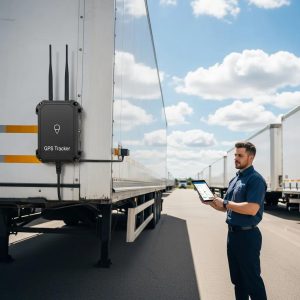
IoT sensors typically send readings to a gateway that attaches location and vehicle state from GPS and ELD systems, producing contextualized records where each temperature sample is geotagged and time-stamped. Platforms aggregate these streams into dashboards and automated reports that show route history, excursions, and corrective actions with linked supporting files. The integration architecture commonly follows sensor → gateway → telematics/asset platform → alerting/report exports, enabling automated handoffs and centralized traceability. This end-to-end linkage shortens time-to-detect, improves incident verification, and supports faster recall responses.
What Role Does Fleet Management Software Play in FSMA Compliance Reporting?
Fleet management platforms provide the data consolidation, standardized exports, and audit trails that make FSMA compliance reporting practical and defensible by transforming dispersed records into coherent, time-stamped evidence. Core features include geofenced route histories, time-stamped temperature logs, video and event attachments, and ELD integration to show driver duty status—all of which feed compliance reports. By automating report generation and preserving immutable logs, the software reduces audit burden and accelerates recall actions.
The table below compares essential compliance features and the outputs auditors expect from modern fleet platforms.
This comparison shows that combining these features creates a complete audit trail linking environment, location, and human actions—exactly what inspectors and customers request when evaluating cold chain compliance.
Provide useful information about fleet safety and efficiency, demonstrate the value of their solutions, and lead potential customers to request a demo or contact sales to purchase products/services.
How Does GPS Tracking Enhance Asset Location and Traceability?
GPS tracking enhances traceability by providing continuous location context for each shipment and enabling geofencing to record entry and exit from critical control points such as cold storage facilities and customer docks. Route histories tied to timestamps let teams reconstruct chain-of-custody and identify where a temperature excursion may have originated. For recalls, GPS-enabled traceability narrows the affected cohort quickly and supports targeted communication with customers and regulators. Including GPS fields in compliance exports—such as coordinates, timestamps, and geofence IDs—streamlines auditor review and speeds corrective response.
How Can Compliance Reporting Reduce Operational Risks and Costs?
Automated compliance reporting reduces risk by shortening detection-to-action time, which lowers spoilage, claim frequency, and the labor cost of manual record consolidation. Data-driven insights also enable route optimization and predictive maintenance that prevent equipment failures likely to cause excursions. Demonstrable ROI examples include fewer rejected deliveries, faster recall containment, and reduced administrative hours spent on audit prep. Tracking KPIs such as excursion rate, mean time to correct, and audit preparation hours provides a clear view of cost savings and compliance improvement over time.
How Can Food Logistics Companies Prevent Spoilage and Ensure Cold Chain Integrity?
Preventing spoilage demands a holistic program that combines validated monitoring technology, disciplined operational controls, and continuous improvement based on telemetry and incident analysis. A practical implementation roadmap starts with a pilot that pairs sensors with telematics and standard operating procedures, then scales monitoring and automated reporting while refining KPIs and training. Integrating supplier vetting, contingency planning, and corrective-action workflows completes a system that is both preventive and responsive.
Implementation checklist to prevent spoilage and improve integrity:
- Conduct a risk assessment for product temperature sensitivity, handling complexity, and transfer points.
- Pilot sensor and telematics integrations on a representative set of routes to validate sampling cadence and alert rules.
- Standardize SOPs for corrective action, sanitation, and documentation, and train drivers and dispatch accordingly.
These steps produce measurable improvements: fewer excursions, faster corrective action, and an audit trail that demonstrates due diligence and continuous control.
What Are Effective Strategies for Supply Chain Food Safety Risk Management?
A five-step risk management framework helps fleets prioritize controls: identify hazards, evaluate likelihood and impact, select preventive measures, implement monitoring and verification, and document corrective actions and continuous improvement. Supplier and carrier contracts should specify temperature requirements, record retention, and audit access to ensure upstream compliance. Contingency planning must include alternate transport, transload procedures, and rapid quarantine protocols to limit product loss. Executing this framework requires clear ownership of tasks, documented verification methods, and periodic reviews to adapt controls as operations change.
How Does Data-Driven Decision Making Improve Cold Chain Outcomes?
Using telemetry, temperature sensors, and video analytics together allows operations teams to spot patterns—such as repeated door-open hotspots or failing HVAC zones—and take targeted corrective action like re-routing, maintenance, or retraining. Dashboards that surface excursion trends, driver performance KPIs, and equipment reliability enable prioritized investments that reduce spoilage and claims. Examples of decisions driven by data include scheduling preventive service for frequently failing reefers and altering loading patterns to eliminate warm pockets in trailers. Monitoring outcome KPIs such as reduction in spoilage percentage and faster incident resolution demonstrates the value of data-driven improvements.
Provide useful information about fleet safety and efficiency, demonstrate the value of their solutions, and lead potential customers to request a demo or contact sales to purchase products/services.

Hannah Lang is a Social Media Marketing Specialist at Safety Track. She has her bachelor’s degree in Advertising and Public Relations from Grand Valley State University. With her passion for research, Hannah possesses a wealth of knowledge expanding across multiple industries and disciplines. Her efforts won her a Scholastic Art and Writing regional Gold Key award.