
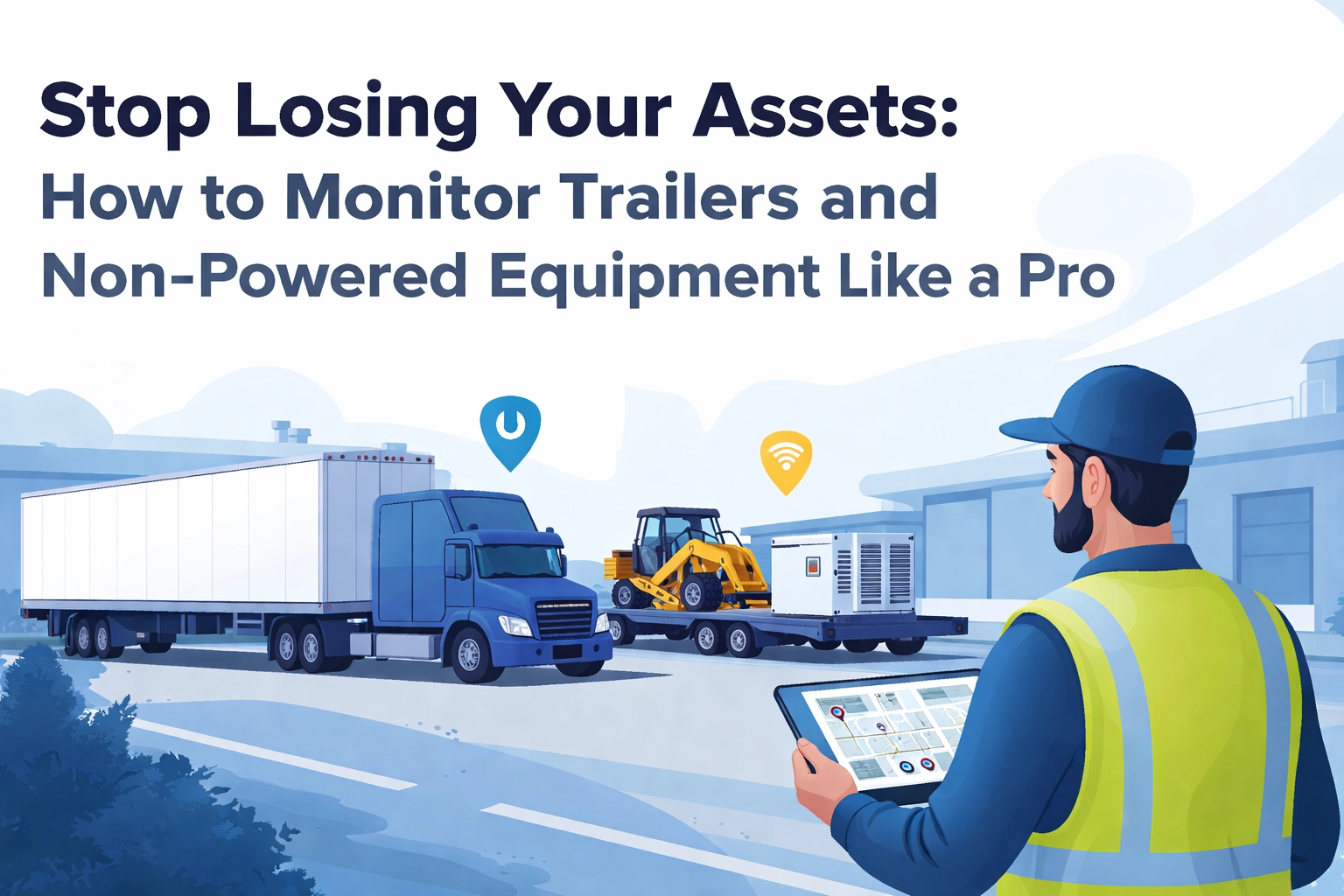
Monitor Trailers & Non-Powered Equipment in Real Time
Trailers, containers, generators, and other non-powered equipment represent a significant investment for any fleet operation. Yet these assets often receive far less attention than the trucks that pull them. The result? Lost equipment, underutilized resources, and thousands of dollars disappearing into operational blind spots.
Fleet managers who rely on manual tracking methods or outdated spreadsheets know the frustration. A trailer sits idle in a distant yard for weeks. A generator goes missing from a job site. A refrigerated container loses temperature control overnight, spoiling an entire shipment. These problems share a common root cause: lack of visibility.
Modern asset tracking technology eliminates these blind spots. With the right combination of GPS tracking, remote sensors, and intelligent alerts, fleet managers gain complete control over every piece of equipment: powered or not.
The Hidden Cost of Untracked Assets
Non-powered assets present unique challenges. Unlike trucks with drivers who check in regularly, trailers and equipment can sit for days or weeks without anyone verifying their location or condition. This creates multiple problems that directly impact the bottom line.
Theft and loss remain constant concerns. Trailers parked at remote locations or job sites become easy targets. Without tracking, recovery becomes nearly impossible, and insurance claims require extensive documentation that may not exist.
Poor utilization drains resources silently. A company might own fifty trailers but consistently struggle to find available units because no one knows which assets are in use, in transit, or sitting idle. This often leads to unnecessary equipment purchases or rental expenses.
Maintenance blind spots create safety risks. Tire pressure drops, brake systems fail, and cargo conditions deteriorate: all without anyone knowing until a breakdown occurs or a shipment arrives damaged.

How GPS Tracking Changes the Game
The foundation of professional asset monitoring starts with GPS tracking technology. Modern systems provide continuous location data through smartphone apps or web-based platforms, giving fleet managers instant visibility into every trailer’s whereabouts.
Unlike older systems that updated locations every 15 minutes or longer, current technology offers real-time tracking with 4G-LTE or 5G cellular connectivity. This means knowing exactly where a trailer is right now: not where it was a quarter-hour ago. For theft recovery, those minutes matter significantly.
GPS tracking also eliminates time-consuming yard searches. Instead of dispatching someone to physically locate a specific trailer among dozens of units, managers simply pull up the tracking dashboard and pinpoint the exact location. This efficiency gain compounds across every search, every day.
The data extends beyond simple location. Modern tracking platforms record movement history, showing when and where assets traveled over days, weeks, or months. This historical data proves invaluable for resolving disputes, verifying delivery times, and analyzing utilization patterns.
For fleet operations seeking deeper insights into how real-time data transforms management decisions, GPS tracking forms the essential first layer.
Beyond Location: Sensor-Based Monitoring
Knowing where a trailer sits tells only part of the story. Knowing what’s happening to that trailer: and inside it: provides the complete picture.
Sensor technology now extends monitoring capabilities far beyond simple GPS coordinates. Fleet managers can track critical equipment conditions in real time:
- Tire pressure and temperature sensors detect leaks or dangerous heat buildup before blowouts occur on the highway
- Door sensors trigger alerts when someone opens a trailer unexpectedly or attempts unauthorized access
- Environmental sensors monitor interior temperature and humidity: critical for refrigerated cargo or sensitive shipments
- Weight sensors detect changes in cargo, flagging potential theft or improper loading
- ABS and power connection monitoring catches brake and electrical issues the moment they develop
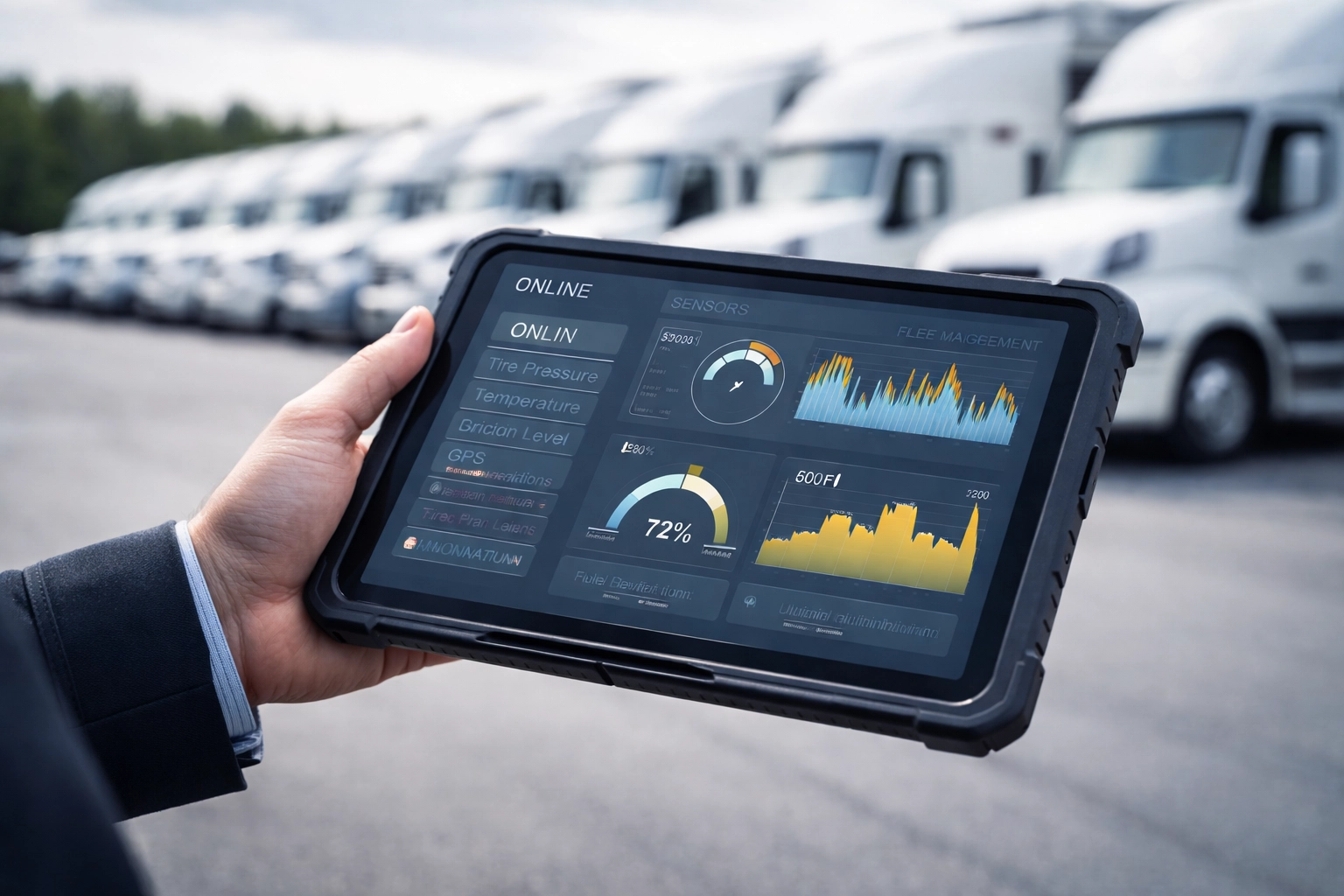
This sensor data feeds into centralized dashboards, allowing managers to monitor entire fleets from a single screen. When a tire pressure drops below threshold or a reefer unit struggles to maintain temperature, the system flags the issue immediately.
The shift from reactive to proactive management represents a fundamental change in fleet operations. Problems get solved before they cause breakdowns, spoiled cargo, or safety incidents. This approach aligns with broader strategies for reducing unexpected downtime through vehicle health monitoring.
Geofencing and Real-Time Alerts
Location tracking becomes exponentially more powerful when combined with geofencing technology. Geofences are virtual boundaries drawn around specific locations: yards, customer sites, approved routes, or restricted areas.
When a tracked asset crosses a geofence boundary, the system triggers an instant alert. This creates automated monitoring that works around the clock without requiring constant human attention.
Practical applications include:
- Theft prevention: Receive immediate notification when a trailer leaves a yard outside business hours
- Delivery verification: Confirm when equipment arrives at or departs from customer locations
- Unauthorized use detection: Flag when assets travel to unapproved areas or deviate from expected routes
- Dwell time tracking: Monitor how long trailers sit at specific locations to identify bottlenecks
Alert systems also monitor for tampering. Devices installed in discreet undercarriage locations include cut-cable detection and unplugged alerts. If someone attempts to disable the tracker, the system sends an immediate warning before the asset disappears.
This layered approach to security makes unauthorized access or theft significantly more difficult while giving fleet managers peace of mind. For operations concerned about theft prevention through AI and GPS integration, geofencing provides a critical defense layer.
Improving Asset Utilization
Beyond security, asset tracking delivers substantial returns through improved utilization. Most fleet operations dramatically underutilize their non-powered equipment simply because they lack visibility into availability.
With comprehensive tracking, managers see exactly which trailers are loaded, which are empty, which are in transit, and which have sat idle for extended periods. This visibility enables smarter scheduling and reduces the need for excess inventory.
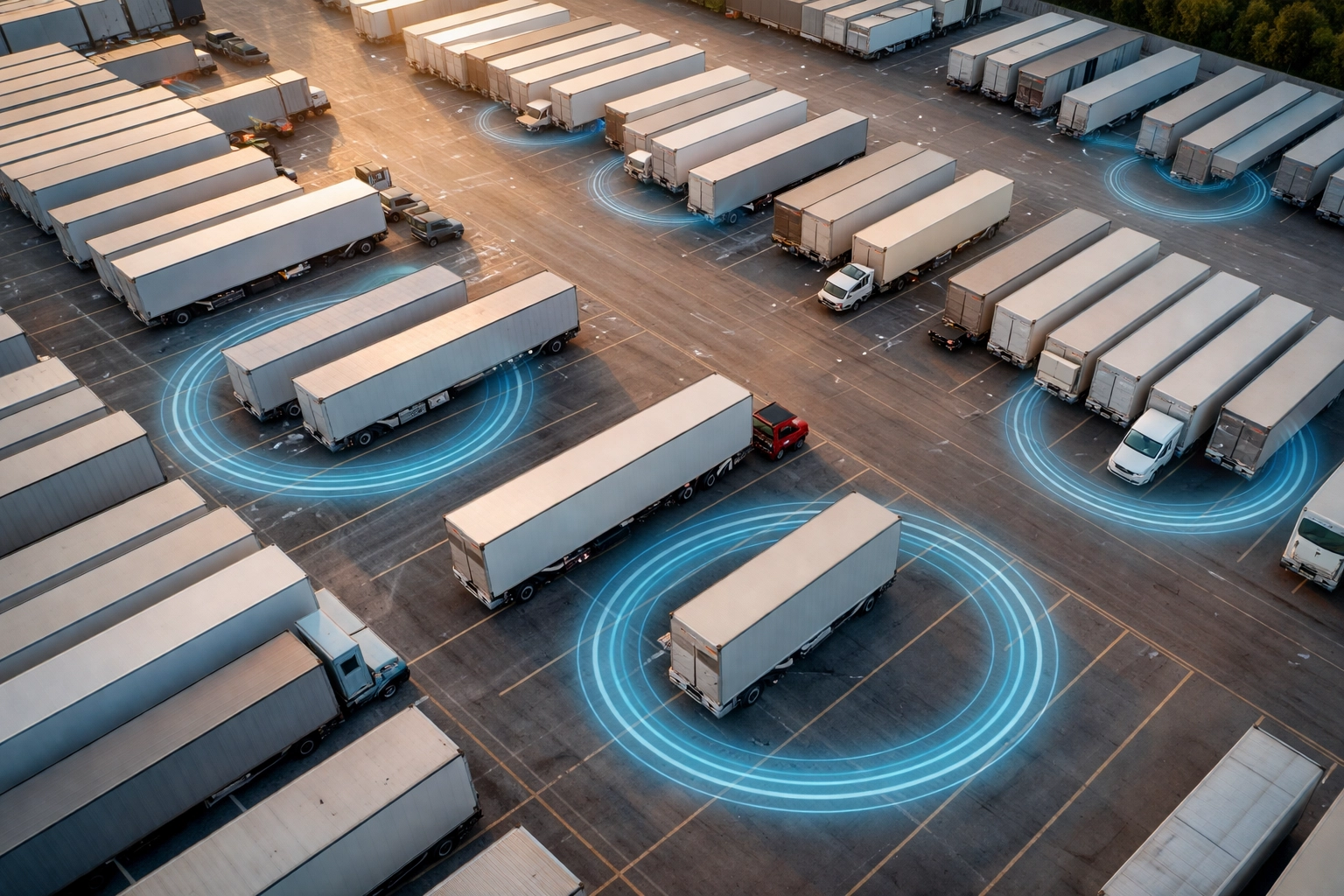
Consider a distribution operation with trailers spread across multiple locations. Without tracking, dispatchers make phone calls, send emails, and wait for responses to locate available units. With tracking, they open a dashboard, filter by location and status, and assign the nearest available trailer in seconds.
The utilization data also informs long-term decisions. If tracking reveals that certain trailers consistently sit unused while others run constantly, managers can rebalance the fleet, sell excess equipment, or adjust deployment strategies.
Over time, these efficiency gains often justify the entire investment in tracking technology: before even factoring in theft prevention or maintenance benefits. For operations looking to combine asset visibility with route optimization and cost reduction, integrated platforms deliver compounding returns.
Custom-Tailored Solutions for Your Fleet
No two fleet operations face identical challenges. A refrigerated transport company needs different monitoring capabilities than a construction equipment rental business. A regional distributor has different concerns than a national logistics provider.
Effective asset tracking requires solutions tailored to specific operational needs. This means selecting the right combination of hardware, sensors, and software features rather than accepting a one-size-fits-all package.
Key considerations include:
- Battery life requirements: Assets that move frequently can recharge tracking devices through motion. Assets that sit for extended periods need long-life battery solutions: some models offer up to five years powered by standard batteries.
- Connectivity options: 4G LTE provides reliable coverage in most areas, but some remote operations may need satellite backup.
- Integration needs: Tracking systems should connect with existing fleet management platforms, tire monitoring solutions, and dispatch software through a single dashboard.
- Reporting requirements: Different stakeholders need different views: operations wants utilization data, finance wants cost analysis, safety wants compliance metrics.
Implementation Best Practices
Deploying asset tracking across a fleet requires planning, but modern systems make the process straightforward. Many current devices feature plug-and-play, wire-free setups that install in approximately five minutes per unit, enabling rapid deployment even for large fleets.
Start with a clear inventory of all non-powered assets. Identify which units move frequently, which sit for extended periods, and which carry the highest value or risk. This prioritization helps phase deployment if budget or time constraints exist.
Train dispatch and operations staff on the tracking platform before going live. The best technology delivers no value if teams don’t use it effectively. Focus training on the specific workflows that will change: locating assets, responding to alerts, pulling utilization reports.
Finally, establish clear processes for responding to alerts. Geofence notifications and security alerts require defined escalation paths. Maintenance alerts need integration with service scheduling. Without these processes, tracking data becomes noise rather than actionable intelligence.
Take Control of Every Asset
Trailers, containers, and non-powered equipment deserve the same visibility as the trucks in a fleet. GPS tracking, sensor monitoring, and intelligent alerts transform these overlooked assets from operational blind spots into fully managed resources.
The benefits compound across every aspect of fleet operations: reduced theft and loss, improved utilization, proactive maintenance, and streamlined logistics. Fleet managers who invest in comprehensive asset tracking gain control they never had before.
Safety Track provides customized fleet management solutions designed around specific operational needs. From GPS tracking to advanced sensor integration, the right combination of technology turns asset management from a constant challenge into a competitive advantage.
Stop losing track of valuable equipment. Start monitoring like a pro.

Hannah Lang is a Social Media Marketing Specialist at Safety Track. She has her bachelor’s degree in Advertising and Public Relations from Grand Valley State University. With her passion for research, Hannah possesses a wealth of knowledge expanding across multiple industries and disciplines. Her efforts won her a Scholastic Art and Writing regional Gold Key award.