

Unlock Insights: Benefits of Predictive Analytics in Vehicle Tracking
Predictive analytics is revolutionizing the way fleet managers approach vehicle tracking, offering insights that enhance operational efficiency and safety. This article delves into the benefits of predictive analytics in vehicle tracking, providing a comprehensive overview of its mechanisms and applications. Fleet managers often face challenges such as unexpected downtime, inefficient routing, and safety concerns. Predictive analytics serves as a powerful solution, enabling data-driven decision-making that can significantly improve fleet performance. We will explore key topics, including the definition of predictive analytics, its role in predictive maintenance, driver behavior analytics, real-time monitoring, and the financial impact of these technologies.
What Is Predictive Analytics in Vehicle Tracking and Why Does It Matter?
Predictive analytics in vehicle tracking refers to the use of data analysis techniques to forecast future events based on historical data. This approach leverages advanced algorithms and machine learning to identify patterns and trends that can inform decision-making. The importance of predictive analytics lies in its ability to enhance operational efficiency, reduce costs, and improve safety within fleet management. By anticipating potential issues before they arise, fleet managers can implement proactive measures that lead to better resource allocation and risk management.
Defining Predictive Analytics and Vehicle Telematics
Predictive analytics encompasses various statistical techniques, including machine learning and data mining, to analyze historical data and predict future outcomes. Vehicle telematics, on the other hand, involves the integration of telecommunications and monitoring systems to collect data from vehicles. Together, these technologies enable fleet managers to gain insights into vehicle performance, driver behavior, and maintenance needs, ultimately leading to improved operational efficiency and safety.
Indeed, the strategic application of predictive analytics, especially when combined with telematics data, is increasingly recognized as a cornerstone for modern fleet management.
Predictive Analytics for Smart Fleet Management
The fleet management industry is comprised of fleet management providers that help ensure an organization’s vehicles remain on the road supporting core business functions efficiently, safely, and at the lowest total operating cost. Recent technology advancements in the data analysis space coupled with enriched data domain have made it possible for analytics to be applied strategically for fleet management solutions. One of the latest and game changing services to enter the fleet management market in recent years is in the IoT (Internet of Things) space, specifically, vehicle telematics services. Collating pure telematics information with other information from other areas such as maintenance, fuel, and driver performance can improve fleet management.
Improving fleet management strategy and operational intelligence with predictive analytics, 2018
How Does Predictive Maintenance Reduce Fleet Downtime and Costs?
Predictive maintenance utilizes predictive analytics to forecast when maintenance should be performed on vehicles, thereby preventing unexpected breakdowns and reducing downtime. By analyzing data from telematics devices, fleet managers can identify patterns that indicate when a vehicle is likely to require maintenance. This proactive approach not only minimizes disruptions but also extends the lifespan of vehicles, leading to significant cost savings.
The integration of telematics with advanced prognostics and health management systems is indeed transforming how commercial vehicles are maintained, significantly boosting operational efficiency.
Telematics & Predictive Maintenance for Fleet Efficiency
Prognostics and Health Management/Monitoring (PHM) are methods to assess the health condition and reliability of systems for the purpose of maximising operational reliability and safety. Recently, PHM systems are emerging in the automotive industry. In the commercial vehicle sector, reducing the maintenance cost and downtime while also improving the reliability of vehicle components can have a major impact on fleet performance and hence business competitiveness. Nowadays, telematics and GPS are used mainly for fleet tracking and diagnostics purposes. Increased numbers of sensors installed on commercial vehicles, advancement of data analytics and computational intelligence methods, increased capabilities for on-board data processing as well as in the cloud, are creating an opportunity for PHM systems to be deployed on commercial vehicles and hence improve the overall operational efficiency.
Overview of telematics-based prognostics and health management systems for commercial vehicles, M Mesgarpour, 2013
Scheduling Maintenance with Predictive Analytics to Prevent Failures
By employing predictive analytics, fleet managers can schedule maintenance based on actual vehicle performance data rather than relying on fixed schedules. This method allows for timely interventions that prevent failures before they occur. For instance, if data indicates that a vehicle’s brake system is showing signs of wear, maintenance can be scheduled before a failure happens, ensuring the vehicle remains operational and safe.
In What Ways Does Driver Behavior Analytics Improve Fleet Safety?

Driver behavior analytics involves monitoring and analyzing driver actions to assess risk and improve safety. By utilizing telematics data, fleet managers can gain insights into driving patterns, such as speeding, harsh braking, and rapid acceleration. Understanding these behaviors is crucial for implementing safety measures that protect both drivers and assets.
Monitoring and Scoring Driver Risk for Safer Operations
Through advanced analytics, fleet managers can score driver risk based on their behavior. This scoring system allows for targeted training and interventions for high-risk drivers, fostering a culture of safety within the fleet. By addressing risky behaviors, companies can reduce accident rates and associated costs, ultimately enhancing overall fleet safety.
What Are the Benefits of Real-Time Fleet Monitoring and Alert Systems?
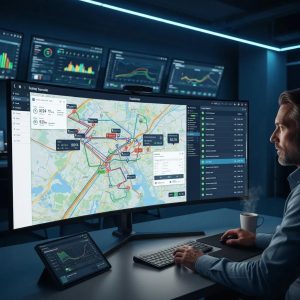
Real-time fleet monitoring provides immediate insights into vehicle locations, performance, and driver behavior. This capability allows fleet managers to make informed decisions quickly, optimizing operations and enhancing safety. The integration of alert systems further enhances this process by notifying managers of critical events, such as unauthorized vehicle use or maintenance needs.
Using Telematics Data for Immediate Operational Decisions
Telematics data enables fleet managers to make immediate operational decisions based on real-time information. For example, if a vehicle deviates from its planned route, managers can quickly assess the situation and take appropriate action. This responsiveness not only improves efficiency but also enhances customer satisfaction by ensuring timely deliveries.
How Can Predictive Analytics Deliver ROI and Cost Savings for Fleets?
The financial impact of predictive analytics in fleet management is significant. By reducing downtime, optimizing maintenance schedules, and improving driver safety, predictive analytics can lead to substantial cost savings. Fleet managers can quantify these savings through various metrics, demonstrating the return on investment (ROI) associated with implementing predictive analytics.
Indeed, the application of AI-driven predictive analytics is proving to be a powerful tool for optimizing fleet management across critical aspects like route planning, vehicle allocation, and maintenance, ultimately driving significant financial benefits.
AI Predictive Analytics for Fleet Optimization
The realm of logistics and transportation is undergoing a transformative shift due to advancements in artificial intelligence (AI) and machine learning (ML) technologies. This research paper investigates the application of AI-driven predictive analytics for optimizing fleet management, focusing on three critical aspects: route planning, vehicle allocation, and predictive maintenance. The study is driven by the imperative to reduce operational costs, enhance delivery efficiency, and improve vehicle utilization through sophisticated AI models.
AI-Driven Predictive Analytics for Fleet Management Optimization in Logistics and Transportation: Leveraging Machine Learning for Route Planning, Vehicle …, VK Dunka, 2022
Quantifying Maintenance Savings and Operational Efficiency Gains
To effectively measure the financial benefits of predictive analytics, fleet managers can track key performance indicators (KPIs) such as maintenance costs, vehicle uptime, and fuel efficiency. By comparing these metrics before and after implementing predictive analytics, organizations can quantify the savings achieved through improved operational efficiency and reduced maintenance expenses.
This table illustrates how predictive analytics can lead to measurable improvements in fleet performance, showcasing the financial benefits of adopting these technologies.
Why Does Predictive Analytics Matter for Vehicle Tracking?
Predictive analytics has proven successful across various industries, demonstrating its versatility and effectiveness in enhancing fleet management. Industries such as construction, transportation, food distribution, and public works have all benefited from implementing predictive analytics in their operations.
Construction, Transportation, Food Distribution, and Public Works Examples
- Construction: Predictive analytics helps construction companies manage equipment usage and maintenance schedules, reducing downtime and improving project timelines.
- Transportation: Logistics companies utilize predictive analytics to optimize routing and delivery schedules, enhancing customer satisfaction and reducing fuel costs.
- Food Distribution: Predictive analytics enables food distributors to monitor vehicle conditions and ensure timely deliveries, maintaining product quality and safety.
- Public Works: Municipalities leverage predictive analytics to manage fleet maintenance and optimize resource allocation, improving service delivery to citizens.
What Are Common Fleet Manager Questions About Predictive Analytics?
Fleet managers often have questions regarding the implementation and effectiveness of predictive analytics in their operations. Addressing these concerns is crucial for fostering confidence in adopting new technologies.
Addressing Maintenance, Safety, and Implementation Concerns
- How can predictive analytics improve maintenance schedules? Predictive analytics allows for data-driven maintenance scheduling, reducing unexpected breakdowns and extending vehicle lifespan.
- What safety benefits can be expected? By analyzing driver behavior, predictive analytics can identify high-risk drivers and facilitate targeted training, enhancing overall fleet safety.
- What challenges are associated with implementation? Common challenges include data integration, staff training, and ensuring data accuracy, but these can be mitigated with proper planning and resources.
How Does Safety Track’s Predictive Analytics Platform Stand Out?
Safety Track offers a specialized predictive analytics platform designed to enhance vehicle tracking and fleet management. By leveraging advanced data analytics, Safety Track provides fleet managers with actionable insights that drive operational efficiency and safety.
Unique Features and Client Success Stories
Safety Track’s platform includes unique features such as real-time monitoring, driver behavior analytics, and predictive maintenance scheduling. Clients have reported significant improvements in fleet performance, including reduced maintenance costs and enhanced safety metrics. These success stories highlight the effectiveness of Safety Track’s solutions in transforming fleet management practices.
In conclusion, predictive analytics is a game-changer for fleet managers, offering insights that enhance operational efficiency, safety, and cost savings. By understanding and implementing these technologies, fleet managers can unlock the full potential of their vehicle tracking systems, leading to improved performance and a competitive edge in the industry.

Hannah Lang is a Social Media Marketing Specialist at Safety Track. She has her bachelor’s degree in Advertising and Public Relations from Grand Valley State University. With her passion for research, Hannah possesses a wealth of knowledge expanding across multiple industries and disciplines. Her efforts won her a Scholastic Art and Writing regional Gold Key award.