
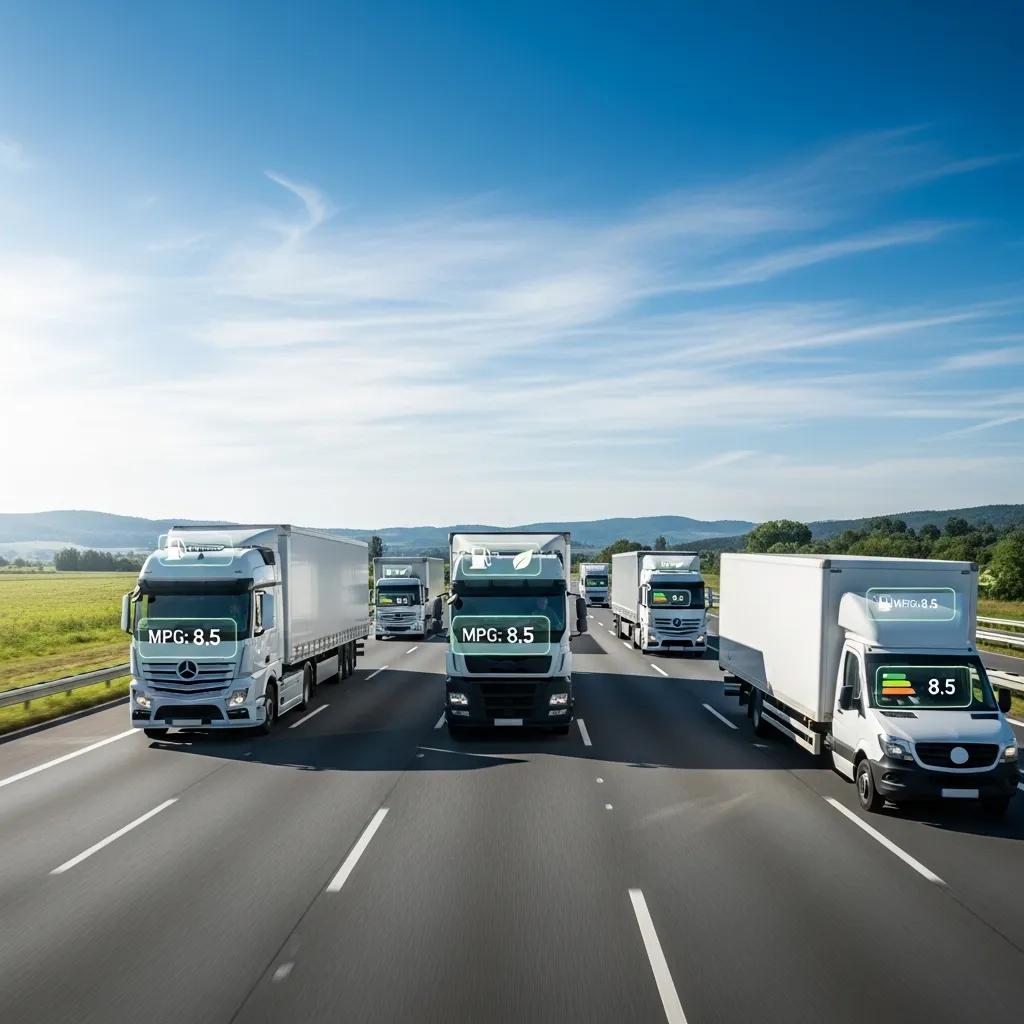
Slash Fuel Costs: Effective Strategies for Your Fleet
How to Cut Fleet Fuel Costs with Proven Strategies
Reducing fuel expenses is a critical concern for fleet managers aiming to optimize operational costs. With fluctuating fuel prices and increasing environmental regulations, finding effective strategies to manage fuel consumption is essential. This article explores various methods to slash your fleet’s fuel expenses, focusing on advanced technologies, driver behavior, route optimization, financial programs, maintenance practices, and emerging fuel-saving technologies. By implementing these strategies, fleet managers can achieve significant cost savings while enhancing overall efficiency. We will delve into the best technologies for monitoring fuel consumption, the impact of driver behavior, effective route optimization strategies, financial incentives, maintenance practices, and the latest innovations in fuel efficiency.
What Are the Best Technologies to Monitor and Reduce Fleet Fuel Consumption?
Technological advancements play a pivotal role in monitoring and reducing fuel consumption in fleets. By leveraging fleet management technologies, companies can gain insights into fuel usage patterns, identify inefficiencies, and implement corrective measures. Key technologies include GPS tracking devices and comprehensive fleet management systems that provide real-time data analytics. These tools not only help in tracking fuel consumption metrics but also enable proactive decision-making to enhance fuel efficiency.
How Do GPS Tracking Devices Help Control Fuel Costs?
GPS tracking devices are instrumental in controlling fuel costs by providing real-time location data and monitoring vehicle performance. These devices allow fleet managers to track routes, monitor speed, and analyze driving behavior, which directly impacts fuel consumption. For instance, by identifying instances of excessive idling or speeding, managers can implement corrective actions that lead to significant fuel savings. Additionally, GPS data can be used to optimize routes, reducing unnecessary mileage and fuel usage.
What Features Should a Fleet Management System Have for Fuel Efficiency?
An effective fleet management system should incorporate several key features to enhance fuel efficiency. These include:
- Integration with Fuel Management Tools: Seamless integration with fuel management systems allows for accurate tracking of fuel purchases and consumption.
- Driver Behavior Monitoring Capabilities: Systems that monitor driver behavior can provide insights into practices that lead to increased fuel consumption, enabling targeted coaching.
- Reporting and Analytics Features: Comprehensive reporting tools help fleet managers analyze fuel consumption trends and identify areas for improvement.
By utilizing these features, fleet managers can make informed decisions that lead to reduced fuel expenses.
How Does Driver Behavior Impact Fuel Efficiency and How Can Coaching Help?
Driver behavior significantly influences fuel efficiency, with certain practices leading to increased fuel consumption. Understanding these behaviors is crucial for implementing effective coaching strategies that can lead to substantial savings. By focusing on driver education and behavior modification, fleets can enhance their overall fuel management.
Which Driver Behaviors Increase Fuel Consumption?
Several driver behaviors are known to increase fuel consumption, including:
- Speeding: Driving at excessive speeds can lead to higher fuel consumption due to increased aerodynamic drag.
- Idling: Prolonged idling wastes fuel and contributes to unnecessary costs.
- Harsh Braking and Acceleration: Aggressive driving behaviors, such as rapid acceleration and sudden braking, can significantly reduce fuel efficiency.
By identifying and addressing these behaviors, fleet managers can implement strategies to improve fuel efficiency.
How Can Driver Scorecards and Coaching Reduce Fuel Expenses?

Implementing driver scorecards and coaching programs can effectively reduce fuel expenses by promoting better driving habits. Scorecards provide drivers with feedback on their performance, highlighting areas for improvement. Coaching techniques, such as one-on-one sessions and group training, can reinforce positive behaviors and educate drivers on fuel-efficient practices. Studies have shown that fleets that adopt these strategies can achieve measurable outcomes, including reduced fuel consumption and lower operational costs. fuel management
Indeed, studies have demonstrated the effectiveness of driver advisory tools and eco-driving techniques in achieving significant and sustained reductions in fuel consumption.
Eco-Driving & Driver Advisory Tools for Fuel Savings
ABSTRACT: Driver behaviour can strongly affect fuel consumption, and driver training in eco-driving techniques has been shown to reduce fuel consumption by 10% on average. However the effects of this training can be short-lived, so there is an apparent need for continuous monitoring of driver behaviour. This study presents a driver advisory tool which encourages eco-driving, and its evaluation in the field. The system, developed by Ashwoods Automotive Ltd (UK) and the University of Bath (UK), is aimed at fleet operators of light commercial vehicles, where the driver is typically a company employee. A significant strength of the system is that it has been designed for easy integration with the vehicle CAN-bus, reducing complexity and cost. By considering the Inertial Power Surrogate (speed times acceleration) the core algorithm is able to identify behaviour which is likely to increase fuel consumption. The algorithm also enforces the advice of the Gear Shift Indicator to encourage earlier upshift
A driver advisory tool to reduce fuel consumption, C Vagg, 2013
What Route Optimization Strategies Slash Fleet Fuel Expenses?
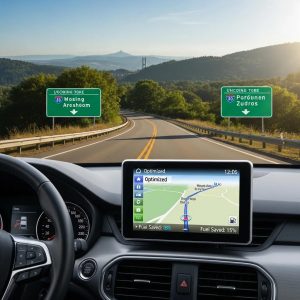
Route optimization is a critical strategy for reducing fuel expenses in fleet management. By planning efficient routes, fleets can minimize travel distances and reduce fuel consumption. Advanced technologies, such as AI-driven route planning tools, can significantly enhance this process.
How Does AI-Driven Route Planning Improve Fuel Efficiency?
AI-driven route planning utilizes real-time data and predictive analytics to determine the most efficient routes for fleet vehicles. These tools consider factors such as traffic patterns, weather conditions, and road closures to optimize routes dynamically. By reducing travel time and distance, fleets can achieve substantial fuel savings while improving delivery times and customer satisfaction.
Further research highlights the transformative potential of AI and IoT in revolutionizing route optimization systems for smarter, more sustainable logistics.
AI & IoT for Dynamic Fleet Route Optimization
This study presents a novel AI-driven approach to optimizing route planning and logistics management through reinforcement learning and cloud-based data platforms. The proposed system integrates real-time data from IoT-enabled devices, GPS tracking, traffic analysis, and weather forecasts to dynamically optimize delivery routes. By leveraging machine learning algorithms, the system can anticipate disruptions and make real-time adjustments, leading to a 98% on-t
Revolutionizing Route Optimization Systems with Artificial Intelligence for a Smarter, Sustainable Logistics Ecosystem, 2025
What Are Practical Steps to Implement Route Optimization?
To implement effective route optimization, fleet managers can follow these practical steps:
- Assess Current Routes: Analyze existing routes to identify inefficiencies and areas for improvement.
- Implement Technology Solutions: Invest in AI-driven route planning tools that provide real-time optimization capabilities.
- Monitor and Adjust Routes: Continuously monitor route performance and make adjustments as needed to ensure ongoing efficiency.
By following these steps, fleets can enhance their operational efficiency and reduce fuel expenses.
Which Financial Programs and Fuel Card Incentives Help Control Fleet Fuel Costs?
Financial programs and fuel card incentives can provide significant savings for fleets. By leveraging these programs, fleet managers can effectively manage fuel management expenses and improve overall cost control.
What Fuel Card Programs Offer the Best Savings for Fleets?
Several fuel card programs offer competitive savings for fleets, including:
- Discounted Fuel Prices: Many fuel card programs provide discounts at participating fuel stations, leading to immediate savings on fuel purchases.
- Detailed Reporting: Fuel cards often come with reporting features that allow fleet managers to track fuel usage and identify spending patterns.
- Fraud Prevention: Advanced security features help prevent unauthorized fuel purchases, ensuring that funds are used efficiently.
By selecting the right fuel card program, fleets can maximize their savings and streamline fuel management.
How Do Fuel Tax Incentives Reduce Overall Fleet Fuel Expenses?
Fuel tax incentives can reduce overall fleet fuel expenses by providing tax credits or rebates for fuel purchases in certain regions. These incentives vary widely by jurisdiction and may have specific eligibility requirements. Understanding local regulations and application processes is essential for maximizing these benefits where applicable.
How Does Fleet Maintenance Affect Fuel Consumption and Cost Control?
Regular fleet maintenance is crucial for optimizing fuel consumption and controlling costs. Well-maintained vehicles operate more efficiently, leading to reduced fuel expenses and improved overall performance.
An integrated approach to fleet management has been shown to significantly contribute to decreasing total maintenance costs and increasing energy efficiency.
Integrated Maintenance for Fleet Energy Efficiency
Integrated fleet maintenance management represents implementation of measures, actions and decision making with the aim of decreasing total maintenance costs and increasing energy efficiency fulfilling requirements of three interdependent components: transport, maintenance and their environment. Therefore, a methodology for integrated fleet maintenance management is developed and presented in this paper. The purpose of the methodology is to contribute in increasing fleet’s energy efficiency and evaluate managers’ fleet maintenance management efficiency. The methodology was implemented in the company with own light and medium goods vehicle fleet. According to realized values of defined indicators, the maintenance management has become more efficient in the observed period. It contributed to specific fuel consumption reduction per transport volume, thereby increasing fleet’s energy efficiency. Further, the fleet size was reduced, which affected the rational realization of the given transport volume in the observed period.
Influence of an integrated maintenance management on the vehicle fleet energy efficiency, DB Vujanović, 2018
What Maintenance Practices Improve Fuel Efficiency?
Implementing the following maintenance practices can enhance fuel efficiency:
- Regular Oil Changes: Keeping engines well-lubricated ensures optimal performance and fuel efficiency.
- Tire Maintenance: Proper tire inflation and alignment can reduce rolling resistance, leading to better fuel economy.
- Engine Tuning: Regular engine checks and tuning can help maintain optimal performance and fuel efficiency.
By prioritizing these maintenance practices, fleet managers can ensure their vehicles operate at peak efficiency.
How to Schedule Maintenance to Maximize Fuel Savings?
To maximize fuel savings through maintenance, fleet managers should:
- Timing of Maintenance Tasks: Schedule maintenance during off-peak hours to minimize disruption to operations.
- Integrate Maintenance with Operations: Coordinate maintenance schedules with operational needs to ensure minimal downtime.
- Monitor Fuel Savings Post-Maintenance: Track fuel consumption before and after maintenance to assess the impact of maintenance practices.
By following these scheduling strategies, fleets can enhance their maintenance efficiency and reduce fuel expenses.
What Emerging Fuel-Saving Technologies and Alternative Fuels Should Fleets Consider?
As the industry evolves, emerging fuel-saving technologies and alternative fuels present new opportunities for fleets to reduce fuel expenses. Staying informed about these innovations is essential for fleet managers looking to enhance efficiency.
How Are Alternative Fuels Impacting Fleet Fuel Costs?
Alternative fuels, such as biodiesel, compressed natural gas (CNG), and electric vehicles (EVs), are gaining traction in the fleet industry. These fuels can provide cost savings compared to traditional gasoline and diesel, especially as technology advances and infrastructure improves. By transitioning to alternative fuels, fleets can reduce their reliance on fossil fuels and potentially lower overall fuel costs.
What New Technologies Are Revolutionizing Fuel Efficiency?
Innovative technologies are continuously emerging to enhance fuel efficiency in fleet management. Some notable advancements include:
- Telematics Systems: These systems provide real-time data on vehicle performance, enabling proactive maintenance and fuel management.
- Hybrid and Electric Vehicles: The adoption of hybrid and electric vehicles can significantly reduce fuel consumption and emissions.
- Advanced Driver Assistance Systems (ADAS): These systems help drivers maintain optimal driving habits, contributing to improved fuel efficiency.
By embracing these technologies, fleets can position themselves for long-term success in fuel management and cost control.
Jeff Stoker is the CEO and founder of Safety Track, a company he established in 2002. With over two decades of leadership in fleet management solutions, Jeff has guided Safety Track from a pioneering vision to a trusted industry leader. His innovative mindset and commitment to excellence continue to drive the company’s growth and impact.