
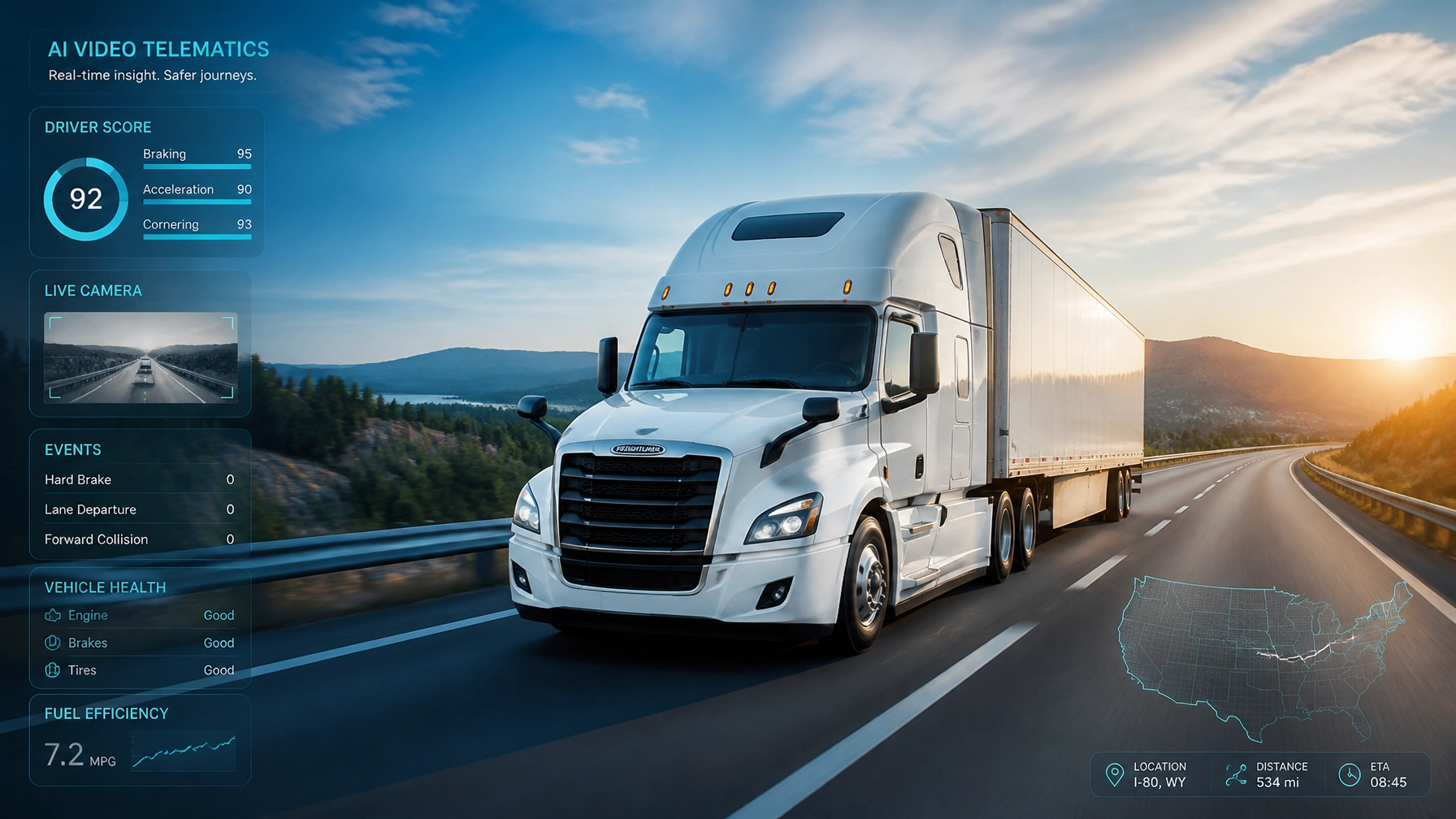
Building a Positive Fleet Safety Culture with AI Video Telematics
National Safety Month serves as a critical annual reminder for fleet managers to evaluate their safety protocols and driver relations. While the primary goal of any safety program is to ensure every driver returns home safely, the methods used to achieve this have evolved significantly. For years, the introduction of cameras in cabs was met with skepticism and labeled as “Big Brother” surveillance. However, the industry is undergoing a paradigm shift.
The focus is moving away from catching mistakes and toward celebrating excellence. By leveraging modern video telematics solutions, companies are transforming the narrative from punitive monitoring to positive reinforcement. This transition from “Gotcha” to “Good Job” is not just about morale; it is a strategic move that enhances retention, reduces insurance costs, and builds a culture of mutual trust.
Understanding the ‘Big Brother’ Stigma
The initial resistance to fleet cameras often stems from a fear of micromanagement. Drivers, who often take great pride in their professional independence, may view in-cab technology as a tool for “gotcha” moments: where a single mistake is used as grounds for discipline without context. This perception can lead to high turnover and a toxic work environment where drivers feel undervalued.
To build a successful safety culture, fleet managers must first address this stigma head-on. Transparency is the most effective tool in this regard. Managers should communicate exactly what the cameras record, who has access to the footage, and most importantly, how the data will be used. When drivers understand that the best dash cam for fleet vehicles is actually there to protect them from false claims and help them improve their skills, the technology becomes a partner rather than a monitor.
AI as a Co-Driver, Not a Cop
The technological leap from traditional dash cams to AI-enhanced systems has changed the rules of engagement. Traditional systems required a manager to manually review hours of footage to find an incident. In contrast, modern AI systems act as a real-time co-driver.
AI-driven fleet cameras can detect high-risk behaviors such as fatigue, distraction, and tailgating as they happen. Instead of waiting for a weekly review, the system provides immediate, in-cab audio alerts. This allows drivers to self-correct in the moment. When a driver receives a gentle nudge to increase their following distance, they are being empowered to prevent an accident before it occurs. This proactive approach shifts the responsibility of safety back to the driver, fostering a sense of autonomy and professional growth.

Data-Driven Coaching: Fairness in the Front Seat
One of the most significant benefits of video telematics solutions is the objectivity they bring to coaching sessions. Traditional coaching often relied on hearsay or the subjective observations of a supervisor. This can lead to feelings of bias or unfair treatment.
With AI video data, the conversation changes. Managers can look at specific, high-risk events alongside the driver and discuss the “why” behind the behavior. For example, if a harsh braking event is flagged, the video might show that the driver was cut off by another vehicle. In this scenario, the coaching session doesn’t end with a reprimand; it ends with a “Good Job” for the driver’s quick reaction that prevented a collision.
By using vehicle tracking data integrated with video, managers can see the full context of every mile driven. This level of detail ensures that coaching is fair, consistent, and focused on development rather than punishment.
Implementing a Rewards Program: Celebrating the ‘Good Job’
To truly move the needle on safety culture, fleets should look for ways to turn data into rewards. National Safety Month is the perfect time to launch a “Safety Leaderboard” or a driver recognition program.
Using the metrics provided by your telematics system, you can track positive behaviors such as:
- Consistent adherence to speed limits.
- Zero incidents of distracted driving over a set period.
- Safe following distances in heavy traffic.
- Collision-free mileage milestones.
These metrics can be tied to tangible rewards, such as gift cards, bonuses, or even preferred routes. Publicly recognizing “Safe Driver of the Month” during safety meetings reinforces the idea that the company values and notices professional behavior. When the goal is to reach the top of a leaderboard rather than avoid a “gotcha” clip, drivers are more likely to engage with the technology enthusiastically.

The ‘Unbiased Witness’ – Protecting Your Drivers
While rewards are essential, perhaps the most persuasive argument for drivers is the protection a camera provides. In the event of an accident, a driver’s word is often pitted against that of a passenger vehicle operator. Without visual evidence, the professional driver often bears the brunt of the blame.
The AI-enhanced camera systems offered by Safety Track act as an unbiased witness. We have seen countless instances where video evidence exonerated a driver within minutes of an incident, preventing a false claim from ruining their professional record. This protection is a powerful incentive. Knowing that the company “has their back” with solid evidence builds a level of loyalty that is hard to achieve through other means.
National Safety Month Action Plan
If you are looking to revitalize your fleet’s safety culture this June, consider the following rollout plan for your video telematics solutions:
- Host a Town Hall: Gather your drivers and explain the transition to AI-assisted safety. Highlight how the system protects them and provides real-time help.
- Define Success: Clearly outline the behaviors that will be rewarded. Make sure these goals are attainable and measurable.
- Audit Your Coaching: Ensure your managers are trained to use video as a tool for positive reinforcement. Every coaching session should include at least one positive observation.
- Showcase Success: Share (with permission) clips of “near-miss” saves where the driver’s skill prevented an accident. Use these as teaching moments for the whole team.
- Review the Data: Use National Safety Month to analyze your long-term trends. Are accidents decreasing? Is asset tracking showing better route efficiency? Share these wins with the entire company.

Investing in Long-Term Retention
The transportation industry faces ongoing challenges with driver retention. High-stress environments and the feeling of being “watched” only exacerbate the problem. By flipping the script and using technology to support and reward drivers, companies can significantly improve job satisfaction.
A driver who feels supported by their technology is a driver who stays. They see the best dash cam for fleet vehicles not as an intruder, but as a piece of safety equipment as vital as their seatbelt or brakes. Over time, this builds a resilient safety culture where drivers take ownership of their performance and take pride in their safety scores.
Staying ahead of telematics trends for 2026 means recognizing that the future of fleet management is as much about human psychology as it is about hardware.
Moving Forward with Safety Track
At Safety Track, we understand that no two fleets are the same. Our custom-tailored solutions are designed to fit your specific operational needs while prioritizing the human element of your business. Our AI-enhanced systems provide the visibility you need to reduce accidents by up to 40% and insurance costs by up to 25%, all while fostering a positive environment for your drivers.
This National Safety Month, don’t just monitor your fleet: empower it. Transform your safety culture from a game of “Gotcha” into a consistent stream of “Good Jobs.”


Tyler Schneider is the IT Director at Safety Track, overseeing the company’s technological infrastructure and innovations. With a strong background in information technology and systems management, Tyler ensures that Safety Track stays at the forefront of tech solutions in fleet management. His strategic expertise supports the seamless integration of technology across the company’s operations.