
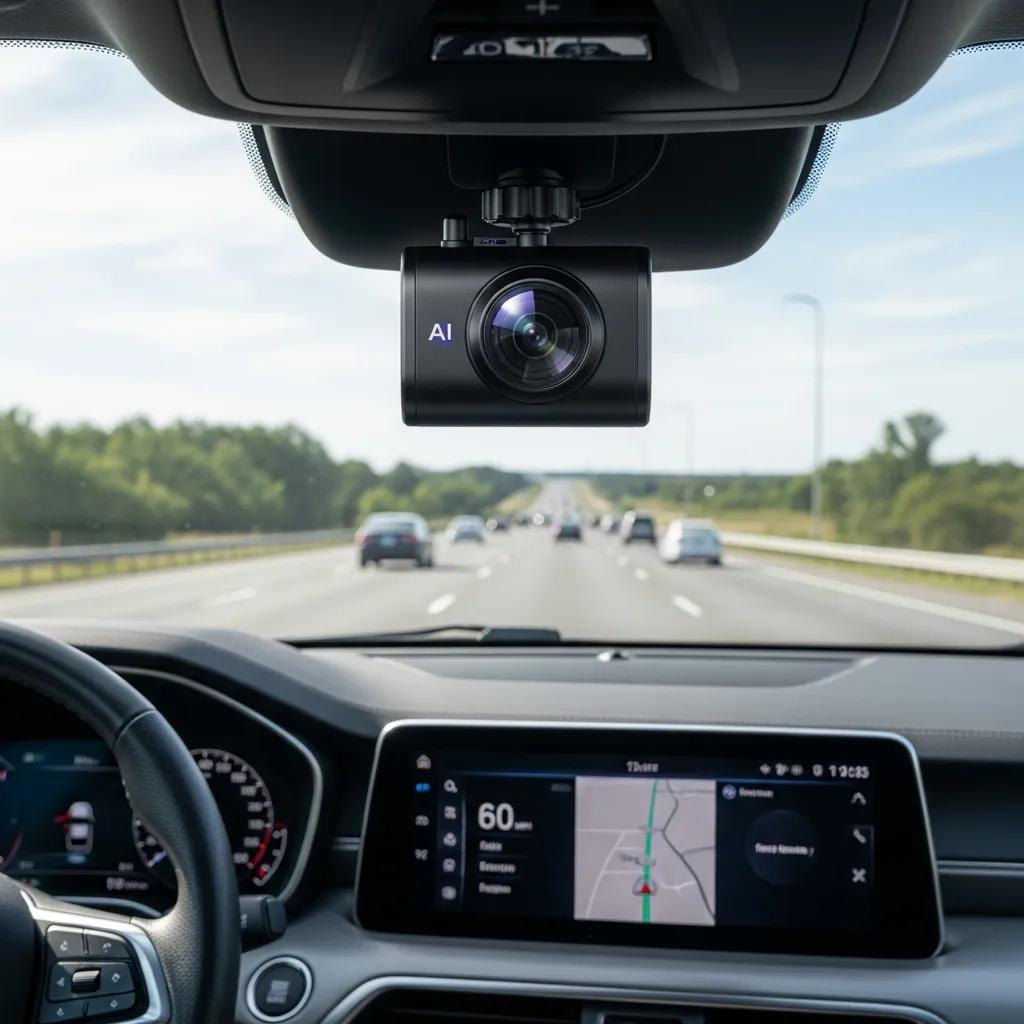
Enhance Fleet Efficiency with AI Dash Cameras for Management
AI dash cameras combine continuous video capture with on-device and cloud AI analytics to convert raw footage into actionable safety and operational intelligence for commercial fleets. This article explains how AI video telematics work, which core features drive measurable safety improvements, and how fleets can choose, deploy, and measure the return on investment of an AI dash camera program. Fleet managers facing rising insurance costs, regulatory complexity, and driver safety challenges will find practical guidance on hardware choices, storage and connectivity trade-offs, integration with telematics, and strategies for driver acceptance. The guide maps industry-specific use cases for construction, food distribution, public works, and general transportation, and it includes decision matrices, EAV comparison tables, and sample ROI scenarios to support procurement and finance teams. Throughout, we use semantic concepts like driver behavior monitoring AI, edge computing, and video analytics to show how video telematics integrates with broader fleet management technology and to help teams craft a defensible deployment plan.
What Are AI Dash Cameras and How Do They Enhance Fleet Management?
AI dash cameras are vehicle-mounted systems that record video and apply computer vision and machine learning to detect driving events, monitor driver behavior, and generate alerts and structured incident data. They work by combining road-facing and optionally driver-facing sensors with an AI inference module that classifies events (hard braking, lane departure, distraction) and tags relevant clips for review. The result is immediate operational value: real-time coaching, prioritized incident review, and reliable evidence that supports claims handling and compliance workflows. This shift from passive recording to active analytics reduces time spent searching footage and increases the signal-to-noise ratio for safety teams, enabling faster corrective actions and more effective training programs. Understanding this mechanism leads directly to how AI dash cams differ from legacy dash cams and which AI features most directly improve driver monitoring and safety.
How Do AI Dash Cameras Differ from Traditional Dash Cams?
Traditional dash cams primarily capture continuous video for later review, creating large volumes of unstructured footage that require manual searching after incidents. AI dash cameras add an analytics layer that detects events in real time, tags clips automatically, and surfaces only the most relevant footage to fleet managers and safety coaches. This difference transforms video from passive evidence into proactive telemetry: incidents trigger alerts, coaching prompts, and automated reports rather than simply creating archives. Practical advantages include reduced investigation time, prioritized forensic evidence for insurers, and automated scorecards that feed coaching workflows. Comparing these approaches clarifies why fleets moving from conventional cameras to AI-enabled systems experience faster incident resolution and more measurable behavior change among drivers.
What Core AI Features Improve Driver Monitoring and Safety?
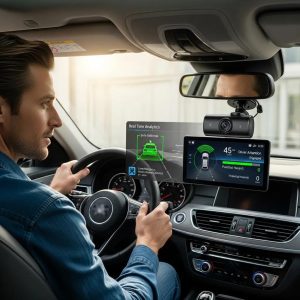
Core AI features combine driver-facing and road-facing analytics to create comprehensive driver monitoring systems that prevent risky behaviors before they escalate into incidents. Driver-facing analytics use facial and head-pose detection, eye-closure metrics, and distraction heuristics to detect fatigue and in-cab distractions, while road-facing analytics apply lane and object detection, forward-collision heuristics, and scene classification to identify external hazards. Event prioritization and automated tagging reduce false positives by correlating sensor inputs with vehicle telemetry such as speed and harsh braking, which improves the quality of coaching data. These capabilities underpin effective safety programs by converting raw sensor data into clear, actionable insights that safety managers can use to tailor interventions and measure improvement over time.
What Are the Top AI Dash Cam Features for Fleet Safety and Efficiency?
AI dash cam systems bundle hardware, connectivity, analytics, and integrations to serve operational and safety needs across diverse fleets. At the hardware level, options range from single road-facing cameras to multi-camera rigs that include dual-facing sensors for in-cab monitoring and externally oriented cameras for complex sightlines. Connectivity choices—edge processing, intermittent upload, or constant cloud streaming—shape costs and latency for alerts, while storage options (local SD/NVR, cloud, or hybrid) affect retention policies and retrieval speed. Integration with telematics and fleet management platforms lets video events trigger workflows such as maintenance flags, driver score updates, or insurer notifications. These system-level decisions determine whether a deployment prioritizes immediate coaching, low-bandwidth operation, or centralized analytics, and they guide procurement toward solutions that match a fleet’s operational constraints.
Key system features to evaluate include:
- Camera topology and mounting: The number and placement of cameras determine coverage and the types of events that can be detected.
- AI analytics and inference location: Edge AI reduces latency for real-time alerts while cloud analytics enable deeper historical analysis.
- Connectivity and bandwidth management: Data plans and cellular options affect per-vehicle operating costs and upload frequency.
- Storage and retention policies: Local short-term storage plus selective cloud upload balances retrieval speed with cost control.
This comparison shows how hardware and analytics placement influence response times and data costs. Selecting the right balance between edge and cloud capabilities is central to an effective fleet strategy.
Which AI Dash Cam Features Support Real-Time Driver Coaching?
Real-time coaching depends on immediate detection, intuitive in-cab alerting, and integration with driver scorecards to create a feedback loop that changes behavior. Effective features include audible in-cab alerts that interrupt dangerous behavior, configurable thresholds to minimize false alarms, and dashboard workflows that summarize events for coaching sessions. Integration with a coaching platform allows events to be tied to corrective actions, personalized training, and performance incentives, which increases driver engagement and measurable improvement. Best practices include piloting alert thresholds, combining positive reinforcement with corrective feedback, and configuring workflows so coaches receive high-signal clips first to maximize coaching time.
Features enabling real-time coaching typically include:
- Audible/silent in-cab alerts that immediately notify drivers of risky behavior.
- Customizable sensitivity settings to tailor detection rates for different vehicle types and routes.
- Automated clip delivery to coaching dashboards prioritized by severity.
How Do Storage and Connectivity Options Impact Fleet Operations?
Storage and connectivity decisions determine how much footage is retained, how quickly incidents can be reviewed, and the recurring network costs of a program. Edge-first approaches store and analyze much of the data on-device, uploading only prioritized clips to the cloud, which minimizes bandwidth usage and reduces recurring cellular costs. Cloud-first strategies enable comprehensive historical analysis and centralized retention policies but increase data transfer and storage expenses. Hybrid models combine both approaches: short-term local buffers with scheduled or triggered cloud uploads for events and summaries. Retention policies must align to regulatory and insurer requirements while balancing cost; for some fleets, short retention with selective cloud archival for incidents is the most cost-effective approach.
Choosing the right mix reduces monthly operating costs and guarantees that the most critical clips are available quickly when claims or audits arise.
How Do AI Dash Cameras Benefit Fleet Safety and Operational Efficiency?
AI dash cameras deliver measurable safety and operational benefits by preventing incidents, speeding investigations, and feeding analytics that optimize routes and maintenance. Video evidence accelerates claims adjudication and deters fraudulent claims, while behavioral insights help reduce risky driving through targeted coaching. Operationally, correlating video events with telematics data improves route adherence, identifies inefficient driving patterns like prolonged idling, and flags vehicles for timely maintenance based on event frequency. Together, these outcomes lower total cost of ownership by reducing incident-related downtime, decreasing claim payouts, and improving fuel efficiency through behavior-based interventions. The following subsections explore how these systems reduce insurance costs and improve compliance and accountability.
Three principal benefits for fleets:
- Improved safety: Early detection and coaching reduce incident rates and severity.
- Lower operational costs: Fewer incidents and optimized driver behavior reduce insurance and fuel costs.
- Stronger compliance: Automated logs and searchable clips support audits and regulatory defense.
These benefits compound over time as a data-driven program matures and fleet policies adapt to insights from video telematics.
In What Ways Do AI Dash Cameras Reduce Insurance Costs and Fraud?
AI dash cameras reduce insurance exposure by providing clear, time-stamped video evidence that helps validate claims and disprove false or exaggerated reports. When footage corroborates telematics data—speed, braking, route—insurers can more quickly determine liability, which often lowers the administrative and legal costs of settlements. Video analytics also help detect patterns consistent with staged or fraudulent claims by flagging inconsistencies between reported events and recorded footage. Over time, fleets that consistently provide verified incident evidence can use aggregated performance data to negotiate better premiums or obtain insurer discounts tied to risk reduction metrics.
Ways video telematics support insurance outcomes:
- Evidence-backed claims handling that shortens investigation cycles.
- Fraud detection via cross-checked telemetry and video to identify discrepancies.
- Performance-based discussions with insurers using quantifiable safety improvements.
Clear documentation and reliable footage enable better insurer relationships and often translate to tangible cost savings.
How Do AI Dash Cameras Improve Compliance and Driver Accountability?
Automated, time-stamped event logs and searchable clip libraries create an auditable trail that supports regulatory compliance and internal policy enforcement. Driver scorecards and coaching records provide documented steps taken after incidents, which are useful during regulatory reviews and internal investigations. Role-based access controls and retention policies allow fleets to manage who can view sensitive footage, ensuring accountability while respecting privacy. By converting raw video into structured reports, AI dash cameras make it easier for compliance teams to demonstrate proper supervision, corrective action, and continuous improvement to auditors and insurers.
Compliance-enabling capabilities include:
- Automated event logs that align with inspection and reporting workflows.
- Driver scorecards and coaching histories for audit trails.
- Access controls and retention rules to meet legal and privacy requirements.
These systems formalize accountability and simplify the documentation necessary for regulatory defense and insurer audits.
How Can Fleet Managers Choose the Right AI Dash Camera System?
Choosing the right system starts with clear objectives: define the primary use cases (safety, claims reduction, compliance), quantify success metrics, and identify technical constraints like bandwidth budgets and integration points. A vendor evaluation checklist should include AI accuracy for key events, hardware durability for vehicle types, ease of installation, APIs for telematics integration, and support for privacy controls and retention policies. Total cost of ownership (TCO) analysis must account for hardware, installation, subscription fees, cellular data, and the expected reduction in claim and operational costs. Procurement teams should pilot options in representative vehicles to validate detection thresholds and driver acceptance before fleet-wide rollout.
Key selection steps:
- Define use cases and KPIs such as incidents per 100k miles and average claim cost reduction.
- Assess technical compatibility focusing on telematics, VMS, and API integrations.
- Estimate TCO including hardware, connectivity, storage, and support costs.
Safety Track offers enterprise-grade AI Dash Cameras and AI Fleet Cameras designed to integrate AI-enhanced camera products with GPS tracking and telematics platforms. For fleet managers evaluating solutions, Safety Track’s product pages and solution descriptions provide examples of systems that combine real-time alerts, driver coaching, and analytics designed for industries such as construction, transportation, and public works. This article also supports Safety Track’s raw content intent: Increase traffic to product and solutions content by educating buyers on technical and operational trade-offs. Fleet teams should still validate AI detection accuracy and integration depth through pilots before committing to full deployment.
What Industry-Specific AI Dash Cam Solutions Are Available?
Different industries present unique camera and analytics requirements that shape recommended features and hardware. Construction fleets need ruggedized mounts and vibration-resistant hardware to withstand heavy equipment; food distribution fleets prioritize route integrity and proof-of-delivery documentation combined with temperature-sensitive chain-of-custody workflows; public works fleets require privacy-aware deployments and integration with municipal asset management systems. Tailoring camera topology and analytics sensitivity to vehicle type and duty cycle produces higher signal quality and reduces false positives. Industry-specific customization increases adoption and ensures the system delivers value in the environments where fleets operate.
Industry tailoring examples:
- Construction: Use external side-angle cameras and reinforced mounting to capture blind-spot events.
- Food distribution: Integrate timestamped proof-of-delivery clips with route telemetry for compliance.
- Public works: Balance driver-facing monitoring with privacy protections appropriate to municipal policies.
What Should Be Considered for AI Dash Cam Installation and Integration?
Installation planning should include a pre-installation survey to determine mounting points, wiring pathways, and vehicle downtime minimization strategies. Fleets may choose plug-and-play units for rapid deployment or hardwired installations for cleaner integration and backup power. Integration with fleet management systems requires API compatibility and clear mapping of event types to downstream workflows such as maintenance triggers or coaching assignments. Training programs for drivers and dispatchers reduce false positives and accelerate acceptance, while staged rollouts (pilot, evaluation, scale) minimize operational disruption. Clear timelines, rollback plans, and support SLAs are essential to a successful deployment.
Installation checklist highlights:
- Site survey and mounting plan to identify optimal camera angles and wiring routes.
- Integration mapping to ensure events trigger the right telematics and maintenance workflows.
- Driver and dispatcher training to explain alerts, appeals, and coaching processes.
How Does Driver Monitoring with AI Dash Cameras Improve Fleet Performance?
Driver monitoring links behavior detection to coaching workflows and operational KPIs, producing sustained improvements in risk profile and efficiency. By tracking metrics such as instances of harsh braking, distracted driving events, and speed compliance, fleet managers can quantify behavior change and correlate it with downstream outcomes like fuel consumption and incident rates. Structured coaching based on prioritized clips turns reactive review into continuous performance improvement, while incentives tied to scorecards motivate drivers to adopt safer behaviors. The combined effect is fewer incidents, lower insurance exposure, and operational gains in fuel efficiency and route adherence.
Performance improvements typically include:
- Lower incident frequency from targeted behavioral coaching.
- Fuel and idle reductions driven by adherence to efficient driving practices.
- Improved route performance via recorded evidence of deviations and corrective actions.
These operational gains are measurable and can be tracked over successive quarters to demonstrate program maturity.
What Are the Best Practices for Implementing AI-Driven Driver Coaching?
Best practices for implementing coaching begin with a pilot that tests detection thresholds and coaching workflows in representative routes and vehicle types. Coaching should be balanced: emphasize positive reinforcement for safe driving behaviors while providing corrective feedback when necessary, and use short, focused coaching sessions backed by high-quality clips. Establish measurable KPIs (incident rate per 100k miles, average driver score improvement) and review cadence (weekly summaries, monthly deep-dive reviews) to maintain momentum. Transparent policies and mechanisms for driver feedback increase acceptance and reduce perceptions of punitive surveillance.
Coaching program template elements:
- Pilot phase to calibrate alerts and gather baseline KPIs.
- Balanced coaching cadence combining immediate feedback and scheduled reviews.
- Incentive programs to reward measurable safety improvements.
Adopting these best practices accelerates behavior change and ensures coaching resources are applied where they will have the greatest impact.
How Do AI Dash Cameras Detect and Prevent Distracted or Fatigued Driving?
AI detection of distraction and fatigue combines facial landmarking, eye-closure metrics, head-pose estimation, and temporal patterns to infer driver state. Algorithms compute features like blink rate and gaze deviation and apply threshold logic tested in pilot deployments to minimize false alarms. Prevention workflows use escalating interventions: an initial in-cab alert for minor deviations, a persistent alert and immediate supervisor notification for repeated events, and scheduling triggers that recommend breaks for fatigue indicators. Integrating detection with dispatch and scheduling systems enables automatic reassignment or mandated rest, reducing the chance that a fatigued driver remains on route.
Detection and prevention mechanisms include: AI dash cameras.
- Facial and head-pose analytics for distraction and gaze estimation.
- Blink and eye-closure metrics to infer microsleeps or fatigue.
- Escalation workflows linking alerts to dispatch and scheduling actions.
These combined measures enable proactive interventions that prevent incidents before they occur and support safer operational decisions.
What Is the Return on Investment for AI Dash Camera Implementation?
Calculating ROI requires identifying cost centers that AI dash cameras impact—claims and settlements, insurance premiums, fuel inefficiencies, and maintenance—and estimating the percent reduction attributable to a video telematics program. A basic ROI framework uses conservative, typical, and aggressive scenarios with inputs for average claim cost, incident frequency, expected reduction in incidents, subscription and connectivity costs, and hardware amortization. The formula compares annualized savings to annual cost to produce payback and multi-year ROI estimates. Using sample scenarios helps procurement and finance teams understand the range of possible outcomes and make evidence-based investment decisions.
These example scenarios demonstrate how varying the expected incident reduction and data cost assumptions changes the payback timeline. Fleet managers should populate scenarios with fleet-specific numbers to produce accurate TCO and ROI estimates.
How Can Fleet Managers Calculate Cost Savings from AI Dash Cameras?
A step-by-step calculation starts by listing input variables: average claim cost, annual incident frequency per vehicle, expected incident reduction percentage achievable through AI monitoring, per-vehicle subscription and connectivity costs, and hardware amortization schedule. Multiply the baseline incident cost (average claim cost × incidents per year) by the expected reduction percentage to estimate annual claims savings per vehicle. Then subtract the per-vehicle recurring program costs to get net annual savings, and calculate payback as hardware cost divided by net annual savings. Conservative, typical, and aggressive scenarios allow sensitivity analysis and provide procurement with defensible justification for investment.
Calculation workflow:
- Gather inputs: average claim cost, incidents/year, expected reduction %, subscription and data costs.
- Compute gross savings: baseline incident cost × reduction %.
- Derive net savings: gross savings − recurring costs (connectivity, subscription) = net annual savings.
Using fleet-specific inputs in this template creates a spreadsheet-ready model that stakeholders can review and validate.
Safety Track’s product and solutions materials include example ROI frameworks and industry-specific case templates that illustrate typical timelines for insurance savings, operational gains, and payback calculations. For fleets seeking vendor comparisons, Safety Track’s AI Dash Cameras and AI Fleet Cameras are presented as enterprise-grade examples that combine AI-enhanced detection with GPS tracking and telematics integration. Teams should use pilot data to refine ROI assumptions and include conservative estimates to ensure realistic projections. case studies are essential for evaluating these solutions.
What Case Studies Demonstrate Measurable Benefits of AI Dash Cameras?
Case studies typically follow a structure of challenge, solution, result, and lessons learned. A logistics fleet might document a challenge of frequent rear-end incidents during urban stops, deploy dual-facing cameras with in-cab coaching, and report a measurable reduction in incidents and claim costs after six months. A construction contractor could outline how ruggedized multi-camera systems reduced blind-spot collisions on sites and improved compliance records. Consistent formatting that includes baseline metrics, timelines, and quantified outcomes—incidents per 100k miles, percentage reduction in claims, or change in insurer premium—makes these case studies compelling for internal stakeholders and insurers.
Elements to include in a case study:
- Problem statement and fleet profile to set context.
- Implementation approach and timeline describing piloting and scale.
- Quantified outcomes and lessons with before/after metrics.
Well-documented case studies help replicate success across similar fleets and strengthen insurer negotiations.
What Are Common Driver Concerns About AI Dash Cameras and How Are They Addressed?
Drivers commonly worry about privacy, misuse of footage, and unfair disciplinary actions, so a successful program explicitly addresses these concerns through transparent policies, role-based access controls, and driver involvement in program design. Privacy safeguards can include video redaction, limited retention for non-incident footage, and audit logs that record who accessed clips and why. Communicating the program’s safety-first goals, providing clear appeals processes, and including drivers in pilot feedback loops reduce resistance and foster buy-in. These measures balance the fleet’s need for accountability with respect for driver privacy, creating a sustainable safety culture.
Core approaches to addressing concerns:
- Transparency: Publish clear policies on recording, retention, and access.
- Technical controls: Use role-based access and redaction tools for sensitive footage.
- Driver engagement: Solicit feedback and use pilots to refine policies.
Addressing concerns proactively increases acceptance and improves the long-term success of the program.
How Is Driver Privacy Protected with AI Dash Camera Systems?
Privacy protection relies on both technical measures and governance. Role-based access controls ensure only authorized personnel can view incident clips, and audit logs provide accountability for access events. Video redaction tools can blur faces or license plates where appropriate, and retention policies limit how long routine footage is stored unless flagged for incidents. Legal and HR teams should collaborate to produce clear notices and consent procedures where required, and training should explain what footage is used for coaching versus disciplinary action. These combined practices protect privacy while preserving the evidence necessary for safety and compliance.
Privacy safeguards include: fleet safety and compliance
- Role-based access and audit logging to track and control viewers.
- Automated redaction options for non-essential sensitive information.
- Retention policies aligned to legal and operational needs.
These practices help fleets meet regulatory expectations and maintain driver trust.
How Can AI Dash Cameras Be Positioned as Tools for Driver Safety, Not Surveillance?
Framing the program around safety and professional development shifts perception away from surveillance. Emphasize benefits that matter to drivers—exoneration when they are not at fault, coaching for career development, and potential incentive programs tied to safety performance. Involve drivers in pilot design, communicate transparency about data use, and ensure appeals processes exist so drivers can contest footage interpretations. Positive messaging, combined with tangible examples of drivers being cleared by footage, reinforces the program’s safety-first orientation and encourages participation.
Communication and program design tips:
- Highlight exoneration use cases where footage protects drivers.
- Include drivers in program governance and feedback mechanisms.
- Offer incentives and recognition tied to safety metrics.
This approach increases acceptance and transforms the technology into a career-support tool rather than a punitive surveillance device.
What Are Frequently Asked Questions About AI Dash Cameras for Fleet Management?
This FAQ section answers common practical questions that procurement, safety, and operations teams ask when evaluating video telematics.
What Is an AI Dash Cam and How Does It Work?
An AI dash cam is a camera system that captures video and applies machine learning and computer vision to detect events, generate alerts, and tag clips for review. Sensors include road-facing and optional driver-facing cameras, GPS, and sometimes accelerometers; an AI inference module processes inputs on-device or in the cloud to classify events. The typical outputs are prioritized clips, event logs, driver scorecards, and alert notifications that feed into coaching and operations workflows. This combination of sensing and analytics transforms raw footage into actionable intelligence that fleets can use to reduce incidents and support claims.
The integration of IoT and AI in fleet management offers a comprehensive framework for enhancing efficiency, safety, and sustainability.
IoT and AI Framework for Smart Fleet Management: Efficiency, Safety, and Sustainability
The Internet of Things (IoT) and Artificial Intelligence (AI) have driven a paradigm shift in fleet management providing organizations to monitor, manage and even optimize their vehicle operations. This article presents an IoT and AI enabled framework for Smart Fleet Management, wherein real-time data, predictive analytics and automation are used for efficient, safe and green fleets. The IoT devices based in automobiles sense and collect data on the consumption of (fuel), engine diagnostics, the environmental conditions at which the automobile is being driven, senvironmental conditions of the automobile driving behavior, and send this to a central virtual platform for analysis. Such AI systems analyze data and pick up the pattern which helps for predictive maintenance, which is a core part of this architecture that helps minimize vehicle downtime and reduces maintenance costs by doing proper identification of potential faults at the right time. The AI also routes better, ensuring vehicles travel down the most efficient roads, have lower emissions and use less fuel, while still ensuring timely deliveries. The proposed architecture also gives the safety of its Advanced Driver Assistance Systems (ADAS) by detecting dangerous driving actions and reactions. Additionally, AI can also be used to fund sustainability programs by forecasting fuel consumption, emission, and fleet corrosion to cut down the carbon footprint of the fleet’s activity. This holistic approach through the synergy of IoT’s data collection capabilities and AI’s intelligent decision-making processes can turn traditional fleet management into a more proactive data-driven and sustainable business.
Internet of things (IoT) and artificial intelligence (AI) enabled framework for smart fleet management, PR Potdar, 2025
Can AI Dash Cameras Reduce Fleet Insurance Costs?
Yes, AI dash cameras can reduce insurance costs by providing reliable evidence for claims, enabling faster investigations, and demonstrating measurable safety improvements to insurers. Video evidence decreases dispute time, and aggregated safety data supports negotiations for premium adjustments or programmatic discounts. To capture insurer benefits, fleets should document baseline incident metrics, run a pilot to gather evidence of improvement, and present verified results and retention policies during insurer discussions. Over time, documented reductions in incidents and improved driver scores create a compelling case for lower premiums.
- Pilot the system to gather baseline and post-deployment metrics that insurers can verify.
- Document retention and access policies to address insurer and regulatory concerns.
- Use aggregated, anonymized performance data when negotiating program-level discounts.
These steps make the insurer conversation data-driven and increase the likelihood of premium reductions.
- Next steps for procurement teams: run a pilot in representative vehicles to validate detection accuracy and costs.
- Operational checklist: define KPIs, map integrations, and create training materials for drivers and coaches.
- Measurement: track incident rates, claim costs, and driver score improvements quarterly to demonstrate ROI.
This FAQ set offers direct, actionable answers to support immediate planning and to help organizations move from evaluation to pilot and scale.

Hannah Lang is a Social Media Marketing Specialist at Safety Track. She has her bachelor’s degree in Advertising and Public Relations from Grand Valley State University. With her passion for research, Hannah possesses a wealth of knowledge expanding across multiple industries and disciplines. Her efforts won her a Scholastic Art and Writing regional Gold Key award.