
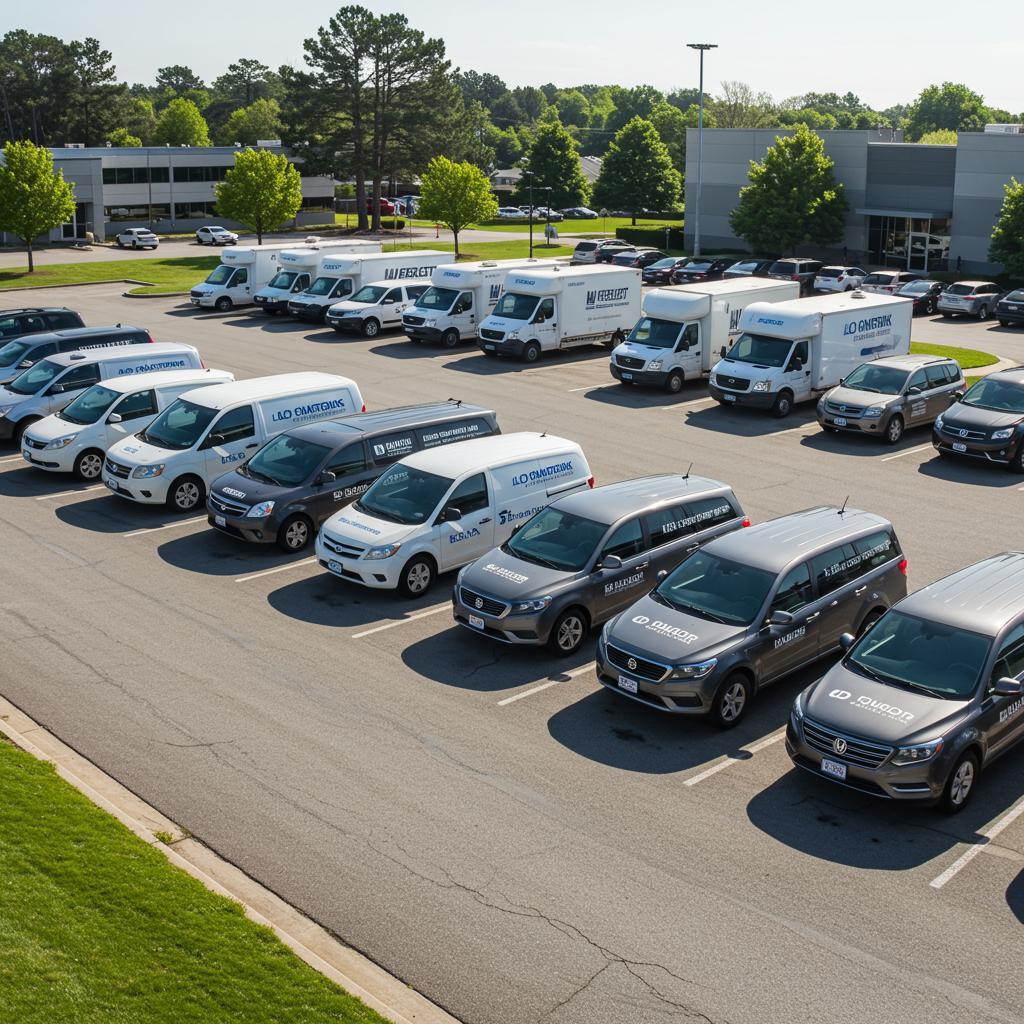
Why Your Business Needs AI Fleet Tracking Now
Why Your Business Needs AI Fleet Tracking Now
In an era where efficiency and real-time data are paramount, AI fleet tracking has emerged as a game-changer for businesses managing vehicle fleets. This technology not only enhances operational efficiency but also provides critical insights that can lead to significant cost savings. As companies face increasing pressure to optimize their logistics and improve service delivery, the integration of AI in fleet management becomes essential. This article will explore the myriad benefits of AI fleet tracking, including real-time monitoring, predictive maintenance, route optimization, and enhanced safety compliance. By understanding these advantages, businesses can make informed decisions about adopting AI solutions to streamline their operations and improve their bottom line.
Benefits of AI in Fleet Management
AI fleet management offers a range of benefits that can transform how businesses operate their vehicle fleets. By leveraging advanced algorithms and data analytics, companies can achieve higher operational efficiency, reduce costs, and improve safety standards. The integration of AI technologies allows for better decision-making and resource allocation, ultimately leading to enhanced productivity.
Safety Track specializes in AI-powered fleet tracking solutions designed to enhance real-time monitoring and management of vehicle fleets. This technology not only streamlines operations but also ensures compliance with safety regulations, making it a vital tool for modern businesses.
Further research underscores how AI applications are revolutionizing intelligent fleet management by optimizing real-time routing and significantly reducing operational costs.
AI for Intelligent Fleet Management: Real-Time Routing & Cost Reduction
This study examined the impact of artificial intelligence (AI) applications on intelligent fleet and delivery management, focusing specifically on real-time routing, adaptive scheduling, and performance control systems. The research aimed to determine how these AI-driven technologies influenced fleet operational performance in terms of efficiency, reliability, cost reduction, and asset utilization.
Intelligent Fleet and Delivery Management: AI Applications for Real-Time Routing, Scheduling, and Performance Control, 2026
Real Time Fleet Monitoring Advantages

Real-time fleet monitoring is a critical component of effective fleet management. It allows businesses to track their vehicles’ locations and statuses at any given moment, providing valuable insights into operational performance. This capability leads to improved fleet management, enhanced safety, and proactive decision-making.
- Improved Fleet Management: Real-time data enables managers to make informed decisions quickly, optimizing routes and schedules based on current conditions.
- Enhanced Safety: Continuous monitoring helps identify unsafe driving behaviors, allowing for immediate corrective actions.
- Proactive Decision-Making: Access to real-time information allows businesses to respond swiftly to unexpected events, minimizing disruptions.
The integration of IoT and AI is fundamentally transforming fleet management, enabling real-time data processing and predictive analytics for smarter operations.
AI & IoT for Smart Fleet Management: Real-Time Data & Predictive Analytics
The Internet of Things (IoT) and Artificial Intelligence (AI) have driven a paradigm shift in fleet management providing organizations to monitor, manage and even optimize their vehicle operations. This article presents an IoT and AI enabled framework for Smart Fleet Management, wherein real-time data, predictive analytics and automation are used for efficient, safe and green fleets.
Internet of things (IoT) and artificial intelligence (AI) enabled framework for smart fleet management, PR Potdar, 2025
Predictive Maintenance Powered by AI

Predictive maintenance is a revolutionary approach that uses AI to forecast when a vehicle will require maintenance. By analyzing data from various sensors and historical performance, AI can predict potential failures before they occur. This proactive strategy prevents unscheduled breakdowns, optimizes maintenance scheduling, and extends the lifespan of vehicles. the benefits of predictive maintenance in fleet management.
- Preventing Unscheduled Breakdowns: AI algorithms analyze patterns to identify when maintenance is needed, reducing the risk of unexpected failures.
- Optimizing Maintenance Scheduling: By predicting maintenance needs, businesses can schedule repairs during off-peak times, minimizing operational disruptions.
- Extending Vehicle Lifespan: Regular maintenance based on predictive analytics ensures that vehicles remain in optimal condition for longer periods.
AI-Based Route Optimization
AI-based route optimization is another significant advantage of AI fleet tracking. This technology analyzes traffic patterns, weather conditions, and other variables to determine the most efficient routes for vehicles. The benefits of route optimization include fuel savings, reduced travel time, and improved customer satisfaction.
- Fuel Savings: Optimized routes lead to less fuel consumption, directly impacting operational costs.
- Reduced Travel Time: AI can identify the quickest paths, ensuring timely deliveries and enhancing service reliability.
- Improved Customer Satisfaction: Faster and more reliable deliveries contribute to higher customer satisfaction and loyalty.
Indeed, the application of advanced AI models is proving crucial for overcoming traditional logistics challenges by optimizing transportation routes and enhancing cost control.
AI Models for Logistics: Optimizing Transportation Routes & Cost Control
The efficiency and cost control of logistics transportation have become critical factors affecting the competitiveness of enterprises. However, computational complexity and lack of flexibility limit traditional methods for optimizing transportation routes, making it difficult to meet the ever-changing and increasingly complex logistics demands. In recent years, large AI models have emerged with their powerful data processing capabilities and predictive accuracy, becoming an important application in optimizing logistics transportation routes.
Research on
optimizing logistics transportation routes using
AI large models, G Ping, 2024
Fleet Safety and Compliance with AI
AI technologies play a crucial role in enhancing fleet safety and compliance with regulations. By utilizing real-time monitoring and data analytics, businesses can maintain high safety standards and adhere to legal requirements.
- Real-Time Monitoring: Continuous tracking of vehicle performance and driver behavior helps identify and mitigate risks.
- Compliance with Regulations: AI systems can automatically ensure that vehicles meet safety standards and regulatory requirements.
- Improved Driver Behavior: Monitoring systems provide feedback to drivers, promoting safer driving practices and reducing accident rates.
Cost Savings and ROI of AI Fleet Tracking
The implementation of AI fleet tracking can lead to substantial cost savings and a measurable return on investment (ROI). By analyzing various factors, businesses can calculate the financial benefits of adopting AI technologies in their fleet management.
- Calculating Cost Savings: Businesses can track reductions in fuel consumption, maintenance costs, and labor expenses directly attributable to AI implementation.
- Measurable ROI: The ability to quantify savings and improvements in efficiency allows companies to assess the financial impact of their investment in AI fleet tracking.
- Long-Term Financial Benefits: Over time, the cumulative savings from optimized operations can significantly enhance a company’s profitability.
In conclusion, the integration of AI fleet tracking is not just a technological upgrade; it is a strategic move that can redefine how businesses manage their vehicle fleets. By embracing this technology, companies can achieve greater efficiency, safety, and cost-effectiveness, positioning themselves for success in a competitive market.
Integrating AI Fleet Tracking: Efficiency, Safety & Cost Savings
Integrating AI fleet tracking is a transformative strategy that enhances operational efficiency, safety, and cost savings for businesses. By leveraging real-time data and predictive analytics, companies can make informed decisions that lead to improved performance and compliance. Embrace the future of fleet management by exploring our advanced AI solutions tailored to your needs. Take the first step towards optimizing your fleet operations today.
Jeff Stoker is the CEO and founder of Safety Track, a company he established in 2002. With over two decades of leadership in fleet management solutions, Jeff has guided Safety Track from a pioneering vision to a trusted industry leader. His innovative mindset and commitment to excellence continue to drive the company’s growth and impact.