
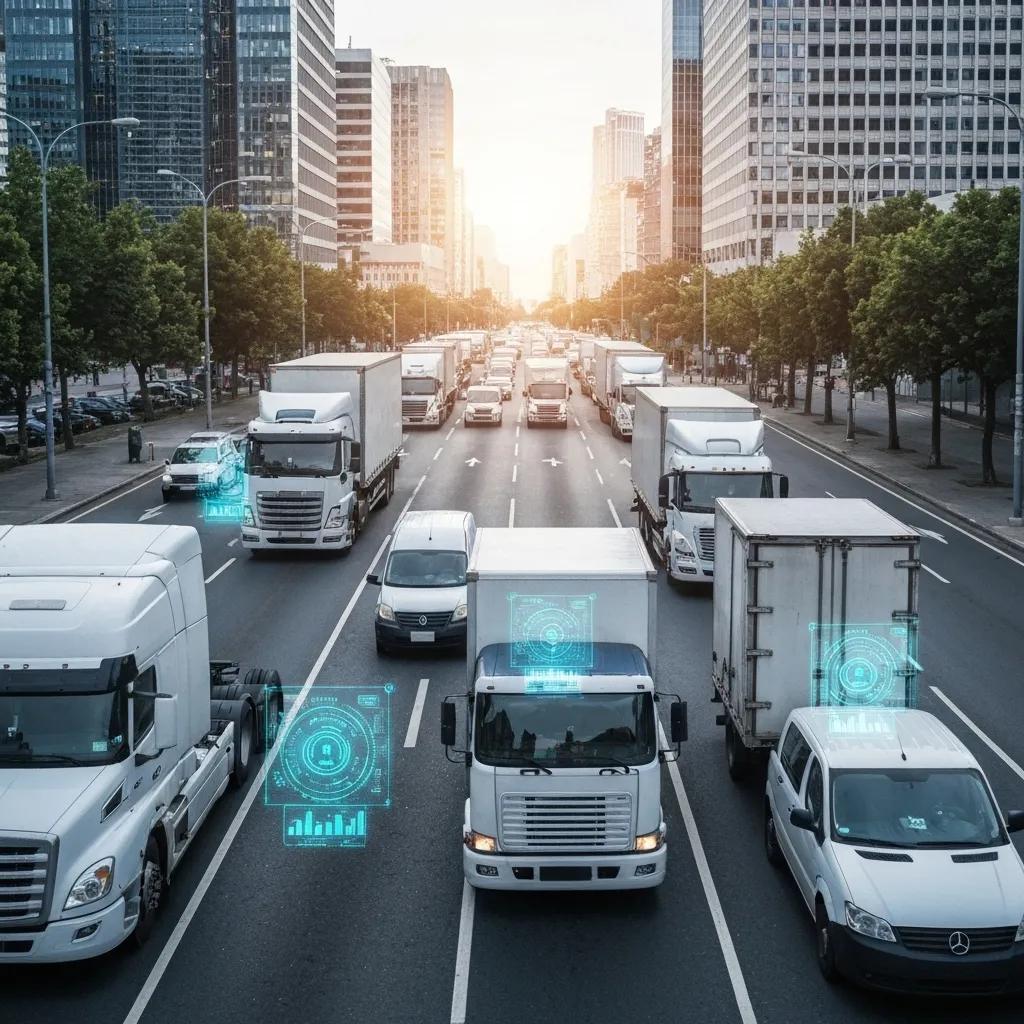
Transform Fleet Management with AI Solutions by Safety Track
Optimizing Fleet Management with Safety Track AI Solutions
Optimizing commercial fleets starts with intelligent systems that elevate productivity and safety. By harnessing AI-driven analytics, predictive modeling, and real-time telematics, Safety Track’s platform enables fleet operators to maximize your fleet AI efficiency while cutting costs and mitigating risks. This guide explores how AI enhances operational workflows, fortifies driver safety, leverages data insights, integrates seamlessly with legacy systems, delivers measurable ROI, and anticipates future innovations.
How Does AI Enhance Fleet Operational Efficiency?
AI enhances fleet operational efficiency by combining machine learning, sensor fusion, and automation to predict failures, optimize routes, and allocate resources smartly. By shifting from reactive to proactive management, fleets reduce idle time, lower maintenance expenses, and improve asset utilization. The following sections detail three core efficiency drivers.
What Is Predictive Maintenance and How Does It Reduce Downtime?
Predictive maintenance uses AI algorithms to analyze vehicle sensor data—temperature, vibration, fluid levels—to forecast component wear before failures occur. This reduces unplanned downtime by up to 50 percent.
- Failure Prediction: Models identify anomaly patterns that precede breakdowns.
- Automated Scheduling: Work orders generate automatically when threshold conditions appear.
- Inventory Forecasting: Parts needs are projected, ensuring on-hand stock and faster repairs.
Early fault detection transforms maintenance from fire-fighting into a streamlined process, setting the stage for uninterrupted operations.
Predictive Maintenance in Fleet Management: Reducing Downtime and Costs
Research indicates that predictive maintenance programs, leveraging AI and real-time data analysis, can significantly reduce unplanned service visits by up to 40% for connected vehicles. This proactive approach helps identify potential issues before they become critical, thereby avoiding costly unscheduled downtime and optimizing overall maintenance expenses.
This research directly supports the article’s claims regarding the reduction of unplanned downtime and the overall benefits of predictive maintenance in fleet operations.
How Does AI-Powered Route Optimization Lower Costs and Improve Delivery Times?
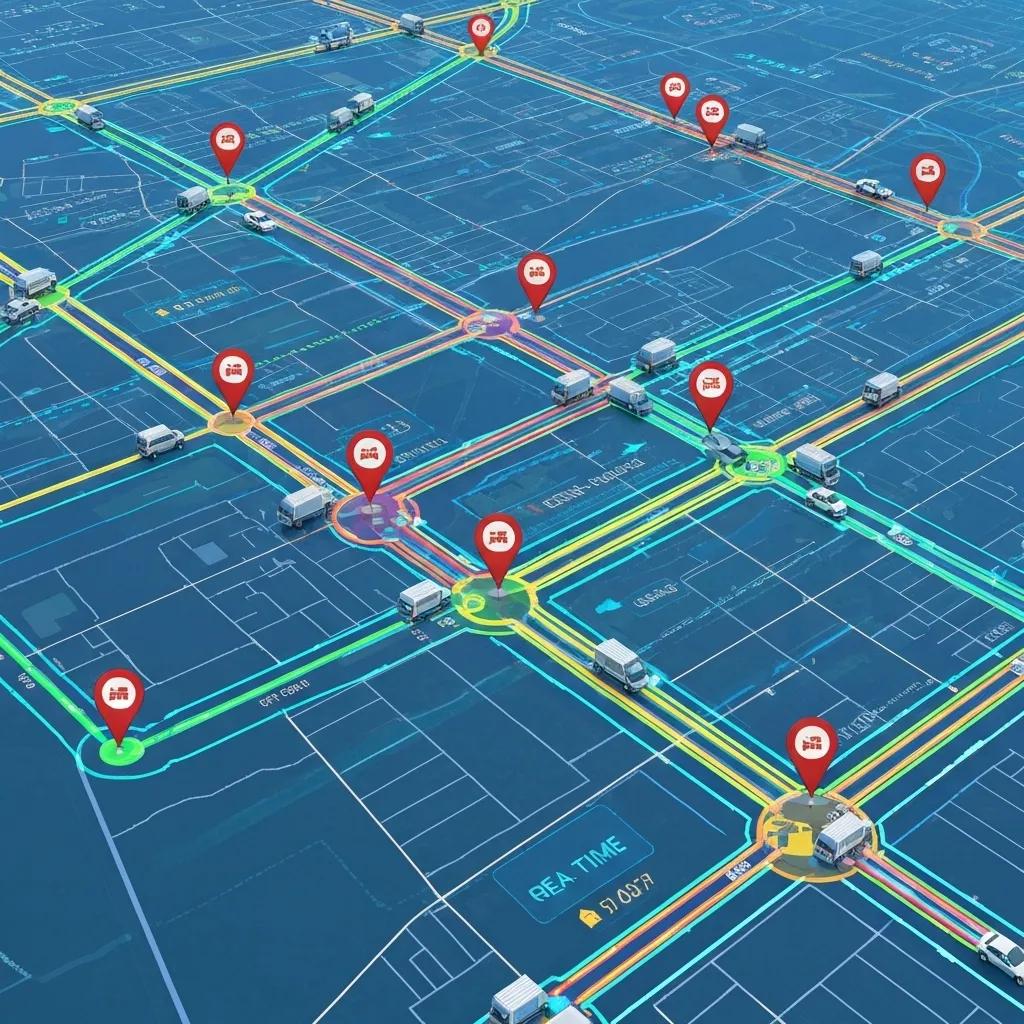
AI-powered route optimization calculates optimal paths by ingesting live traffic, weather, and delivery constraints, cutting fuel use by up to 20 percent and improving on-time performance by 15 percent.
- Dynamic Traffic Analysis: Real-time road conditions drive immediate rerouting.
- Load Sequencing: AI balances cargo loads to minimize stops and empty miles.
- Window Adherence: Delivery time slots integrate with customer requirements for precision.
Efficient routing complements proactive vehicle health management, yielding a leaner, faster distribution network.
AI-Powered Route Optimization for Enhanced Efficiency and Cost Savings
Studies demonstrate that AI-driven route optimization systems dynamically adjust delivery paths based on real-time data, leading to substantial reductions in fuel consumption and overall operational costs. Some implementations have shown a reduction in operating costs by as much as 40% through optimized routes, driver wages, and toll fees.
This citation validates the article’s assertions about AI-powered route optimization leading to significant fuel savings and improved operational efficiency.
In What Ways Does AI Automate Fleet Resource Allocation?
AI automates fleet resource allocation by evaluating vehicle availability, driver schedules, and service demands to assign assets optimally.
- Shift Optimization: Aligns driver hours with peak demand periods.
- Vehicle Matching: Pairs load sizes and route profiles with the right vehicle type.
- Real-Time Dispatch: Adjusts assignments instantly in response to delays or new orders.
Automated allocation maximizes utilization rates and ensures that every asset contributes to productivity goals.
How Can AI Improve Fleet Driver Safety and Compliance?
AI improves driver safety and compliance by continuously monitoring behavior, detecting hazards, and enforcing regulations through automated alerts and reporting. This dual focus reduces accidents and shields fleets from fines or liability.
What Are the Key Features of AI Driver Behavior Monitoring?

AI driver behavior monitoring employs in-cab cameras, telematics, and computer vision to identify risky actions such as harsh braking, lane departures, distracted driving, and fatigue.
- Real-Time Alerts: Instant feedback prompts safer actions on the road.
- Behavior Scoring: Weighted metrics rank drivers for coaching or incentives.
- Video Evidence: Incident footage supports training and claims resolution.
Continuous oversight builds a culture of safety and accountability, directly reducing collision risk.
How Does AI Help Prevent Accidents and Reduce Insurance Costs?
By correlating near-miss data, traffic incidents, and environmental factors, AI can predict high-risk scenarios and prompt preemptive interventions.
- Risk Prediction: AI flags routes and times with elevated collision probability.
- Proactive Coaching: Automated coaching messages reinforce safe driving habits.
- Insurance Analytics: Claims data integrated with behavior records can secure premium discounts up to 25 percent.
Accident avoidance and data-driven risk profiles translate into both human and financial savings.
Impact of AI on Driver Behavior Monitoring and Accident Reduction
Integrating AI-driven solutions for driver behavior monitoring can lead to a notable decrease in accidents and unsafe driving incidents. Analysis of 5,000 fleets showed a remarkable 22% reduction in accidents and a 56% drop in unsafe driving incidents with the integration of AI technologies, which also contributes to lower insurance premiums by fostering a safer driving culture.
This research supports the article’s claims regarding AI’s role in improving driver safety metrics, reducing collisions, and potentially lowering insurance costs.
How Does AI Ensure Regulatory Compliance for Fleets?
AI-driven compliance modules automatically track hours-of-service, electronic logging, and maintenance records, generating reports that align with DOT and regional regulations.
- Automated Logs: Driver hours and rest periods recorded without manual entry.
- Inspection Readiness: Compliance dashboards highlight pending checks or document gaps.
- Audit Trails: Immutable records support seamless regulatory reviews.
Regulatory automation frees managers from paperwork and shields fleets from penalties.
What Role Does Data Analytics Play in AI Fleet Management?
Data analytics serves as the intelligence engine, transforming raw telematics streams and performance metrics into actionable insights that guide strategic decisions, operational improvements, and continuous optimization.
How Does Machine Learning Transform Fleet Data into Actionable Insights?
Machine learning algorithms detect trends and correlations across vast datasets—fuel consumption, engine performance, route histories—to recommend efficiency gains.
- Pattern Recognition: Identifies underperforming assets or routes.
- Anomaly Detection: Flags outlier events such as excessive idling.
- Predictive Forecasting: Projects fuel budgets, maintenance cycles, and capacity needs.
These insights enable data-driven strategies that boost productivity and reduce waste.
What Types of Telematics Data Are Used in AI Fleet Solutions?
Telematics systems capture vehicle speed, geo-location, fuel levels, engine diagnostics, and driver inputs. Integrating IoT sensor data—temperature, load weight, tire pressure—creates a holistic vehicle profile.
How Does Real-Time Data Analysis Support Proactive Fleet Management?
Real-time analytics fuses live telematics and external feeds—traffic, weather—into continuous operational intelligence. Alerts trigger instant reassignments, reroutes, or service calls. Preemptive actions reduce downtime and service disruptions, closing the loop between insight and execution seamlessly.
How Does Safety Track’s AI Solution Integrate with Existing Fleet Systems?
Safety Track’s modular architecture integrates with legacy telematics, ERP, and transportation management systems (TMS), delivering AI enhancements without replacing core platforms.
What Legacy Systems Are Compatible with Safety Track AI?
Safety Track AI connects seamlessly to: enhancing driver safety
- ERP Platforms: Data exchange via REST APIs and middleware connectors.
- TMS Software: Bi-directional sync of orders, route changes, and updates.
- Third-Party Telematics: Ingests data from leading hardware providers through open protocols.
This compatibility streamlines deployment and preserves prior technology investments.
How Is Scalability Achieved in AI Fleet Management Platforms?
Cloud-native microservices enable on-demand scaling as fleet size grows. Containerized modules—predictive maintenance, route engine, compliance—spin up elastically to handle peak data volumes without performance loss. Multi-tenant architecture ensures cost-efficient resource sharing.
What Are the Benefits of Seamless AI Integration for Fleet Managers?
Integrating AI directly into existing interfaces minimizes training needs and accelerates ROI:
- Rapid Onboarding: Familiar dashboards updated with AI-driven widgets.
- Consolidated Data Views: Unified insights across platforms.
- Incremental Adoption: Gradual module activation matches capacity and budget.
Smooth integration preserves user experience while unlocking advanced capabilities.
What Are the Measurable Benefits of Using AI in Fleet Management?
Quantifying AI’s impact reinforces investment value through hard metrics in downtime reduction, fuel savings, and safety improvements.
How Much Can Predictive Maintenance Reduce Fleet Downtime and Costs?
Predictive maintenance correlates with a 50 percent drop in unplanned downtime and up to 30 percent lower maintenance expenses. Early fault detection and optimized service schedules extend vehicle lifespan by 20 percent and free capacity for revenue trips.
What Fuel Savings Are Achieved Through AI Route Optimization?
AI route planning cuts fuel consumption by an average of 15–20 percent. Dynamic adjustments, combined with load balancing and idle-time reduction, translate into thousands of gallons saved per year for a 100-vehicle fleet.
How Does AI Improve Driver Safety Metrics and Reduce Accidents?
Fleets using AI safety modules report 40 percent fewer collisions and a 25 percent reduction in insurance premiums. Real-time behavior feedback, risk scoring, and proactive alerts foster a safer driving culture and lower total cost of risk.
What Emerging AI Trends Will Shape the Future of Fleet Management?
Next-generation AI capabilities promise deeper automation, smarter insights, and responsible data use that will redefine fleet operations in the coming years.
How Will Generative AI Enhance Fleet Reporting and Decision-Making?
Generative AI can synthesize complex datasets into narrative reports, highlight anomalies in natural language, and draft optimized schedules—freeing managers from manual analysis. Automated report generation tailors insights to stakeholder needs in seconds.
What Is the Role of Agentic AI in Autonomous Fleet Operations?
Agentic AI agents can make end-to-end operational decisions—dispatching vehicles, rerouting in emergencies, and negotiating delivery windows—without human intervention. This autonomy promises 24/7 responsiveness and unmatched efficiency gains.
How Is Ethical AI and Data Privacy Addressed in Fleet Solutions?
Responsible AI frameworks enforce data anonymization, secure encryption, and bias-mitigation protocols. Transparent model governance and consent-based data capture ensure driver privacy and regulatory compliance, building trust in AI-enabled monitoring.
What Are the Most Common Questions About AI Fleet Management?
Fleet operators frequently inquire how AI integrates, what benefits arise, and how core applications work. Below are clear explanations to address these top queries.
How Is AI Used in Fleet Management?
AI powers predictive maintenance, route optimization, driver behavior monitoring, and real-time analytics by processing telematics and IoT sensor data through machine learning models that automate decisions and insights.
What Are the Benefits of AI in Fleet Operations?
Key benefits include lower operational costs, improved fuel efficiency, reduced downtime, enhanced driver safety, optimized routing, and streamlined compliance—each driven by data-backed intelligence.
How Does AI Predictive Maintenance Work?
AI predictive maintenance applies machine learning to historical and live sensor data, detecting patterns that forecast component failures, allowing for timely service and minimizing unexpected breakdowns.
How Can AI Improve Route Optimization?
AI optimizes routes by analyzing traffic, weather, delivery constraints, and vehicle capabilities in real time, generating dynamic itineraries that reduce travel time and fuel consumption.
How Does AI Enhance Driver Safety?
AI enhances safety by continuously monitoring driver inputs and environmental conditions, issuing real-time alerts for risky behaviors, compiling behavior scores, and enabling targeted coaching to prevent accidents.
Safeguarding efficiency and safety through AI transforms fleet operations from reactive to strategic. By leveraging Safety Track’s intelligent platform, organizations unlock measurable gains in utilization, cost savings, and risk reduction—paving the way for truly future-proof fleet management.
Frequently Asked Questions
What are the implementation steps for integrating AI into existing fleet systems?
Integrating AI into existing fleet systems usually involves several key steps: First, an assessment of current infrastructure is essential to identify compatibility issues. Next, you need to choose the right AI solution tailored to your operational needs. This is followed by customizing software to fit seamlessly with legacy systems. Finally, training staff to effectively utilize new AI tools and continuously monitoring performance are crucial for ensuring successful implementation and maximizing ROI.
How can AI improve fuel efficiency in fleet operations?
AI enhances fuel efficiency primarily through route optimization which employs real-time data analysis of traffic, weather conditions, and vehicle load. Machine learning algorithms identify patterns and suggest optimal driving strategies and routes. This means minimizing idle time, reducing unnecessary stopovers, and avoiding congested routes. As a result, fleets can achieve significant reductions in fuel consumption, leading to cost savings and lowered environmental impact.
What metrics should be tracked to assess the effectiveness of AI solutions in fleet management?
Key metrics to track include operational costs, vehicle downtime, fuel consumption rates, accident frequency, and driver behavior scores. Additionally, measuring compliance adherence and maintenance efficiency can provide insights into the effectiveness of AI solutions. Regular analysis of these metrics helps in understanding the ROI of the AI systems and allows fleet managers to make informed adjustments for continuous improvement.
How does AI affect driver retention and recruitment in fleet management?
AI plays a pivotal role in improving driver retention and recruitment by enhancing job satisfaction through better scheduling and reduced workloads. By automating tedious tasks, such as logging hours and managing compliance, drivers can focus more on driving. Moreover, real-time safety monitoring and feedback create a supportive environment that enhances driver confidence. These improvements make it easier to attract new talent while retaining experienced drivers, ultimately reducing turnover costs.
Are there specific industries that benefit more from AI in fleet management?
While many sectors can benefit, industries with high logistics needs, such as transportation, retail, and construction, gain considerable advantages from AI in fleet management. These sectors often deal with complex routing, high fuel costs, and strict regulatory compliance, making predictive analytics and real-time data critical. Additionally, utilities and emergency services can utilize AI for reliability in critical delivery operations, enhancing service efficiency and responsiveness.
What are the potential challenges of adopting AI in fleet management?
Adopting AI in fleet management comes with challenges such as initial costs of implementation, integration with existing systems, and the need for staff training. Data quality and privacy concerns also pose significant hurdles; companies must ensure they collect reliable data and adhere to regulations. Moreover, resistance to change and difficulties in adapting to new technology among employees can impact the smooth transition—making change management essential during implementation.
How does Safety Track address data privacy and security concerns with their AI solutions?
Safety Track addresses data privacy and security by implementing robust encryption protocols, ensuring data is anonymized and securely stored. They follow compliance regulations for data handling and provide transparency in how data is used and shared. Additionally, ongoing audits and security assessments are conducted to protect against breaches. By focusing on ethical AI practices, Safety Track builds trust with clients while maintaining the confidentiality of sensitive information.

Tyler Schneider is the IT Director at Safety Track, overseeing the company’s technological infrastructure and innovations. With a strong background in information technology and systems management, Tyler ensures that Safety Track stays at the forefront of tech solutions in fleet management. His strategic expertise supports the seamless integration of technology across the company’s operations.