
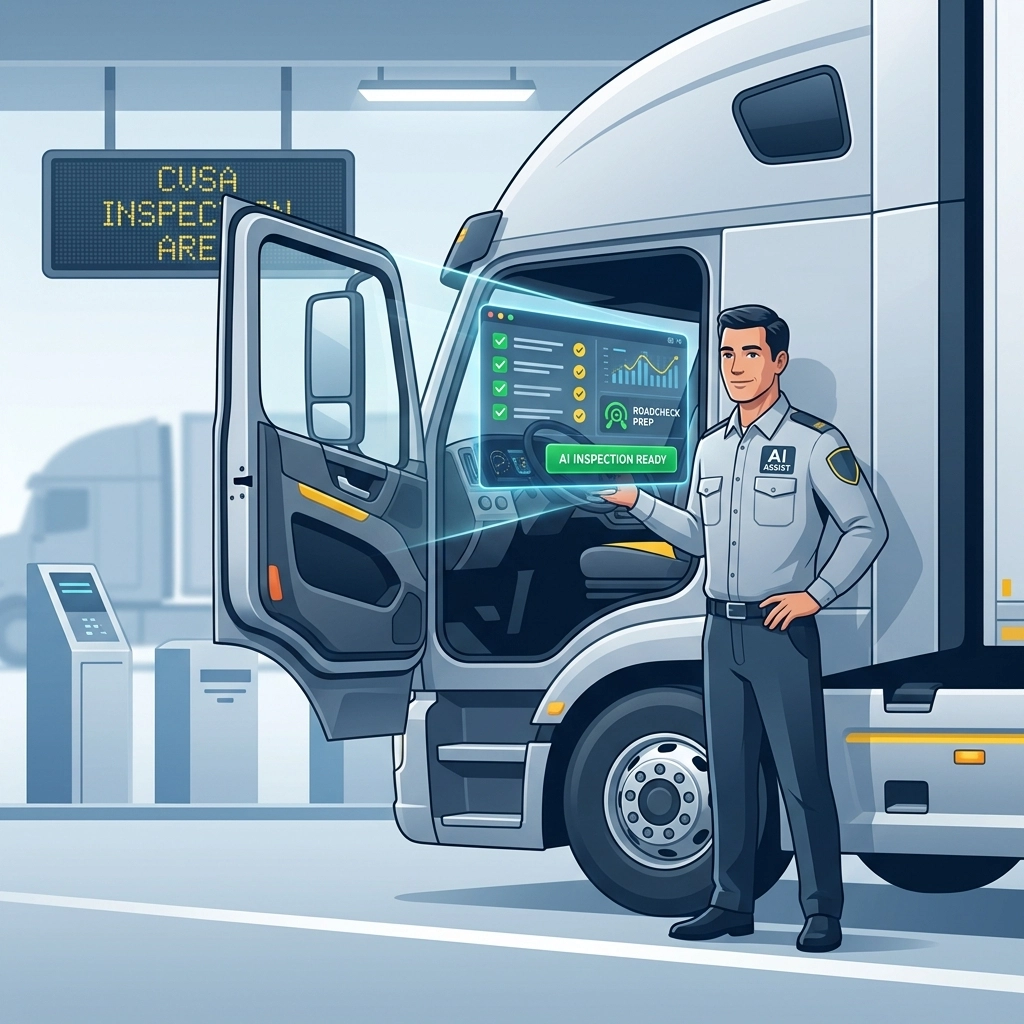
The 2026 CVSA Roadcheck Survival Guide: Using AI to Ace the Inspection
As the calendar turns to May 1, 2026, fleet managers across North America are focusing their attention on a single, high-stakes event: the CVSA International Roadcheck. Scheduled for May 12–14, this 72-hour period represents the most intensive inspection blitz of the year. For three days, thousands of commercial motor vehicle inspectors will be out in force across highways, weigh stations, and inspection points, conducting nearly 15 inspections every minute.
The stakes are high. In previous years, approximately 20% of vehicles and 5% of drivers inspected were placed out-of-service (OOS) due to critical safety violations. In 2026, the Commercial Vehicle Safety Alliance (CVSA) has announced a dual focus that is particularly challenging for modern fleets: ELD Tampering/Falsification and Cargo Securement.
To navigate this environment, traditional compliance methods are no longer enough. Forward-thinking companies are turning to AI fleet safety cameras and comprehensive video telematics solutions to ensure their drivers and assets are ready before they ever reach the inspection point. This guide explores how to leverage 2026 technology to not only survive the Roadcheck but to achieve a standard of excellence that protects your bottom line.
Understanding the 2026 Focus: The End of Log Manipulation
The primary focus of the 2026 Roadcheck is the integrity of Electronic Logging Devices (ELDs). While the industry transitioned to ELDs years ago, the FMCSA and CVSA have identified a rising trend in sophisticated falsification methods. Inspectors this year are specifically trained to look for “ghost drivers,” unassigned driving segments, and hardware “zappers” or software workarounds designed to hide Hours of Service (HOS) violations.
For fleet managers, the risk isn’t just a fine; it’s a total loss of credibility and high OOS rates that damage your CSA score. This is where fleet camera systems become an indispensable part of your compliance stack.
How AI Dash Cams Validate Log Integrity
Modern video telematics solutions act as a second layer of verification for ELD data. AI-enhanced cameras can now automatically correlate the presence of a driver in the cab with the active log on the ELD. If a vehicle is in motion but no driver is logged in: or if the driver logged in does not match the facial recognition profile of the person behind the wheel: the system triggers an immediate alert.
By identifying these discrepancies internally, managers can correct “unassigned mileage” issues before a CVSA inspector finds them. This proactive approach is the hallmark of fleet telematics trends for 2026, where data silos are broken down to create a single source of truth for compliance.

The Second Pillar: Cargo Securement Under the Microscope
The second focus area for 2026 is cargo securement. Improperly secured loads are a leading cause of highway accidents and infrastructure damage. During the May 12–14 blitz, inspectors will be meticulously checking for:
- Damaged tie-downs (notches, frays, or cracks).
- Insufficient number of tie-downs for the weight and length of the load.
- Loose or shifting cargo within enclosed trailers.
- Inadequate bracing and blocking.
Using AI to Guard the Load
While dash cameras are often associated with road-facing safety, their role in cargo securement is rapidly expanding. The best dash cam for fleet vehicles in 2026 often includes interior or trailer-facing modules. These AI fleet safety cameras use computer vision to monitor the state of the cargo in real-time.
If a pallet shifts or a strap becomes loose during transit, the AI can detect the movement and notify the driver immediately. This allows for corrective action on the shoulder of the road, rather than waiting until a CVSA inspector discovers the hazard at a weigh station. Furthermore, having high-definition video evidence of the loading process provides a digital “birth certificate” for every trip, proving that the load was secured according to FMCSA Part 393 standards at the point of origin.
The Level I Inspection: What to Expect
The North American Standard Level I Inspection is the most thorough procedure. It involves a 37-step process that covers both driver credentials and vehicle mechanical fitness.
The Driver Check
Inspectors will review:
- Driver’s License: Validity, expiration, and class.
- Medical Examiner’s Certificate: Ensuring the driver is physically fit to operate.
- Record of Duty Status (RODS): This is where the 2026 focus on ELD tampering will be most intense.
- Skill Performance Evaluation (SPE) Certificate: If applicable.
The Vehicle Check
This is a “top-to-bottom” look at the truck and trailer, including:
- Brake systems and adjustment.
- Coupling devices.
- Exhaust systems.
- Fuel systems.
- Lighting devices (headlamps, tail lamps, turn signals).
- Steering mechanisms.
- Suspension.
- Tires, wheels, rims, and hubs.

Caption: A high-level overview of the 37-step CVSA Level I Inspection process, emphasizing critical mechanical checkpoints.
Preparing Your Fleet: A Tech-First Strategy
Preparation for the May Roadcheck should begin weeks in advance. Relying on paper checklists is a legacy strategy; the modern approach involves utilizing AI fleet optimization tools to automate the audit process.
1. Conduct Virtual Audits
Instead of waiting for trucks to return to the yard, use your fleet camera systems to conduct virtual inspections. Review random footage from the past week to ensure drivers are wearing seatbelts, avoiding distracted driving, and following proper pre-trip inspection protocols. If the camera captures a driver skipping a walk-around inspection, that is a coaching opportunity that could save you an OOS order on May 12.
2. Verify Hardware Health
An AI system is only as good as its uptime. Ensure your hardware is ready by following the ultimate spring maintenance checklist for commercial dash cam systems. Check for:
- Lens clarity (pollen and road grime can obscure AI sensors).
- Firmware updates that include the latest ELD synchronization patches.
- Secure mounting to prevent “vibration alerts” that can clutter your dashboard.
3. Educate and Empower Drivers
The Roadcheck is stressful for drivers. Positioning technology as a “co-pilot” rather than a “spy” is crucial for morale. Explain to your team how AI fleet safety cameras protect them from wrongful citations and provide the evidence needed to prove their innocence in an accident.
Training should be data-driven. Use the insights from your telematics platform to identify which drivers are most at risk for violations and provide targeted effective driver training programs.

The Hidden Costs of Roadcheck Failures
The financial impact of the CVSA Roadcheck extends far beyond the initial fine. When a vehicle is placed out-of-service, the “ripple effect” begins:
- Towing and Storage: If the repair cannot be made on-site, towing fees for heavy-duty vehicles can reach thousands of dollars.
- Missed Deliveries: In the “just-in-time” logistics world of 2026, a 24-hour delay can lead to contract penalties and lost customers.
- Insurance Premiums: Your CSA score is a primary factor in insurance underwriting. A spike in violations during Roadcheck week can lead to significantly higher premiums for the next fiscal year.
Conversely, investing in fleet camera systems delivers significant cost savings by preventing these OOS incidents. A clean inspection report is more than just a pass; it’s a competitive advantage that proves your fleet is a reliable partner in the supply chain.
Leveraging Video Telematics for Real-Time Support
During the Roadcheck itself (May 12–14), the “Live Stream” feature of your telematics solution becomes your most valuable asset. If a driver is pulled over for a Level I inspection, managers can discover the benefits of a dash cam with live streaming to virtually “stand next” to the driver.
If an inspector questions the securement of a load or a specific driving event, the manager can instantly pull the relevant video clip and send it to the driver’s mobile device. This level of real-time support can often clarify a misunderstanding before it results in a formal citation.

Best Practices for May 12–14, 2026
To ensure your fleet passes with flying colors, implement these three operational shifts during Roadcheck week:
1. “Clean Cab” Policy
Inspectors look for more than just mechanical issues; they look for signs of fatigue and unprofessionalism. A cluttered cab with trash on the dashboard or unsecured items on the floor suggests a lack of attention to detail. Use your interior-facing AI fleet safety cameras to ensure cabs are clean and drivers are organized.
2. Paperwork Readiness
While 2026 is a digital-first era, certain documents must be accessible. Ensure every vehicle has a “Roadcheck Folder” containing:
- Instructions for the ELD (required by law).
- Blank paper logs (at least an 8-day supply) in case of ELD malfunction.
- Recent vehicle inspection reports (DVIRs).
- Evidence of cargo securement training.
3. Proactive Maintenance
Small issues like a cracked tail light or a worn tire are “low-hanging fruit” for inspectors. In the days leading up to May 12, use your telematics data to prioritize maintenance for vehicles that have shown sensor warnings. A proactive approach to safety in bloom means addressing the wear and tear of spring driving before the CVSA does.
Conclusion: Turning Compliance into a Competitive Edge
The 2026 CVSA International Roadcheck shouldn’t be a source of anxiety. For fleets equipped with the right video telematics solutions, it is an opportunity to validate their safety culture and operational excellence.
By focusing on the dual priorities of ELD integrity and cargo securement, and by utilizing AI fleet safety cameras to audit and support drivers, you can ensure that your assets stay on the road and your business stays profitable. In the modern logistics landscape, safety isn’t just about avoiding fines; it’s about using technology to build a more resilient, transparent, and efficient operation.
Ready to upgrade your fleet’s defense? Discover how Safety Track’s AI solutions can help you ace the 2026 Roadcheck and beyond. From the best dash cam for fleet vehicles to comprehensive asset monitoring, we provide the tools you need to lead the industry in safety.
For more information on official inspection standards, visit the CVSA website or the FMCSA compliance portal.


Tyler Schneider is the IT Director at Safety Track, overseeing the company’s technological infrastructure and innovations. With a strong background in information technology and systems management, Tyler ensures that Safety Track stays at the forefront of tech solutions in fleet management. His strategic expertise supports the seamless integration of technology across the company’s operations.