
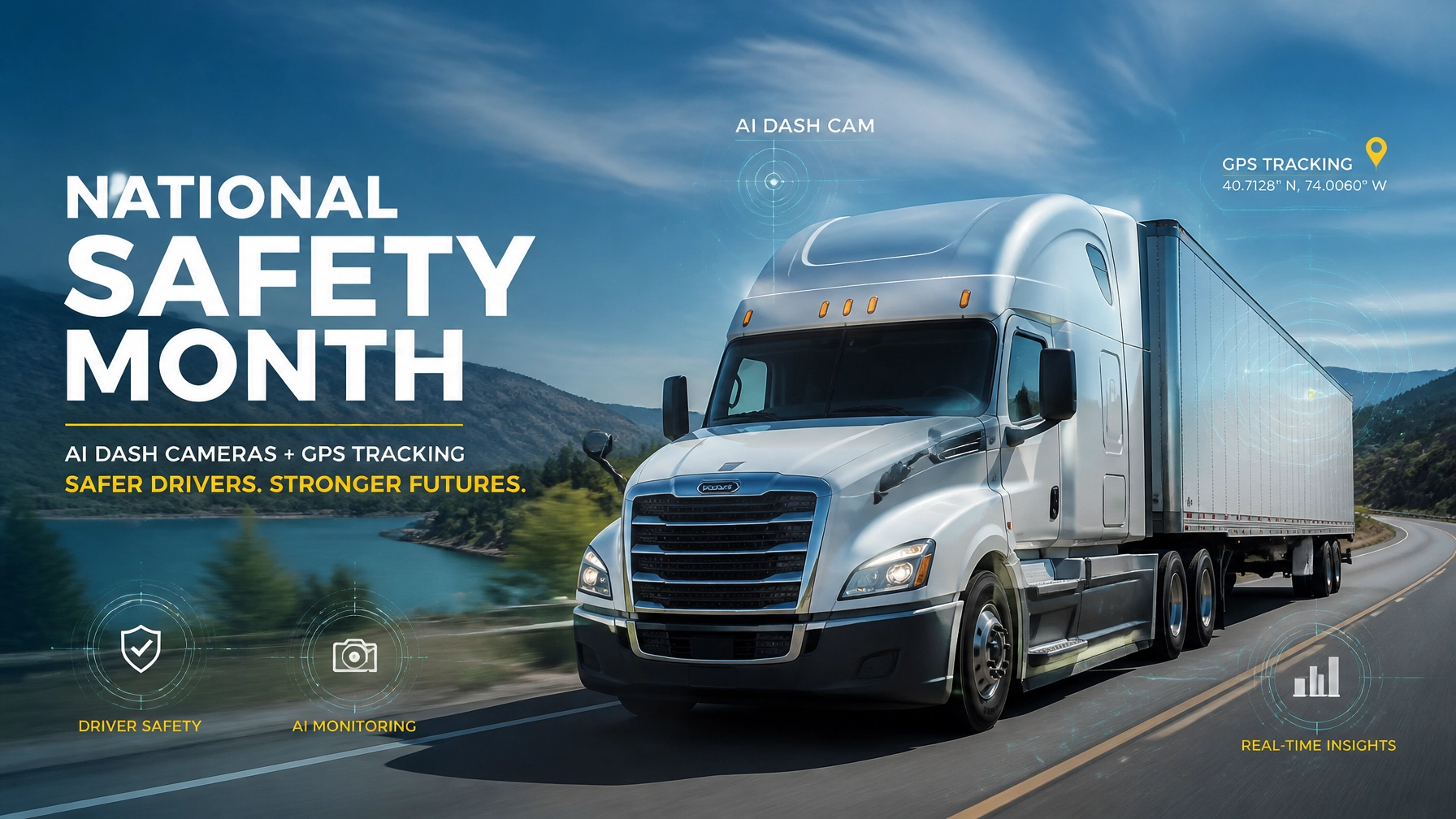
4 Strategies to Reduce Fleet Accidents and Improve Safety
Every June, the transportation industry pauses to observe National Safety Month. While safety is a year-round commitment for any reputable carrier, this month serves as a critical period to audit systems, refresh training, and implement technologies that move the needle.
For fleet managers, the stakes have never been higher. Roadway incidents remain the leading cause of work-related fatalities in the United States. Beyond the human cost: which is the most significant factor: the financial burden of collisions, insurance premiums, and litigation continues to climb.
However, the data from 2026 shows a clear path forward. Companies that integrate advanced fleet safety cameras and AI-driven monitoring are seeing transformative results. At Safety Track, we have observed that a properly implemented system can reduce accidents by up to 40% and lower insurance costs by 25%.
Here are four ways your fleet can leverage modern technology to achieve these results and ensure your drivers return home safely every day.
1. Deploying AI Dash Cameras for Real-Time Risk Mitigation
Traditional dash cameras were “passive” devices. They recorded footage to an SD card, and unless an accident occurred, that footage was rarely viewed. By the time a manager saw a risky driving behavior, the incident had often already happened.
Modern AI dash cameras for fleets change the equation from reactive to proactive. These systems use edge computing and machine vision to analyze the road and the driver simultaneously in real time.
In-Cab Alerts and Immediate Intervention
The primary strength of an AI-enhanced commercial dash cam system is its ability to detect “near-miss” behaviors. The AI identifies specific high-risk actions, such as:
- Tailgating: Calculating the distance between the truck and the vehicle ahead based on current speed.
- Distracted Driving: Monitoring for mobile phone usage, smoking, or the driver looking away from the road for extended periods.
- Drowsiness: Detecting facial cues that indicate fatigue before a microsleep occurs.
- Lane Departures: Alerting the driver if they drift without a turn signal.
When the system detects these risks, it issues an immediate, audible in-cab alert. This allows the driver to self-correct in the moment. Statistics show that real-time alerts alone can reduce rear-end collisions by up to 50%. By the time a human manager could ever intervene, the AI has already prevented the accident.

2. Slashing Costs with Video Evidence and Exoneration
One of the most immediate benefits of a commercial dash cam system is the financial protection it offers. In the current legal climate, “nuclear verdicts” against trucking companies are a constant threat. Even when a passenger vehicle is at fault, the lack of objective evidence often leaves the fleet vulnerable to high settlements.
The 25% Insurance Reduction
Insurance underwriters are increasingly rewarding fleets that provide transparency. By sharing safety data and proving the presence of video telematics, many fleets secure up to a 25% reduction in insurance costs.
Video evidence acts as an unbiased witness. In “he-said, she-said” scenarios at the scene of an accident, a live video fleet camera system allows managers to pull footage instantly.
Exoneration in Minutes:
- False Claims: Identify staged accidents or fraudulent “slip and fall” claims involving your vehicles.
- Liability Accuracy: Prove that your driver was maintaining a safe speed and following distance.
- Faster Settlements: Reduce legal fees by settling clear-cut cases quickly or forcing the opposition to drop baseless claims.
When your drivers know they are protected from false accusations, it builds a culture of trust. They no longer see the camera as a “Big Brother” tool but as a digital shield that protects their CDL and their livelihood.
3. Building a Safety Culture Through Data-Driven Coaching
Technology is only as effective as the people who use it. National Safety Month is the perfect time to transition from “monitoring” to “coaching.”
Using Safety Track’s AI efficiency tools, fleet managers can move away from punishing drivers for mistakes and toward professional development.
Structured Feedback Loops
The Camera Management Suite (CMS) provides a “safety score” for every driver. This score isn’t based on opinion; it’s based on hard data points like harsh braking, rapid acceleration, and AI-detected distractions.
The Coaching Process:
- Identify Patterns: Instead of looking at a single event, look for trends. Does a specific driver struggle with following distance on Fridays?
- Positive Reinforcement: Use the data to reward your safest drivers. Recognize those who have zero AI-triggered alerts over a 30-day period.
- Targeted Training: Use real footage of near-misses (anonymized if necessary) in safety meetings to show real-world examples of how to handle specific road hazards.
By focusing on coaching, you create a feedback loop that lowers the fleet’s overall risk profile. This proactive approach is the reason why Safety Track clients report up to 40% fewer accidents after fully integrating our coaching tools.

4. Full Visibility: Integrating GPS and Asset Tracking
Safety isn’t just about what happens behind the wheel; it’s about where your assets are and what condition they are in. A comprehensive safety strategy must include GPS vehicle tracking and asset monitoring.
Preventing Mechanical Failures
A vehicle that breaks down on the shoulder of a busy highway is a major safety hazard. Maintenance tracking integrated into your fleet management solution allows you to stay ahead of vehicle diagnostics. By tracking engine health and scheduling preventative maintenance, you reduce the risk of catastrophic mechanical failures: like brake or tire blowouts: that lead to serious accidents.
Route Optimization and Driver Wellness
Fatigue is a leading cause of accidents. GPS tracking allows for better route optimization. When routes are optimized, drivers aren’t rushing to make up time or struggling with poorly planned stops.
Benefits of Real-Time Monitoring:
- Geofencing: Ensure drivers stay on approved, safe routes and avoid hazardous areas or restricted roads.
- Load Safety: Asset tracking ensures that trailers and non-powered assets are secure, preventing theft and unauthorized use.
- Emergency Response: If an accident does occur, the dispatcher knows the exact location of the vehicle instantly, allowing for faster emergency services deployment.

Conclusion: Achieving Peace of Mind
For a fleet manager, the ultimate goal is peace of mind. Knowing that your drivers are protected by the best fleet safety cameras, that your insurance costs are under control, and that your assets are monitored 24/7 changes the way you run your business.
National Safety Month is a reminder that accidents are preventable. By leveraging AI dash cameras, real-time monitoring, and data-driven coaching, you aren’t just following regulations: you are building a more profitable, safer, and more resilient fleet.
At Safety Track, we don’t believe in “one size fits all.” We custom-tailor our fleet management solutions to your specific operational needs. Whether you operate five trucks or five hundred, our goal is to help you reduce accidents by 40% and keep your eyes on the road, even when you aren’t there.
Ready to transform your fleet’s safety profile? Contact us today to explore a custom solution for your business.

Tyler Schneider is the IT Director at Safety Track, overseeing the company’s technological infrastructure and innovations. With a strong background in information technology and systems management, Tyler ensures that Safety Track stays at the forefront of tech solutions in fleet management. His strategic expertise supports the seamless integration of technology across the company’s operations.