
Exoneration: The Shield Against Property Damage Claims
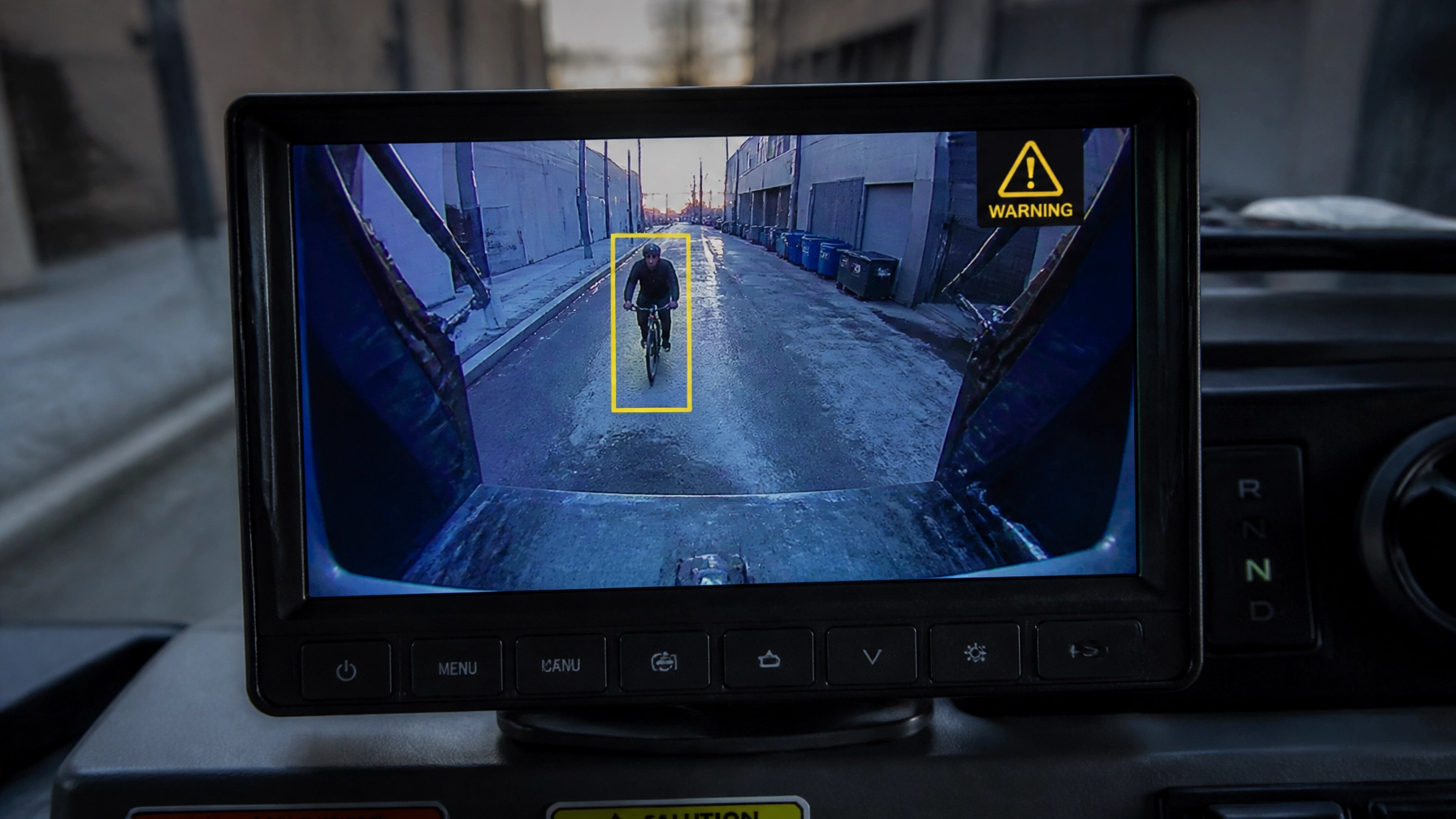
AI cameras excel at “Object Detection.” Unlike basic motion sensors that might beep for every leaf or trash bin, AI algorithms are trained to recognize the specific shape and movement of humans. This reduces “alert fatigue” for drivers. When the system identifies a person in the danger zone, it triggers a distinct, urgent alert.
At Safety Track, we have seen that implementing AI-enhanced security can lead to a significant reduction in incidents: up to 40% fewer accidents across the fleet. In the waste industry, where a single pedestrian injury can result in a “nuclear verdict” or a multi-million dollar settlement, this level of protection is an essential investment, not just a luxury.
Exoneration: The Shield Against Property Damage Claims
“Your truck hit my fence.”
“Your driver cracked my driveway.”
“A bin was dropped on my car.”
Waste management companies are frequent targets for property damage claims. Because of the size and noise of the vehicles, it is easy for a homeowner to blame the garbage truck for any new damage they find near the curb. Without visual evidence, these cases often turn into a “he said, she said” scenario where the company usually loses to maintain customer relationships or avoid legal fees.
A commercial dash cam system provides the ultimate defense. With multiple camera angles: including side-view cameras that look down the length of the truck and hopper cameras that view the lifting mechanism: every “pick” is documented.
When a claim is filed, the fleet manager can pull the exact footage from that day’s GPS tracking data. Often, the video proves the truck never made contact with the property, or that the damage was already present before the truck arrived. This immediate exoneration saves thousands of dollars in payouts and helps keep insurance premiums stable. In fact, many our clients see up to a 25% reduction in insurance costs simply by having video evidence to refute false claims.
Verifying Service: Ending the “Missed Pickup” Dispute
Operational efficiency in waste management is measured by the completion of the route. However, “missed pickup” complaints are a daily headache for dispatchers. Residents may claim their bin was out on time and the driver simply skipped them.
By integrating video with real-time monitoring, fleet managers can verify service in seconds. If a resident calls to complain, the manager can see the video from the side-view camera showing the truck passing the house at 7:05 AM and the bin not being at the curb. This changes the conversation from an apology and a costly “go-back” trip to a factual explanation for the customer.
This visibility also extends to asset tracking. For commercial waste haulers, tracking the location and status of hundreds of dumpsters is vital. Cameras can document the condition of a dumpster before and after a pickup, ensuring that if a container is damaged by a third party, the waste company isn’t held liable.
Proactive Coaching: Building a Safer Workforce
One of the biggest misconceptions about AI cameras is that they are a “spy in the cab.” In a professional fleet environment, the goal is the opposite: the camera is a tool for professional development and driver protection.
AI cameras monitor for behaviors that indicate risk before an accident happens, such as:
- Distracted Driving: Detecting if a driver is looking at a phone or away from the road.
- Fatigue: Recognizing signs of drowsiness during long shifts or early hours.
- Seatbelt Compliance: Ensuring the basic safety fundamentals are met.
- Harsh Maneuvers: Identifying aggressive braking or cornering that stresses the vehicle and risks spills.
Instead of a manager having to watch hours of boring footage, the AI “flags” only the critical moments. This allows for targeted coaching. A driver might not realize they have a habit of checking their phone at every red light until they see the video. By addressing these small behaviors, managers can prevent the “big” accident from ever happening.
Furthermore, these systems protect good drivers. When an accident occurs that isn’t their fault: such as a passenger vehicle cutting off a truck: the video evidence is the driver’s best friend. It proves they followed every protocol, protecting their CDL and their livelihood.
Maintenance and Longevity: Protecting the Vehicle
Waste trucks represent a massive capital investment. The stop-and-go nature of the work, combined with the heavy hydraulic systems, means that maintenance costs are naturally high. Maintenance tracking integrated with telematics ensures the fleet stays on the road.
AI cameras contribute to vehicle longevity by reducing “harsh driving.” Aggressive braking and rapid acceleration don’t just increase the risk of accidents; they also lead to premature wear on brakes, tires, and transmissions. By monitoring and coaching these behaviors, companies can see up to 30% fuel savings and a significant reduction in unplanned maintenance downtime.
When a truck is in the shop, it isn’t making money. By using AI to encourage smoother driving, waste fleets can extend the lifecycle of their most expensive assets.
Scaling Safety: Custom Tailored Solutions
No two waste management operations are exactly alike. A municipal fleet handling residential curbside pickup has different needs than a private contractor managing heavy construction roll-off bins. This is why custom tailored solutions are so vital.
At Safety Track, we don’t believe in a one-size-fits-all approach. We work with fleet managers to determine the optimal camera placement: whether that’s focusing on the hopper, the side robotic arm, or 360-degree perimeter coverage. Our goal is to provide the visibility you need to solve your specific operational pain points.
The ROI of Peace of Mind
Investing in an AI-enhanced commercial dash cam system isn’t just about safety; it’s about the long-term viability of the business. In an era of rising insurance premiums and litigious environments, having a “digital witness” is the only way to effectively manage risk.
The return on investment (ROI) is found in:
- Immediate Insurance Savings: Lower premiums and faster claim settlements.
- Reduced Legal Costs: Avoiding lengthy court battles through clear video evidence.
- Fuel and Maintenance Efficiency: Smoother driving habits leading to lower operating costs.
- Brand Reputation: Fewer accidents and fewer disputes with the community build trust with the municipalities you serve.
Conclusion
In the demanding world of waste management, precision is everything. From the way a driver maneuvers an alley to the moment the robotic arm engages a bin, there is no room for error. AI cameras provide the technical precision to match the physical demands of the job, creating a safer environment for drivers and the neighborhoods they protect.
Is your fleet protected from the unique risks of the local route? At Safety Track, we specialize in helping local fleets transition from reactive monitoring to proactive AI-enhanced safety.
Explore our AI Fleet Dash Cameras today and see how we can custom-tailor a solution for your waste management operation.

Tyler Schneider is the IT Director at Safety Track, overseeing the company’s technological infrastructure and innovations. With a strong background in information technology and systems management, Tyler ensures that Safety Track stays at the forefront of tech solutions in fleet management. His strategic expertise supports the seamless integration of technology across the company’s operations.