
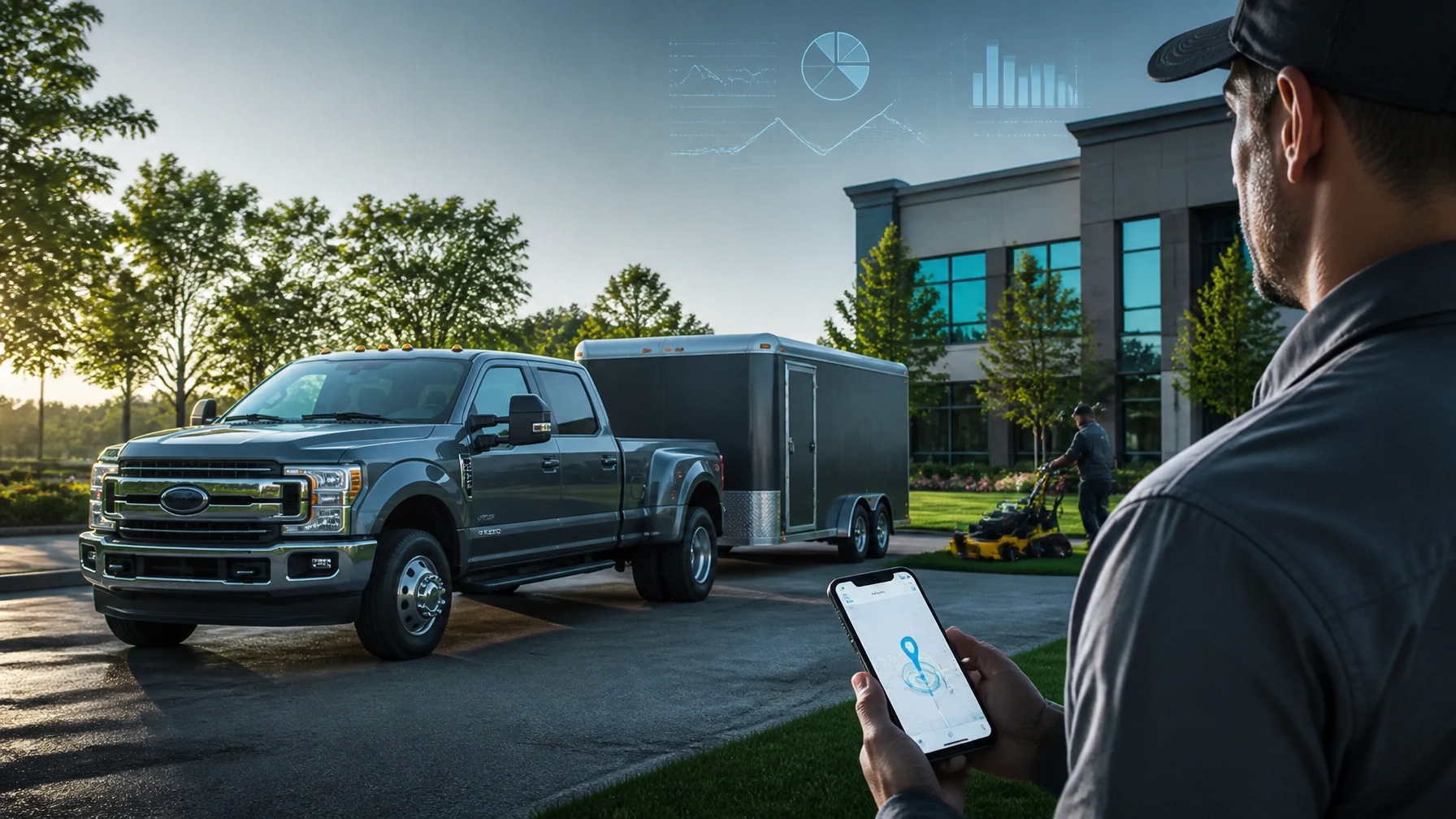
Grow Your Lawn Care Business in 2027: The Tech Customers Now Expect
Lawn care customers are raising their expectations. A clean property and healthy turf still matter, but they are no longer the entire customer experience.
Residential clients, property managers, HOAs, and commercial facility managers also want reliable arrival times, clear communication, professional crews, and proof that each visit was completed as promised. As the 2027 season approaches, lawn care companies that provide this level of visibility will have a stronger advantage when competing for new contracts and retaining existing customers.
Technology makes that standard achievable. GPS tracking, real-time monitoring, and AI-enhanced dash cameras help lawn care companies deliver a more transparent service experience while improving safety and fleet efficiency behind the scenes.
Customer Service Now Extends Beyond the Lawn
Customers often judge a lawn care company before a crew begins work. They notice whether a truck arrives on time, whether the driver operates it responsibly, and whether the company communicates when plans change.
A missed service window can create frustration even when the final work is excellent. A lack of documentation can also create disputes when customers question whether a crew arrived, how long it stayed, or whether a vehicle caused property damage.
Modern fleet technology addresses these concerns by giving lawn care businesses a reliable record of daily operations. Managers can see vehicle locations, review driving activity, and respond to customer questions with accurate information instead of relying on memory or phone calls.
Industry resources from the National Association of Landscape Professionals show the scale and professionalism of the landscaping industry. In a competitive market, technology helps individual companies demonstrate that professionalism at every customer touchpoint.
1. Customers Expect More Accurate Arrival Times
“Anytime between 8 a.m. and 4 p.m.” is becoming a difficult promise to defend. Customers want a more useful estimate, especially when they need to unlock gates, move vehicles, keep pets indoors, or coordinate access to commercial properties.
GPS tracking gives dispatchers a live view of each lawn care truck and trailer. That visibility helps managers:
- Monitor current vehicle locations
- Identify traffic-related delays
- Adjust routes when jobs take longer than expected
- Provide more accurate estimated arrival times
- Notify customers when crews are on the way
- Confirm when a vehicle reaches the service location
A GPS tracking platform does not eliminate every delay. Weather, equipment issues, and unexpected property conditions can still affect a route. However, it gives managers the information needed to communicate early and set realistic expectations.
That difference matters. Customers are often more understanding of a delay when they receive timely, accurate information. Silence creates uncertainty, while visibility gives the company an opportunity to protect trust.
Explore Safety Track’s GPS tracking and Tracking Management Suite to see how location data can support a more responsive operation.

2. Proof of Service Builds Confidence
Lawn care companies can lose time and revenue investigating simple service disputes. A customer may say a crew never arrived. A property manager may question whether the full visit was completed. A homeowner may report damage near a driveway or gate.
Without documentation, managers have limited options. They may need to send another crew, issue a credit, or spend hours reconstructing the day’s schedule.
GPS tracking creates a location-based record of when a vehicle arrived and departed. That information provides valuable proof of presence and service timing. It should work alongside a complete proof-of-service process that may include:
- A pre-visit confirmation with the scheduled service window
- An arrival notification when the crew reaches the property
- Notes or photos documenting completed work
- A completion notification after the visit
- A digital record of the property’s service history
This process makes the customer experience easier to understand. It also gives managers a consistent record for commercial accounts and recurring service agreements.
GPS data does not independently verify every task performed on a property. It confirms vehicle activity and location. When combined with crew notes, photos, scheduling information, and job-management procedures, it creates a much stronger service record.
That level of transparency helps lawn care companies support renewals, answer questions quickly, and demonstrate operational control during contract reviews.
3. Professional Driving Protects the Brand
A lawn care truck is a moving advertisement. Branded vehicles travel through residential neighborhoods, business parks, and busy commercial roads every day.
Customers and potential customers notice how those vehicles are driven. Speeding, harsh braking, distracted driving, and unsafe turns can damage a company’s reputation before a crew ever steps onto a property.
AI-enhanced dash cameras help managers reinforce professional driving standards across the fleet. Depending on the system configuration, cameras can support:
- Forward-facing road visibility
- Driver-facing monitoring
- Detection of distraction and fatigue
- Alerts for unsafe driving behavior
- Video review after a traffic incident
- Coaching based on actual driving events
- Documentation for insurance and liability claims
Safety Track’s in-vehicle camera systems include AI-powered options for forward-facing and driver-monitoring coverage. The ST-25 ADAS camera supports lane departure and forward collision warnings, while the ST-26 DMS camera is designed to detect behaviors such as fatigue, distraction, phone use, and smoking.
The goal is not to create a punitive workplace. The goal is to create consistent expectations and give managers objective information for coaching. A short review of a specific event is more effective than a general reminder to “drive safer.”
Professional drivers protect more than vehicles. They protect customer confidence, public reputation, insurance performance, and the company’s ability to win local contracts.
4. Video Evidence Makes Insurance Claims Easier
Lawn care fleets face daily exposure to traffic incidents, backing accidents, trailer-related damage, and false liability claims. Even a minor event can lead to repair costs, missed work, legal expenses, and a difficult insurance process.
Dash cameras provide time-stamped video evidence that helps clarify what happened. Footage can show:
- Road conditions before an incident
- Vehicle movement and impact direction
- Driver actions
- The actions of other motorists
- Whether a vehicle was involved in a reported event
- Conditions around a property entrance or worksite
This evidence can help insurance adjusters evaluate claims more efficiently. It can also protect a lawn care company when a customer or third party makes an inaccurate allegation.
Safety Track’s live video fleet camera systems provide real-time visibility and recorded evidence for incident review. The systems are designed to support risk management, driver accountability, and faster access to important footage.
Insurance savings should not be promised as an automatic result. Results depend on the carrier, policy, fleet history, safety program, and system implementation. Still, documented safety practices and clear video evidence give fleet owners stronger information when discussing risk with insurers.
A safer fleet also creates customer-facing value. Commercial clients want vendors that actively manage liability and protect their properties. Showing that a company uses professional safety technology can strengthen a proposal and reduce concerns during vendor screening.

5. Real-Time Job Status Updates Improve Communication
Customers increasingly expect service companies to communicate like other modern businesses. They want confirmations, reminders, arrival notices, and completion updates through convenient digital channels.
Lawn care companies can use GPS and operational data to support a simple status workflow:
- Scheduled: The visit is on the calendar.
- En route: The crew is traveling to the property.
- Arrived: The vehicle has reached the service location.
- In progress: Work is underway.
- Completed: The visit has been documented and closed.
- Needs attention: Weather, access, equipment, or property conditions require follow-up.
These updates are especially valuable for commercial landscaping accounts. A property manager may oversee multiple locations and need confirmation that service occurred without calling the office for every visit.
Real-time monitoring can also help managers respond to problems before they become customer complaints. If a truck is stopped too long, reaches the wrong location, or falls behind schedule, the office can investigate and communicate proactively.
The technology does not replace a customer service process. It strengthens that process with better information.
6. Technology Helps Companies Scale Without Losing Control
Growth creates operational pressure. More customers mean more trucks, longer routes, additional equipment, and more opportunities for scheduling mistakes.
Manual check-ins may work for a small crew. They become difficult to manage when a company operates across several neighborhoods or service territories. GPS tracking and camera systems give managers a centralized view as the fleet expands.
This visibility supports growth by helping companies:
- Compare route efficiency across crews
- Reduce unnecessary mileage and fuel use
- Identify recurring scheduling bottlenecks
- Coach drivers using objective events
- Protect trailers and non-powered equipment
- Review incidents quickly
- Maintain consistent service standards across locations
Safety Track offers custom-tailored fleet management solutions for businesses with different vehicle types, operating areas, and service requirements. A small lawn care company may begin with GPS tracking and forward-facing cameras. A larger landscaping operation may need multi-camera coverage, asset tracking, and real-time video access across trucks and trailers.
The right solution should match the company’s workflow. One system does not fit every lawn care fleet.
Build the 2027 Customer Experience Now
Lawn care businesses preparing for 2027 should treat fleet technology as part of the customer experience, not only as an internal management tool.
A practical preparation plan includes:
- Document current service complaints. Identify whether customers are concerned about arrival times, missed visits, communication, or property damage.
- Map the daily fleet workflow. Determine where GPS location data and real-time status updates would improve decisions.
- Create a proof-of-service standard. Combine arrival records with crew notes, photos, and completion notifications.
- Set clear driver expectations. Explain how AI dash cameras support safety, coaching, and fair incident reviews.
- Review insurance documentation. Ask an insurance provider what safety records and video evidence may support risk discussions.
- Start with the highest-value vehicles. Equip the trucks, trailers, and routes that create the greatest operational or liability exposure.
- Measure customer-facing results. Track on-time arrival, disputes, response time, complaints, and contract renewals.
Customers do not expect lawn care companies to become technology companies. They expect service businesses to be dependable, transparent, and easy to work with.
GPS tracking helps prove where a vehicle is and when it arrived. Real-time monitoring helps managers respond faster. AI-enhanced dash cameras support safer driving, professional crews, and stronger evidence during insurance claims.
Together, these tools help lawn care companies deliver the visibility customers will increasingly expect in 2027. They also give owners greater control over costs, safety, and growth.
Contact Safety Track to discuss a fleet management solution tailored to the needs of a lawn care or landscaping operation.

SEO title tag: Grow Your Lawn Care Business in 2027 With Fleet Tech
Meta description: Learn how GPS tracking and AI dash cameras help lawn care companies prove service, improve arrivals, protect claims, and win contracts.
Primary keywords: lawn care fleet technology, GPS tracking for lawn care companies, AI dash cameras for landscaping, proof of service lawn care, landscaping fleet management, real-time monitoring for lawn care

Tyler Schneider is the IT Director at Safety Track, overseeing the company’s technological infrastructure and innovations. With a strong background in information technology and systems management, Tyler ensures that Safety Track stays at the forefront of tech solutions in fleet management. His strategic expertise supports the seamless integration of technology across the company’s operations.