
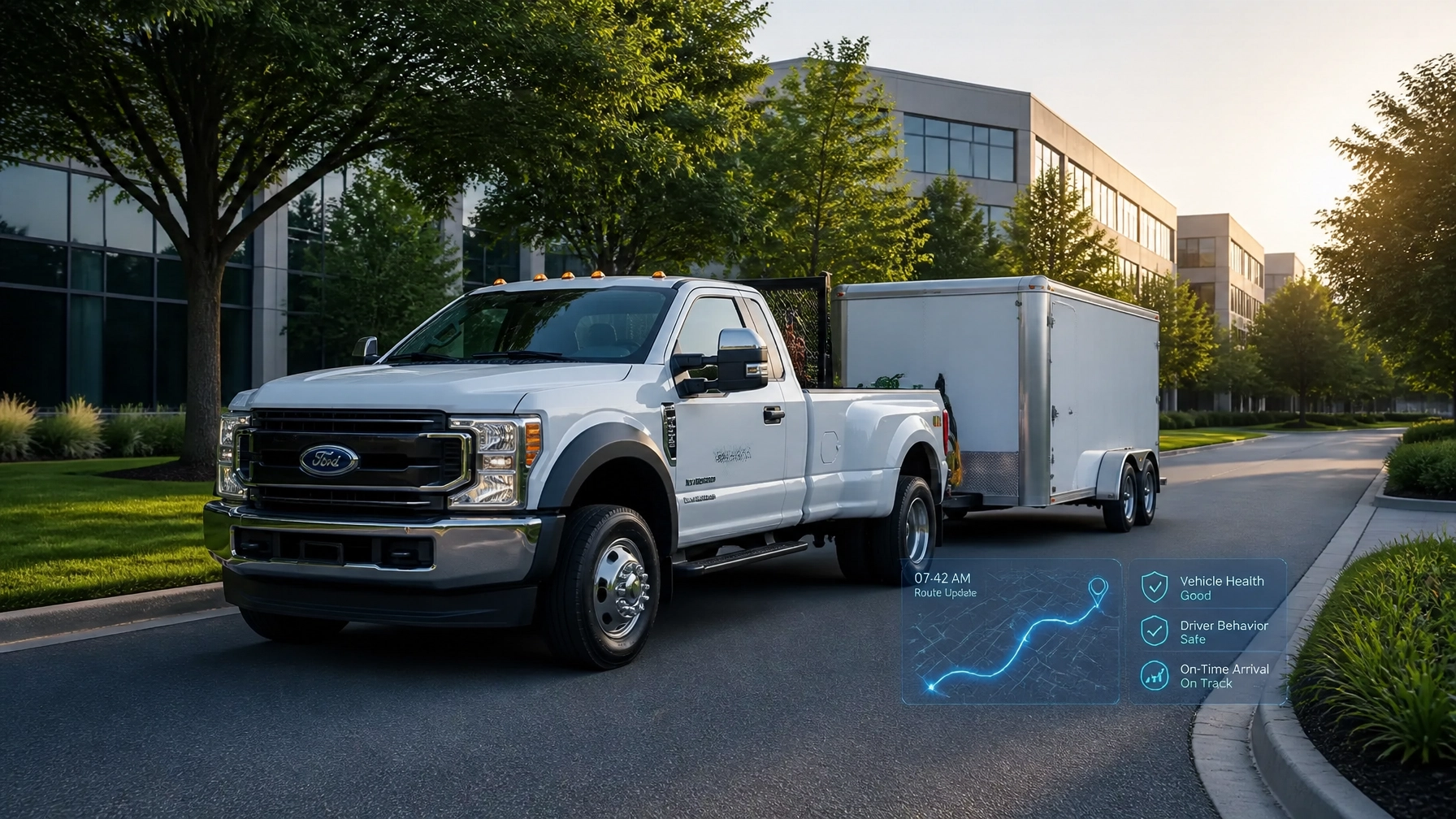
Winning 2027 Lawn Care Contracts: How Video Telematics Drives Success
Lawn care companies preparing bids for 2027 contracts face more than a pricing decision. Commercial property managers, HOAs, and municipalities want reliable service, professional crews, documented safety practices, and vendors that can reduce risk.
A competitive price still matters. It is no longer enough by itself.
Video telematics gives lawn care and landscaping companies a practical way to prove that their operation is prepared to deliver. GPS tracking, AI dash cameras, live video, and driver behavior data turn general promises about accountability into documented performance.
That evidence can help a company stand apart from competitors that submit the same basic scope of work and insurance certificate.
What Buyers Are Looking for in 2027
Commercial property managers and public procurement teams evaluate more than mowing frequency and monthly pricing. They also consider the operational risks associated with service vehicles and equipment.
A landscaping truck may travel through residential streets, HOA communities, school zones, parking lots, and municipal properties. Crews may tow trailers, maneuver around pedestrians, and work near expensive curbs, gates, irrigation systems, and parked vehicles.
A strong 2027 proposal should demonstrate:
- Reliable arrival and departure times
- Trained and accountable drivers
- A documented fleet safety program
- Fast incident response
- Clear evidence for insurance claims
- Professional protection of client property
- Consistent service reporting
Public solicitations often require specific forms, insurance documents, references, and safety acknowledgments. Companies should review each RFP carefully and follow its required format. Examples such as the Oak Forest lawn maintenance bid page show how municipalities can structure detailed requirements for grounds maintenance services.
Video telematics does not replace those requirements. It strengthens the proposal behind them.
1. Prove That Crews Arrive and Complete Service
One of the most valuable advantages of telematics is service verification.
A property manager should not have to rely on an employee’s memory to confirm whether a crew arrived on time. GPS tracking can create a time-stamped record of vehicle movement, arrival, departure, and route activity.
When a lawn care company uses GPS fleet tracking with video telematics, the bid can promise a more transparent service process:
- Vehicles can be monitored as they approach scheduled properties.
- Arrival and departure times can be documented.
- Route history can support service reports.
- Managers can investigate missed-service complaints quickly.
- Unplanned stops or route changes can be reviewed.
This information helps resolve common disputes. A customer may believe a crew missed a scheduled visit, while GPS records show that the service vehicle entered the property during the contracted window. The data gives both parties a factual starting point.
Lawn care companies can include a service verification process in their proposals. The proposal might explain that fleet location data supports internal quality control and customer communication without overwhelming the client with unnecessary technical details.
Reliable documentation makes a company easier to manage. That matters to property managers overseeing dozens of vendors.
2. Turn Fleet Safety Into a Bidding Advantage
Many landscaping companies describe their crews as safe and professional. Fewer can show how safety is monitored every day.
AI-enhanced dash cameras help bridge that gap. Safety Track’s AI fleet safety cameras can provide forward-facing and driver-monitoring coverage, with features designed to identify risks such as distraction, fatigue, lane departure, and forward collision hazards.
For lawn care companies, the technology supports a proactive safety program. It is not limited to reviewing footage after a crash.
A company can use camera alerts and telematics data to:
- Identify risky driving patterns
- Coach drivers after near misses
- Review harsh braking and acceleration
- Reinforce seat belt and phone-use policies
- Document recurring training
- Track improvements over time
This gives a proposal more substance. Instead of writing, “Our drivers follow strict safety standards,” a company can explain how it monitors behavior, reviews events, and provides ongoing coaching.
That distinction is important when bidding on HOA or municipal work. The buyer is not only hiring a crew to maintain a property. The buyer is also allowing branded commercial vehicles and employees onto public or semi-public grounds.

3. Use Insurance Performance to Support Better Pricing
Insurance costs affect every commercial lawn care bid. General liability, commercial auto, workers’ compensation, and trailer coverage all contribute to operating expenses.
A company cannot promise that a dash camera will automatically produce a specific insurance discount. Insurance requirements and underwriting decisions vary by carrier, state, fleet profile, and loss history.
However, video telematics can support a stronger risk-management discussion with an insurance broker. Documented driver coaching, incident footage, and safety policies give the carrier more information than a clean statement of intent.
Safety Track reports that its fleet camera solutions can help reduce insurance costs by up to 25% by providing video evidence and supporting safer driving practices. Actual savings depend on the insurer and the company’s individual safety record.
Lower insurance costs can improve a bid in two ways:
- The company can protect its margin. Reduced claims and better loss control help limit unexpected operating expenses.
- The company can compete more effectively. Some savings may be passed into pricing without cutting essential service quality.
A proposal should not lead with an unsupported promise of an insurance discount. It should explain that the company has invested in measurable loss prevention and can provide documentation for risk reviews.
That approach is more credible to commercial buyers and insurance professionals.
4. Resolve Property Damage and Liability Claims Faster
Landscaping work takes place in environments with significant exposure to claims. A trailer may scrape a gate. A truck may be accused of damaging a curb. A resident may report that a crew vehicle hit a parked car.
Without video, these incidents can become lengthy disputes.
With video telematics solutions, managers can review footage surrounding an event and establish what happened. Live video and recorded footage can show road conditions, vehicle movement, traffic activity, and the actions of other drivers or pedestrians.
This evidence supports faster decisions:
- The company can accept responsibility when its driver caused the damage.
- A false or inaccurate claim can be challenged with objective footage.
- The client can receive a clear explanation instead of speculation.
- Insurance adjusters can review visual evidence during the claims process.
- Corrective action can be taken after a confirmed incident.
A professional claims process improves customer satisfaction. Property managers do not expect every vendor to avoid every incident. They do expect vendors to respond quickly, communicate clearly, and take responsibility when necessary.
Video telematics gives lawn care companies a repeatable process for meeting that expectation.
5. Demonstrate Professional Accountability Around Clients
A lawn care crew represents its company before it begins work. Vehicle condition, driving behavior, parking practices, and communication all influence how a property manager views the contractor.
Fleet safety cameras help reinforce professional standards between service locations. Forward-facing cameras document traffic conditions, while driver-monitoring cameras can support policies against distracted driving and unsafe conduct.
Companies can also use footage during safety meetings. For example, managers can review best practices for:
- Backing into tight HOA streets
- Maneuvering near pedestrians
- Entering commercial parking lots
- Towing equipment trailers
- Maintaining safe following distances
- Avoiding phone use behind the wheel
This creates a culture of accountability without relying only on disciplinary action. Drivers receive specific coaching based on real events, and managers can recognize improvements.
For a 2027 proposal, that story is valuable. It shows that the company has a system for protecting residents, employees, customers, and property.
Tailor the Message to Each Buyer
The same video telematics program should be presented differently depending on the contract.
Commercial Property Managers
Emphasize:
- On-time service verification
- Faster claims resolution
- Reduced disruption to tenants
- Professional vehicle operations
- Clear communication after incidents
Property managers want vendors that reduce the number of problems requiring their attention.
HOAs
Emphasize:
- Resident and pedestrian safety
- Reduced complaints
- Documentation of arrival and departure
- Careful maneuvering near homes and parked vehicles
- Accountability for crews working in shared spaces
HOA boards want confidence that the contractor will protect curb appeal and community trust.
Municipalities
Emphasize:
- Written safety policies
- Audit-ready fleet records
- Driver training and coaching
- Insurance and claims documentation
- GPS-backed service reporting
- Compliance with the RFP’s submission requirements
Municipal buyers often need to justify vendor decisions through a formal procurement process. Organized safety documentation helps make the selection easier to defend.
Add a “Safety and Telematics” Section to Every 2027 Bid
A dedicated section can make the technology easy to find. It should be concise and connected to the client’s priorities.
A lawn care company might include language such as:
Our service fleet uses GPS tracking and video telematics to support on-time performance, driver accountability, and incident documentation. AI-enhanced cameras help identify unsafe driving behaviors, while recorded footage provides objective evidence for collision and property damage claims. Safety events are reviewed through a documented coaching process, and service activity can be verified through vehicle location history.
The final proposal should only include capabilities the company actively uses. Buyers value accurate documentation more than impressive but unsupported claims.
Companies should also confirm their policies for driver privacy, footage access, retention, and communication. A clear policy helps employees understand that cameras support safety, training, and fair incident review.
Prepare Now for the 2027 Bidding Season
Lawn care companies should not wait until an RFP deadline to install cameras and build a safety program. The strongest bidding advantage comes from having historical records to support the proposal.
Before 2027 contracts open, companies should:
- Equip trucks and trailers with the appropriate fleet safety cameras.
- Create a written camera and driver safety policy.
- Train managers to review events consistently.
- Document coaching and corrective actions.
- Track incidents, near misses, and safety improvements.
- Ask insurance brokers how telematics documentation may support underwriting.
- Build a proposal section for safety, claims, and service verification.
- Prepare sample reports without exposing private customer information.
Safety Track offers configurable camera systems for different fleet sizes, including forward-facing, driver-monitoring, rear, side, and interior coverage. The right setup depends on the vehicle type, trailer configuration, route environment, and contract requirements.
Make Reliability Visible in Every Proposal
Winning 2027 lawn care contracts will require more than a competitive number. Commercial property managers, HOAs, and municipalities want dependable vendors that can manage risk and demonstrate accountability.
Video telematics helps make those qualities visible. GPS records support service verification. AI dash cameras strengthen driver coaching. Recorded footage supports insurance claims. Safety documentation gives buyers confidence that the company is prepared for professional, consistent operations.
At Safety Track, we provide custom-tailored fleet management solutions for lawn care and landscaping companies. Contact Safety Track to build a video telematics program that supports safer operations and stronger 2027 bids.


Tyler Schneider is the IT Director at Safety Track, overseeing the company’s technological infrastructure and innovations. With a strong background in information technology and systems management, Tyler ensures that Safety Track stays at the forefront of tech solutions in fleet management. His strategic expertise supports the seamless integration of technology across the company’s operations.