
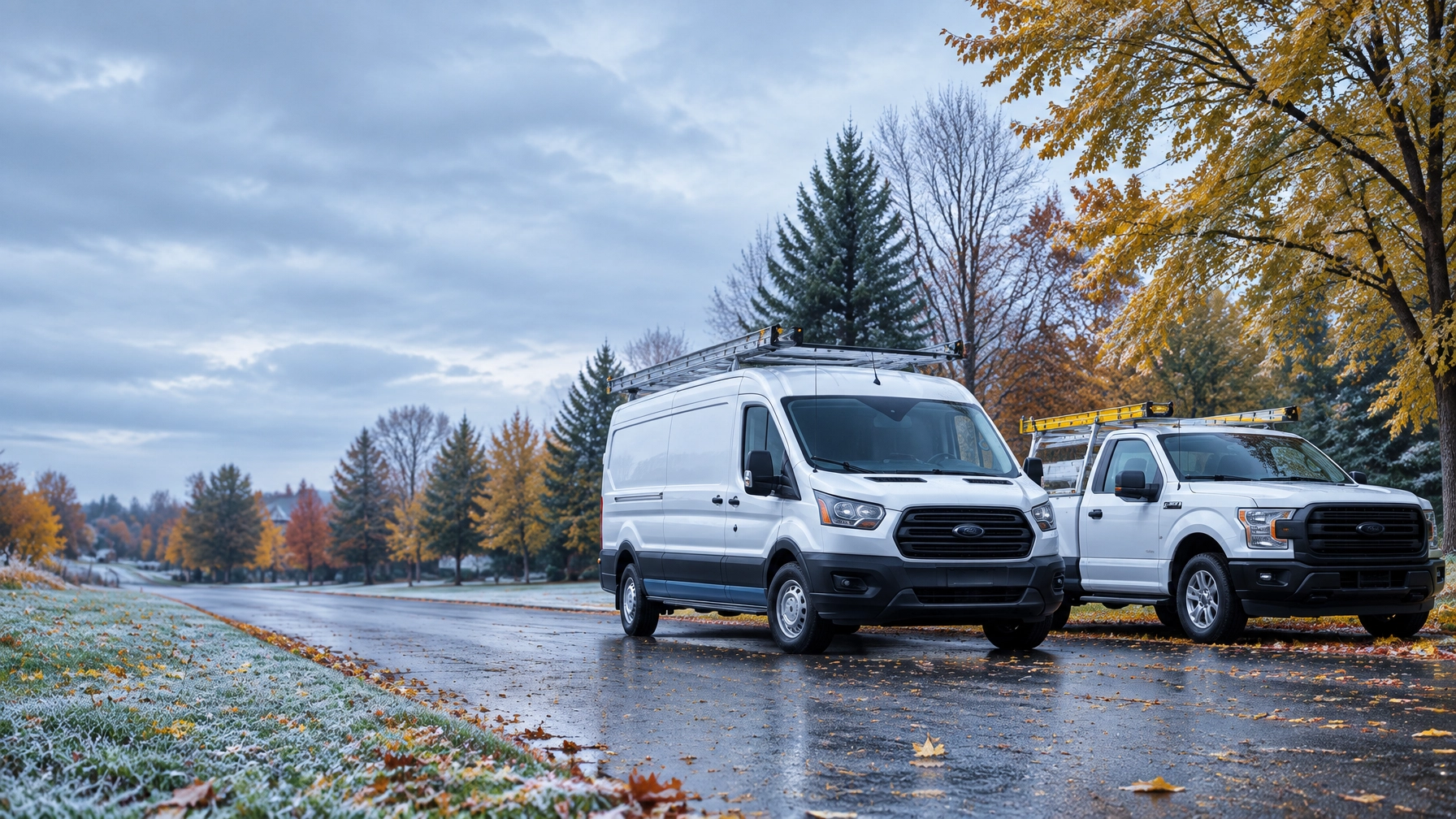
Wet Leaves and First Frost: The Two-Week Window That Catches Small Fleets Off Guard
Autumn creates a narrow window that catches many small fleets off guard. Wet leaves arrive first. Then the first frost appears on early-morning routes. Road conditions change quickly, but driving habits often remain set for dry summer pavement.
That gap creates preventable risk for plumbing companies, HVAC contractors, landscapers, delivery businesses, and other companies operating vans and light trucks. Wet leaves can reduce traction sharply. Frost can hide black ice on bridges, overpasses, shaded roads, and parking lots.
Fleet managers can reduce that risk by adjusting speed, following distance, and route timing before the first incident occurs. AI dash cameras add another layer of control by identifying harsh braking and short following distances while giving managers immediate access to the footage behind each event.
Why Wet Leaves and First Frost Create a Dangerous Two-Week Window
Wet leaves are more than a visibility problem. When rain or morning moisture covers a layer of leaves, the surface can become extremely slick. The leaves create a barrier between the tires and pavement, reducing available traction during braking, turning, and acceleration.
Research and driver-safety guidance commonly compare wet leaves to icy conditions. The National Highway Safety Association’s guidance on wet leaves recommends slowing down, increasing following distance, and avoiding sudden maneuvers.
The first frost creates a separate but related problem. Temperatures can fall below freezing overnight while roads still appear clear. Moisture then freezes into a thin layer that drivers may not see until the vehicle begins to slide.
Black ice forms first in places that lose heat quickly or receive little sunlight, including:
- Bridges and overpasses
- Shaded roads beneath trees
- Road sections beside buildings or retaining walls
- Low-lying areas where moisture collects
- Residential streets with heavy leaf coverage
- Parking lots and service yards
The first cold mornings are especially important because drivers may not yet have adjusted their habits. A route that was safe at the same speed the previous week can require significantly more space and earlier braking after the temperature drops.

Wet Leaves Can Multiply Stopping Distance
Stopping distance depends on speed, tires, road surface, vehicle weight, and driver reaction time. A loaded service van also behaves differently from an empty passenger vehicle when traction decreases.
On dry pavement, a driver may have enough grip to stop from a typical city speed with a manageable distance. Wet pavement can roughly double the stopping distance. Wet leaves can require even more space, particularly when the driver brakes or turns suddenly.
At common urban and suburban speeds, wet leaves can require two to three times the stopping distance of dry pavement. Ice can require many times more. Michelin’s winter driving guidance notes that stopping distances can double on wet roads, triple on packed snow, and increase by up to ten times on icy surfaces.
The exact distance varies, but the operating rule is clear: drivers must create more space before the hazard appears.
Fleet managers should coach drivers to:
- Reduce speed before entering leaf-covered areas
- Brake earlier and more gently
- Avoid abrupt lane changes
- Keep the vehicle pointed straight while braking
- Avoid hard acceleration on slick surfaces
- Leave additional room at intersections and turns
- Treat bridge decks as potential slick spots
A driver who waits until the last moment to brake has already lost the advantage of planning. Early, smooth inputs help preserve the limited traction available.
Use Time-Based Following Distance
Following distance should increase as soon as pavement becomes wet, leaf-covered, frosty, or shaded.
A three- to four-second gap may work as a baseline on dry roads. Wet conditions require more space. On wet leaves, suspected black ice, or a shaded bridge, fleet managers should coach drivers to maintain an eight- to ten-second gap whenever traffic allows.
A simple time-gap test makes the rule easy to understand:
- Choose a fixed object ahead, such as a sign or utility pole.
- Start counting when the vehicle ahead passes it.
- Count until the fleet vehicle reaches the same object.
- Increase the gap if the count is below the company standard.
Time-based spacing works at different speeds because the distance expands as vehicle speed increases. It also gives drivers more time to respond if the vehicle ahead brakes unexpectedly.
Following distance matters even more for vans and light trucks carrying tools, equipment, or materials. Additional weight increases the consequences of reduced traction and late braking.
Managers can reinforce the policy through fleet dash cameras and driver behavior data. A recurring short-gap alert is not just a record of past behavior. It is a coaching opportunity before a rear-end collision becomes a claim.
Adjust Morning Route Timing Before the First Frost
The first frost often arrives before most businesses change their schedules. Service vehicles leave early, drivers hurry to the first appointment, and dispatchers continue using summer travel estimates.
That approach creates pressure at exactly the wrong time. Drivers who are rushing to make an appointment have less time to reduce speed, check shaded sections, or recover from an unexpected slick patch.
Small fleets can reduce morning risk by:
- Adding travel time to first appointments
- Checking overnight temperatures before dispatch
- Identifying bridge-heavy and tree-covered routes
- Avoiding unnecessary early-morning shortcuts
- Clearing windshields and mirrors completely
- Confirming tire pressure and tread condition
- Communicating weather-related route changes before departure
A few extra minutes in the schedule can prevent hard braking, late arrivals, and rushed driving. Customers generally respond better to a clear weather-related delay than to a preventable vehicle incident.
Drivers should also be reminded that a road can change from dry to slick within a single route. A shaded section may remain frosty after the rest of the roadway has warmed. A bridge may freeze while the pavement before it appears normal.
Use AI Dash Cameras to Coach Before a Slide Becomes a Claim
Driver training explains what should happen. AI-enhanced dash cameras help fleet managers identify what is happening on the road.
Depending on the system configuration, AI dash cameras can identify events such as:
- Harsh braking
- Short following distance
- Rapid acceleration
- Unsafe lane changes
- Distracted driving
- Collision indicators
- Other risky driving patterns
A harsh-braking alert during the first frost period does not automatically mean the driver made a mistake. Another vehicle may have entered the lane, or an unexpected hazard may have appeared. The event does, however, provide a reason to review the surrounding footage and road conditions.
Coaching should focus on the behavior and the conditions:
- Review the video before and after the alert.
- Ask the driver what occurred.
- Identify whether speed or following distance reduced available reaction time.
- Discuss a safer response for the next route.
- Monitor whether the behavior improves.
Safety Track’s AI fleet monitoring solutions combine camera visibility with fleet data. This gives managers more context than a behavior score alone.
Video coaching is most effective when it happens promptly. A conversation held the same day as the event connects the driving behavior to the actual road conditions. It also helps managers address a pattern before it becomes a collision.

When a Slide Happens, Footage Helps Settle Fault Questions
Even careful drivers can encounter a patch of black ice or lose traction on wet leaves. When a slide happens, assumptions spread quickly. A customer, another driver, or an insurance adjuster may have questions about speed, lane position, braking, and road conditions.
Recorded video can provide the missing context. Forward-facing footage may show:
- The road surface before the event
- Leaf coverage or frost
- Traffic movement
- The actions of another vehicle
- The driver’s braking and steering response
- The point where traction was lost
GPS data can add location and timing information. Together, video and telematics help managers review the event based on facts rather than conflicting accounts.
Safety Track gives authorized customers immediate control over available footage. Managers can locate and review video without waiting for a vendor to retrieve it. That speed matters when an insurer, customer, or attorney needs a clear account of what happened.
The $99.95 per vehicle, per month unlimited video plan includes unlimited viewing and unlimited downloads. Small fleets can review the full context, preserve the relevant clip, and share it with authorized parties without paying per clip or waiting for vendor retrieval.
For more on direct video control, fleet owners can review Manage Your Own Video: A Small Fleet Owner’s Guide.
A Practical First-Frost Checklist for Small Fleets
Before the first frost reaches the service area, fleet managers should complete a short seasonal review.
Vehicle preparation
- Check tire pressure and tread depth
- Inspect windshield wipers and washer fluid
- Confirm headlights, brake lights, and defrosters work
- Remove leaves from windshield and hood areas
- Review vehicle maintenance concerns before cold mornings
Driver preparation
- Explain how wet leaves reduce traction
- Set minimum following-distance expectations
- Review bridge and shaded-road risks
- Prohibit sudden braking and steering on slick surfaces
- Remind drivers to allow more time for morning routes
Technology preparation
- Confirm AI dash cameras are operating
- Review harsh-braking and following-distance alert settings
- Verify that managers can access footage immediately
- Test video viewing and downloading procedures
- Establish a process for timely coaching after alerts
This checklist turns a short seasonal hazard window into a manageable fleet-safety routine.
Prepare Before Road Conditions Change
Wet leaves and first frost do not last forever, but they create a concentrated period of risk. Small fleets can stay ahead by changing route timing, increasing following distance, and coaching drivers to use smooth, deliberate inputs.
AI dash cameras strengthen that process by identifying risky behavior, supporting timely video coaching, and preserving clear evidence when a slide or collision occurs. Immediate access also gives fleet owners control over footage when a decision cannot wait for vendor retrieval.
Review the Safety Track live video fleet camera solutions to learn how instant video access, GPS tracking, and AI-enhanced monitoring can support a safer small-business fleet.

Tyler Schneider is the IT Director at Safety Track, overseeing the company’s technological infrastructure and innovations. With a strong background in information technology and systems management, Tyler ensures that Safety Track stays at the forefront of tech solutions in fleet management. His strategic expertise supports the seamless integration of technology across the company’s operations.