
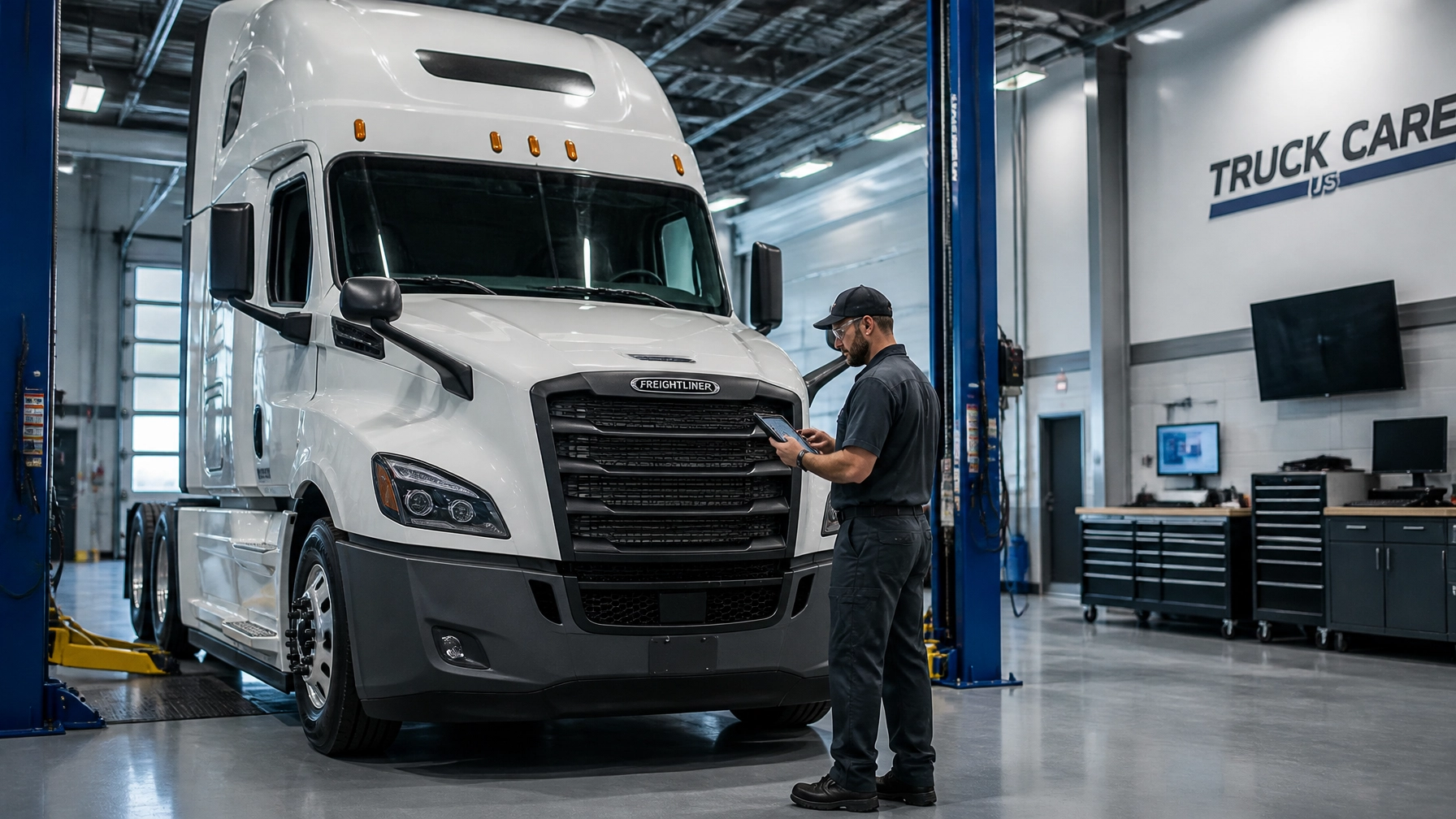
Integrating Fleet Camera Systems with Maintenance for Better Safety
June marks the arrival of National Safety Month, a time when the transportation industry refocuses its efforts on the most critical asset of any business: its people. While much of the conversation around road safety naturally focuses on driver behavior and accident prevention technology, a foundational truth often goes overlooked. Safety doesn’t start when the driver turns the key; it starts hours, days, and weeks earlier in the maintenance bay.
For modern fleet managers, the challenge is no longer just “fixing what’s broken.” It is about creating a unified ecosystem where maintenance tracking and fleet camera systems work in tandem to eliminate risks before they manifest as a highway catastrophe. When these two technologies are siloed, you only see half the picture. When they are integrated, you gain a comprehensive safety shield that protects your drivers, your cargo, and your bottom line.
In this deep dive, we will explore how integrating vehicle health data with video telematics transforms fleet safety from a reactive chore into a proactive competitive advantage.
The Mechanical Link to Roadway Safety
According to the National Safety Council (NSC), roadway incidents remain the leading cause of work-related deaths. While human error is frequently cited as the primary factor, mechanical failure is a massive, often preventable contributor. A blowout at 65 mph or a brake failure on a steep grade isn’t just a maintenance issue: it’s a life-threatening safety failure.
National Safety Month 2026 emphasizes “Moving Safety Forward” by strengthening proactive cultures. In a fleet context, this means moving beyond the basic pre-trip inspection. It requires a system that monitors the vehicle’s physical condition with the same intensity that we monitor the driver’s behavior.
The Danger of Deferred Maintenance
In a high-pressure logistics environment, the temptation to “get one more trip” out of a set of brake pads or a vibrating tire is real. However, deferred maintenance creates a compounding risk. A vehicle with worn suspension doesn’t just ride poorly; it handles unpredictably during emergency maneuvers. A truck with a small oil leak isn’t just messy; it’s a fire hazard or an engine failure waiting to happen in the middle of a high-traffic corridor.
By utilizing advanced maintenance tracking, fleet managers can move away from paper logs and manual reminders. Instead, they receive automated alerts based on real-time mileage and engine hours, ensuring that no vehicle ever misses a critical safety check.
Using Fleet Camera Systems as Diagnostic Tools
Most people view fleet camera systems as tools for documenting accidents or coaching drivers. While they excel at those tasks, they are also secret weapons for your maintenance team.
When an AI-enhanced camera triggers a “Harsh Braking” event, it does more than just show you a video of a driver stopping suddenly. It provides a data point for your shop. Frequent harsh braking events accelerate the wear on brake drums, rotors, and linings. By analyzing the frequency of these events through your camera dashboard, you can adjust maintenance intervals for specific vehicles that are subjected to high-stress driving.

Harsh Events as Early Warning Signs
Consider these common triggers captured by modern camera systems and what they tell your maintenance team:
- Harsh Cornering: This isn’t just a sign of aggressive driving; it’s a signal that the vehicle’s tires and suspension are being subjected to extreme lateral forces. Over time, this leads to premature tire wear and potential alignment issues.
- Impact Alerts: If a dash cam detects a significant G-force impact (even if it’s not a collision with another vehicle, such as hitting a deep pothole), it should trigger an immediate inspection of the wheels and axles.
- Harsh Acceleration: Consistent “jackrabbit” starts put immense strain on the drivetrain and transmission. Tracking these events allows you to predict when a transmission service or U-joint replacement might be necessary.
By integrating this behavioral data into your maintenance workflow, you are no longer guessing when a vehicle needs attention. You are using the driver’s actual road experience to inform the shop’s schedule.
Real-Time Engine Diagnostics: The Heartbeat of Your Fleet
At Safety Track, we emphasize that “one solution cannot fit everyone’s needs.” This is why our custom-tailored solutions include deep integration with a vehicle’s On-Board Diagnostics (OBD-II or J1939) port.
When a “Check Engine” light illuminates on a Kenworth or Freightliner dashboard, the driver might ignore it to finish a route. With integrated maintenance tracking, that fault code is instantly transmitted to the fleet manager. You see the exact code, the severity of the issue, and the vehicle’s location simultaneously.
Bridging the Gap Between Video and Data
Imagine receiving an alert for a “Low Coolant” engine code. Simultaneously, you can pull the live video feed from the vehicle’s dash camera to see the road conditions. Is the driver stuck in heavy traffic where the engine might overheat? Or are they in a safe location where they can pull over immediately?
This combination of visual context and mechanical data allows fleet managers to make informed, split-second decisions that prevent engine meltdowns and dangerous roadside breakdowns. It’s the difference between a $200 sensor replacement and a $20,000 engine overhaul: and more importantly, it keeps a disabled truck off the shoulder of a busy highway.
Moving from Reactive to Proactive Maintenance
The goal of National Safety Month is to prevent incidents before they occur. In the shop, this translates to proactive maintenance. Traditional maintenance is “reactive”: you fix it when it breaks. “Preventive” maintenance is scheduled: you fix it based on time. But the gold standard is “Predictive” maintenance: you fix it because the data says it’s about to fail.

Digital Inspections and Accountability
Safety Track’s systems facilitate digital Driver Vehicle Inspection Reports (DVIR). Instead of a driver scribbling on a notepad, they use a mobile app to walk through a guided inspection of tires, lights, and mirrors. They can even take photos of a frayed belt or a leaking seal and upload them directly to the maintenance portal.
When a driver knows that their reports are being tracked and that the shop is responding to their concerns, it builds a culture of accountability. Drivers feel more responsible for their equipment, and the shop can prioritize repairs based on actual safety risks rather than just who complained the loudest.
The Economic Impact: Protecting the Bottom Line
Safety is a moral imperative, but it is also a financial one. The costs associated with a single major accident: legal fees, insurance hikes, vehicle replacement, and lost productivity: can be catastrophic for a small to medium-sized fleet.
- Insurance Savings: We’ve seen that video evidence reduces false claims, leading to up to a 25% reduction in insurance costs. When you add a documented maintenance history to that, you become a “low-risk” fleet in the eyes of underwriters.
- Fuel Efficiency: Well-maintained vehicles (properly inflated tires, clean air filters, healthy engines) are more fuel-efficient. Combined with the 30% fuel savings our clients often see through behavior monitoring and route optimization, the ROI becomes undeniable.
- Reduced Downtime: Every hour a truck spends in the shop is an hour it’s not making money. Predictive maintenance reduces “unplanned” downtime by catching small issues during scheduled service windows.
Integrating your systems doesn’t just make you safer; it makes you more profitable.
Building a Culture of Care During National Safety Month
Technology is only as effective as the people who use it. National Safety Month is the perfect time to communicate to your drivers that these systems are not “Big Brother.” Instead, they are a “Safety Net.”
When a driver understands that the AI-enhanced cameras are there to exonerate them in a “he-said, she-said” accident, and that the maintenance tracking is there to ensure they aren’t driving a “death trap,” their perspective shifts. They aren’t being watched; they are being protected.
Recognition and Rewards
Use the data from your integrated system to reward your safest drivers. During June, highlight the drivers who have the fewest harsh events and the most consistent DVIR submissions. By gamifying safety and maintenance, you turn a mandatory requirement into a point of pride for your team.
The Future of Fleet Safety: All Eyes on Optimization
As we look toward the remainder of 2026 and beyond, the convergence of AI, video, and mechanical data will only deepen. We are moving toward a world where the vehicle itself will be able to schedule its own service based on a combination of engine health and driving conditions.
At Safety Track, we are leading this charge. Our asset tracking solutions already allow you to monitor trailers and non-powered assets with the same precision as your power units. Our goal is to ensure that no part of your fleet is a “blind spot.”

Conclusion: Take Control Today
National Safety Month is a call to action. It is a reminder that safety is a continuous process that requires the right tools and the right mindset. By integrating your maintenance tracking with your fleet camera systems, you are creating a synergy that protects your most valuable assets.
Are you ready to see how a custom-tailored solution can reduce your accidents by 40% and your insurance costs by 25%? Contact Safety Track today for a consultation. Let’s make this National Safety Month the start of your safest year yet.
Go Securely. Grow Safely.

Tyler Schneider is the IT Director at Safety Track, overseeing the company’s technological infrastructure and innovations. With a strong background in information technology and systems management, Tyler ensures that Safety Track stays at the forefront of tech solutions in fleet management. His strategic expertise supports the seamless integration of technology across the company’s operations.