

How AI Enhances Driver Behavior in Fleet Management
How AI Enhances Driver Behavior in Fleet Management
How AI Enhances Driver Behavior in Fleet Management: Improving Safety and Performance with AI-Powered Solutions
The integration of artificial intelligence (AI) in fleet management is revolutionizing how companies monitor and enhance driver behavior. This article delves into the mechanisms through which AI improves safety and performance, focusing on AI driver behavior monitoring, real-time coaching, and predictive analytics. Fleet managers face challenges such as distracted driving and fatigue, which can lead to accidents and increased operational costs. AI offers solutions that not only mitigate these risks but also enhance overall fleet efficiency. We will explore the various AI technologies that contribute to safer driving practices, the benefits of real-time coaching, and how predictive analytics can forecast and help prevent potential accidents. Additionally, we will discuss the role of Safety Track in implementing these AI solutions effectively.
Further research highlights how the synergy of IoT and AI creates a robust framework for smart fleet management, enabling real-time data analysis and predictive capabilities for enhanced safety and efficiency.
AI & IoT for Smart Fleet Management: Real-time Data, Predictive Analytics, and Enhanced Safety
The Internet of Things (IoT) and Artificial Intelligence (AI) have driven a paradigm shift in fleet management providing organizations to monitor, manage and even optimize their vehicle operations. This article presents an IoT and AI enabled framework for Smart Fleet Management, wherein real-time data, predictive analytics and automation are used for efficient, safe and green fleets. The IoT devices based in automobiles sense and collect data on the environmental conditions of the automobile driving behavior, and send this to a central virtual platform for analysis. The proposed architecture also gives the safety of its Advanced Driver Assistance Systems (ADAS) by detecting dangerous driving actions and reactions.
Internet of things (IoT) and artificial intelligence (AI) enabled framework for smart fleet management, PR Potdar, 2025
What Is AI Driver Behavior Monitoring and How Does It Work?
AI driver behavior monitoring refers to the use of artificial intelligence technologies to analyze and improve the driving habits of fleet operators. This system works by collecting data from various sources, including GPS tracking, telematics, and AI fleet cameras, to assess driver performance. The primary benefit of this monitoring is its ability to provide real-time or near-real-time feedback, which can lead to significant improvements in safety and efficiency.
How Do AI Fleet Cameras and Telematics Collect Driver Data?
AI fleet cameras and telematics systems collect a wide range of data, including speed, braking patterns, and acceleration. These systems utilize advanced sensors and algorithms to capture driver behavior accurately. For instance, telematics devices can track vehicle location and performance metrics, while AI cameras can analyze visual data to detect unsafe driving practices such as distracted driving or seatbelt use. This comprehensive data collection enables fleet managers to identify areas for improvement and implement targeted training programs.
Which AI Technologies Analyze Driver Behavior for Fleet Safety?
Several AI technologies are employed to analyze driver behavior, including machine learning algorithms, computer vision, and predictive analytics. Machine learning models can process vast amounts of data to identify patterns and anomalies in driving behavior. Computer vision technology, used in AI fleet cameras, can detect risky behaviors such as tailgating, distracted driving, or drowsiness. Predictive analytics further enhances safety by forecasting potential risks based on historical data, allowing for proactive measures to be taken.
A comprehensive review further details how machine learning techniques, including clustering and classification, are pivotal in analyzing complex driving behaviors for real-time monitoring and improved vehicle safety systems.
Machine Learning for Driving Behavior Analysis: Real-time Monitoring & Safety
Smart mobility has ushered in advanced sensing technologies. These, together with high‑level data analytics, are revolutionizing how we analyze driving behavior. Excellent performance in dealing with real-world, high-technology complexities for machine learning has made wide enthusiasm to utilize them to study driver behavior. This article gives a thorough overview of the important machine learning methods—especially clustering and classification techniques—that help analyze complex driving behaviors, predict fuel and energy use, and improve vehicle safety systems. The review specifically explains unsupervised methods like fuzzy c-means, k-means, and density-based spatial clustering of applications with noise, as well as supervised techniques such as artificial neural networks, k-nearest neighbors, and support vector machines. Emphasis is placed on how these methods transform vast, heterogeneous driving data into actionable insights that support real-time monitoring and personalized feedback for eco-driving and smart transportation applications.
A state-of-the-art review on machine learning techniques for driving behavior analysis: clustering and classification approaches, S Shaffiee Haghshenas, 2025
How Does Real-Time AI Driver Coaching Improve Fleet Safety?
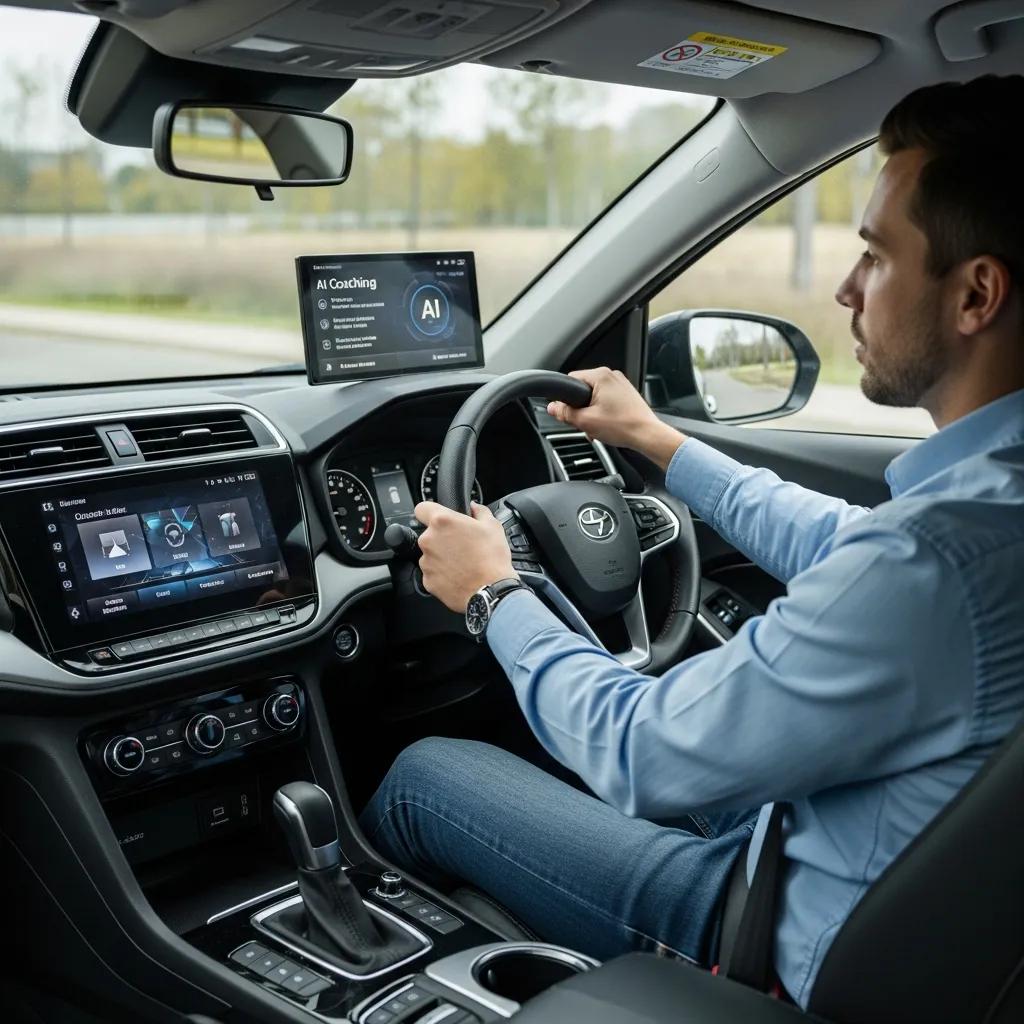
Real-time AI driver coaching provides immediate feedback to drivers, helping them adjust their behavior on the spot. This coaching is crucial for reinforcing safe driving practices and reducing the likelihood of accidents. By utilizing in-cab alerts and personalized coaching programs, fleet managers can significantly enhance driver performance and safety.
What Are In-Cab Alerts and Their Role in Preventing Risky Driving?
In-cab alerts are notifications provided to drivers in real-time, warning them of unsafe driving behaviors such as speeding, harsh braking, or rapid acceleration. These alerts serve as immediate reminders for drivers to correct their actions, thereby reducing the risk of accidents. Studies have shown that fleets utilizing in-cab alerts experience a notable decrease in incident rates, highlighting their effectiveness in promoting safer driving habits.
How Do Personalized AI Coaching Programs Enhance Driver Performance?
Personalized AI coaching programs tailor feedback to individual drivers based on their unique driving patterns. By analyzing data collected from AI systems, these programs can identify specific areas where a driver may need improvement, such as reducing harsh braking or maintaining a safe following distance. This targeted approach not only enhances driver performance but also fosters a culture of safety within the fleet.
Research demonstrates the effectiveness of smart driving assistance frameworks like DriveCoach, which provide real-time on-board and post-drive coaching tailored to individual users, significantly enhancing road safety and mitigating risks. Learn more about our driving assistance.
Real-Time AI Driving Coach for Enhanced Road Safety & Risk Mitigation
This paper introduces DriveCoach, a smart driving assistance framework designed to enhance road safety. It provides a holistic approach to predicting and mitigating a wide range of driving risks. Utilizing data from multiple sources, our multimodal models identify eleven types of near-miss risks and provide personalized, context-aware guidance. DriveCoach offers real-time on-board assistance and post-drive coaching, dynamically tailored to specific users. Demonstrations in a driving simulator show DriveCoach’s potential to reduce accidents and enhance road safety, contributing to safer, intelligent transportation systems.
Smart Driving Assistance with Real-Time Risk Assessment and Personalized Driving Coaching to Enhance Road Safety, W Gan, 2025
How Does AI Reduce Distracted Driving and Fatigue in Fleet Management?
Distracted driving and fatigue are two of the leading causes of accidents in fleet management. AI technologies play a pivotal role in detecting and mitigating these issues, ensuring that drivers remain focused and alert while on the road.
What AI Solutions Detect and Prevent Distracted Driving?
AI solutions designed to detect distracted driving utilize advanced algorithms and computer vision to monitor driver behavior. These systems can identify when a driver is using a mobile device, looking away from the road, or engaging in other distractions. By providing immediate feedback and alerts, these technologies help to reduce the incidence of distracted driving, ultimately enhancing safety on the road.
How Does Fatigue Detection Technology Protect Drivers and Fleets?

Fatigue detection technology employs various methods, such as monitoring driver eye movements, blink rates, and facial expressions, to assess alertness levels. When signs of fatigue are detected, the system can alert the driver to take a break, thereby preventing potential accidents caused by drowsiness. This proactive approach not only protects drivers but also reduces liability for fleet operators.
What Role Does Predictive Analytics Play in Proactive Driver Safety?
Predictive analytics is a powerful tool in fleet management, allowing for the identification of risk patterns in driver behavior. By analyzing historical and real-time data, AI systems can forecast potential safety issues and recommend preventive measures.
How Does AI Identify Risk Patterns in Driver Behavior?
AI identifies risk patterns by analyzing data collected from various sources, including telematics and driver feedback. Machine learning algorithms can detect trends that may indicate unsafe driving practices, such as frequent hard braking, rapid acceleration, or excessive idling. By recognizing these patterns, fleet managers can implement targeted interventions to improve driver safety.
How Can Predictive Analytics Forecast and Prevent Accidents?
Predictive analytics can forecast potential accidents by analyzing factors such as weather conditions, traffic patterns, vehicle maintenance data, and driver behavior. By understanding these variables, fleet managers can make informed decisions about route planning and driver assignments. This proactive approach not only enhances safety but also optimizes operational efficiency.
What Are the Benefits and ROI of AI-Powered Fleet Safety Solutions?
Implementing AI-powered fleet safety solutions offers numerous benefits, including cost savings, reduced accident rates, and improved operational efficiency. These advantages contribute to a strong return on investment (ROI) for fleet operators.
How Does AI Reduce Accidents and Lower Insurance Costs?
AI technologies have been shown to significantly reduce accident rates within fleets. By enhancing driver behavior and providing real-time feedback, fleets can lower their insurance premiums due to decreased risk. This reduction in accidents not only saves money but also protects the company’s reputation.
In What Ways Does AI Improve Fuel Efficiency and Operational Savings?
AI solutions contribute to improved fuel efficiency by optimizing driving patterns and reducing unnecessary idling. By analyzing data on driver behavior, fleets can implement strategies that promote smoother driving, leading to lower fuel consumption. This operational savings can be substantial, further enhancing the ROI of AI investments.
How Can Fleet Managers Implement AI Solutions with Safety Track?
Safety Track offers comprehensive AI-powered fleet management solutions designed to enhance driver behavior and improve overall safety. Fleet managers can leverage these tools to implement effective monitoring and coaching strategies.
What Features Do Safety Track’s AI Fleet Cameras and Monitoring Solutions Offer?
Safety Track’s AI fleet cameras provide advanced features such as real-time monitoring, incident recording, and driver behavior analysis. These capabilities enable fleet managers to gain valuable insights into driver performance and make data-driven decisions to enhance safety.
How Does Customization Enhance Integration of AI in Fleet Management?
Customization options offered by Safety Track allow fleet managers to tailor AI solutions to their specific needs. By integrating these solutions seamlessly into existing systems, fleets can maximize the effectiveness of their safety initiatives and ensure a smooth transition to AI-powered management.
What Are Common Questions About AI in Driver Behavior and Fleet Safety?
As AI technology continues to evolve, many fleet managers have questions about its effectiveness and implementation. Addressing these common inquiries can help demystify AI’s role in fleet safety.
How Does AI Improve Driver Behavior Effectively?
AI improves driver behavior by providing real-time feedback and personalized coaching based on data analysis. This targeted approach helps drivers understand their performance and make necessary adjustments, leading to safer driving practices. You can learn more about driver training solutions.
Can AI Detect Fatigue and Distracted Driving Accurately?
Yes, AI can accurately detect fatigue and distracted driving through advanced monitoring technologies. By analyzing driver behavior and physiological indicators, AI systems can provide timely alerts to prevent accidents caused by these factors, such as unsafe driving behaviors.

Hannah Lang is a Social Media Marketing Specialist at Safety Track. She has her bachelor’s degree in Advertising and Public Relations from Grand Valley State University. With her passion for research, Hannah possesses a wealth of knowledge expanding across multiple industries and disciplines. Her efforts won her a Scholastic Art and Writing regional Gold Key award.