
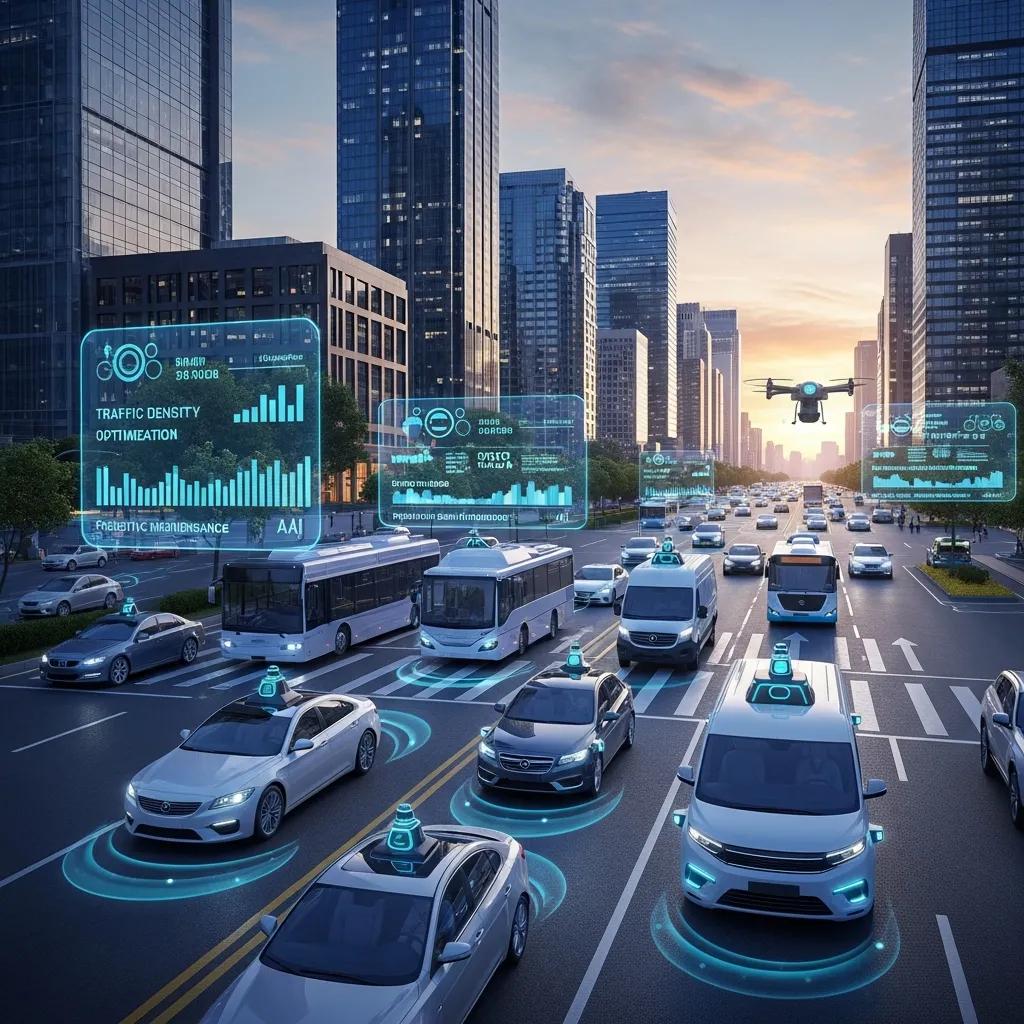
Maximize Efficiency Using Smart Fleet Management Systems
Maximize Efficiency Using Smart Fleet Management Systems
AI Fleet Monitoring Solutions for Optimal Operations: Enhancing Fleet Efficiency and Safety
In the rapidly evolving landscape of logistics and transportation, AI fleet monitoring solutions have emerged as a game-changer for optimizing operations. These advanced systems leverage artificial intelligence to enhance fleet efficiency, improve safety, and reduce operational costs. This article will delve into the mechanisms behind AI-driven fleet monitoring, exploring how these technologies can transform vehicle tracking, driver behavior analytics, and predictive maintenance. As businesses face increasing pressure to streamline operations and ensure compliance, understanding the benefits of AI fleet monitoring solutions becomes essential. We will cover key topics, including the definition of AI fleet monitoring, the role of real-time data, and the impact of driver behavior monitoring on safety and compliance.
What Are AI Fleet Monitoring Solutions and How Do They Improve Operations?
AI fleet monitoring solutions refer to advanced systems that utilize artificial intelligence to enhance the management and operation of vehicle fleets. These solutions improve operational efficiency by providing real-time insights into vehicle performance, driver behavior, and overall fleet health. By integrating AI technologies, businesses can optimize routes, reduce fuel consumption, and enhance safety measures. The importance of real-time data cannot be overstated, as it allows fleet managers to make informed decisions quickly, ultimately leading to improved operational outcomes.
Further emphasizing the comprehensive benefits of these integrated systems, recent research highlights how IoT and AI frameworks are revolutionizing smart fleet management.
IoT & AI for Smart Fleet Management: Efficiency, Safety, and Predictive Maintenance
The Internet of Things (IoT) and Artificial Intelligence (AI) have driven a paradigm shift in fleet management providing organizations to monitor, manage and even optimize their vehicle operations. This article presents an IoT and AI enabled framework for Smart Fleet Management, wherein real-time data, predictive analytics and automation are used for efficient, safe and green fleets. Such AI systems analyze data and pick up the pattern which helps for predictive maintenance, which is a core part of this architecture that helps minimize vehicle downtime and reduces maintenance costs by doing proper identification of potential faults at the right time. The AI also routes better, ensuring vehicles travel down the most efficient roads, have lower emissions and use less fuel, while still ensuring timely deliveries. The proposed architecture also gives the safety of its Advanced Driver Assistance Systems (ADAS) by detecting dangerous driving actions and reactions.
Internet of things (IoT) and artificial intelligence (AI) enabled framework for smart fleet management, PR Potdar, 2025
Defining AI-Driven Fleet Monitoring and Smart Fleet Management Systems
AI-driven fleet monitoring encompasses a range of technologies designed to enhance fleet management through data analysis and automation. Smart fleet management systems integrate various components, including GPS tracking, telematics, and driver behavior analytics, to provide a comprehensive view of fleet operations. These systems enable businesses to monitor vehicle locations, assess driver performance, and identify maintenance needs proactively. By leveraging AI, companies can streamline their operations and achieve significant cost savings.
How AI Enhances Real-Time Vehicle Tracking and Driver Behavior Analytics
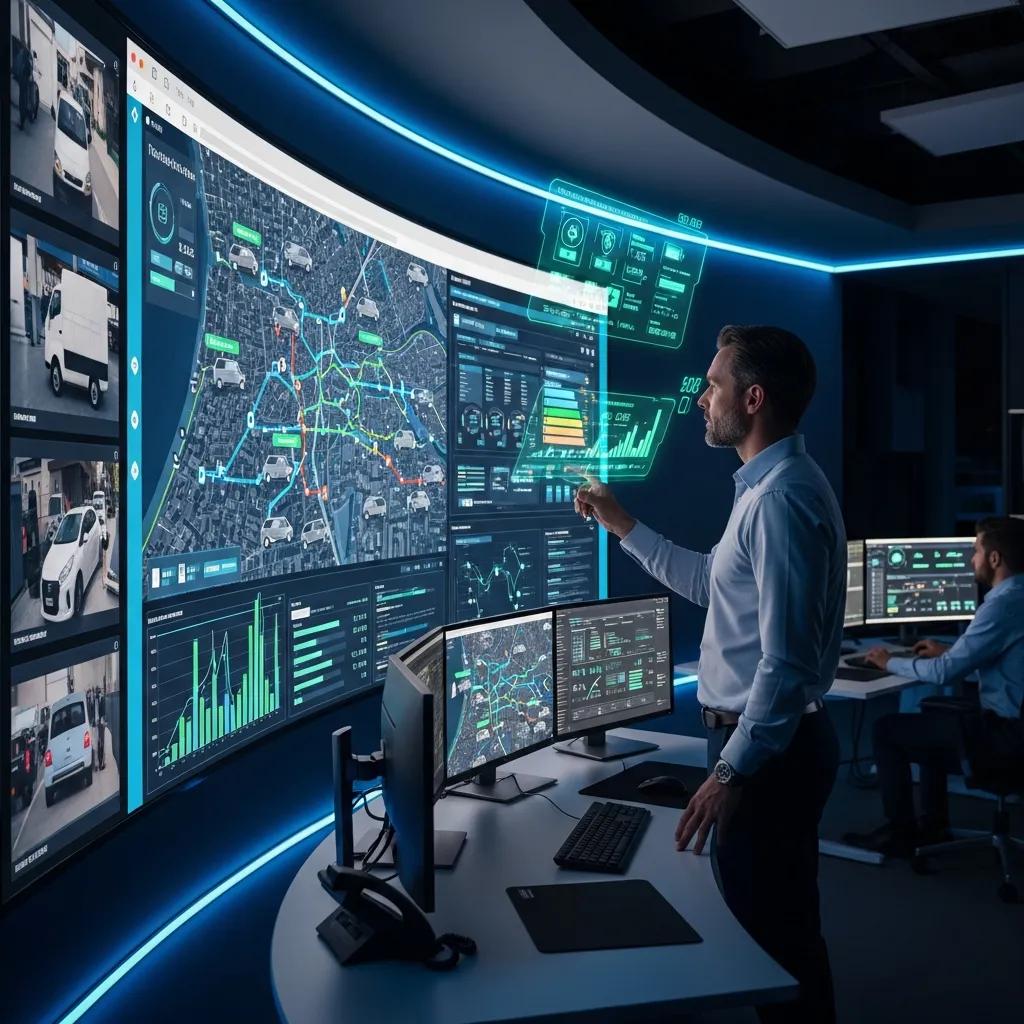
AI enhances real-time vehicle tracking by utilizing advanced algorithms to process data from GPS and telematics systems. This technology allows fleet managers to monitor vehicle locations and performance metrics continuously. Additionally, AI-driven analytics can assess driver behavior, identifying patterns that may indicate unsafe practices or inefficiencies. By addressing these issues, companies can implement targeted training programs, ultimately improving safety and reducing accident rates. Fleet safety and compliance are crucial to ensure the effectiveness of these measures.
How Does Real-Time Fleet Monitoring Optimize Vehicle Tracking and Performance?
Real-time fleet monitoring optimizes vehicle tracking and performance by providing immediate access to critical data. Fleet managers can track vehicle locations, monitor fuel consumption, and assess maintenance needs in real-time. This level of visibility enables businesses to respond quickly to potential issues, minimizing downtime and enhancing overall fleet performance.
Key Features of Vehicle Tracking Software and Fleet Telematics Systems
Vehicle tracking software and fleet telematics systems offer several key features that contribute to optimized fleet management:
- Real-Time Tracking: Continuous monitoring of vehicle locations allows for efficient route planning and timely deliveries.
- Data Integration: Integration with other systems, such as maintenance and fuel management, provides a holistic view of fleet operations.
- Driver Behavior Monitoring: Analytics tools assess driver performance, helping to identify areas for improvement.
These features collectively enhance operational efficiency and contribute to better decision-making.
Benefits of Real-Time Data for Fleet Performance Analytics
The benefits of using real-time data for fleet performance analytics are substantial. By leveraging immediate insights, fleet managers can:
- Improve Decision-Making: Access to real-time data enables informed decisions regarding route adjustments and resource allocation.
- Enhance Operational Efficiency: Continuous monitoring helps identify inefficiencies, allowing for timely interventions.
- Reduce Costs: Optimized routes and improved driver behavior lead to significant cost savings in fuel and maintenance.
These advantages underscore the importance of real-time data in modern fleet management.
What Role Does Driver Behavior Monitoring Play in Fleet Safety and Compliance?
Driver behavior monitoring plays a crucial role in enhancing fleet safety and ensuring compliance with regulations. By analyzing driver performance, fleet managers can identify risky behaviors and implement corrective measures to mitigate potential accidents.
Analyzing Driver Behavior to Reduce Accident Rates and Improve Safety
Analyzing driver behavior involves assessing various metrics, such as speed, braking patterns, and acceleration. By identifying patterns that correlate with accidents, fleet managers can develop targeted training programs to address these issues. Research indicates that companies implementing driver behavior monitoring have seen a reduction in accident rates, leading to safer driving environments.
Ensuring Fleet Safety Compliance Through AI Analytics
AI analytics contribute to fleet safety compliance by automating the monitoring of regulatory requirements. These systems can track driver hours, vehicle maintenance schedules, and safety inspections, ensuring that fleets adhere to industry standards. By maintaining compliance, companies can avoid costly fines and enhance their reputation in the market.
How Can Predictive Maintenance Alerts Prevent Vehicle Downtime?
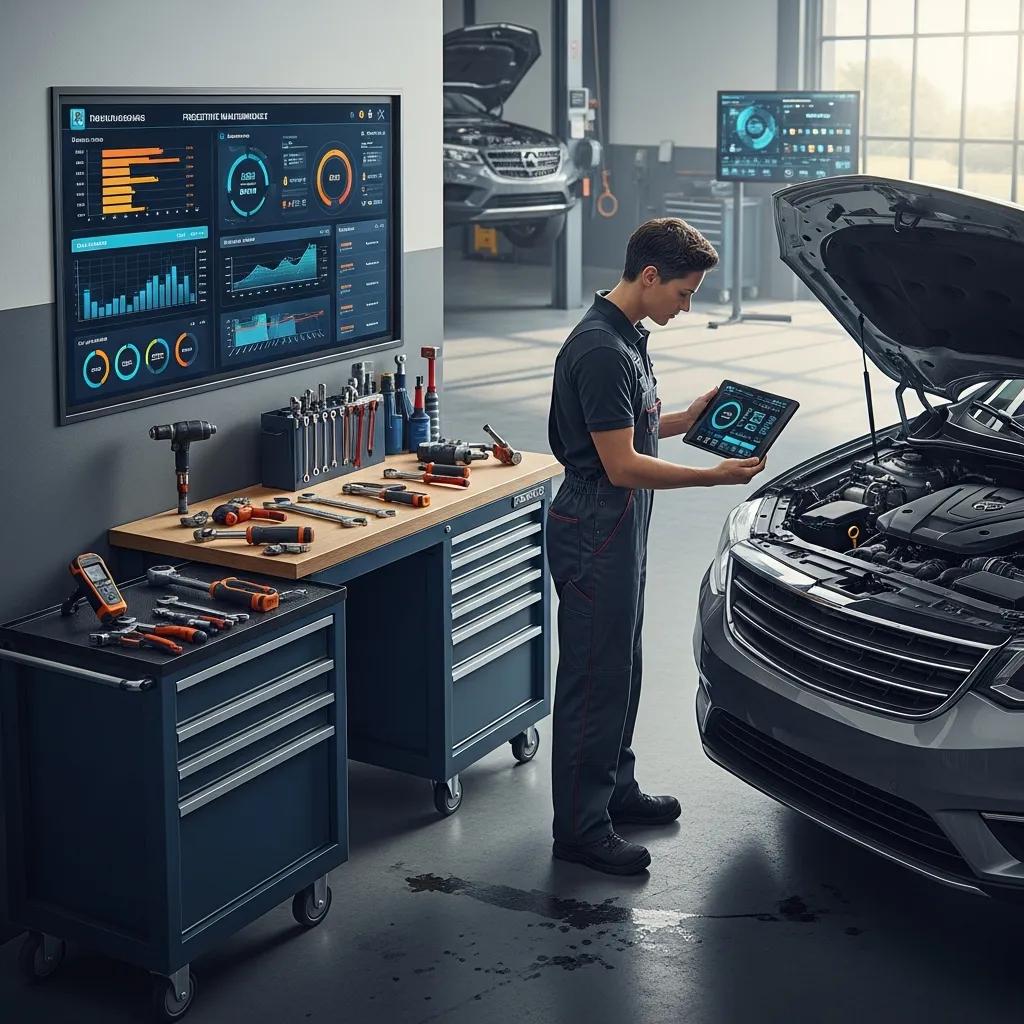
Predictive maintenance alerts are a vital component of AI fleet monitoring solutions, helping to prevent vehicle downtime by forecasting maintenance needs before they become critical issues. This proactive approach ensures that vehicles remain operational and reduces the risk of unexpected breakdowns.
The critical role of predictive maintenance in fleet operations, particularly in minimizing downtime and costs, is further underscored by studies exploring advanced data processing techniques.
Predictive Maintenance for Fleet Operations: Minimizing Downtime & Costs
Predictive maintenance in fleet operations is critical for minimizing downtime, reducing operational costs, and enhancing safety. However, the massive volume, velocity, and variety of data generated by vehicle sensors pose significant challenges for traditional data processing systems. This paper investigates distributed data processing techniques as a scalable and efficient solution for predictive maintenance in large-scale fleet operations.
Investigation of distributed data processing techniques for predictive maintenance in fleet operations, 2024
Using AI to Forecast Maintenance Needs and Optimize Fleet Uptime
AI technologies analyze historical data and real-time performance metrics to predict when maintenance is required. By identifying patterns that indicate potential failures, fleet managers can schedule maintenance proactively, minimizing downtime and ensuring that vehicles are always ready for operation. This approach not only enhances fleet uptime but also extends the lifespan of vehicles.
Integration Capabilities with Existing Fleet Systems for Maintenance
Integrating predictive maintenance alerts with existing fleet management systems is essential for maximizing their effectiveness. By ensuring seamless communication between systems, fleet managers can streamline maintenance processes and improve overall operational efficiency. This integration allows for better resource allocation and more effective management of maintenance schedules.
What Are the Benefits of Fuel Efficiency Optimization in AI Fleet Monitoring?
Fuel efficiency optimization is a critical aspect of AI fleet monitoring solutions, as it directly impacts operational costs and environmental sustainability. By leveraging AI technologies, companies can implement strategies to monitor and improve fuel consumption across their fleets.
Techniques for Monitoring and Improving Fuel Consumption
Several techniques can be employed to monitor and improve fuel consumption, including:
- Telematics Data Analysis: Utilizing telematics data to identify fuel consumption patterns and inefficiencies.
- Driver Training Programs: Implementing training programs focused on fuel-efficient driving practices.
- Route Optimization: Using AI algorithms to determine the most fuel-efficient routes for deliveries.
These techniques collectively contribute to enhanced fuel efficiency and reduced operational costs.
Impact of Fuel Efficiency on Operational Costs and Sustainability
Improving fuel efficiency has a direct impact on operational costs, as reduced fuel consumption leads to significant savings. Additionally, optimizing fuel usage contributes to environmental sustainability by lowering greenhouse gas emissions. Companies that prioritize fuel efficiency not only enhance their bottom line but also demonstrate a commitment to sustainable practices.
How Does AI Integration Enhance Fleet Operational Efficiency and Decision Support?
AI integration enhances fleet operational efficiency by providing data-driven insights that support decision-making processes. By leveraging advanced analytics, fleet managers can make informed choices that optimize fleet performance.
Data-Driven Decision Making with AI Fleet Performance Metrics
Data-driven decision-making involves utilizing AI-generated metrics to assess fleet performance. Key performance indicators (KPIs) such as fuel efficiency, vehicle utilization, and driver performance can be analyzed to identify areas for improvement. This approach enables fleet managers to implement targeted strategies that enhance overall operational efficiency.
Case Studies Demonstrating ROI Improvements from AI Solutions
Numerous case studies illustrate the return on investment (ROI) achieved through AI fleet monitoring solutions. Companies that have adopted AI technologies report significant reductions in operational costs, improved safety records, and enhanced customer satisfaction. These success stories highlight the transformative potential of AI in fleet management.
Which Industry Sectors Benefit Most from AI Fleet Monitoring Solutions?
AI fleet monitoring solutions are applicable across various industry sectors, each benefiting uniquely from these technologies. Understanding the specific applications of AI in different industries can help businesses tailor their fleet management strategies.
Applications in Trucking, Construction, and Automotive Services
- Trucking: AI solutions optimize route planning and enhance driver safety, leading to improved delivery times and reduced costs.
- Construction: Fleet monitoring ensures that construction vehicles are utilized efficiently, minimizing downtime and maximizing productivity.
- Automotive Services: AI technologies help automotive service providers manage their fleets effectively, ensuring timely maintenance and compliance with regulations.
These applications demonstrate the versatility of AI fleet monitoring solutions across diverse sectors.
Tailoring AI Solutions to Specific Fleet Management Needs
Tailoring AI solutions to meet specific fleet management needs is essential for maximizing their effectiveness. By understanding the unique challenges faced by different industries, fleet managers can implement customized strategies that address their operational requirements. This approach ensures that AI technologies deliver optimal results and drive significant improvements in fleet performance.
What Are the Latest Trends and Market Insights in AI Fleet Monitoring for 2024-2026?
The landscape of AI fleet monitoring is continuously evolving, with new trends and insights emerging that shape the future of fleet management. Staying informed about these developments is crucial for businesses looking to remain competitive.
Growth of AI Adoption in Logistics and Fleet Management
The adoption of AI technologies in logistics and fleet management is experiencing rapid growth, driven by the need for increased efficiency and cost savings. Companies are increasingly recognizing the value of AI in optimizing operations and enhancing decision-making processes. This trend is expected to continue as more businesses invest in advanced fleet monitoring solutions.
Emerging Technologies and Future Directions in Smart Fleet Systems
Emerging technologies, such as machine learning and the Internet of Things (IoT), are set to revolutionize smart fleet systems. These innovations will enable even greater levels of automation and data analysis, further enhancing fleet performance. As the industry evolves, businesses must remain agile and adapt to these changes to leverage the full potential of AI fleet monitoring solutions.
Jeff Stoker is the CEO and founder of Safety Track, a company he established in 2002. With over two decades of leadership in fleet management solutions, Jeff has guided Safety Track from a pioneering vision to a trusted industry leader. His innovative mindset and commitment to excellence continue to drive the company’s growth and impact.