
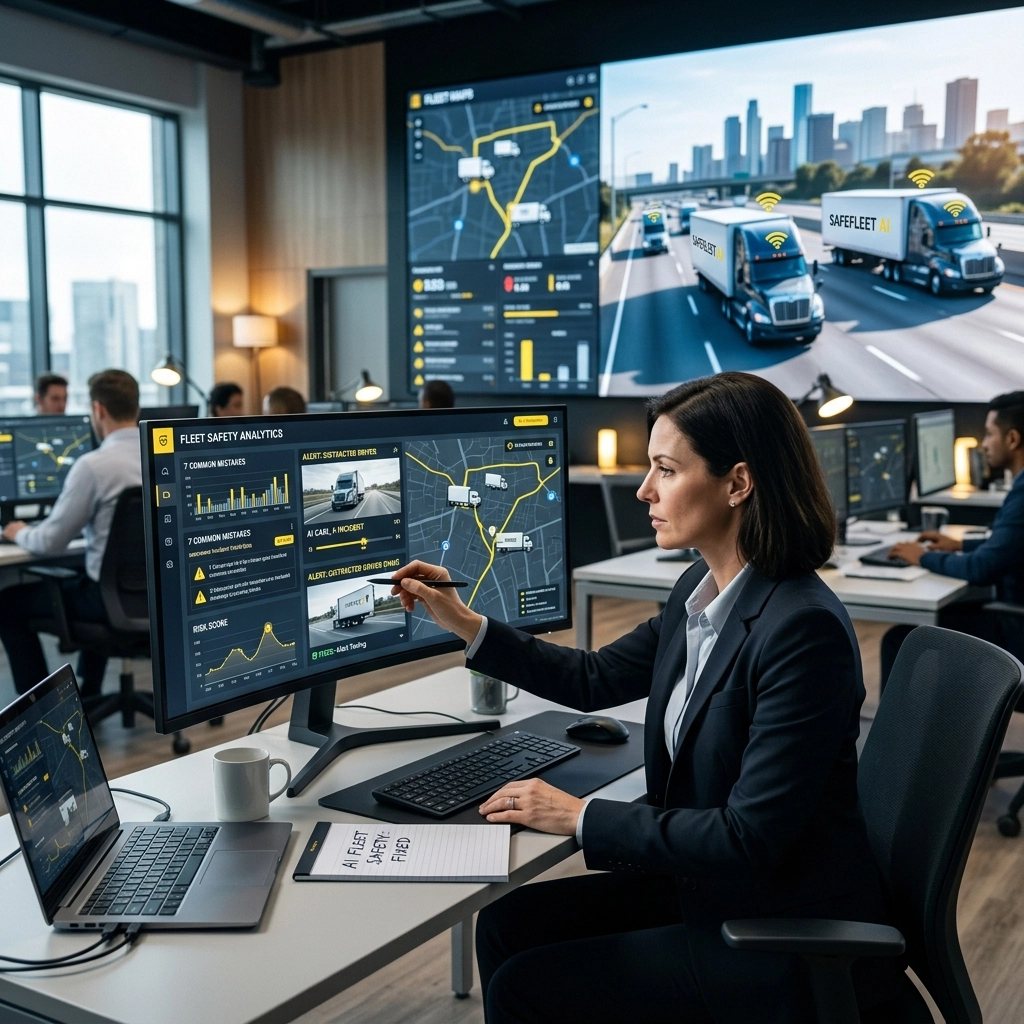
7 AI Fleet Safety Camera Mistakes and How to Fix Them
Implementing AI fleet safety cameras is one of the most significant investments a modern transport or logistics company can make. These systems offer more than just a recording of the road; they provide real-time intelligence, risk mitigation, and a massive reduction in liability. However, simply purchasing the hardware and sticking it on a windshield does not guarantee success.
Many fleet managers find that after the initial excitement wears off, they aren’t seeing the ROI they expected. Accidents are still happening, drivers are frustrated, and the data remains unread. Often, the issue isn’t the technology itself, but how it is being managed. By identifying and correcting common implementation errors, you can transform your AI dash cameras for fleets into a powerhouse for operational efficiency.
Here are the seven most common mistakes fleet managers make with AI camera systems and the actionable steps to fix them.
1. Poor Mounting and Placement Strategy
The physical installation of a commercial dash cam system is the foundation of its performance. A common mistake is treating installation as a minor “IT checkbox” task. When cameras are mounted too low on the windshield, they often capture dashboard reflections rather than clear road data. Worse, low placement can lead to headlight glare from oncoming traffic triggering false alerts for speeding or lane departures.
Furthermore, driver-facing cameras must be positioned precisely. If they are placed where sun glare washes out the driver’s face during sunrise or sunset, the AI will fail to detect signs of fatigue or distraction. If the camera blocks the driver’s line of sight to mirrors or intersections, it creates a new safety hazard rather than solving one.
The Fix:
Standardize your mounting protocol across the entire fleet. Forward-facing cameras should generally be mounted high, often behind the rearview mirror or near the top of the windshield, to maximize the field of view while minimizing dashboard glare. According to FMCSA regulations, devices must be mounted within specific zones to ensure they do not obstruct the driver’s view. Always perform a “view test” after installation to ensure the AI can see both the driver’s eyes and the road lanes clearly under various lighting conditions.

2. Neglecting Driver Buy-In and Communication
One of the quickest ways to derail a safety program is to introduce AI fleet safety cameras without proper communication. If drivers perceive the cameras as “spy-ware” intended to micromanage their every move, resistance is inevitable. This leads to tampering, lens covering, or high turnover rates.
Many managers fail to explain the “why” behind the technology. They focus on the monitoring aspect rather than the protection aspect. This creates a culture of distrust where drivers feel their privacy is being invaded without any clear benefit to them.
The Fix:
Shift the narrative from “surveillance” to “exoneration.” Use the cameras as a tool to protect your drivers from false claims. When an accident occurs, the video evidence provided by video telematics solutions is often the only thing that saves a driver from a wrongful citation.
Transparently discuss fleet monitoring vs. employee privacy rights. Explain exactly what triggers a recording and who has access to the footage. When drivers realize the system is there to have their back in a legal dispute, buy-in increases dramatically.
3. Succumbing to “Alert Fatigue”
AI cameras are incredibly smart; they can detect tailgating, cell phone use, smoking, and even yawning. However, if every single event sends a push notification to the fleet manager’s phone, the “noise” becomes overwhelming. This is known as alert fatigue. When a manager receives 200 alerts a day, they stop looking at them. This means that a critical alert: one that could prevent a catastrophic accident: might be buried under a mountain of minor lane-drift notifications.
The Fix:
Customize your alert thresholds. Most high-quality fleet camera systems allow you to set sensitivity levels. Start by focusing on high-risk behaviors: harsh braking, collisions, and active cell phone use. As your safety culture improves, you can gradually lower the thresholds to include minor infractions.
Prioritize “Edge AI” processing, where the camera itself analyzes the footage and only uploads the most relevant clips. This reduces data costs and ensures that your safety team is only reviewing high-impact events. You can learn more about managing these outputs in our guide on how AI fleet optimization tools transform operations.

4. Using Data for “Gotcha” Moments Only
A common mistake is using camera footage exclusively for discipline. If the only time a driver hears about the camera system is when they’ve done something wrong, they will grow to hate the technology. This reactive approach fails to improve long-term driving habits because it ignores the 99% of the time the driver is doing a great job.
The Fix:
Implement a proactive coaching program that balances correction with recognition. Use the data from your commercial dash cam system to identify “safety champions.” If a driver uses defensive driving to avoid an accident caused by someone else, highlight that footage in company meetings.
Effective fleet management safety training should involve the driver in the review process. Instead of just sending a reprimand, sit down with the driver and review the clip together. Ask them what they saw and how they would handle it differently next time. This collaborative approach turns the camera into a teaching tool rather than a weapon.
5. Ignoring Auxiliary Power and Technical Infrastructure
AI cameras, especially those with live-streaming capabilities and constant AI processing, require a stable power source. A mistake often seen in specialized fleets: such as construction or refrigeration: is failing to account for the auxiliary power draw. If cameras are wired incorrectly, they can drain the vehicle’s battery overnight. Conversely, if they aren’t wired to “always-on” power when needed, you might miss critical “parked” events like hit-and-runs or theft.
Additionally, many managers ignore cellular connectivity issues. If your fleet operates in rural “dead zones,” the AI might detect a risk, but it won’t be able to upload the clip to the cloud until the vehicle returns to a 4G/5G area.
The Fix:
Ensure professional installation that accounts for your vehicle’s specific electrical load. Modern AI dash cameras for fleets often have “sleep modes” that protect the battery while still allowing for wake-up triggers if an impact is detected. For connectivity, choose systems that offer robust local storage (SD cards or internal SSDs) so that no data is lost during cellular outages. Regularly check our spring maintenance checklist for dash cams to keep your hardware in top shape.

6. Failing to Integrate with Claims Workflows
A camera system is only as good as the speed at which you can retrieve its data. In the event of an accident, every minute counts. A major mistake is keeping the camera data in a “silo,” where only one person has the login and the insurance company has to wait days for a clip. According to insurance industry reports, “First Notice of Loss” (FNOL) speed is a primary factor in the total cost of a claim. The longer it takes to prove your driver wasn’t at fault, the higher the legal and storage fees climb.
The Fix:
Integrate your video telematics solutions with your broader fleet management and claims process. Ensure that your safety officers and even your insurance adjusters have a streamlined way to access relevant clips. Systems that offer a dash cam with live streaming allow dispatchers to see the scene of an accident immediately, providing better support to the driver and gathering evidence before witnesses leave the scene.
7. Treating It as “Set It and Forget It”
Technology evolves, and so do driving risks. A mistake many fleets make is installing the cameras and never updating the software or reviewing the safety goals. Lenses get dirty, mounts get loose, and SD cards eventually wear out from constant over-writing. Furthermore, AI models are frequently updated to recognize new types of risks, such as updated distracted driving patterns.
The Fix:
Establish a recurring maintenance and review schedule. Every 90 days, inspect the physical mounts and clean the lenses. Check the health of your storage media to ensure video is actually being saved. On the administrative side, review your safety data quarterly. Are accidents actually going down? Which drivers are improving? Use these insights to refine your driver training programs.

Maximizing the Benefits of AI Fleet Monitoring
When implemented correctly, the advantages of AI fleet monitoring are undeniable. Beyond just safety, these systems contribute to:
- Significant Cost Savings: By reducing accidents and exonerating drivers, companies save thousands in insurance premiums and legal fees. Discover more about how fleet camera systems deliver significant cost savings.
- Asset Protection: Cameras don’t just watch the road; they watch your cargo. When paired with GPS trailer tracking, you gain 360-degree visibility into your operations.
- Improved Driver Retention: While it seems counterintuitive, professional drivers often prefer working for companies that provide high-quality equipment that protects their CDL from unfair blame.
Choosing the Right Partner
The final mistake is choosing a provider based solely on price. A “cheap” camera system often lacks the processing power to accurately run AI algorithms, leading to high false-alert rates and unreliable video uploads.
At Safety Track, we specialize in providing tailored video telematics solutions that go beyond simple recording. Our systems are designed to integrate seamlessly with your existing operations, providing the real-time data you need to protect your bottom line.
Whether you are looking to install your first commercial dash cam system or seeking to upgrade your existing fleet camera systems, our team is here to help you avoid the pitfalls and maximize your ROI.
Safety isn’t just about avoiding accidents; it’s about building a culture of accountability and excellence. By fixing these seven common mistakes, you aren’t just installing cameras: you’re installing a future-proof safety strategy.
Ready to take your fleet safety to the next level? Explore our full range of AI fleet safety cameras and see how we can help you protect your drivers and your business. For more insights into the future of telematics, check out our thoughts on future insights into safety tracking technology.

Tyler Schneider is the IT Director at Safety Track, overseeing the company’s technological infrastructure and innovations. With a strong background in information technology and systems management, Tyler ensures that Safety Track stays at the forefront of tech solutions in fleet management. His strategic expertise supports the seamless integration of technology across the company’s operations.