
AI Fleet Safety Cameras: Reducing Driver Distractions
Let’s be honest: the road is a much noisier place than it was even five years ago. For fleet drivers, the cab isn’t just an office; it’s a high-pressure environment where a single second of lost focus can lead to a lifetime of consequences. We’ve all been there: that “quick glance” at a notification or the struggle to keep your eyes open during a long haul through the Midwest at 3:00 AM.
In the world of fleet management, “distraction” is often treated like a buzzword. But for companies like Safety Track, it’s a measurable risk that can be mitigated. While traditional dash cams have acted as a digital witness for years, the game has changed. We are now in the era of AI fleet safety cameras, technology that doesn’t just record the disaster: it actually helps prevent it from happening in the first place.
In this guide, we’re going to look at the most common distraction mistakes drivers make and how a modern commercial dash cam system uses artificial intelligence to act as a digital co-pilot, keeping your team safe and your liability low.
The Modern Anatomy of Distraction
When we talk about distracted driving, most people immediately think of a smartphone. While that’s a huge part of the problem, it’s only the tip of the iceberg. Distraction is multifaceted, involving visual, manual, and cognitive lapses.
1. The “Quick Glance” Myth
Many drivers believe that looking away for two seconds to check a text or a GPS update is harmless. However, at 55 mph, you travel the length of a football field in five seconds. If you’re looking at a screen for two of those seconds, you’ve essentially driven 120 feet blindfolded.
2. Fatigue and Highway Hypnosis
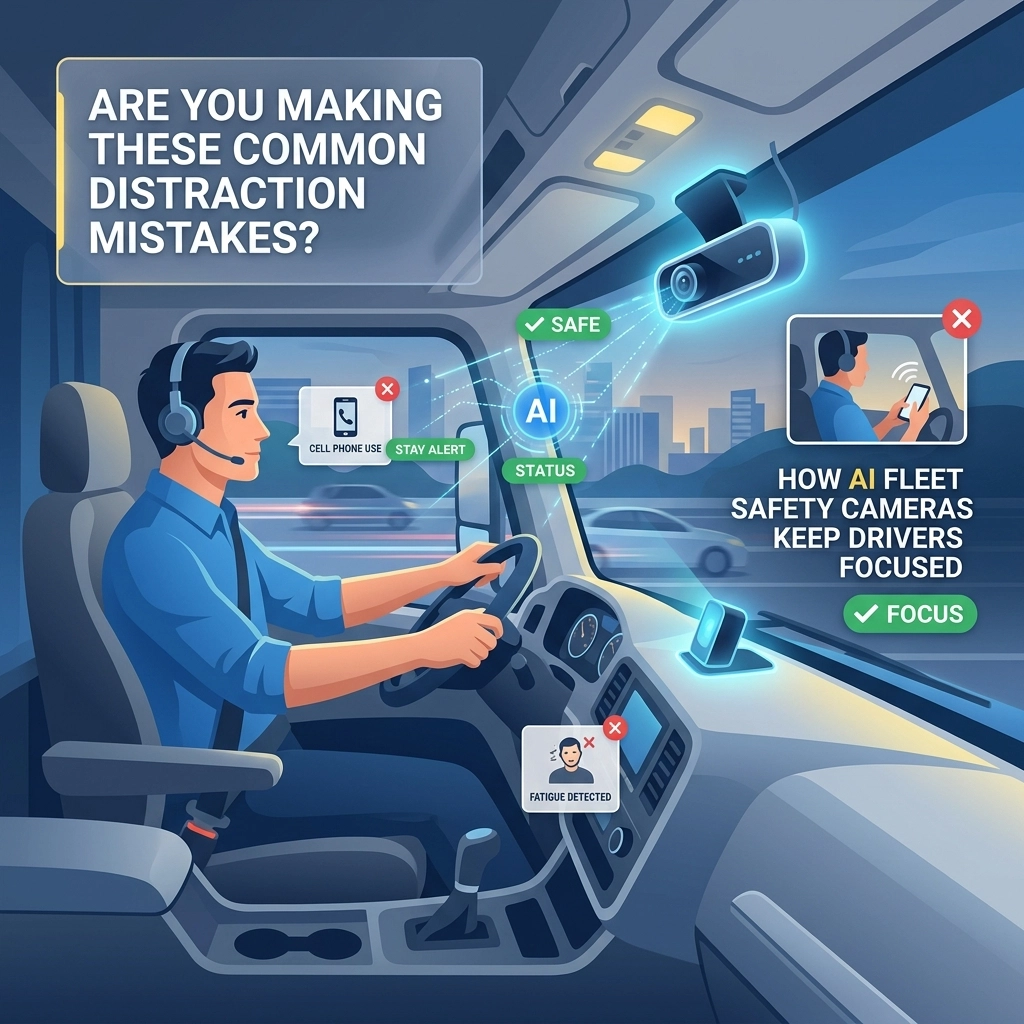
According to research, fatigue is a silent killer in the logistics industry. “Highway hypnosis” occurs when a driver zones out on familiar routes, operating the vehicle on autopilot while their conscious mind is elsewhere. This is where AI dash cameras for fleets prove their worth by detecting the subtle signs of drowsiness: like drooping eyelids or frequent yawning: long before the driver realizes they are failing.
3. The “Phantom Notification” Anxiety
Modern research has identified a phenomenon known as “phantom vibration syndrome.” Drivers who are stressed or anxious about missing a call from a dispatcher or family member may constantly check their devices even when they haven’t made a sound. This cognitive load pulls focus away from the road, creating a dangerous mental distraction.
4. In-Cab Multitasking
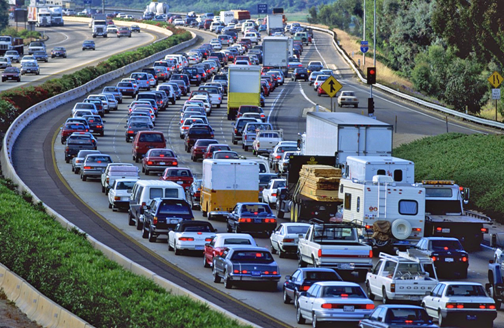
Eating, drinking, or even reaching for a fallen object in the footwell are common manual distractions. While these seem like “part of the job” for long-haulers, they significantly slow down reaction times during sudden traffic shifts or heavy freeway congestion.
How AI Fleet Safety Cameras Change the Game
Gone are the days when a fleet manager had to manually sift through hours of footage to find a safety violation. Modern fleet camera systems are proactive, not just reactive.
Real-Time Behavioral Analysis
An AI-powered camera uses machine vision to monitor the driver’s face and body posture. It isn’t just “watching” you; it’s analyzing specific data points.
- Gaze Tracking: The system knows if your eyes are on the road or your lap.
- Object Detection: The AI can identify the specific shape of a smartphone, a cigarette, or a coffee cup.
- Biometric Patterns: It tracks blink rates and head positioning to detect the onset of microsleep.
When the system detects a violation: like a driver holding a phone: it triggers an immediate in-cab alert. This “voice of God” or audible beep snaps the driver’s attention back to the task at hand. This is the difference between a “near miss” and a catastrophic collision. For a deeper look at how this data manages risk, check out our post on leveraging AI for risk management.

Tailored Alerts for Specific Needs
Not every fleet is the same. A construction vehicle navigating a busy job site has different risks than a delivery van in a residential neighborhood. AI systems can be calibrated to recognize the specific environmental triggers of your industry. Whether it’s construction fleet tracking or long-haul logistics, the AI adapts to provide the most relevant safety feedback.
Why You Need a Commercial Dash Cam System Right Now
If you’re still on the fence about upgrading your tech, consider the legal and financial landscape of 2026. “Nuclear verdicts”: jury awards exceeding $10 million: are becoming more common in the trucking industry.
1. Exonerating Your Drivers
Most passenger vehicle drivers assume the “big truck” is at fault in any accident. Without video evidence, it’s your word against theirs. A commercial dash cam system provides high-definition, AI-stamped proof of what actually happened. If your driver was focused and the other car cut them off, you have the evidence to end a lawsuit before it even starts. This is a key reason why real-time fleet data is the backbone of modern operations.
2. Slashing Insurance Premiums
Insurance companies love AI. Why? Because it’s predictable. When you can prove to an underwriter that your fleet uses AI dash cameras for fleets to actively coach drivers and reduce distracted driving events, you’re in a much stronger position to negotiate lower premiums. Some fleets have seen insurance costs drop by up to 25% after implementing these systems.
3. Improving Driver Coaching
Instead of yelling at a driver after an accident, fleet managers can use “teachable moments” captured by the AI. This shifts the culture from one of surveillance to one of professional development. It’s about supporting, not replacing, fleet managers.
Overcoming the “Big Brother” Stigma
One of the biggest hurdles to implementing fleet camera systems is driver pushback. No one likes feeling like they’re being watched by a boss every second of the day. However, the narrative is shifting.
Drivers are beginning to see these cameras as their “best friend” on the road. If a driver is falsely accused of texting during an accident, the AI camera is the only thing that can prove their innocence. It’s important to communicate that the AI is there to protect their CDL and their livelihood. For tips on how to handle this conversation, read our guide on proving AI cameras are a driver’s best friend.

The Integration: GPS and AI Working Together
An AI camera is powerful on its own, but when integrated with a robust GPS tracking platform, it becomes a total fleet management solution.
- Location-Based Safety: Did the driver speed through a high-accident zone while distracted?
- Geofencing: You can receive alerts if a driver is showing signs of fatigue while entering a high-traffic urban area.
- Idle Tracking: Often, distraction and high idle times go hand-in-hand (e.g., a driver sitting at a light distracted by a phone).
By combining these technologies, you get a 360-degree view of your operations. This is particularly vital for specialized industries, such as landscaping and tree services, where drivers often navigate tight residential streets with high pedestrian traffic.
Taking the Next Step with Safety Track
At Safety Track, we know that fleet management isn’t just about moving assets from point A to point B. It’s about people. It’s about making sure every driver who leaves the lot in the morning makes it home for dinner at night.
Whether you’re managing a family-owned fleet or a massive logistics operation, the transition to AI fleet safety cameras is the single most impactful safety decision you can make this year. Our solutions are designed to be user-friendly for managers and non-intrusive for drivers, focusing on what matters: safety, efficiency, and peace of mind.

Ready to protect your fleet?
Don’t wait for a “near miss” to become a “direct hit.” Explore how our AI dash cameras can transform your safety culture today.
Final Thoughts: The Road Ahead
As we look toward the future of transportation, the integration of AI is no longer a luxury; it’s a requirement. The roads aren’t getting any emptier, and the distractions aren’t going away. By investing in a commercial dash cam system, you are giving your drivers the tools they need to stay focused, stay professional, and stay safe.
From reducing maintenance costs through better driving to protecting your company from unfair liability, the benefits are clear. Keep your eyes on the road, and let AI help you watch the rest.
If you’re ready to see the difference for yourself, reach out to the Safety Track team. We’ve been helping fleets navigate these challenges for years, and we’d love to help you build a safer, more profitable future.
Key Takeaways for Fleet Managers:
- AI is Proactive: Real-time alerts stop accidents before they happen.
- Liability Protection: Video evidence is the only way to beat “nuclear verdicts.”
- Driver Retention: Use AI to coach and protect your best drivers, not just punish them.
- Cost Savings: Lower insurance and maintenance costs lead to a healthier bottom line.
Stay safe out there!

Tyler Schneider is the IT Director at Safety Track, overseeing the company’s technological infrastructure and innovations. With a strong background in information technology and systems management, Tyler ensures that Safety Track stays at the forefront of tech solutions in fleet management. His strategic expertise supports the seamless integration of technology across the company’s operations.