
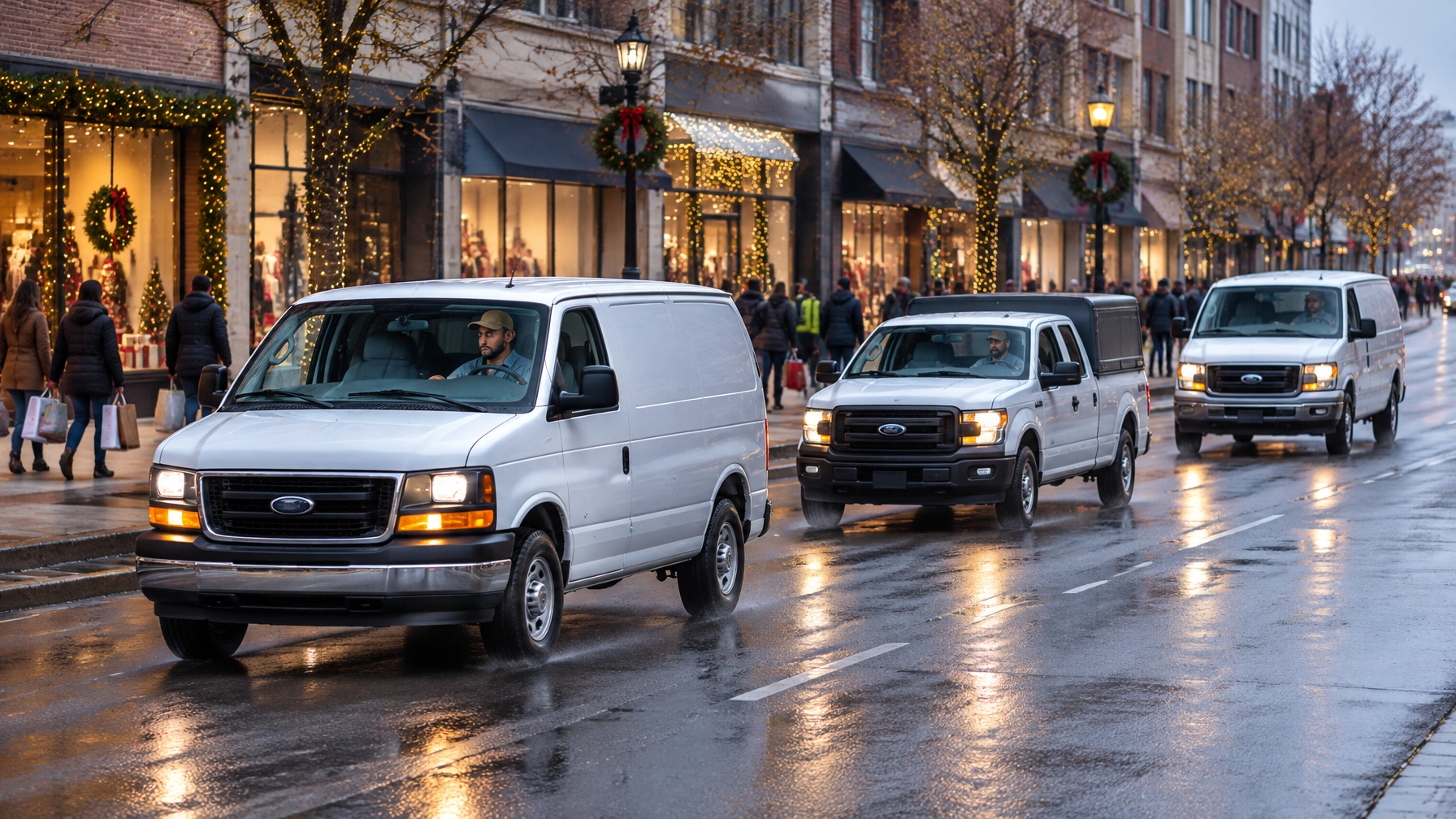
Black Friday and Cyber Monday: Delivery Vans Under Pressure
Black Friday and Cyber Monday can push even a small delivery operation beyond its normal pace. Routes run through crowded shopping areas and unfamiliar residential streets. Stop windows tighten, daylight fades, and drivers may feel pressure to complete every delivery before the shift ends.
For a business with a handful of vans, the answer is not simply to ask drivers to move faster. A practical plan can help reduce backing incidents, curb strikes, property damage disputes, and rushed decisions at the end of a long day. It can also help managers respond quickly when a customer questions a delivery.
Plan routes for real-world conditions
A route that looks efficient on a screen may become difficult when streets fill with shoppers, parked cars, delivery vehicles, and pedestrians. A few poorly placed stops can create delays across the whole route.
Before the holiday rush, review routes for known bottlenecks and difficult residential approaches. Where possible, group nearby stops and plan legal places to park that do not block a crosswalk, sidewalk, driveway, bike lane, hydrant, or sightline. Leave time for parking and walking to the delivery point, not just driving between addresses.
Drivers should not be expected to make an unsafe or illegal stop to protect a schedule. Give them clear instructions to choose a safer location, contact dispatch, or defer a stop when the approach is blocked.

A short pre-shift check helps turn the route plan into a usable one:
- Confirm the stop list, delivery windows, and any access notes.
- Flag locations with narrow driveways, limited visibility, or known congestion.
- Set a process for reporting blocked access or unexpected delays.
- Build time for traffic, parking, and customer interactions into the schedule.
GPS tracking can help managers see vehicle locations and identify when a route is falling behind. It does not replace driver judgment. The goal is to give dispatch enough visibility to adjust the plan before a driver feels pressure to take a risk.
Set stop counts drivers can complete safely
A stop target should reflect the route, parking conditions, delivery requirements, and available work hours. An aspirational number can become a safety problem if drivers respond by speeding, skipping breaks, rushing through parking maneuvers, or trying to recover time late in the day.
Review recent routes to estimate how long stops actually take. Add a reasonable buffer for peak-season traffic, customer questions, loading, and access issues. If the route cannot fit within the available shift without rushing, reduce the stop count, add support, or adjust the delivery window.
Managers should also set a clear expectation: drivers can report that a route is running late without being told to make up time through unsafe driving. That message is especially important for temporary or seasonal staff who may be new to the vehicle, route, and company procedures.
The principle is simple: a realistic plan supports steady driving. A schedule that depends on perfect conditions does not.
Brief drivers on backing and curbside stops
Residential delivery work can require tight turns and awkward approaches. Reversing into a driveway or backing out toward traffic can expose a driver to pedestrians, children, pets, parked vehicles, and objects hidden from view.
The safest first step is to avoid unnecessary backing. The USPS Highway Contract Safety Procedure advises avoiding backing and taking care when it is necessary. OSHA’s backing safety guidance also recommends minimizing backing, checking around the vehicle, and using a spotter when available.
Before a peak delivery period, review a short, consistent procedure:
- Choose a legal position that allows the vehicle to leave facing forward whenever possible.
- Stop and check the surroundings before reversing.
- Use a trained spotter when one is available and it is safe to do so.
- Stop immediately if the driver loses sight of the spotter.
- Move slowly and stop if a person or obstacle enters the vehicle’s path.
A driver should not assume a camera or sensor can see every hazard. Technology can support awareness, but a careful walk-around and deliberate maneuver still matter.

Also remind drivers to avoid mounting curbs or using sidewalks as shortcuts. If a stop cannot be completed from a safe, legal position, dispatch should help determine the next step.
Watch for fatigue and end-of-day rushing
Long days, repeated stops, dark conditions, and pressure to finish can affect attention and decision-making. Fatigue does not always look dramatic. A driver may simply become less patient, miss a hazard, or rush a maneuver they would handle more carefully earlier in the shift.
Managers can reduce pressure by setting realistic routes, checking in during the day, and making sure drivers know how to report fatigue or unsafe conditions. Schedule breaks and follow applicable hours-of-service requirements. If a driver is too tired to continue safely, the route needs to change.
Telematics and video can help managers review driving patterns, such as speeding or harsh braking, and use specific examples in coaching. The purpose is to identify risks and improve habits, not to encourage drivers to watch a screen while the vehicle is moving. Safety Track’s AI fleet monitoring solutions combine fleet visibility tools that can be tailored to an operation’s needs.
Resolve delivery disputes with a clear record
During peak season, a customer may report that a package never arrived, was left at the wrong location, or was damaged. Managers need to review the available information promptly and carefully.
Start by matching the tracking or work-order reference to the correct vehicle, stop, and time. GPS history can help confirm where the vehicle was. Delivery scans, customer-facing delivery photos, driver notes, and other records may provide additional context.
Vehicle video can also help managers review the approach, stop, and departure. Depending on the camera view and what it captured. It is important not to overstate what dash cam footage proves: a forward-facing camera may not show a package being placed at a doorstep, and a recording cannot establish what happened outside its view. Use it alongside the relevant delivery records, not as a substitute for them.
When footage is relevant, immediate access matters. Safety Track gives authorized customers control over their available footage without waiting for vendor retrieval. That can help a small team review an incident while details are fresh and share the appropriate clip with authorized parties.

Safety Track’s plan is $99.95 per vehicle, per month, including unlimited video viewing and unlimited downloads. Learn more about the unlimited dash cam video plan.
Set a simple review process before the rush:
- Record the complaint and identify the stop, vehicle, and approximate time.
- Review the matching GPS, delivery, and video records available.
- Preserve relevant footage and share it only through approved channels.
- Document what the records show, and what they do not show.
- Follow up with the customer and coach the driver if needed.
A consistent process helps managers respond with facts without making assumptions about a driver or customer.
Give a small fleet a practical peak-season plan
A handful of vans does not require a national-carrier playbook. It does require clear expectations, a route plan drivers can complete safely, and a reliable way to investigate concerns.
Before Black Friday and Cyber Monday, managers can:
- Review routes for congestion and difficult residential stops.
- Set realistic stop counts with time for parking and delays.
- Brief every driver on backing discipline and safe stopping.
- Establish a check-in and escalation process for route problems.
- Explain how customer complaints and video footage will be reviewed.
When drivers have room to make safe decisions and managers can see what is happening, the operation is better prepared for a busy delivery window. At Safety Track, fleet camera and GPS solutions are tailored to each operation. Contact Safety Track to discuss how fleet visibility and instant video access can support your delivery team.

Tyler Schneider is the IT Director at Safety Track, overseeing the company’s technological infrastructure and innovations. With a strong background in information technology and systems management, Tyler ensures that Safety Track stays at the forefront of tech solutions in fleet management. His strategic expertise supports the seamless integration of technology across the company’s operations.