
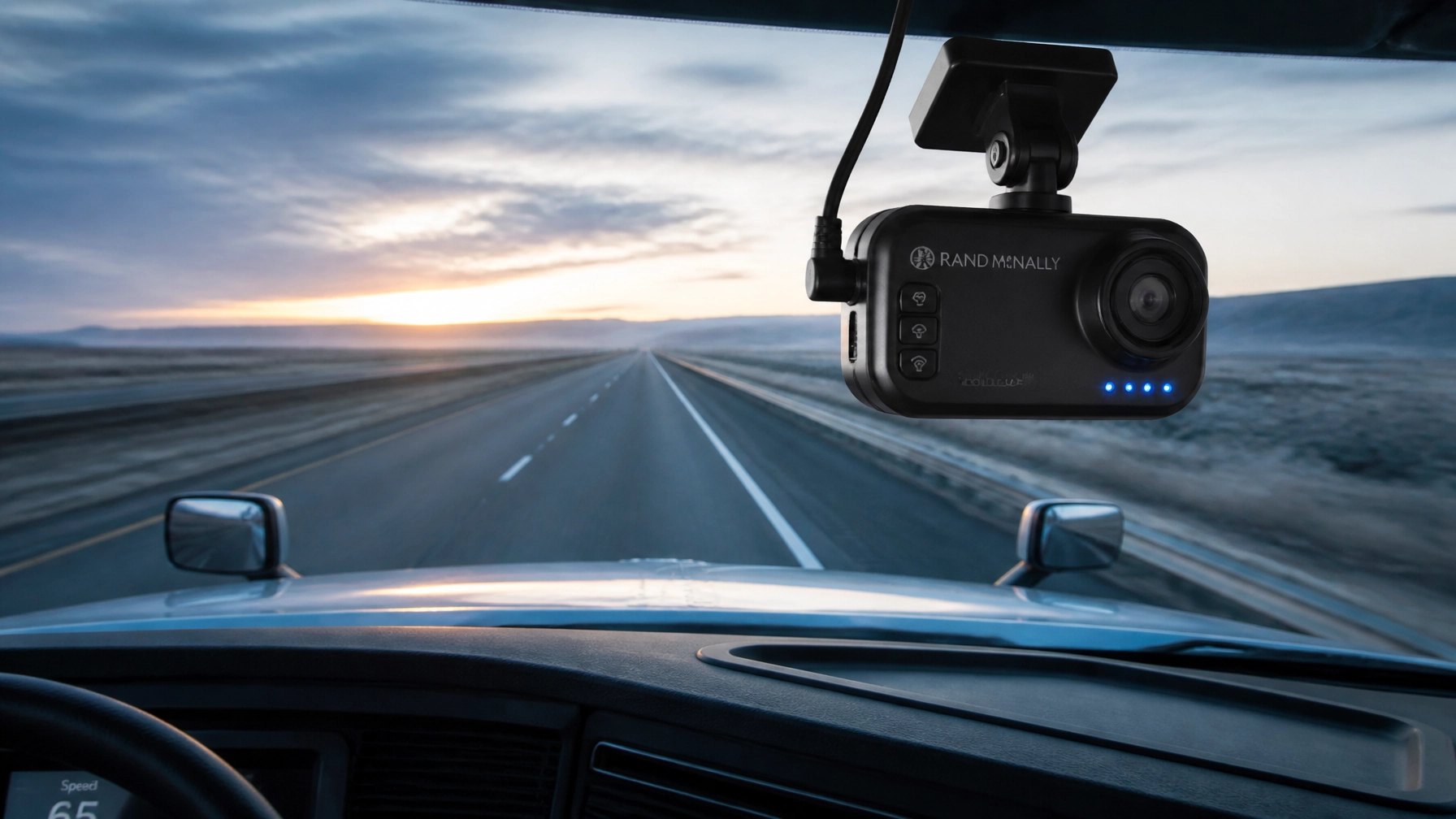
Commercial Truck Dash Cams: 5 Features for Fleet Safety
For a fleet manager, the search for a dash cam for commercial trucks often begins after a “near-miss” or a costly, disputed insurance claim. However, as the market matures, the gap between consumer-grade cameras and professional fleet tools has widened into a canyon.
A consumer dash cam: the kind found at a local big-box retailer: is designed to record a weekend road trip. In a commercial environment, these devices often fail. They lack the durability for 24/7 operation, they require manual data retrieval, and they offer zero actionable insights. For a logistics or construction fleet, these are essentially toys.
A true commercial-grade truck camera system with gps is a sophisticated safety engine. It doesn’t just record; it prevents. It doesn’t just store data; it analyzes it. If you are currently evaluating systems to protect your drivers and your bottom line, these are the five features that define a professional tool.
1. Dual-Facing Lenses: Capturing the Full Story
The most immediate difference between a basic camera and a professional commercial dash cam system is the number of perspectives it captures. A single front-facing camera only tells half the story. While it can prove that a third party cut off your driver, it cannot prove that your driver was focused, alert, and wearing their seatbelt at the time of the incident.
Professional systems utilize dual-facing (or multi-channel) configurations.
- The Exterior Lens: Captures high-definition (1080p or higher) footage of the road ahead, featuring wide-angle views to eliminate blind spots.
- The Interior Lens: Monitors the cabin. In a professional tool, this lens is equipped with infrared technology to ensure clear visibility even during night hauls.
This dual perspective is the ultimate defense against false claims. When a “he-said, she-said” lawsuit arises, having synchronized footage of the driver’s reaction and the road environment can lead to faster settlements and exoneration. Without the interior view, insurance companies may still question the driver’s level of distraction, potentially leading to shared liability.

2. AI-Powered Real-Time Alerts
If a camera only allows you to see an accident after it has happened, its value is purely reactive. The hallmark of a modern “tool” is proactive prevention through Artificial Intelligence (AI).
Professional fleet camera systems now integrate Advanced Driver Assistance Systems (ADAS) and Driver Monitoring Systems (DMS). These aren’t just buzzwords; they are life-saving features. Using edge computing, the camera analyzes the road and the driver in real-time.
Critical AI alerts include:
- Forward Collision Warnings: Detecting when the distance between your truck and the vehicle ahead is closing too fast.
- Lane Departure Warnings: Identifying when a vehicle drifts out of its lane without a turn signal, a common sign of fatigue.
- Distracted Driving Alerts: The camera detects if a driver is looking at a phone, eating, or smoking, and provides an immediate in-cab audio alert to refocus them.
- Drowsiness Detection: AI monitors eye-blink frequency and head position to catch signs of microsleep before a catastrophe occurs.
By providing these alerts instantly, the system coaches the driver in the moment. This immediate feedback loop often prevents the accident entirely, which is a level of ROI that no “toy” camera can match.

3. Integrated GPS and Telematics
A camera that operates in a vacuum is a liability. In a commercial setting, video is most powerful when it is paired with context. Professional systems integrate high-precision GPS and telematics directly into the camera hardware.
When a fleet manager reviews a clip, they shouldn’t just see a truck braking hard; they should see exactly where it happened on a map, how fast the vehicle was traveling, and what the posted speed limit was. This “sensor fusion” combines video, speed, and location data into a single, undeniable record.
Safety Track’s systems go a step further by using this integration to trigger “Event-Based Recording.” If the onboard G-sensors detect a harsh braking event, a sudden turn, or a collision, the system automatically tags that specific GPS location and saves the relevant video clip. This ensures that managers don’t have to sift through 40 hours of mundane driving to find the 30 seconds that matter.

4. Automated Cloud Storage and Connectivity
One of the most common points of failure for consumer-grade cameras is the SD card. These cards have limited lifespans in high-vibration, high-temperature environments. Furthermore, if an accident occurs, the driver must manually pull the card and send it to the office: a process fraught with the risk of lost or “accidentally deleted” footage.
Professional tools utilize LTE or Wi-Fi connectivity to bypass the SD card bottleneck. While the camera may record locally for redundancy, all critical “events” are automatically uploaded to a secure cloud server.
The benefits of cloud-connected systems include:
- Live View: Fleet managers can tap into a “live” feed of any vehicle in the fleet for real-time monitoring of high-stakes loads.
- Immediate Access: Within seconds of an incident, the video is available on the manager’s dashboard, allowing for immediate insurance filing.
- Data Security: Footage is encrypted and stored off-site, making it tamper-proof and legally admissible.
For a mid-sized logistics fleet, the time saved by not having to manually retrieve footage from dozen of trucks can equate to thousands of dollars in administrative labor costs every year.
5. Advanced Driver Behavior Analytics
The final feature that separates a tool from a toy is what happens after the drive is over. A professional commercial dash cam system serves as the foundation for a comprehensive driver coaching program.
Rather than just catching bad drivers, these systems use data to reward good ones. Professional platforms generate “Driver Safety Scores” based on the frequency of AI-detected events like tailgating or harsh braking.
This analytical layer allows fleet managers to:
- Identify Trends: Recognize if a specific driver has a recurring habit of late braking, allowing for targeted training.
- Lower Insurance Premiums: Many insurers offer significant discounts to fleets that can prove they have an active, data-driven safety program in place.
- Reduce Fuel Costs: There is a direct correlation between safe driving (smooth acceleration and braking) and fuel efficiency. Monitoring behavior can lead to up to 30% savings at the pump.
When you treat a dash cam as a data source rather than just a recording device, it stops being an expense and starts being an asset.

Conclusion: Investing in Professional Performance
Choosing a dash cam for commercial trucks is a decision that impacts your company’s liability, safety culture, and operational efficiency. While a consumer camera might seem like a cost-effective shortcut, the lack of AI alerts, cloud connectivity, and integrated telematics makes it a “toy” that fails when you need it most.
At Safety Track, we specialize in custom-tailored solutions that provide the active protection and deep insights required by modern logistics and construction fleets. Our AI-enhanced systems are designed to reduce accidents by up to 40% and slash insurance costs by providing the undeniable evidence you need.
Don’t wait for a costly accident to realize your cameras aren’t up to the task. Equip your fleet with a professional tool designed for the rigors of the road.
Ready to see the difference AI-enhanced safety can make for your fleet? Explore our complete range of fleet camera systems or contact us today for a custom quote.

Tyler Schneider is the IT Director at Safety Track, overseeing the company’s technological infrastructure and innovations. With a strong background in information technology and systems management, Tyler ensures that Safety Track stays at the forefront of tech solutions in fleet management. His strategic expertise supports the seamless integration of technology across the company’s operations.