
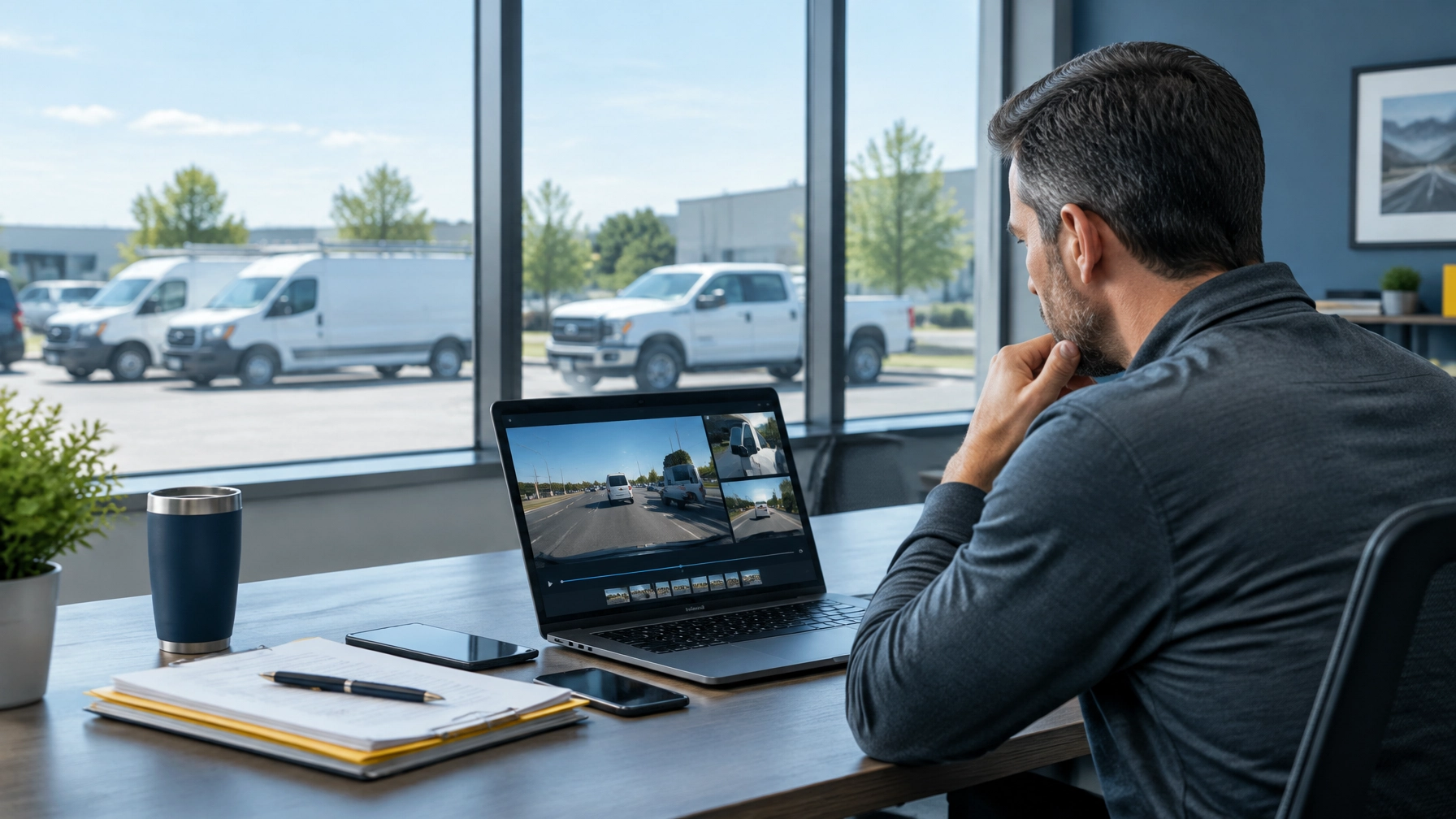
Download It, Share It, Settle It: Faster Claims for Small Fleets
A collision, customer dispute, or property damage allegation can put a small business under immediate pressure. The fleet owner must protect the driver, respond to the customer, notify the insurer, and keep daily operations moving.
The right video evidence can simplify that process. The challenge is getting the footage quickly.
Some camera providers require fleet owners to submit a request and wait for a vendor to retrieve the clip. That delay can stretch from hours into days. During that time, the adjuster may work from incomplete statements, the customer may continue disputing the event, and the business may absorb unnecessary costs.
A self-serve video platform changes the workflow. Fleet managers can find the footage, download it, and send it to the right person the same day.
For a small fleet, speed can make the difference between closing a claim and fighting it.
Why Claim Speed Matters to Small Fleet Owners
Large transportation companies may have dedicated claims departments. Small businesses usually do not.
The owner, operations manager, or fleet supervisor may handle the entire claim process while also managing:
- Dispatch
- Customer communication
- Vehicle maintenance
- Driver scheduling
- Payroll
- Compliance
- New business
A delayed video request adds more work to an already busy operation. It also creates uncertainty when the business needs clear answers.
A claim can become more difficult when:
- The driver’s account is questioned
- A customer alleges property damage
- Another motorist files a liability claim
- An insurer requests evidence
- A delivery dispute depends on the vehicle’s location
- A driver needs protection from an inaccurate allegation
Written statements are important. Video gives those statements context. It can show traffic conditions, vehicle position, driver actions, road hazards, and the moments before and after an incident.
That information is most valuable when it reaches the adjuster or customer quickly.
The Download, Share, Settle Workflow
A practical claims process should be simple enough for any small fleet to follow.
1. Download the footage immediately
As soon as a driver reports an incident, the fleet manager should identify the vehicle, time, and location. The manager can then open the fleet video platform and review the available footage.
With instant self-serve access, the manager does not need to call a vendor or open a retrieval ticket. Authorized users can search for the vehicle and time period, review the event, and download the relevant clip directly.
Managers should download more than the exact moment of impact when possible. The surrounding footage may show:
- Traffic approaching the event
- A vehicle changing lanes
- A driver braking or signaling
- Weather or road conditions
- The actions of another motorist
- What happened immediately after the incident
The manager should preserve the original file and create a secure backup. It is also useful to record the vehicle, driver, timestamp, location, and claim number in the incident file.

2. Share the evidence the same day
The next step is to send the footage through the insurer’s approved claims portal, email process, or secure file-sharing system.
The video should be accompanied by a short factual summary. Avoid speculation or statements about fault. Include:
- Claim number
- Vehicle identification
- Driver name
- Date and time of the event
- Location
- A brief description of what the video shows
- Contact information for the fleet representative
The manager can send the clip to the adjuster, customer, attorney, or other authorized party, depending on the situation.
Same-day sharing improves communication. The adjuster receives the evidence while the event is still being reviewed. The customer receives a direct response instead of a vague promise to investigate. The fleet owner has a documented record of what was submitted and when.
The business should keep the original footage and a copy of the submission confirmation until the claim is closed.
3. Settle the claim with facts
Video does not replace the insurer’s investigation or formal claims process. It gives that process better information.
A clear clip can help an adjuster determine whether:
- The fleet vehicle was moving or stopped
- Another driver entered the vehicle’s path
- The driver maintained a safe following distance
- A backing maneuver was performed correctly
- A reported event matches the available evidence
- A customer’s damage allegation is consistent with what occurred
That clarity can reduce back-and-forth communication. It can also help prevent a small dispute from becoming a long liability fight.
When the fleet was not at fault, timely evidence helps protect the driver and the company. When the driver made an error, the footage helps the business address the event honestly and begin focused coaching.
Before and After: The Cost of Waiting
Consider a small plumbing company with six service vans.
Before: Vendor retrieval delay
One of the company’s vans is involved in a low-speed intersection collision. The other driver claims the plumbing van ran a red light.
The owner knows the vehicle has a dash camera. However, the camera provider requires a support request before releasing footage. The owner submits the request after business hours and waits until the next day for a response.
The vendor sends a short clip. It does not show the traffic signal clearly, so the owner requests a longer time range. Another delay follows.
By the time the complete footage arrives, the adjuster has already reviewed the other driver’s statement. The customer is demanding answers. The owner has spent hours making calls and managing an avoidable dispute.
After: Instant self-serve access
With direct video access, the owner opens the platform as soon as the driver reports the collision. The owner reviews the full event, downloads the footage before and after the impact, and sends it to the adjuster the same day.
The video shows that the other vehicle turned across the van’s path after the signal changed. The adjuster has objective evidence during the initial review. The customer receives a factual update. The owner preserves the original file and closes the internal incident report.
The difference is not only convenience. Faster evidence changes the sequence of decisions. It gives the business a stronger position before assumptions become conclusions.
Instant Access Is More Valuable When Video Use Is Unlimited
Small fleets need to control costs. Per-clip charges and limited viewing can discourage managers from reviewing the full context of an event.
Safety Track’s $99.95 per month unlimited video plan includes:
- Unlimited video viewing
- Unlimited video downloads
- Direct access to available fleet footage
- More flexibility for claims investigations
- Predictable monthly budgeting
Unlimited access allows managers to review additional time windows, download copies for multiple authorized recipients, and revisit a claim when new questions arise.
The same footage can support an insurance claim, a customer response, a driver coaching session, and the company’s internal records. Managers do not have to choose only one use for important evidence.
This is especially valuable for small operators. A single monthly price makes it easier to budget for video access without guessing how many clips the fleet may need during a busy month.
What to Look for in a Fleet Video System
A fleet camera system should record more than an incident. It should help the business manage the evidence afterward.
Fleet owners should ask whether a provider offers:
- Self-serve video retrieval
- Remote playback by vehicle and time
- Simple video downloads
- Multiple camera views
- GPS and location data
- Secure access for authorized users
- Unlimited viewing and downloads
- AI alerts for unsafe behaviors
- Support for claims and driver coaching
Safety Track’s video telematics solutions connect camera footage with GPS and fleet data. This gives managers more context around an event.
Safety Track fleet camera systems support remote monitoring and playback for commercial vehicles. Solutions can be tailored to service fleets, construction companies, delivery operations, transportation businesses, and other small to mid-size fleets.
For proactive safety management, AI fleet safety cameras can help identify behaviors such as distracted driving, drowsiness, harsh braking, speeding, and lane departure. Those alerts support coaching before a risky behavior becomes a claim.

Build a Same-Day Claims Procedure
Technology works best when the fleet has a consistent process. Small businesses can create a simple same-day checklist:
- Confirm the driver is safe and address immediate medical or emergency needs.
- Record the vehicle, driver, location, and approximate incident time.
- Open the video platform and review the event.
- Download the original clip and surrounding context.
- Save a secure backup.
- Notify the insurer according to the policy requirements.
- Share the footage through the approved channel.
- Document when and how the file was submitted.
- Follow up with the adjuster and customer.
- Use the footage for coaching or internal review after the claim is resolved.
This process reduces confusion. It also ensures the fleet does not wait until the next business day to begin gathering evidence.
The goal is not to rush a claim without reviewing the facts. The goal is to make the facts available while they can still guide the outcome.
Your Footage Should Work for Your Business
Small fleet owners cannot afford to spend days waiting for evidence that their own vehicles captured. Every delay consumes management time and gives disputes more room to grow.
Instant self-serve video access puts the workflow back in the fleet owner’s hands:
- Download the clip.
- Share it the same day.
- Give the adjuster or customer clear evidence.
- Settle the claim with greater confidence.
Safety Track’s unlimited video plan provides unlimited viewing and unlimited downloads for $99.95 per month. That gives small businesses a practical way to manage claims, protect drivers, respond to customers, and improve fleet safety without per-clip limits.
Contact Safety Track to learn how instant video access can help a small fleet resolve claims faster.

Frequently Asked Questions
How does instant fleet video access help with insurance claims?
It allows an authorized fleet manager to review and download footage without waiting for a vendor retrieval request. The manager can send the evidence to the adjuster the same day.
What should a fleet manager send with a video claim file?
Include the claim number, vehicle identification, driver name, date, time, location, and a brief factual description of what the footage shows. The original file should also be preserved securely.
What does Safety Track’s $99.95 unlimited video plan include?
The plan includes unlimited video viewing and unlimited video downloads. It helps small fleets review footage, preserve evidence, support claims, and coach drivers without per-clip limits.

Tyler Schneider is the IT Director at Safety Track, overseeing the company’s technological infrastructure and innovations. With a strong background in information technology and systems management, Tyler ensures that Safety Track stays at the forefront of tech solutions in fleet management. His strategic expertise supports the seamless integration of technology across the company’s operations.