
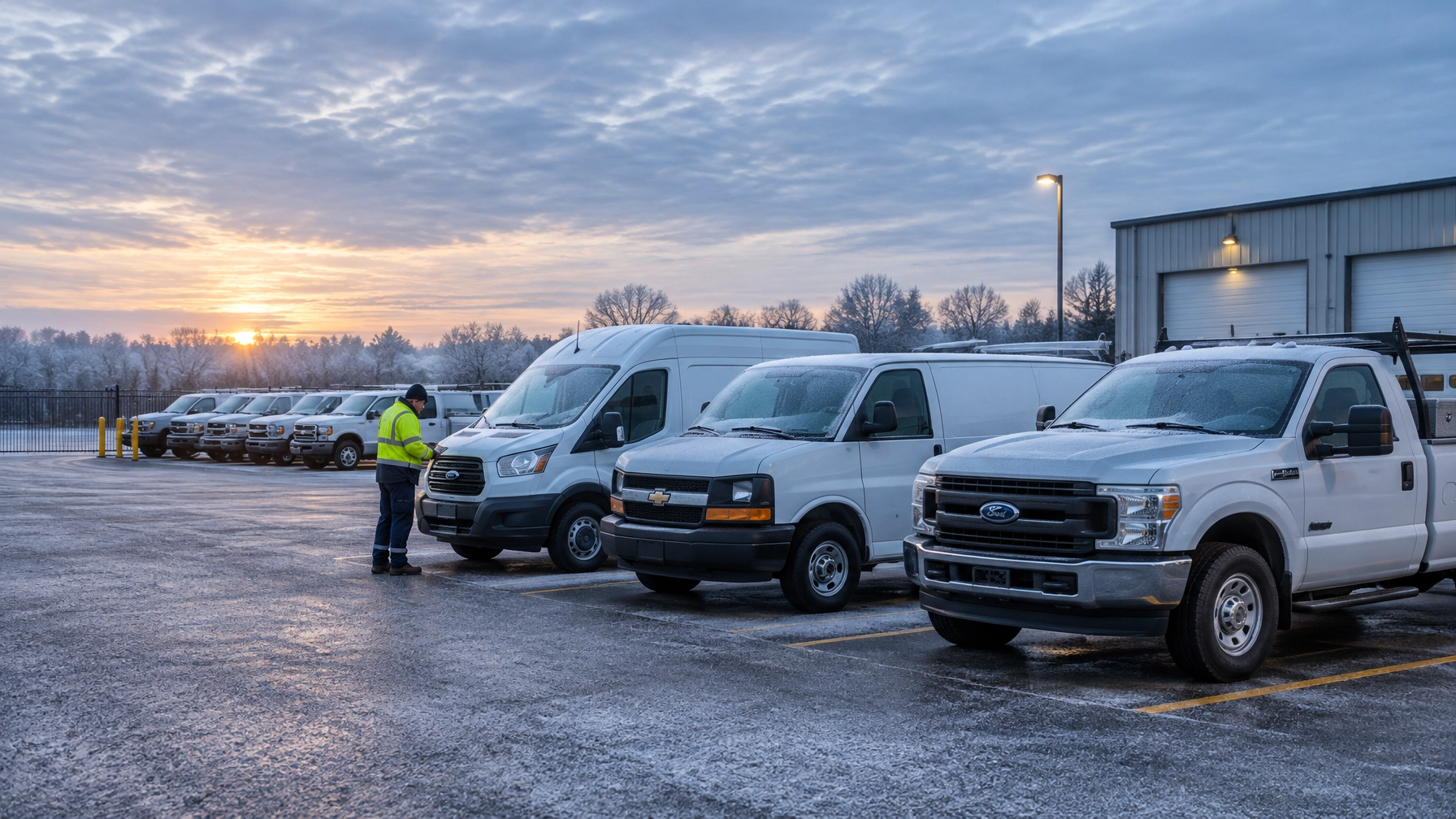
First Frost: The Morning Checklist for Vans and Light Trucks
The first hard frost often arrives with little warning. For a small business fleet, that cold morning can turn minor maintenance issues into missed appointments, delayed deliveries, or an avoidable roadside failure.
HVAC, plumbing, electrical, lawn care, and delivery businesses depend on vans and light trucks leaving the yard on time. A practical first-frost checklist helps owners and drivers catch problems before the route begins. It also gives fleet managers a repeatable process for preparing vehicles, protecting drivers, and controlling winter operating costs.
The National Highway Traffic Safety Administration’s winter driving guidance emphasizes the importance of preparing both the vehicle and the driver. Small fleets can apply that same principle with a short morning inspection.
Start With the Battery and Cold-Starting System
Cold temperatures reduce available battery power. Gasoline and diesel engines also require more effort to start in cold conditions. A battery that performed adequately during mild weather may struggle when the first frost arrives.
Drivers should watch for:
- Slow or hesitant cranking
- Flickering interior or dashboard lights
- Corroded or loose battery terminals
- A battery that is near the end of its service life
- Repeated jump-starts or recent no-start complaints
Fleet owners should arrange battery testing before the cold season begins. A load test can identify a borderline battery before it leaves a van stranded at the start of a workday. Technicians should also inspect the charging system, belts, terminals, and visible wiring.
Maintenance tracking makes this process easier. A fleet manager can record battery tests, replacement dates, and recurring starting issues instead of relying on memory. Diagnostic alerts can also help identify charging-system or engine fault codes that deserve attention before a vehicle fails to start.
A few minutes spent checking battery health can prevent a much longer morning delay.
Check Tire Pressure and Tread Before Dispatch
Cold air lowers tire pressure. NHTSA advises checking tires when they are cold and filling them to the vehicle manufacturer’s recommended pressure, listed on the driver-side door label or in the owner’s manual. The pressure printed on the tire sidewall is the maximum tire pressure, not the vehicle’s recommended setting.
Drivers should check each tire for:
- Proper inflation
- Uneven wear
- Low tread
- Cuts, cracks, or punctures
- Bulges or sidewall damage
- A properly inflated spare tire
A common rule of thumb is that tire pressure changes by approximately 1 PSI for every 10-degree Fahrenheit change in temperature. The exact change varies, but the operating principle is consistent: a temperature drop can leave a tire underinflated by morning.
Underinflated tires can affect handling, braking, fuel economy, and tread wear. The risk becomes greater when a route includes wet pavement, frost, or an unexpected icy section.
Fleet managers should set a minimum tread standard appropriate for the vehicle, tire type, and operating area. Any tire with structural damage should be removed from service and evaluated by a qualified tire professional.

Prepare the Windshield, Wipers, and Defroster
A clear windshield is essential before a vehicle moves. Frost, fog, and road spray can quickly reduce visibility during the first cold morning of the season.
Each driver should confirm that:
- The windshield is fully cleared with an ice scraper.
- The wiper blades remove water without leaving heavy streaks.
- The washer reservoir contains winter-rated fluid.
- The washer nozzles spray correctly.
- The front defroster works.
- The rear defroster works when equipped.
- The heater provides enough airflow to clear the glass.
Summer washer fluid can freeze in the reservoir or lines. Winter-rated fluid with de-icing capability is a better choice for cold-weather operations.
Drivers should not use windshield wipers to scrape heavy ice. That can damage the blades and strain the wiper motor. A proper scraper and sufficient defroster time protect the equipment and improve visibility.
The same inspection applies to mirrors, side windows, and camera lenses. Frost or condensation on a camera lens can limit the usefulness of a driver-assistance or dash camera system.
Confirm Every Light Works
Frosty mornings are often darker than drivers expect. Headlights and marker lights help other road users see a work van or light truck during the morning commute.
The walk-around should include:
- Low-beam headlights
- High-beam headlights
- Brake lights
- Turn signals
- Hazard flashers
- Reverse lights
- Side markers
- Trailer lights, when applicable
Drivers should remove frost, dirt, and road film from light lenses. A quick check can identify a burned-out bulb or electrical fault before the vehicle enters traffic.
A fleet manager can make lighting checks part of the same pre-route process as tire and fluid inspections. Consistency matters more than complexity.
Inspect Fluids, Brakes, and Cooling System
The first frost is a useful reminder to check more than the windshield washer reservoir. Drivers should look for obvious leaks and verify that fluid levels are within the manufacturer’s recommended range.
The inspection should include:
- Engine coolant level
- Visible coolant leaks
- Engine oil level
- Brake fluid level
- Power steering fluid, if applicable
- Transmission fluid, if the vehicle design allows a driver check
Coolant should meet the vehicle manufacturer’s specifications and provide protection for the expected overnight temperature. A service professional can test freeze protection and inspect hoses, belts, and the cooling system.
The brake or ABS warning light should not remain illuminated after startup. Any warning light or unusual pedal feel requires prompt attention before dispatch.
A maintenance tracking system can connect these inspections with service records. That gives owners a clearer view of which vehicles are ready for work and which ones need attention before the next route.
Allow Enough Warm-Up Time Without Excessive Idling
A cold engine needs time to circulate oil and reach normal operating conditions. However, extended idling can quietly consume fuel across a small fleet.
A practical winter warm-up policy should require drivers to:
- Start the vehicle and allow a short period for oil circulation.
- Use enough time to clear frost and establish safe visibility.
- Drive gently until the engine, tires, and drivetrain reach normal operating conditions.
- Avoid long stationary warm-ups when they are not necessary.
- Follow manufacturer guidance for the specific vehicle and engine.
The correct warm-up time varies by vehicle, fuel type, temperature, and operating conditions. Safety comes first. A vehicle should not move until the windshield and other critical glass areas are clear.
Idle-time visibility helps fleet managers see whether winter warm-ups are becoming excessive. Safety Track’s fleet safety tools include dashboard visibility into driving and idle activity, helping managers identify patterns across vehicles.
Fuel cost adds up when several vans idle every morning. The cost depends on engine size, idle fuel consumption, local fuel prices, and the length of the warm-up. Fleet managers can estimate the impact with a simple calculation:
Idle fuel cost = idle hours × gallons consumed per idle hour × fuel price
Reducing unnecessary idle time protects fuel budgets without asking drivers to compromise visibility or safety.

Brief Drivers on First-Frost Road Conditions
The first frost changes road risk even when the pavement looks clear. Bridge decks and overpasses can freeze before the rest of the roadway because cold air moves around their surfaces. Shaded stretches can remain icy after nearby pavement begins to dry.
Drivers should expect:
- Slick bridges and overpasses
- Black ice before sunrise
- Longer stopping distances
- Reduced traction on shaded roads
- Wet-looking pavement that may be frozen
- More glare as the sun rises
- Increased congestion during the morning commute
The correct response is straightforward. Drivers should reduce speed, increase following distance, avoid sudden braking or steering, and accelerate smoothly. NHTSA specifically recommends slowing down and increasing following distance on slick surfaces.
Route planning should also account for extra travel time. Dispatchers should not pressure drivers to make up time by driving aggressively after a frost-related delay. A cautious departure protects the driver, the vehicle, and the customer schedule over the full workday.

Use Fleet Technology to Support the Checklist
A first-frost checklist works best when it becomes part of a larger fleet management process. GPS tracking shows where vehicles are operating. Maintenance tracking records inspections and repairs. Diagnostic alerts can identify fault codes before a small issue becomes a roadside failure.
AI-enhanced dash cameras add another layer of visibility. If a driver encounters a slick road, collision, or disputed incident, immediate video access helps the fleet team review what happened without waiting for a vendor to retrieve footage. Managers can use Safety Track’s fleet safety and compliance solutions to connect driver safety, vehicle information, and operational visibility.
For fleets that want broader access to footage, Safety Track offers an unlimited video plan for $99.95 per vehicle, per month, including unlimited viewing and unlimited downloads. Authorized fleet users can access their footage directly, review the surrounding conditions, and download the files needed for claims, coaching, or internal records.
That control matters on a winter morning. The technology does not replace a walk-around inspection, but it helps managers respond with better information when road conditions or driver events raise questions.
Make First Frost a Fleet Habit
The first frost should trigger a consistent process, not a scramble. A short inspection can protect battery performance, tire safety, visibility, vehicle reliability, and fuel costs.
Fleet owners and drivers should:
- Check battery condition and starting performance.
- Verify tire pressure, tread, and sidewall condition.
- Use winter-rated washer fluid.
- Test wipers, defrosters, and heaters.
- Confirm all lights work.
- Check fluids, brakes, and warning lights.
- Warm vehicles only as long as safety requires.
- Expect slick bridges, shaded roads, and longer stopping distances.
- Use maintenance tracking and diagnostic alerts to address problems early.
- Review idle-time data and winter driving events.
Small businesses do not need a complicated winterization program to improve readiness. They need a repeatable checklist, clear driver expectations, and technology that gives managers visibility before small problems become expensive ones.
Contact Safety Track to discuss a fleet management solution tailored to the needs of service vans and light trucks.

Tyler Schneider is the IT Director at Safety Track, overseeing the company’s technological infrastructure and innovations. With a strong background in information technology and systems management, Tyler ensures that Safety Track stays at the forefront of tech solutions in fleet management. His strategic expertise supports the seamless integration of technology across the company’s operations.