
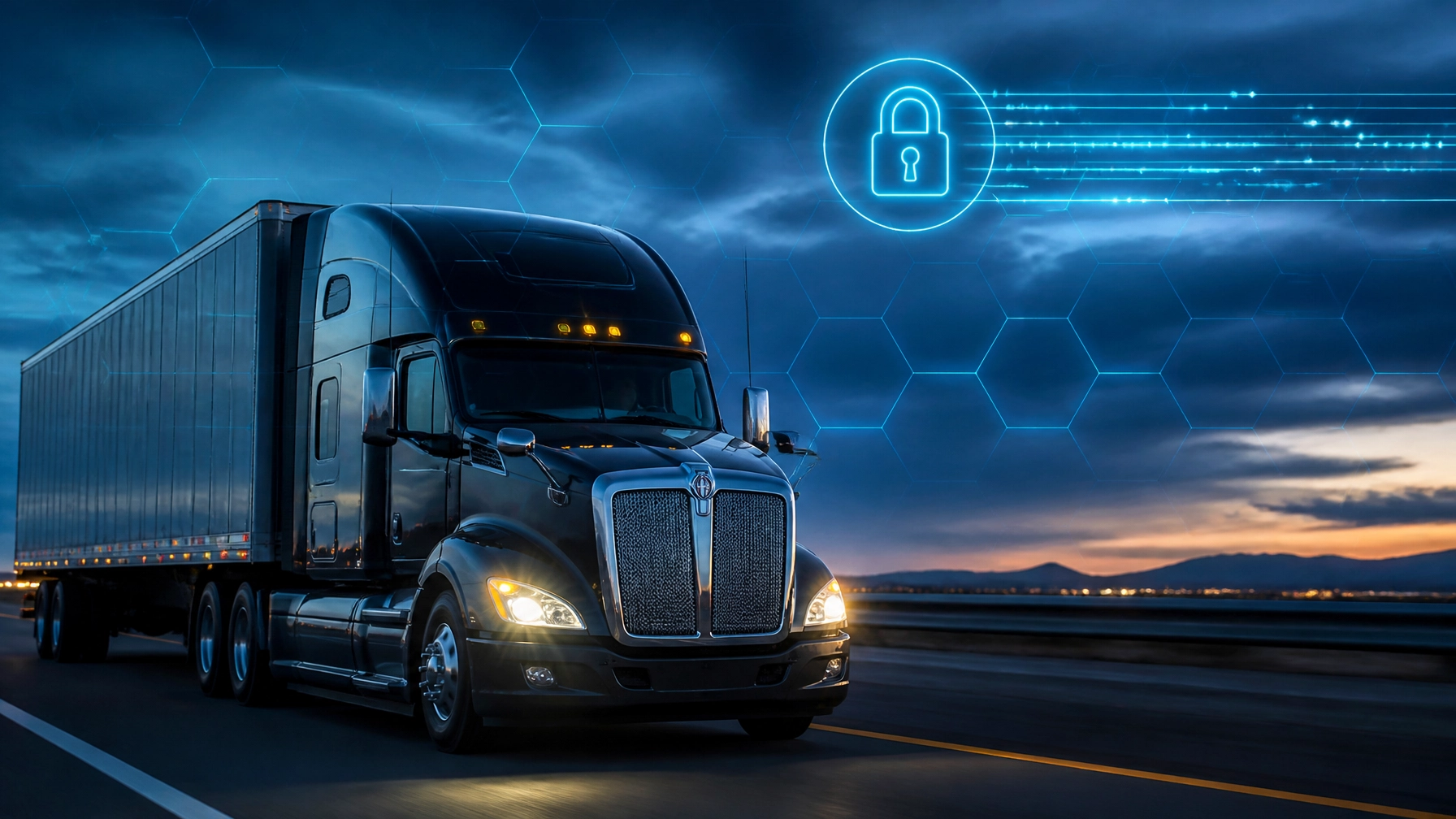
Is Your AI Dash Cam a Cyber Risk? Protecting Your Fleet in 2026
As we move through 2026, the trucking industry has reached a pivotal intersection. On one side, we have the incredible benefits of AI-enhanced telematics: systems that can predict accidents before they happen, optimize fuel consumption, and provide ironclad evidence in the event of a false insurance claim. On the other side, we face a growing shadow: the rapid industrialization of automotive cybercrime.
For years, fleet managers viewed cybersecurity as an “I.T. problem” reserved for office servers and payroll systems. Today, that perspective is no longer sustainable. Your fleet is a moving network of connected data points. Every tractor-trailer, every GPS sensor, and every AI dash camera is an entry point.
The data is startling. Recent industry reports confirm that automotive cyber incidents have roughly doubled in just the last two years. Ransomware, specifically targeting logistics and fleet operations, now accounts for nearly 44% of all reported automotive cyberattacks. This isn’t just about someone “hacking” a camera to see the road; it is about organized groups looking for high-leverage entry points to shut down operations, steal proprietary route data, or hold an entire fleet’s connectivity for ransom.
At Safety Track, we believe that safety isn’t just about avoiding a collision on the highway: it’s about protecting the data that keeps your business moving. In this deep dive, we’ll explore how AI dash cameras for fleets have become the new front line in the battle for fleet security and why a “data lockdown” is the most important feature you haven’t considered yet.
The 2026 Cyber Landscape: Why Automotive Incidents Have Doubled
Why now? Why has the trucking industry suddenly become a primary target for cyber threats? The answer lies in the sheer volume and value of the data being transmitted.
In 2024, many systems were still in a transitional phase. By 2026, the “Connected Fleet” is the standard. Modern fleet camera systems are doing more than just recording loops. They are processing facial recognition to detect fatigue, scanning license plates, tracking GPS coordinates in real-time, and communicating directly with Engine Control Units (ECUs) via the CAN bus to monitor vehicle health.
This connectivity creates a massive “attack surface.” Research shows that 97% of automotive cyberattacks are now carried out remotely. Hackers no longer need physical access to a truck to cause havoc. They can exploit vulnerabilities in:
- Unsecured Cloud Portals: Where fleet managers view live feeds.
- Firmware Vulnerabilities: Outdated software on the camera itself.
- Weak Authentication: Shared passwords among drivers or dispatchers.
When an incident occurs, it’s rarely a minor glitch. Roughly 68% of these events involve data exposure or theft. For a logistics company, a data breach means that sensitive delivery schedules, client names, and driver habits are out in the open. Worse, if a ransomware attack hits your telematics provider, your entire fleet could be “blind” and unmonitored for days, leading to massive operational downtime and a spike in liability risk.
AI Dash Cameras: The New Attack Surface

AI dash cameras are inherently more complex than the “plug-and-play” cams of the past. To provide real-time alerts for lane departures or distracted driving, these cameras are essentially powerful mini-computers. This complexity is exactly what attackers exploit.
The Problem with Default Credentials
One of the most common vulnerabilities in AI fleet safety cameras is the use of default settings. Many lower-tier camera systems come out of the box with “admin/admin” style logins. If a fleet manager doesn’t change these across 500 units, a single hacker can gain access to the entire fleet’s live feed with minimal effort.
Unencrypted Video Streams
If a camera system doesn’t use end-to-end encryption, the video files being sent from the truck to the cloud are vulnerable. An attacker who intercepts this stream can see exactly what your drivers see. This isn’t just a privacy concern; it’s a security risk for high-value cargo. If a criminal knows exactly where a truck is and can see through the camera that the driver is pulled over at a rest stop, they have the perfect window for cargo theft.
Firmware as a Backdoor
Cameras that don’t receive regular, secure “Over-the-Air” (OTA) updates are a ticking time bomb. As new vulnerabilities are discovered in common software libraries, hackers create automated tools to scan the internet for devices using that specific software. Without a proactive update strategy, your cameras are sitting ducks.
The High Cost of a Data Breach: More Than Just Video
When we talk about “cyber risk,” it’s easy to get lost in the tech talk. Let’s look at the real-world business impact. In 2026, the cost of a data breach for a mid-sized fleet can easily exceed $1.5 million when you factor in:
- Legal Liability: If driver data is leaked, you face lawsuits from employees. If client data is leaked, you face breach-of-contract suits.
- Insurance Spikes: Once you are tagged as a “high-risk” cyber target, your insurance renewals will skyrocket. Underwriters in 2026 are looking as closely at your data security as they are at your accident history.
- Operational Paralysis: If your GPS and camera systems are locked by ransomware, can you still fulfill your contracts? Most modern dispatch workflows are so integrated with telematics that a “digital blackout” brings everything to a halt.
Safety Track’s Shield: Built-In Data Lockdown
At Safety Track, we didn’t just add AI to our cameras; we built a security fortress around them. We understand that our customers in logistics, waste management, and construction can’t afford to be cyber experts: they need a system that is secure by design.
PTCRB Certification and Network Integrity
One of the most important aspects of our hardware is that it is PTCRB certified. This isn’t just a technical badge; it means our devices have been rigorously tested to work securely across all major cellular networks. This certification ensures that the communication between the vehicle and the cloud is stable, authenticated, and resistant to common “man-in-the-middle” attacks.
AI-Enhanced Security & Edge Processing
Unlike systems that stream every second of video to the cloud: creating more opportunities for interception: Safety Track utilizes “Edge Computing.” The AI processing happens on the device. The camera only sends the relevant data and “event” clips (like a hard brake or a distracted driving alert) through a secure, encrypted tunnel. This significantly reduces the amount of sensitive data “in flight” and keeps your operational footprint smaller and harder to hit.
Protecting Driver Privacy and Operational Integrity

A major concern for many fleets is the “Big Brother” aspect. Drivers are often resistant to AI cameras because they fear their private moments are being watched or recorded. Cybersecurity is actually the solution to this problem.
By implementing a strict Data Lockdown, Safety Track ensures that:
- Access is Role-Based: Not every employee in your office should be able to see driver footage. Our systems allow you to set strict permissions so only authorized safety managers can access specific clips.
- Audit Logs: Every time a piece of video is viewed or downloaded, the system creates an unchangeable record. This prevents “prying eyes” from within your own organization and protects driver privacy.
- Secure Boot: Our cameras use a secure boot process, meaning they will only run software that has been digitally signed by Safety Track. This prevents hackers from installing “spyware” on the cameras.
When drivers know that the system is as much about protecting them as it is about monitoring them, the safety culture of the company improves. Security and privacy are two sides of the same coin.
Future-Proofing Checklist for Fleet Managers
If you are evaluating AI dash cameras in 2026, you must look beyond the resolution of the video and the price of the unit. Use this checklist to ensure you aren’t introducing a massive liability into your fleet:
- Is the data encrypted at rest and in transit? (Look for AES-256 standards).
- Does the provider require Multi-Factor Authentication (MFA)? If you can log into your fleet dashboard with just a password, it isn’t secure.
- Are the devices PTCRB certified? This ensures network-level security and reliability.
- How are firmware updates handled? They should be automatic and encrypted.
- What is the data retention policy? In 2026, keeping data forever is a liability. You need a system that can automatically purge non-incident data after 30 or 60 days.
Conclusion: Security is the New Safety

The days when fleet safety was just about “eyes on the road” are over. In 2026, a truly safe fleet is one that is also cyber-resilient. As automotive cyber incidents continue to rise, the choice of a telematics partner becomes one of the most critical business decisions you will make.
Safety Track offers more than just GPS and cameras; we offer a Complete Fleet Management Solution that is custom-tailored to your operations and fortified with the latest in AI-enhanced security. We don’t just help you see what’s happening in the cab: we make sure nobody else can.
Protect your drivers, your data, and your bottom line. It’s time to move beyond basic monitoring and step into the era of secure, AI-powered fleet management.
Ready to secure your fleet? Contact Safety Track today for a custom-tailored consultation on our AI-enhanced camera solutions and data protection strategies.

Tyler Schneider is the IT Director at Safety Track, overseeing the company’s technological infrastructure and innovations. With a strong background in information technology and systems management, Tyler ensures that Safety Track stays at the forefront of tech solutions in fleet management. His strategic expertise supports the seamless integration of technology across the company’s operations.