
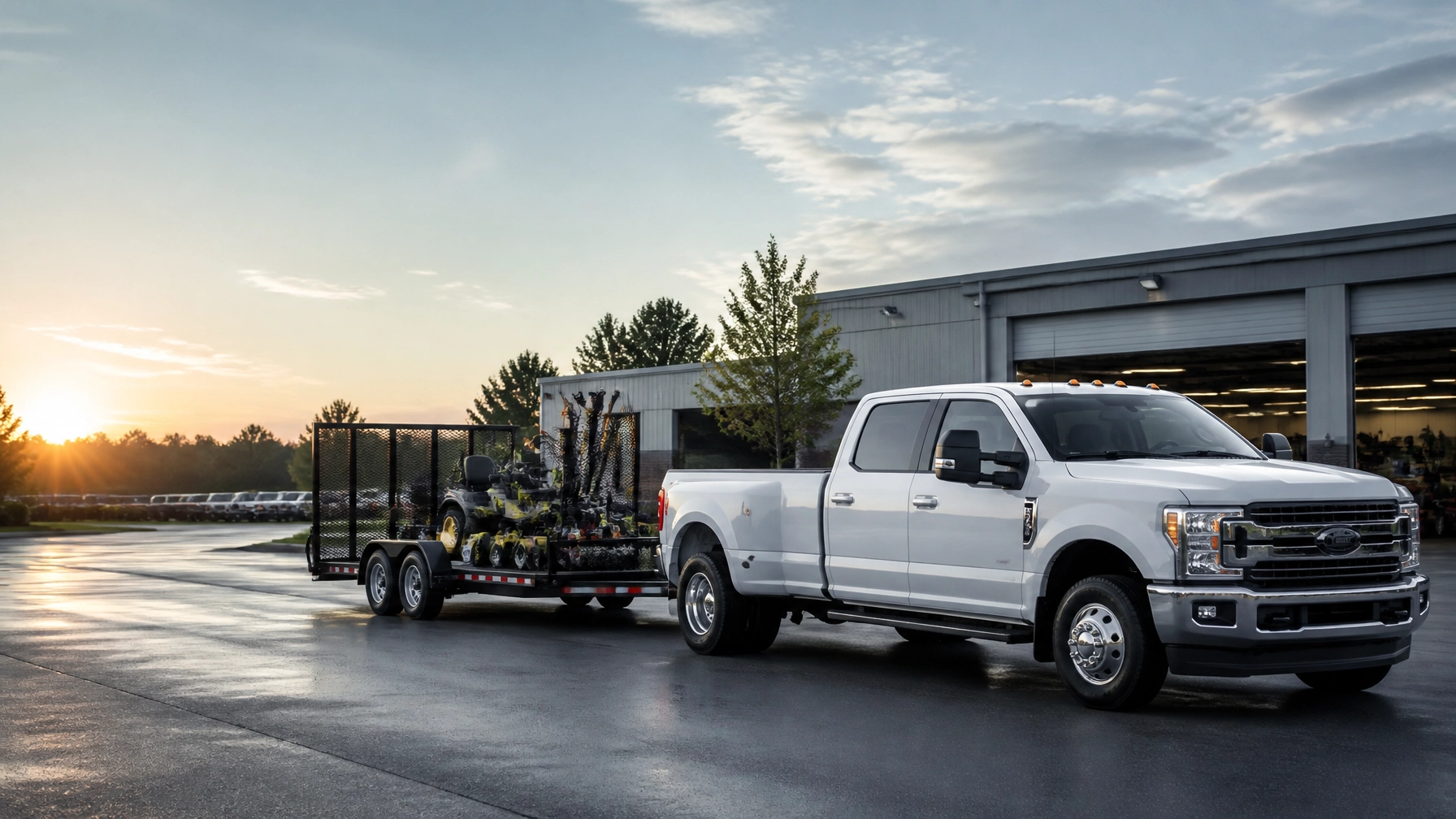
Lawn Care in 2027: 5 Fleet Upgrades That Pay for Themselves
Planning for the 2027 lawn care season starts before the first mower is loaded. Fuel prices, insurance costs, labor challenges, customer expectations, and equipment downtime all affect how much a landscaping business earns from every route.
The right fleet upgrades help owners turn those pressures into measurable savings. AI dash cameras can reduce risk and simplify insurance claims. GPS tracking can improve routing and cut unproductive miles. Asset tracking can protect trailers and high-value equipment. Maintenance tracking can keep trucks and mowers working during the busiest months.
The goal is not to add technology for its own sake. The goal is to invest in systems that return value through fewer accidents, lower fuel use, better equipment utilization, and more productive crews.
Here are five fleet upgrades lawn care businesses should evaluate before the 2027 season.
1. AI Dash Cameras That Reduce Risk and Protect Claims
A lawn care truck may make dozens of stops each day. Crews pull into residential driveways, navigate busy commercial properties, back trailers into tight spaces, and share the road with pedestrians, cyclists, and other vehicles.
That exposure creates risk. A minor collision can lead to vehicle repairs, missed appointments, driver downtime, and a complicated insurance claim.
AI dash cameras provide objective video evidence when an incident occurs. They also help fleet managers identify risky driving behavior before it causes a crash. Depending on the camera configuration, an AI system can detect events such as:
- Distracted driving
- Phone use
- Fatigue
- Harsh braking
- Forward collision risks
- Lane departures
- Aggressive acceleration
Safety Track’s AI fleet dash cameras include forward-facing and driver-monitoring options. The ST-25 ADAS camera provides lane departure and forward collision warnings, while the ST-26 DMS camera monitors behaviors such as fatigue, distraction, phone use, and smoking.
How AI cameras create an ROI
The financial return comes from several areas:
- Fewer preventable accidents: Targeted coaching helps drivers correct unsafe habits.
- Lower claim exposure: Video can clarify what happened and help defend the business against false or exaggerated claims.
- Less administrative time: Managers spend less time reconstructing incidents from incomplete accounts.
- Reduced downtime: Faster claims investigations can help get vehicles back into service sooner.
- Potential insurance savings: Some insurers recognize documented safety programs and video evidence when evaluating risk.
Safety Track reports potential reductions of up to 40% in accidents and up to 25% in insurance costs, depending on how a solution is implemented and how consistently drivers use it. These figures are not a guarantee, but they show why video telematics deserves a place in a 2027 fleet budget.

2. GPS Tracking That Improves Every Route
Route inefficiency is one of the most common sources of lost profit in lawn care. A crew that spends extra time driving between properties has fewer hours available for billable work. Unnecessary miles also increase fuel costs and vehicle wear.
GPS tracking gives managers real-time visibility into fleet locations and movement. It shows where each truck is, how long it has been at a property, and whether the daily route is being completed as planned.
With the right data, lawn care businesses can:
- Group nearby jobs more efficiently
- Reduce unnecessary backtracking
- Monitor idle time
- Verify arrival and departure times
- Respond to customer questions quickly
- Identify unauthorized vehicle use
- Compare planned routes with actual routes
- Improve dispatch decisions during the day
Safety Track’s fleet tracking systems and Tracking Management Suite help managers view vehicle locations, run reports, and organize fleet activity from a web-based platform.
How GPS tracking pays for itself
GPS tracking does not need to create dramatic savings to produce a strong return. Even small improvements compound across a full season.
For example, a five-truck lawn care business may lose several hours each week to inefficient routes, excess idling, or unnecessary dispatch changes. Recovering even a portion of that time can create additional service capacity without adding another truck or crew.
Fuel savings add another layer of value. Safety Track identifies potential fuel savings of up to 30% through route optimization and behavior monitoring. Actual results depend on fleet size, routes, vehicle types, and driver habits.
The most important step is to measure a baseline before deployment. Track fuel spending, idle time, miles per job, and average daily stops. Then compare those figures after the system has been in use for 60 and 90 days.
3. Asset Tracking for Trailers and Equipment
A lawn care fleet includes more than trucks. Trailers, commercial mowers, stand-on machines, compact loaders, aerators, sprayers, and other equipment represent a significant investment.
When those assets are misplaced, stolen, or assigned inefficiently, the business loses money in several ways. An owner may need to rent replacement equipment, delay a job, send a crew back to the shop, or purchase a machine that already exists somewhere in the fleet.
Asset tracking helps owners monitor trailers and non-powered equipment. GPS-enabled devices can provide real-time location data, movement history, notifications, and reports. Safety Track also offers solutions for GPS asset tracking, including options designed for assets without a direct power source.
How asset tracking creates a return
Asset tracking supports ROI in four practical ways:
- Theft recovery: Location data helps businesses respond faster when a trailer or machine moves unexpectedly.
- Better utilization: Managers can see which equipment is being used and which equipment remains idle.
- Lower replacement costs: Improved visibility reduces unnecessary purchases.
- Faster dispatching: Crews can be assigned equipment based on location and availability.
Owners should begin by listing every trailer and high-value machine. Record its purchase price, current location, assigned crew, utilization, and replacement cost. This inventory creates a clear picture of which assets justify dedicated tracking first.
A trailer carrying several commercial mowers may deliver a faster return than a lower-value handheld tool. The best rollout prioritizes assets that are expensive, mobile, frequently shared, or difficult to replace during peak season.

4. Maintenance Tracking That Prevents Peak-Season Downtime
A breakdown in January is inconvenient. A breakdown in the middle of spring or summer can disrupt an entire day of scheduled work.
Lawn care businesses depend on both trucks and equipment. Missed oil changes, worn tires, overdue mower service, and neglected trailer repairs can quickly become expensive failures. Emergency repairs also tend to cost more because they often require expedited parts, outside labor, or short-term equipment rentals.
Maintenance tracking creates a central record for inspections, service intervals, repairs, parts, and upcoming work. Managers can schedule maintenance based on mileage, engine hours, calendar dates, or manufacturer recommendations.
Safety Track’s fleet management tools support maintenance organization alongside GPS and asset visibility. Its maintenance and fleet management resources explain how proactive service helps fleets reduce unexpected downtime.
How maintenance tracking pays for itself
The return is measured through avoided costs:
- Fewer emergency repairs
- Longer vehicle and equipment life
- Less lost revenue from unavailable crews
- Better warranty documentation
- More predictable repair spending
- Higher resale value at replacement time
Owners can estimate the value of uptime with a simple calculation:
Downtime cost = lost revenue during downtime + replacement labor or rental costs + repair expense
The exact number varies by business. However, every owner should know what one unavailable truck and crew costs per day. That figure makes maintenance investment easier to evaluate.
A maintenance system is most effective when crews participate. Drivers and crew leaders should complete short inspections before each shift and report issues immediately. Managers can then schedule repairs before a small problem becomes a seasonal disruption.
For additional planning guidance, review Safety Track’s article on the impact of vehicle downtime on fleet productivity.

5. An Integrated Fleet Management Platform and Driver Coaching Program
Technology produces the strongest return when the data works together. Separate systems for cameras, GPS, equipment, and maintenance can create disconnected information. An integrated platform gives managers a more complete view of fleet performance.
The fifth upgrade for 2027 is not simply another device. It is a coordinated fleet management process built around shared data and consistent action.
A lawn care business can use one operating rhythm:
- Review GPS data to identify route inefficiencies and idle time.
- Review camera events to coach specific driving behaviors.
- Review asset locations to improve equipment assignments.
- Review maintenance alerts to schedule service before failure.
- Review monthly KPIs to confirm that the investment is producing savings.
This process turns fleet technology into a management tool rather than a passive reporting system.
The ROI of better decision-making
Integrated reporting helps owners decide:
- Which trucks should be replaced first
- Which routes produce the best margins
- Which drivers need coaching
- Which trailers are underused
- Which machines cost too much to maintain
- Whether another crew can be added without buying another truck
That information improves purchasing decisions for the 2027 season. Instead of replacing equipment based on age alone, owners can compare maintenance history, utilization, downtime, fuel use, and revenue contribution.
How to Build a 2027 Fleet Upgrade Budget
Lawn care businesses do not need to upgrade every vehicle and asset at once. A phased plan often produces better results.
Start with the largest cost leak
- Frequent accidents or disputed claims: begin with AI dash cameras.
- Excess fuel use or inefficient routes: begin with GPS tracking.
- Missing trailers or equipment: begin with asset tracking.
- Repeated breakdowns: begin with maintenance tracking.
- Scattered data and inconsistent follow-up: prioritize an integrated platform.
Measure the baseline
Before implementation, record:
- Monthly fuel expense
- Average miles per job
- Idle hours
- Accident frequency
- Insurance claim costs
- Downtime hours
- Equipment replacement and rental costs
- Average daily stops per crew
Calculate the break-even point
Use this basic formula:
Break-even period = total upgrade cost ÷ monthly savings
For example, if a five-truck system costs $500 per month, the fleet needs to recover $500 in combined fuel, labor, downtime, claim, or equipment savings each month to break even. Actual equipment and subscription costs vary, so owners should use a written quote and their own operating data.
The important point is that ROI does not come from one feature alone. It comes from stacking smaller improvements across the business.
Prepare the Fleet Before the Season Starts
The most profitable 2027 fleet will not necessarily be the largest fleet. It will be the fleet that uses its trucks, trailers, equipment, drivers, and maintenance budget with the least waste.
AI dash cameras improve safety and claim protection. GPS tracking improves routes and accountability. Asset tracking protects mobile equipment. Maintenance tracking protects uptime. Integrated reporting helps owners make better decisions across all four areas.
Start planning before the busy season. Establish baseline costs, prioritize the largest operational leak, and measure results after deployment. A custom-tailored solution from Safety Track can help lawn care and landscaping businesses enter 2027 with greater visibility, stronger control, and a fleet investment designed to pay for itself.

Tyler Schneider is the IT Director at Safety Track, overseeing the company’s technological infrastructure and innovations. With a strong background in information technology and systems management, Tyler ensures that Safety Track stays at the forefront of tech solutions in fleet management. His strategic expertise supports the seamless integration of technology across the company’s operations.