
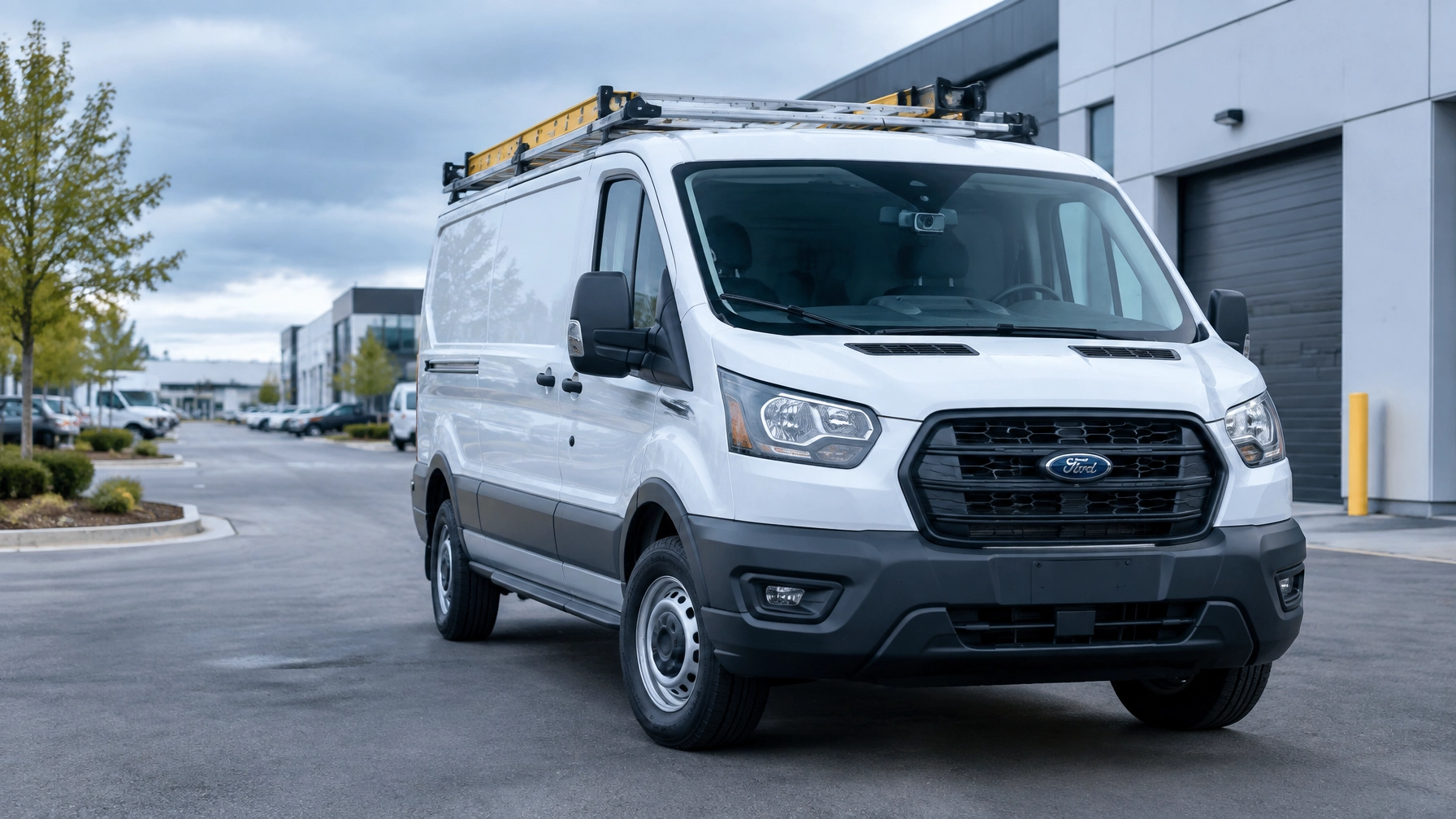
Q4 Budget Planning: How a Small Business Owner Justifies AI Dash Cams Before Year-End
October is the right time for a small business owner to build the case for new safety technology. Q4 budgets are taking shape, year-end cash decisions matter, and every purchase has to answer one question: How fast will this pay for itself?
For HVAC, plumbing, electrical, lawn care, and local delivery companies, AI dash cameras deserve a serious look. A properly implemented system helps a small service fleet reduce accidents, strengthen insurance claims, lower fuel consumption, and improve driver accountability without adding unnecessary overhead.
Safety Track uses three planning benchmarks for its AI-enhanced fleet solutions:
- Up to 40% fewer accidents
- Up to 25% lower insurance costs
- Up to 30% fuel savings
These figures are not automatic guarantees. They are practical benchmarks for building conservative, base, and high-performance budget scenarios. For a small operation, the strongest case connects each target to real monthly cash flow, insurance renewal timing, and how quickly the investment can pay back.
Start with the costs a small business owner already feels every month
A budget request gets stronger when it starts with current expenses instead of product features. Small business owners should collect 12 months of data for three cost categories:
- Accident and claims costs
- Commercial auto insurance costs
- Fuel costs
For a service fleet, the baseline should include more than repair invoices. Accident costs may also include towing, vehicle downtime, rental vehicles, deductibles, workers’ compensation exposure, missed appointments, overtime to reshuffle technicians, and lost revenue from jobs that could not be completed.
Insurance costs should include the company’s full annual premium and any increases tied to claims. Fuel costs should include gasoline or diesel purchases, excessive idling, speeding, inefficient routing, and fuel consumed during unauthorized vehicle use.
This baseline matters because small operations do not have much room for hidden losses. It also makes the proposal specific enough to explain to a business partner, office manager, lender, or bank if outside financing is part of the purchase decision.
Build a three-scenario model that works for a small operation
A single optimistic projection can make a purchase feel risky. A three-scenario model shows that the investment still makes sense even if results come in below the headline numbers.
A practical model can include:
| Scenario | Accident reduction | Insurance reduction | Fuel reduction |
|---|---|---|---|
| Conservative | 20% | 10% | 10% |
| Target | 40% | 25% | 30% |
| High-performance | 50% | 25% | 30% |
The conservative scenario protects the credibility of the plan. The target scenario reflects the outcomes Safety Track highlights for fleets that actively use AI alerts, driver coaching, video evidence, GPS tracking, and route optimization.
Published fleet technology analyses also show that video telematics programs can reduce collision frequency, insurance exposure, and fuel consumption when the technology is paired with consistent coaching. Small business owners can review resources from SureCam on fleet dash cam ROI and Geotab’s comparison of AI and traditional dash cameras when gathering support for a purchase decision.
The key point is simple: cameras create the data, but day-to-day management turns that data into savings. That matters even more in a five-, ten-, or twenty-vehicle service fleet where every claim and every wasted gallon shows up quickly in the numbers.
Use real math: an example for a 10-vehicle service business
Consider a small HVAC, plumbing, electrical, lawn care, or local delivery company with 10 vans or light-duty trucks. The following figures are illustrative and should be replaced with company-specific data.
Current annual costs
- Two preventable incidents per year at an average total cost of $12,000: $24,000
- Commercial auto insurance: $48,000
- Fuel: $60,000
For a small business, those costs are not abstract. They affect cash flow, owner distributions, hiring plans, and the ability to add vehicles before the busy season.
Target annual savings
- Accident savings: $24,000 × 40% = $9,600
- Insurance savings: $48,000 × 25% = $12,000
- Fuel savings: $60,000 × 30% = $18,000
Total estimated annual savings: $39,600
Now estimate the first-year investment:
- Hardware: 10 cameras at $350 each = $3,500
- Installation: 10 vehicles at $150 each = $1,500
- Software and video telematics: $35 per vehicle per month = $4,200 annually
Estimated first-year investment: $9,200
Using these assumptions:
- Estimated first-year net savings: $39,600 − $9,200 = $30,400
- Estimated ROI: ($39,600 − $9,200) ÷ $9,200 × 100 = 330%
- Estimated payback period: $9,200 ÷ ($39,600 ÷ 12) = about 2.8 months
That payback period is what often gets an owner’s attention. If a system can reasonably pay for itself in one quarter, it becomes easier to approve before year-end.
The conservative scenario provides a more cautious view:
- Accident savings at 20%: $4,800
- Insurance savings at 10%: $4,800
- Fuel savings at 10%: $6,000
- Total annual savings: $15,600
- Net first-year savings: $6,400
- ROI: approximately 70%
- Payback period: about 7.1 months
Even the conservative model can support a strong Q4 case for a small business. If the purchase happens in the fall, the company can begin collecting footage, coaching data, and safety documentation ahead of the next insurance renewal.
A smaller company can also scale the math down further. A five-vehicle operation could cut the hardware, installation, and software line items roughly in half, then compare the monthly system cost against one avoided deductible, one protected claim, or one month of reduced fuel waste. That framing often makes the decision easier than debating annual totals alone.

Explain how the savings show up in a small business
Small business owners do not need a long list of technical specifications. They need to understand how the system protects margin, cash flow, and future growth.
Fewer accidents
AI dash cameras identify driving behaviors that often lead to collisions. Depending on the configuration, forward-facing AI can detect lane departure and forward-collision risks. Driver-monitoring cameras can identify fatigue, distraction, phone use, and other attention-related behaviors.
In-cab alerts give drivers a chance to correct behavior immediately. Owners or managers can then review event clips, identify patterns, and coach specific drivers before a near miss becomes a claim.
In a small service fleet, one preventable accident can erase months of profit from maintenance agreements, installs, or route revenue. Safety Track’s AI dash cameras for fleets include forward and driver-monitoring options designed for proactive safety alerts.
Lower insurance costs
Video evidence changes the claims process. When an incident occurs, owners and office managers can quickly determine what happened, establish liability, and protect a driver who was not at fault.
That evidence can help reduce false or exaggerated claims. It also supports better conversations with an insurance broker before renewal. Small businesses should not assume that every carrier will immediately provide a 25% discount, but they should ask what documentation is required to qualify for safety-technology credits or stronger renewal terms.
A documented safety program is more persuasive than camera installation alone. The insurance file should include deployment records, driver training, coaching activity, event trends, and claim outcomes. If renewal is coming up in Q1, a Q4 rollout gives the business time to show that the investment is active, managed, and producing better risk visibility.
Lower fuel consumption
AI dash cameras do not reduce fuel use by themselves. Savings come from the behavior and telematics data they help identify.
Harsh acceleration, speeding, extended idling, and inefficient routing all increase fuel consumption. In service fleets, this often means technicians sitting with the engine running between calls, rushed driving between jobs, or unnecessary miles that add up across the week. When AI event data is combined with GPS tracking and route analysis, managers can coach specific behaviors and reduce unnecessary fuel spend.
Safety Track’s fleet camera systems can be incorporated into broader GPS tracking and fleet management programs. That integration helps small business owners connect driver behavior to fuel performance in terms that matter: lower weekly fuel bills, fewer wasted miles, and better use of each vehicle on the road.
Match the Q4 purchase to the small fleet’s actual needs
A one-size-fits-all proposal can create unnecessary cost. Small business owners should choose the camera configuration that fits each vehicle type and operating risk.
For example:
- An HVAC or plumbing van may need a dual-lens forward and cabin camera.
- An electrical contractor may want added visibility for expensive tools and equipment.
- A lawn care or landscape vehicle may benefit from coverage that supports backing events, route accountability, and driver coaching.
- A local delivery vehicle may need stronger documentation for frequent stops, tight streets, and customer-facing incidents.
- A mixed service fleet may need different configurations managed through one platform.
Safety Track offers a range of camera and mobile DVR options. The ST-25 provides forward-facing ADAS features, while the ST-26 focuses on driver monitoring. The ST-220, ST-240, and ST-280 support different camera counts for smaller, mid-size, and larger vehicle configurations.
Owners should include installation, cellular service, storage, training, and ongoing support in the budget. Underestimating these costs makes the payback calculation less credible. Getting the right setup from the start also helps when the owner needs to explain the purchase to a partner, accountant, or bank.
Give the owner a measurement plan
A strong proposal explains how the business will know whether the investment worked. Establish the baseline before installation and review results monthly or quarterly.
Recommended Q4, Q1, and Q2 metrics include:
- Preventable accidents per vehicle
- Total claims and average claim value
- Percentage of claims resolved with video evidence
- Insurance premium changes at renewal
- Harsh-braking and rapid-acceleration events
- Idle time per vehicle
- Fuel cost per vehicle or per mile
- Driver coaching completion rate
- Camera uptime and event-response time
In a small business, one person may wear several hats. The owner may review claims and insurance, while an office manager tracks fuel trends and the field supervisor handles driver coaching. The important step is to validate savings against invoices, claims records, fuel receipts, and insurance statements.
This measurement plan turns AI dash cameras from a technology purchase into an accountable operating decision. It also creates the documentation a partner, accountant, or lender may want to see if the business is financing growth and safety improvements at the same time.
Position the investment as protection, not surveillance
Driver communication affects adoption. A successful rollout explains that the system protects employees as well as the business.
The same footage that identifies unsafe behavior can defend a technician or driver against a false accusation from another motorist or even a customer. Clear policies should explain what the cameras record, how footage is accessed, how long it is retained, and how coaching decisions are made.
Owners should use video to reinforce good driving, not only to discipline mistakes. Recognizing safe decisions builds trust and creates a stronger safety culture, which matters in small businesses where retention and team morale directly affect service quality.
Make the Q4 case now
A Q4 AI dash camera purchase can deliver value before the next budget cycle. Early deployment gives a small business owner time to establish a baseline, train drivers, identify high-risk behaviors, and document results before the next insurance renewal.
That timing matters. If renewal is approaching in the first quarter, a Q4 rollout gives the company real data to bring into the discussion with its broker or carrier. It also gives the owner a stronger case if a partner asks why the spend is necessary or if a bank wants to understand how the investment supports risk reduction and cash flow.
The budget request should summarize:
- Current accident, insurance, and fuel costs
- Conservative, target, and high-performance savings
- First-year system and implementation costs
- Expected payback period
- Insurance renewal timing
- Key performance indicators
- Driver communication and coaching plans
For small operations, the decision often comes down to a simple question: is the monthly camera cost lower than the cost of one claim, one deductible, one insurance increase, or one quarter of uncontrolled fuel waste? In many cases, the answer is yes.
At Safety Track, custom-tailored commercial dash cam system configurations help small service fleets align camera coverage with vehicle type, operating conditions, and financial priorities. A September budget discussion can become measurable safety and cost improvement by Q1.
Contact Safety Track to review the potential ROI for a specific fleet.
SEO details
Title tag: Q4 AI Dash Camera ROI for Small Service Fleets
Meta description: See how small service fleets justify AI dash cams in Q4 with ROI math, faster payback, and stronger insurance renewal conversations.
Target keywords: AI dash cameras for small business, service fleet dash cameras, dash camera ROI for small fleets, insurance savings for service fleets, AI fleet cameras, Q4 budgeting for small fleets, video telematics, small fleet insurance renewal

Tyler Schneider is the IT Director at Safety Track, overseeing the company’s technological infrastructure and innovations. With a strong background in information technology and systems management, Tyler ensures that Safety Track stays at the forefront of tech solutions in fleet management. His strategic expertise supports the seamless integration of technology across the company’s operations.