
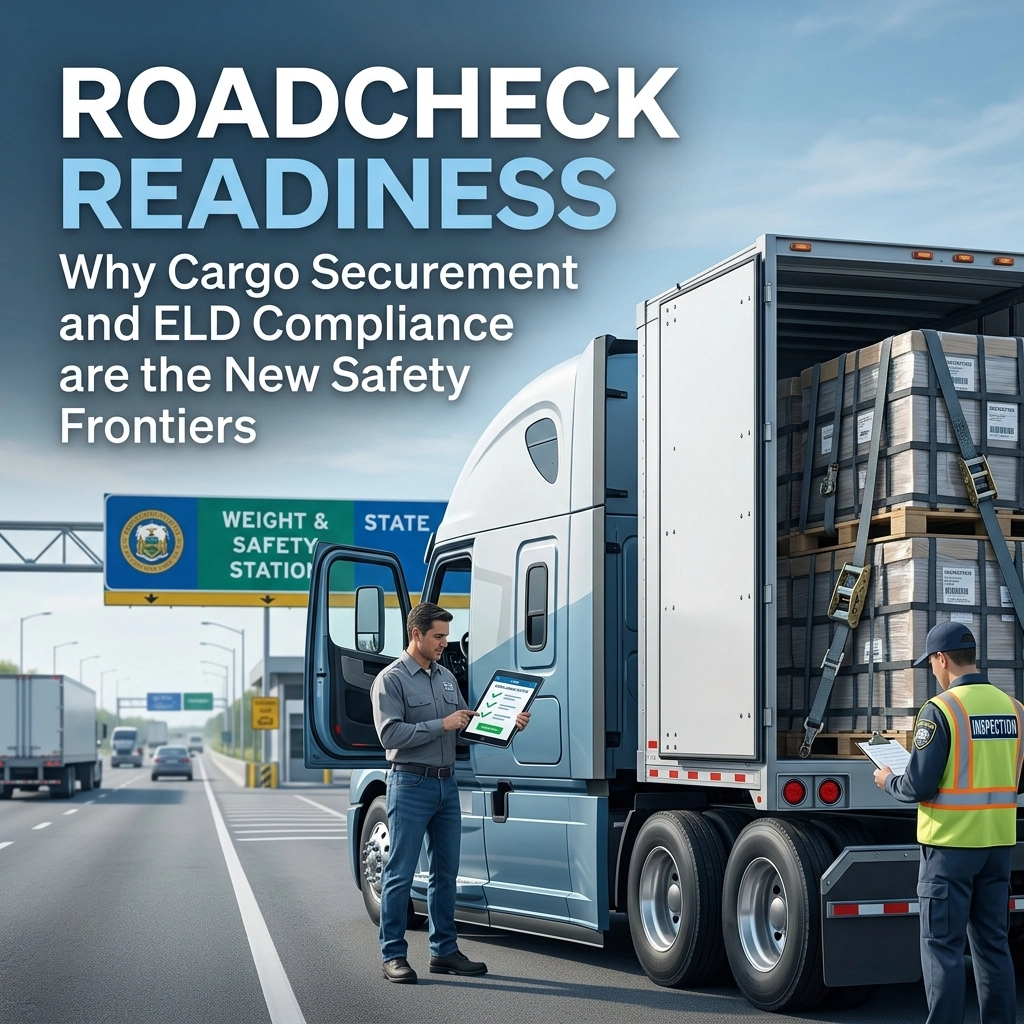
2026 International Roadcheck: Guide to Compliance and Readiness
The commercial transportation industry is currently counting down to one of the most significant dates on the 2026 calendar. The Commercial Vehicle Safety Alliance (CVSA) has officially scheduled the International Roadcheck for May 12–14, 2026. For 72 hours, law enforcement personnel across North America will conduct high-volume, high-frequency inspections of commercial motor vehicles and drivers.
While the Roadcheck is an annual event, the focus shifts every year to address emerging safety concerns and persistent violation trends. For 2026, the CVSA has identified two specific “safety frontiers”: ELD Compliance (specifically tampering and falsification) and Cargo Securement. These areas are not just bureaucratic hurdles; they represent the leading causes of preventable accidents and severe out-of-service (OOS) orders.
Fleet managers must move beyond reactive maintenance and embrace a proactive strategy. The integration of a high-quality dash cam for commercial trucks and advanced video telematics solutions is no longer a luxury: it is the foundation of modern compliance.
The 2026 Mandate: Why This Year is Different
In previous years, Roadcheck might have focused on mechanical components like brake systems or lighting. However, the data from the past 24 months suggests a shift in where the most critical risks lie. According to federal safety data, falsification of records of duty status (RODS) recently ranked as the second most-cited driver violation. Simultaneously, more than 34,000 vehicles were placed out of service during the 2025 Roadcheck specifically for cargo and dunnage securement issues.
The “frontier” nature of these focuses reflects the industry’s digital and physical evolution. As fleets become more connected, the methods of bypassing safety protocols have become more sophisticated. In response, the 2026 Roadcheck is designed to catch not just the obvious errors, but the intentional manipulations of safety data.
Deep Dive: The ELD Compliance Frontier
Electronic Logging Devices (ELDs) were supposed to eliminate the “paper log” era of falsification. However, as technology evolved, so did the methods of tampering. The 2026 Roadcheck inspectors are specifically trained to look for ELD tampering, falsification, and manipulation.
Identifying Tampering and Manipulation
Inspectors will scrutinize ELD data for inconsistencies that suggest a driver has been “ghosting” miles or utilizing unauthorized exemptions. Common red flags include:
- Unassigned driving time that hasn’t been reconciled.
- Frequent use of “Personal Conveyance” to move freight during rest periods.
- Data gaps that suggest the ELD was disconnected or the signal was jammed.
The Role of Video Telematics Solutions
Traditional GPS tracking tells you where a truck is, but video telematics solutions tell you what is actually happening inside and outside the cab. By syncing ELD data with footage from a dual dash cam for fleets, managers can verify that the driver logged as “Off Duty” is actually resting and not behind the wheel.
This level of transparency is vital for defending against “falsification” citations. If an inspector questions a gap in the log, having time-stamped video evidence that the vehicle was stationary and the driver was in the sleeper berth provides an indisputable layer of protection. For more on how these technologies are evolving, see our analysis of fleet telematics trends for 2026.
Deep Dive: The Cargo Securement Frontier
While ELDs focus on the driver’s digital footprint, cargo securement remains the most critical physical safety frontier. Improperly secured loads lead to load shifts, falling debris, and devastating rollover accidents.
Common Securement Violations
Inspectors will be checking for:
- Damaged tie-downs: Any nicks, cuts, or frayed edges on straps can lead to an immediate OOS order.
- Insufficient tie-downs: Every load has a specific requirement for the number of restraints based on weight and length.
- Loose dunnage: Even if the primary cargo is secure, loose tools, packing materials, or spare tires can result in a violation.
Visual Verification with AI Fleet Safety Cameras
Checking cargo at the start of a trip is standard. Ensuring it stays secure over 500 miles of highway vibrations is the challenge. AI fleet safety cameras can be positioned to monitor the trailer or the load area. Advanced AI can detect movement within the trailer that shouldn’t be happening: alerting the driver to a shifted load before it becomes a hazard or an inspection failure.
Utilizing AI fleet dash cameras allows safety officers to conduct “virtual walk-arounds” at any point in the journey. This proactive approach ensures that by the time a truck reaches a CVSA inspection point, the load is exactly where it should be.
The Economic Impact of Roadcheck Failures
The cost of a Roadcheck failure extends far beyond the initial fine. When a vehicle or driver is placed out of service, the financial ripples are felt throughout the entire organization.
Out-of-Service (OOS) Costs
An OOS order means the truck stops moving immediately. This leads to:
- Missed Delivery Windows: Perishable goods can spoil, and contract penalties for late delivery can be triggered.
- Towing and Storage: If the violation cannot be fixed on-site, the vehicle must be towed to a secure facility.
- Driver Downtime: You are still paying for the driver’s time (or losing their productivity) while they wait for the vehicle to be cleared.
Impact on CSA Scores
The Compliance, Safety, Accountability (CSA) scores are a fleet’s digital reputation. Violations during Roadcheck are weighted heavily. High scores lead to:
- Increased Insurance Premiums: Insurers view high CSA scores as high risk.
- Loss of Contracts: Many high-value shippers will not work with carriers who have poor safety ratings.
- Increased Inspection Frequency: The “Better” your score, the less likely you are to be pulled in for future inspections. Technology plays a key role here; as we discuss in our blog on fleet camera systems delivering cost savings, the long-term ROI of compliance tech is massive.

Leveraging Technology to Ace the Inspection
To survive the 2026 Roadcheck, fleets must transition from “hoping” they are compliant to “knowing” they are compliant. This requires a three-pronged technological approach.
1. The Power of Dual Dash Cam for Fleets
A dual dash cam for fleets captures both the road ahead and the driver’s behavior. During an ELD audit, this dual perspective is invaluable. It prevents “falsification” claims by showing that the person behind the wheel is the person logged into the system. It also monitors for distracted driving, which is often a precursor to hours-of-service violations.
2. AI-Driven Maintenance Alerts
Before the Roadcheck begins, your hardware must be in top shape. Using a checklist for commercial dash cam systems ensures that your “digital witnesses” are functioning. AI systems can now self-diagnose, alerting fleet managers if a camera is obstructed or if an ELD is losing connection.
3. Real-Time Cargo Monitoring
Internal trailer cameras, integrated into your wider video telematics solutions, provide a 24/7 view of cargo securement. If a strap breaks or a pallet slides, the system sends an instant alert. This allows the driver to pull over and rectify the situation in a safe environment, rather than having it discovered by an inspector at the weigh station.

Preparing Your Drivers: The Human Element
Technology is a tool, but the driver is the user. Preparing for the Roadcheck requires clear communication and training.
Training for Roadside Interviews
Inspectors will talk to drivers about their ELD use. Drivers need to be confident in demonstrating:
- How to transfer ELD data to the inspector (via Bluetooth, USB, or wireless web services).
- Where the ELD manual is kept (electronic or paper).
- How to handle an ELD malfunction (carrying at least 8 days of blank paper logs).
The “Co-Pilot” Mentality
Drivers often view cameras as “big brother.” It is essential to reframe AI fleet safety cameras as a “co-pilot.” Explain that the camera is there to exonerate them in the event of a false accusation of ELD tampering or to catch a cargo shift that they couldn’t possibly see from the cab. When drivers understand that fleet camera systems transform safety, they are more likely to utilize the technology correctly.
A Roadcheck Readiness Checklist
To ensure your fleet is ready for the May 12–14 blitz, follow this targeted checklist:
| Category | Item to Verify | Technology Advantage |
|---|---|---|
| ELD | Verify no “Unidentified Driving” logs remain on any vehicle. | Telematics dashboard alerts. |
| ELD | Ensure all drivers are using “certified” and non-revoked ELDs. | Automated hardware updates. |
| Cargo | Inspect all tie-downs and friction mats for physical wear. | Internal trailer cameras. |
| Cargo | Check that load distribution meets weight-per-axle limits. | Integrated weight sensors. |
| Equipment | Ensure your dash cam for commercial trucks has a clear view. | AI obstruction detection. |
| Documentation | Verify current medical certificates and CDLs are in the cab. | Cloud-based document storage. |

The Future of Compliance: Beyond the Blitz
While the CVSA Roadcheck is a high-pressure 72-hour window, the “Safety Frontiers” it highlights: Cargo Securement and ELD Compliance: are year-round priorities. The fleets that perform the best are those that don’t change their behavior for May; they simply continue the rigorous standards they maintain in January and October.
The integration of AI fleet safety cameras and video telematics solutions represents a fundamental shift in how we manage risk. We are moving away from a world of “after-the-fact” reporting and into a world of real-time prevention. Whether it is spotting a driver who is too fatigued to continue or catching a loosened cargo strap, technology is the key to maintaining a perfect safety record.
As you prepare for May 12th, remember that compliance is not a hurdle to clear; it is a competitive advantage. Fleets that prioritize safety spend less on insurance, suffer fewer delays, and build stronger reputations with their clients.
How Safety Track Can Help
At Safety Track, we specialize in providing the tools necessary to navigate the complexities of modern fleet management. Our range of dash cams for commercial trucks and AI fleet safety cameras are designed specifically to meet the rigorous demands of the 2026 regulatory environment.
Whether you are looking to upgrade your current video telematics solutions or need advice on how to integrate dual dash cams for fleets into your existing workflow, our team is here to help. Don’t wait for the Roadcheck to discover a gap in your compliance strategy. Contact Safety Track today and ensure your fleet is ready for whatever the road: or the inspector: throws your way.

Tyler Schneider is the IT Director at Safety Track, overseeing the company’s technological infrastructure and innovations. With a strong background in information technology and systems management, Tyler ensures that Safety Track stays at the forefront of tech solutions in fleet management. His strategic expertise supports the seamless integration of technology across the company’s operations.