
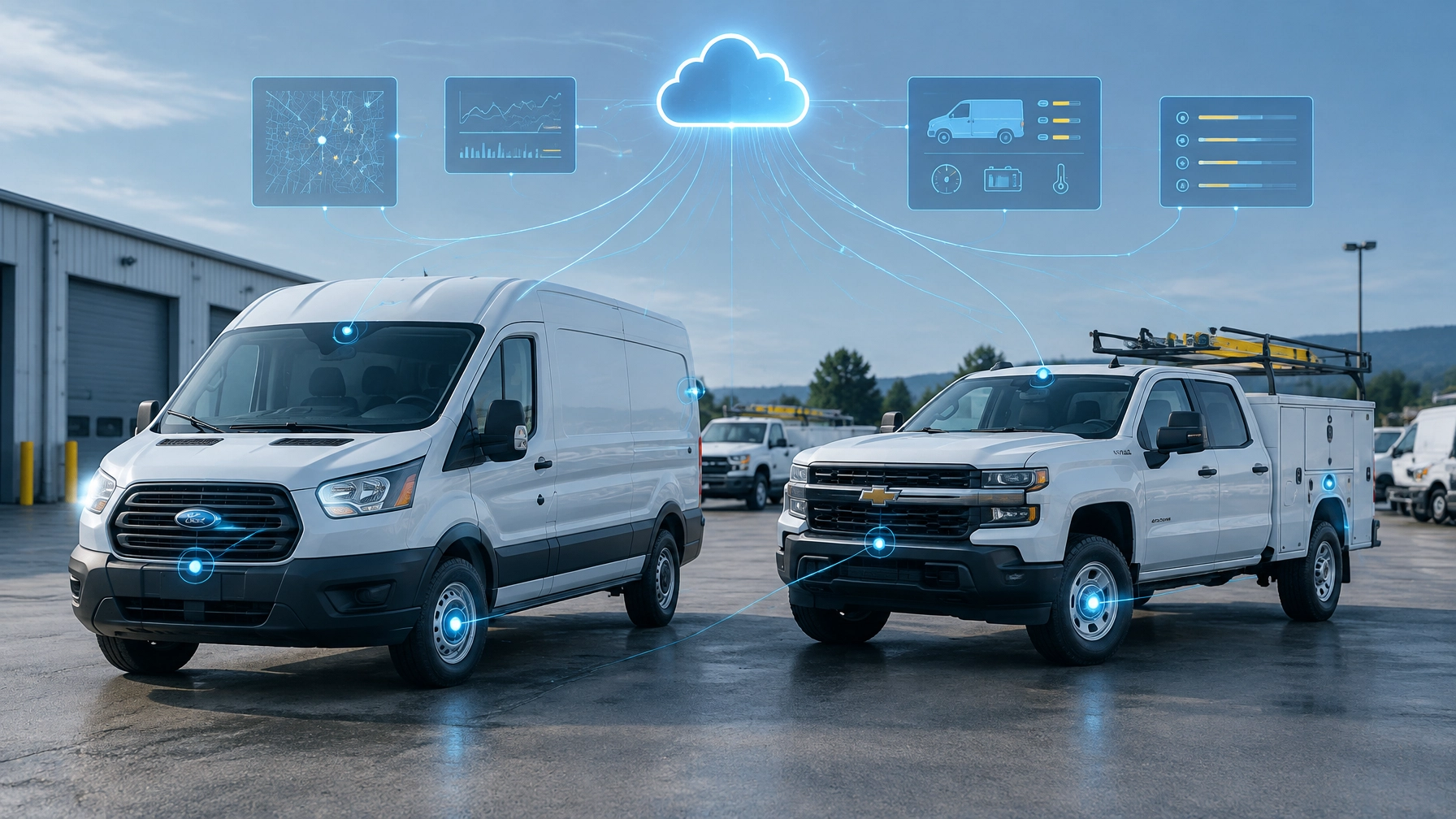
The Connected Fleet Architecture: Unifying ELD Mandates, GPS, and Video via Open APIs
Fleet operators often manage three separate data streams: ELD records for compliance, GPS tracking for location visibility, and video telematics for safety and claims. Each system can provide value on its own. The challenge begins when dispatch, payroll, maintenance, safety, and reporting teams need to compare information across all three.
A connected fleet architecture solves that problem. It uses open APIs to move data between vehicle hardware, fleet software, and business systems. Instead of treating ELD, GPS, and dash camera platforms as isolated tools, an operator can build one connected software stack around shared vehicle, driver, trip, and event data.
This approach requires planning and setup work. It also delivers better visibility, fewer manual processes, and a more flexible technology foundation for a growing fleet.
What a Connected Fleet Architecture Includes
A connected fleet architecture combines several technology layers:
- ELD hardware and software for hours-of-service records and FMCSA compliance
- GPS telematics for location, speed, mileage, routes, and geofencing
- Dash cameras and video telematics for event footage, driver behavior, and incident review
- Vehicle diagnostics for engine data, fault codes, and maintenance planning
- Open APIs and webhooks for sharing data with other applications
- Fleet management software for dashboards, alerts, reports, and workflows
- Business systems such as TMS, ERP, payroll, dispatch, accounting, and maintenance platforms
The API layer acts as the connection point between these systems. It can send a vehicle location update to dispatch, associate a video event with an ELD driver record, or pass an engine fault code to a maintenance system.
Safety Track’s Open API connection capabilities support custom integrations involving telematics and video data. The company identifies dispatch management, maintenance scheduling, and safety applications as common integration opportunities.
The objective is not simply to collect more data. The objective is to make the data usable where fleet teams already work.
ELD Data Is More Than a Compliance Record
The FMCSA ELD program requires most drivers who must maintain records of duty status to use a registered electronic logging device. An ELD connects to the vehicle and records information such as:
- Driving time
- Duty status
- Engine power status
- Vehicle movement
- Location information
- Driver and vehicle identifiers
- Hours-of-service records
FMCSA ELD compliance remains the primary purpose of the device. However, the data it produces can also improve daily operations when connected to other systems.
For example, dispatch can use duty status information to understand whether a driver is available for another assignment. Safety managers can compare a video event with the driver’s duty status. Payroll teams can use approved activity records to reduce manual time entry, subject to company policies and applicable labor requirements.
Integration does not replace the ELD’s compliance function. It makes compliant data more useful across the business.
GPS Tracking Adds Operational Context
GPS tracking shows where a vehicle is, where it has been, and how it is moving. A connected fleet architecture uses that information for more than a map display.
GPS data can support:
- Real-time vehicle visibility
- Route progress and estimated arrival times
- Mileage by state or jurisdiction
- Geofence entry and exit alerts
- Unauthorized movement notifications
- Customer status updates
- Route and idle-time reporting
- Asset and trailer monitoring
Safety Track’s Tracking Management Suite includes real-time vehicle and equipment location, custom geofences, SMS and email alerts, reporting, and maintenance management features.
When GPS data is connected to ELD and video records, fleet managers gain a clearer view of an event. They can identify the vehicle’s location, determine who was assigned to it, review the route, and examine related footage from the same time period.
That context reduces the need to search through disconnected systems.

Video Telematics Connects Events to Evidence
Dash cameras generate a different type of fleet data. GPS can show where an event occurred. ELD data can show the driver’s duty status. Video can show what happened on the road and inside the cab, depending on the camera configuration and company privacy policies.
Video telematics can be linked to:
- Harsh braking
- Rapid acceleration
- Collisions
- Speeding
- Following-distance events
- Lane departures
- Driver distraction
- Near misses
- Unauthorized vehicle movement
The value increases when video is available immediately through the customer’s own platform. Safety Track emphasizes direct access to available footage, allowing authorized users to review and download video without waiting for a vendor to retrieve each clip.
For fleets that choose the plan, Safety Track’s unlimited video option is $99.95 per vehicle, per month and includes unlimited viewing and unlimited downloads. Predictable access helps safety teams review the full context of an event, preserve evidence, and support driver coaching without per-clip or per-download charges.
The fleet dash cam integration guide explains how connected video can bring GPS, vehicle diagnostics, and footage together for incident review and safety workflows.
How an Open API Changes Daily Fleet Operations
An open API does not automatically create a connected fleet. It provides the technical pathway for systems to exchange information.
A typical workflow may look like this:
- A driver begins a trip and the ELD records the change in duty status.
- GPS tracking reports the vehicle’s location, speed, and route progress.
- A dash camera identifies a safety event and saves associated video.
- The platform links the event to the vehicle, driver, timestamp, and GPS coordinates.
- A webhook sends the event to a safety or dispatch application.
- The maintenance system receives a diagnostic code and creates a review task.
- Payroll, reporting, or business intelligence tools receive approved data for analysis.
The result is less duplicate data entry. Dispatchers do not need to copy location information into another system. Safety managers do not need to match video timestamps with GPS history manually. Maintenance teams can receive actionable vehicle data without waiting for a separate report.
Integration still requires configuration. Teams must define data fields, user permissions, event rules, identifiers, retention policies, and testing procedures. Vehicle IDs and driver IDs must remain consistent across applications. Time zones and timestamps must also align.
Good architecture makes that work manageable. Poor architecture creates another disconnected tool.
Automated IFTA Calculations Depend on Reliable Data
The International Fuel Tax Association provides the framework used by participating jurisdictions for reporting fuel use and mileage. Accurate IFTA reporting generally depends on mileage by jurisdiction, fuel purchases, and the applicable tax rates and rules.
Connected telematics can support automated IFTA calculations by combining:
- GPS mileage
- State and provincial border crossings
- Odometer information
- Fuel card transactions
- Vehicle and trip identifiers
- Applicable jurisdiction rates
The platform can organize mileage by jurisdiction and send the resulting data to accounting or tax-reporting workflows. This reduces spreadsheet work and creates a more consistent audit trail.
Automation does not eliminate the need for review. Fleet operators should validate mileage, fuel records, vehicle classifications, exemptions, and jurisdiction-specific requirements before filing. The technology improves preparation; it does not replace tax or compliance oversight.

Why Hardware-Agnostic Telematics Matters
A growing fleet may use several vehicle types, camera configurations, GPS devices, and software applications. A hardware-agnostic telematics strategy helps operators avoid replacing every component whenever the fleet changes.
Hardware-agnostic telematics can provide flexibility when a business:
- Adds new vehicle classes
- Acquires another company
- Expands into a different region
- Replaces older vehicles
- Adds trailers or non-powered assets
- Changes dispatch or maintenance software
- Needs different camera configurations for different operations
Vendor lock-in creates long-term risk. A fleet may become dependent on one device, one data format, or one software contract. Changing providers can then require new installations, retraining, data migration, and operational disruption.
Open APIs reduce that risk by making integrations more portable. They do not guarantee that every device or platform will connect without modification. Compatibility still depends on supported endpoints, data formats, authentication, and vendor cooperation. However, an open integration strategy gives IT teams more choices as requirements evolve.
Evaluate Total Cost of Ownership, Not Just Monthly Price
Total cost of ownership includes more than the subscription fee. Fleet operators should evaluate:
- Hardware and installation
- Cellular connectivity
- Software subscriptions
- API access and integration work
- Training and implementation
- Data storage and retention
- Support and troubleshooting
- Device replacement
- Downtime during migrations
- Reporting and compliance administration
- Costs created by duplicate manual work
A lower monthly price may not be lower over the life of the fleet if the platform creates extra administrative work or requires proprietary hardware. Conversely, a connected architecture may require more initial planning but reduce costs through automation, better fuel visibility, faster incident review, and improved maintenance coordination.
The right calculation compares the full operating model. It measures how the technology affects safety, labor, compliance, fuel, uptime, claims, and future flexibility.
Build the Connected Fleet in Practical Stages
Fleet operators do not need to connect every system on the first day. A staged approach reduces implementation risk.
Start with the data foundation
Standardize vehicle, driver, asset, trip, and event identifiers. Decide which system will be the source of truth for each data type.
Prioritize high-value workflows
Begin with workflows that create measurable value, such as dispatch visibility, video event review, maintenance alerts, or IFTA mileage reporting.
Confirm API capabilities
Ask providers about REST endpoints, webhooks, authentication, rate limits, data retention, video access, and documentation. Safety Track provides TMS API documentation for integration planning.
Test with a limited group
Connect a small group of vehicles before expanding across the fleet. Check timestamps, driver assignments, alerts, video availability, and downstream system behavior.
Measure operational results
Track investigation time, manual data entry, missed maintenance events, idle time, route efficiency, compliance exceptions, and reporting effort.
A connected fleet architecture should improve daily work, not simply add another dashboard.
The Business Case for a Unified Fleet Management Stack
ELD, GPS, and video data answer different questions. ELD helps establish duty status and support FMCSA ELD compliance. GPS shows location, movement, route history, and jurisdiction mileage. Video provides visual evidence and driver safety context.
Open APIs connect those answers.
With a unified fleet management software strategy, dispatch can work from more complete information. Safety teams can review events faster. Maintenance teams can respond to vehicle data sooner. Payroll and accounting can reduce manual workflows. IT teams can support growth without rebuilding the entire technology stack.
Connected fleet architecture requires deliberate setup, secure access controls, testing, and ongoing data governance. For operators planning beyond the next vehicle purchase, those requirements are an investment in control and flexibility.
The result is a fleet technology environment where information moves with the operation instead of remaining trapped in separate tools.
Key Takeaways
- Open API telematics connects ELD, GPS, video, and business software.
- ELD data can support both FMCSA compliance and operational workflows.
- GPS tracking adds location, route, geofence, and IFTA mileage context.
- Video telematics links safety events to visual evidence.
- Automated IFTA calculations depend on reliable mileage and fuel data.
- Hardware-agnostic telematics helps reduce vendor lock-in.
- Total cost of ownership should include integration, support, labor, and future flexibility.
- A phased implementation makes connected fleet architecture easier to manage.

Tyler Schneider is the IT Director at Safety Track, overseeing the company’s technological infrastructure and innovations. With a strong background in information technology and systems management, Tyler ensures that Safety Track stays at the forefront of tech solutions in fleet management. His strategic expertise supports the seamless integration of technology across the company’s operations.