
Best AI Dashcams for Fleet Management: Safety & Efficiency Solutions
In the rapidly evolving landscape of fleet management, AI dashcams have become essential tools for improving safety, visibility, and operational efficiency. These advanced camera systems leverage artificial intelligence to deliver real-time insights into driver behavior, accident prevention, and overall fleet performance. As fleets face increasing pressure to reduce incidents, control insurance costs, and maintain accountability, understanding how AI dashcams function and what differentiates leading solutions has become critical.
This comprehensive guide explores the role of AI dashcams in modern fleet operations, examines the key features that influence safety outcomes, and compares how today’s leading solutions support driver protection and fleet efficiency. In addition, this article highlights how Safety Track’s AI fleet camera lineup, including the ST-810, ST-820, and the newly introduced ST-360 panoramic monitoring system, aligns with these evolving safety and visibility demands.
Why AI Dashcams Are Essential for Fleet Safety and Management
AI dashcams play a vital role in fleet safety by strengthening driver accountability and providing actionable data that supports accident prevention. By applying artificial intelligence to video capture, these systems move beyond passive recording and instead analyze driving behavior in real time. They identify risky actions such as distracted driving, harsh braking, aggressive acceleration, or unsafe following distances, then provide immediate feedback that allows drivers to self-correct.
This proactive safety approach helps fleets reduce preventable incidents while reinforcing safer driving habits across the organization. Over time, the consistent use of AI dashcams contributes to a stronger safety culture, improved driver awareness, and greater operational consistency. In addition to safety benefits, fleets often experience reduced operational costs as accident frequency declines and insurance exposure improves.
Real-world deployments continue to demonstrate how AI-enabled dashcams positively influence driver behavior and significantly reduce incident rates across diverse fleet environments.
AI Dashcam Initiatives for High-Risk Driving and Fleet Safety
Industry research highlights how organizations operating large vehicle fleets have successfully implemented AI dashcam initiatives to identify high-risk driving behaviors and reduce preventable incidents. In one example, a global energy technology company deployed AI-enabled dashcams across its fleet to improve the detection of unsafe driving patterns. By analyzing video data and behavioral alerts, the company strengthened driver coaching programs and achieved measurable improvements in road safety and operational efficiency.
These initiatives underscore the value of AI dashcams not only as monitoring tools but as long-term safety investments that support continuous improvement.
How AI Dashcams Enhance Driver Safety and Accident Prevention
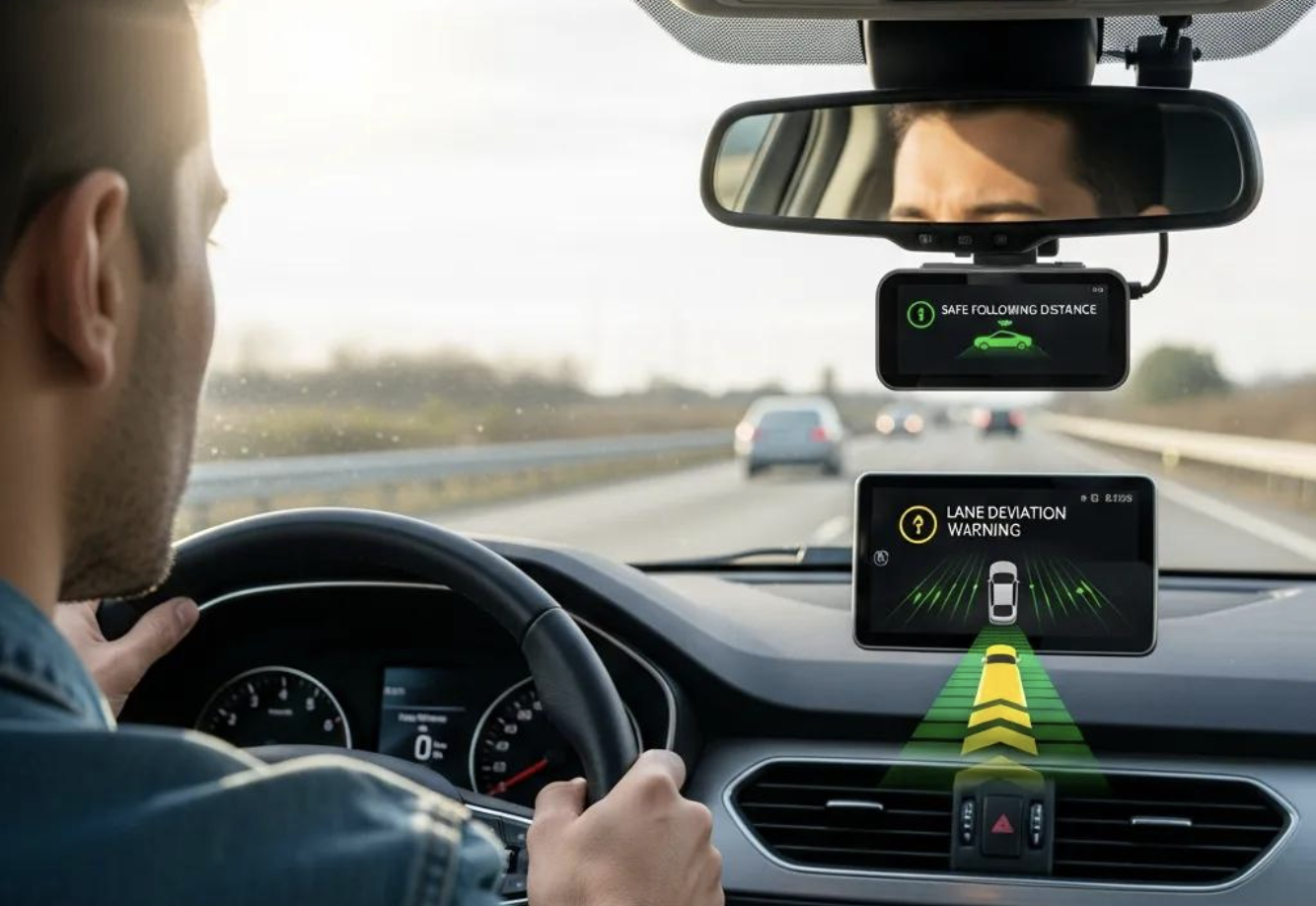
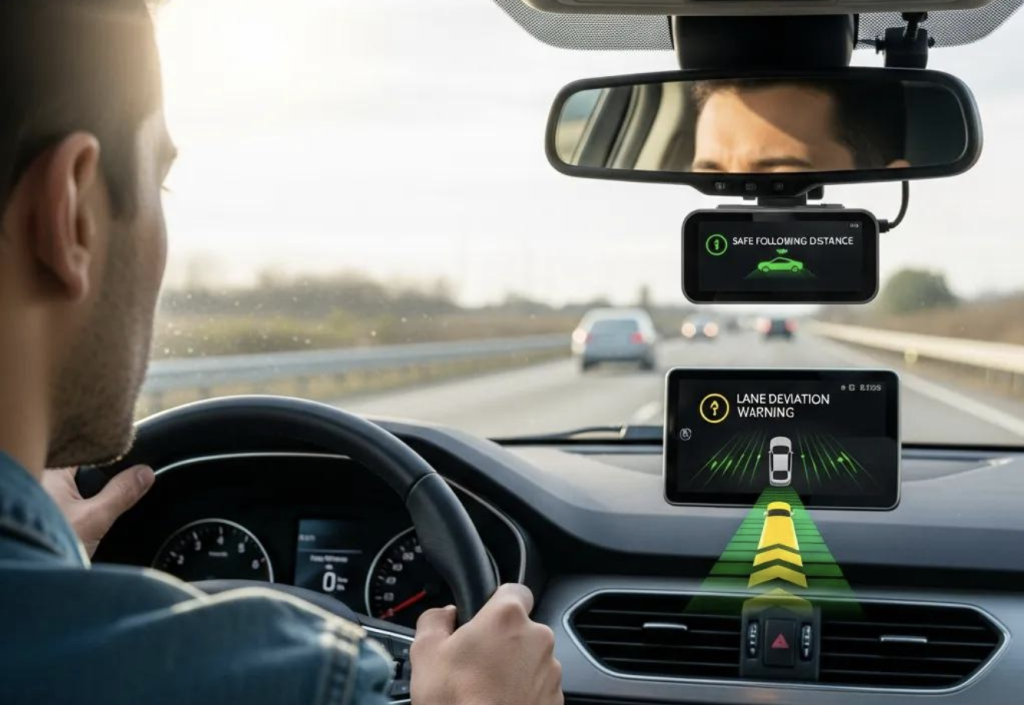
AI dashcams enhance driver safety by combining real-time alerts, behavioral monitoring, and advanced driver-assistance technologies. When the system detects dangerous behaviors such as distracted driving, harsh braking, or lane drifting, it immediately alerts the driver, allowing for corrective action before an incident occurs. This instant feedback loop plays a critical role in accident prevention, especially in high-risk or high-mileage driving environments.
Many AI dashcams also integrate Advanced Driver-Assistance Systems (ADAS) features such as lane departure warnings and forward collision alerts. These capabilities further reduce accident risk by supporting drivers in maintaining situational awareness, particularly during long shifts or challenging road conditions. As a result, fleets benefit from fewer collisions and more consistent driving performance.
Recent research continues to explore how specific AI algorithms identify distracted driving behaviors. Studies define distraction events through indicators such as prolonged eye movement away from the road, mobile phone use, smoking, or other in-cab activities that compromise attention. By detecting these behaviors early, AI dashcams provide fleets with tools to intervene before accidents occur.
What Cost Savings and Insurance Benefits Do AI Dashcams Provide?
The financial benefits of AI dashcams extend beyond safety improvements. Fleets that adopt these systems often see meaningful reductions in insurance premiums due to documented improvements in driver behavior and incident reduction. While savings vary by insurer and fleet profile, many organizations report insurance cost reductions ranging from 10 to 20 percent.
In addition to insurance benefits, AI dashcams help lower expenses related to vehicle repairs, legal claims, downtime, and lost productivity. Video evidence accelerates claims resolution and reduces disputes by providing clear documentation of events. Over time, these combined savings contribute to a strong return on investment.
What Are the Key Features to Compare in AI Dashcams for Commercial Fleets?
When evaluating AI dashcams for commercial fleets, several features directly influence safety outcomes and operational effectiveness. These include driver monitoring capabilities, ADAS functionality, cloud-based video access, GPS tracking, and high-resolution recording.
Each of these components plays a role in ensuring fleets can monitor behavior accurately, respond to incidents quickly, and analyze performance trends across vehicles and drivers.
How Do ADAS and Driver Monitoring Systems Improve Fleet Operations?
ADAS and driver monitoring systems improve fleet operations by supporting proactive safety management. These technologies provide drivers with real-time guidance while giving fleet managers deeper insight into behavior patterns. Alerts for forward collision risk, unsafe lane movement, or distraction help drivers make immediate adjustments, while recorded data allows managers to identify coaching opportunities.
By shifting safety management from reactive incident review to proactive risk reduction, fleets improve overall efficiency and driver performance.
Essential AI Dashcam Features to Compare for Commercial Fleets
Cloud storage enables fleet managers to access video footage remotely, simplifying incident review and documentation. GPS tracking adds location, speed, and route context to video events, which strengthens analysis and reporting. High-resolution video ensures critical details remain visible, which is essential for insurance claims, compliance documentation, and driver protection.
Together, these features transform dashcams into comprehensive safety and visibility tools.
 Leading AI Dashcam Brands in the Fleet Safety Market
Several companies continue to shape the AI dashcam market by delivering solutions tailored to commercial fleets. Brands such as Safety Track, Motive, and Samsara each offer advanced systems designed to improve driver safety and operational visibility. What differentiates these platforms is not only AI capability but also ease of integration, scalability, and relevance to real-world fleet challenges.
How Safety Track’s AI Fleet Cameras Align With Modern Fleet Safety Needs
Safety Track’s AI fleet camera solutions are designed to support visibility, accountability, and driver protection across a wide range of fleet types. Rather than focusing solely on event recording, these systems emphasize real-time awareness and actionable insights that improve safety outcomes.
The ST-810 AI fleet camera provides reliable forward-facing video combined with intelligent event detection. This system captures critical road conditions and driving events while supporting incident documentation and risk analysis. Fleets that deploy the ST-810 gain clear visibility into road-facing activity without adding complexity to daily operations.
The ST-820 AI dashcam expands on this capability by incorporating dual-facing video. By capturing both the road and the driver, the system enables accurate identification of distracted driving, fatigue, and unsafe behaviors while also protecting drivers from false claims. Real-time alerts encourage safer driving habits, while cloud-based access supports efficient incident review and coaching.
The ST-220 AI dash camera offers a compact yet powerful solution for fleets seeking advanced safety features without added complexity. Designed for easy installation and seamless integration, the ST-220 delivers high-quality video, intelligent event detection, and real-time insights that help fleets proactively manage risk. With its focus on affordability and performance, the ST-220 makes AI-powered fleet safety accessible for operations of any size.
Safety Track’s newest solution, the ST-360, introduces a 360-degree seamless panoramic video monitoring system designed for large commercial vehicles. By combining four or more cameras, the system delivers a continuous, real-time view of the vehicle’s surroundings. This comprehensive perspective eliminates blind spots and significantly improves driver awareness, especially in congested environments, job sites, and urban settings. The ST-360 supports safer maneuvering, reduces low-speed collisions, and enhances overall situational awareness for drivers operating complex vehicles.
How AI Dashcams Benefit Different Fleet Types and Industries
AI dashcams provide value across industries by adapting to specific operational challenges. Construction and logistics fleets benefit from improved visibility and accountability in high-risk environments. Public works and transportation fleets rely on video documentation to support compliance and protect drivers working in traffic-heavy conditions.
Across sectors, AI dashcams serve as both preventive safety tools and reliable documentation systems.
What Is the Return on Investment of AI Dashcams?
The ROI of AI dashcams becomes evident through reduced accident rates, improved driver behavior, and lower insurance costs. Fleets frequently report accident reductions of 20 to 30 percent after implementing AI-enabled camera systems. These improvements compound over time as safety programs mature and driver awareness increases.
How AI Dashcams Integrate With Fleet Management and Telematics Systems
AI dashcams integrate seamlessly with fleet management and telematics platforms, allowing managers to view video, GPS data, and performance metrics in a unified system. This integration supports real-time monitoring, streamlined reporting, and more informed decision-making, which enhances overall fleet efficiency.
Emerging Trends in AI Dashcam Technology
AI dashcam technology continues to advance through predictive analytics and improved machine learning capabilities. By analyzing historical driving data, emerging systems can identify risk patterns and forecast potential safety issues before incidents occur. These developments are reshaping how fleets approach risk management and long-term safety planning.
Are AI Dashcams Worth the Investment for Commercial Fleets?
For most commercial fleets, AI dashcams represent a valuable investment. They enhance safety, reduce operational risk, and provide long-term financial benefits. When combined with advanced solutions such as Safety Track’s ST-810, ST-820, and ST-360, fleets gain comprehensive visibility that supports safer, more efficient operations.

Hannah Lang is a Social Media Marketing Specialist at Safety Track. She has her bachelor’s degree in Advertising and Public Relations from Grand Valley State University. With her passion for research, Hannah possesses a wealth of knowledge expanding across multiple industries and disciplines. Her efforts won her a Scholastic Art and Writing regional Gold Key award.