
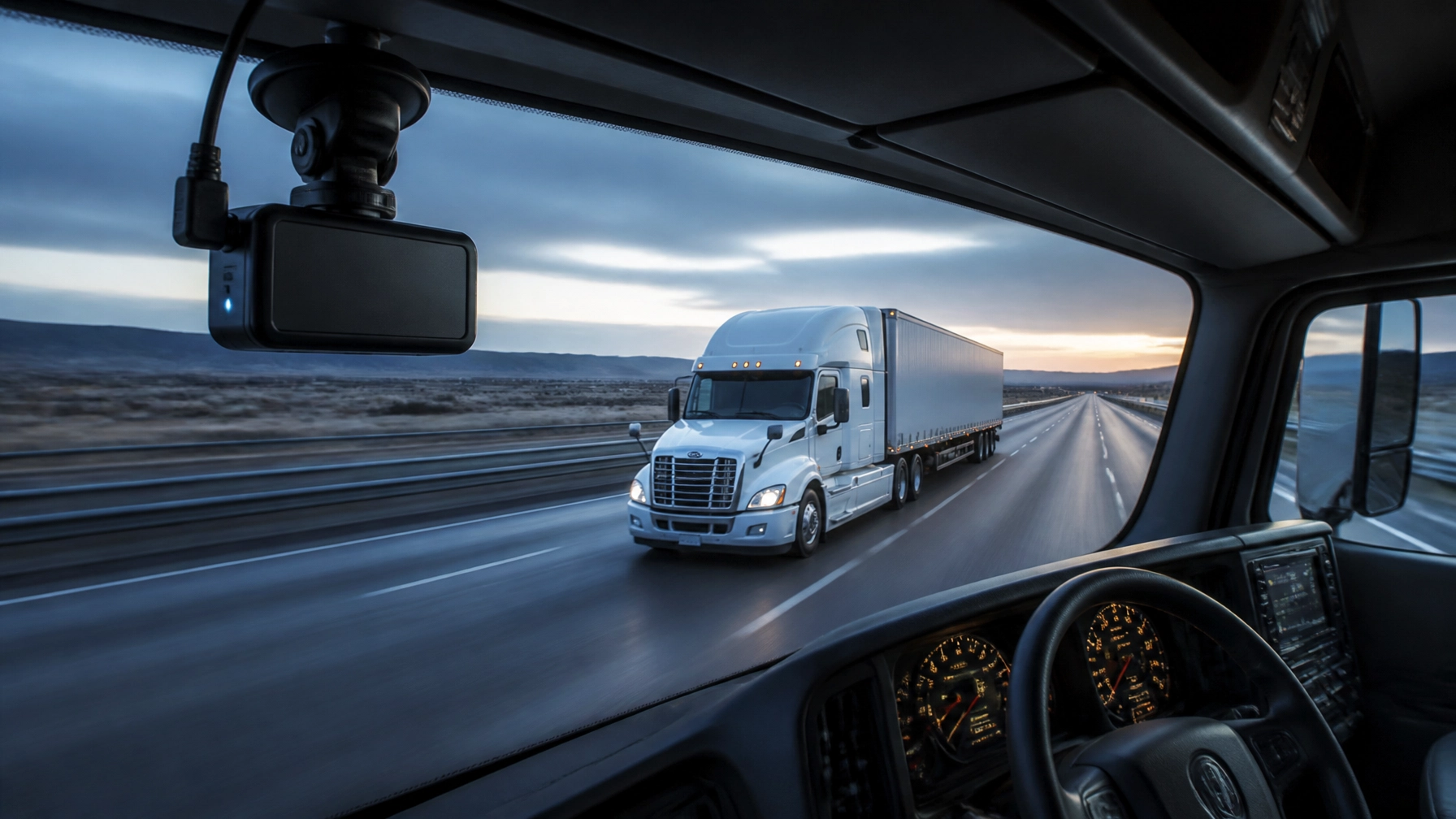
Beyond GPS: Why Your Fleet Needs AI-Powered Video Telematics
For years, GPS tracking has been the backbone of fleet management. It provided the “dots on a map” that allowed managers to see where their vehicles were, how fast they were going, and when they arrived at a destination. In its time, this was revolutionary. It improved dispatching, helped with fuel tax reporting, and gave a basic level of oversight.
However, as the logistics and transportation industries evolve, basic location data is no longer enough to protect a business from modern risks. GPS tells you what happened: a vehicle stopped suddenly or a driver took a long route: but it can never tell you why.
This is the “data gap” that video telematics solutions are designed to bridge. By combining traditional telematics with high-definition video and artificial intelligence, fleet managers can finally see the full context of every mile driven.
The “What” vs. The “Why”: Beyond the Hard Brake
Every fleet manager has seen a “hard braking” alert on their GPS dashboard. In a GPS-only world, that alert often leads to a disciplinary conversation. You assume the driver was speeding or being aggressive.
But what if that hard brake was actually a heroic maneuver?
Consider this scenario: A driver is cruising at 55 mph on a rural highway. Suddenly, a passenger car pulls out from a side street without looking. Your driver slams on the brakes, narrowly avoiding a catastrophic collision.
A GPS-only system will simply log a “Critical Safety Event: Hard Braking.” Without video, you might call that driver into the office to reprimand them for “aggressive driving.” With AI fleet safety cameras, you see the passenger car’s error. Instead of a reprimand, the driver receives a commendation for their quick reflexes.
Video reveals the truth behind the data. It transforms a list of “events” into a series of “stories,” allowing managers to make decisions based on reality rather than assumptions.

Accident Exoneration: The “Unbiased Witness”
In the unfortunate event of an accident, the commercial driver is often the first to be blamed. “Nuclear verdicts” and fraudulent insurance claims are at an all-time high, often because it is one person’s word against another’s.
GPS can prove a vehicle was at a certain location at a certain time, but it cannot prove who had the right of way or if a third party was behaving recklessly. Fleet safety cameras act as an unbiased witness that never forgets and never lies.
Faster Settlements and Lower Costs
When you have high-definition video of an incident, the insurance claim process changes completely.
- Reduced Liability: Video can immediately exonerate a driver who was not at fault, preventing a business from paying out thousands in false claims.
- Insurance Discounts: Many insurers offer up to 25% lower premiums for fleets that utilize comprehensive video telematics because the risk of a “he-said, she-said” lawsuit is virtually eliminated.
- Faster Turnaround: Instead of weeks of investigation, a 15-second video clip can resolve a dispute in minutes.
By providing the “why” behind an accident, video telematics protects your bottom line and your company’s reputation.
Detecting Fatigue and Distraction Before They Lead to Disaster
The most dangerous risks in a fleet are often invisible to GPS. Fatigue, drowsiness, and distraction don’t always result in a speed alert or a hard brake: at least not until it’s too late.
GPS cannot tell you if a driver is looking at their phone. It cannot tell you if their eyes are closing due to exhaustion. It only reacts after a maneuver has been made. Modern AI fleet safety cameras are proactive rather than reactive.

Real-Time In-Cab Alerts
Using computer vision, AI-enhanced cameras can detect:
- Drowsiness: The system identifies drooping eyelids or frequent yawning and provides an audible alert to the driver, suggesting they take a break.
- Distraction: If a driver looks down at a mobile device for more than a few seconds, the system triggers an alert to bring their focus back to the road.
- Tailgating: AI monitors the distance between vehicles and warns the driver if they are following too closely for their current speed.
These features provide a “virtual co-pilot” that helps prevent accidents before they happen. GPS can tell you where the truck ended up after an accident; video telematics keeps the truck on the road.
Cargo Security and Operational Accountability
For many businesses, the “dots on the map” are only half the battle. What happens when the vehicle arrives at the job site?
GPS will show that a truck arrived at a construction site at 8:00 AM and left at 10:00 AM. But it won’t show you why the unloading took two hours instead of one. It won’t show you if the cargo was damaged during transit or if the driver followed proper safety protocols while offloading.
Integrating video telematics solutions with side-view or cargo-area cameras provides visibility into the entire operational lifecycle.
- Proof of Delivery: Clear footage shows exactly when and where a load was dropped off, serving as undeniable proof for customers.
- Cargo Integrity: If a customer claims goods arrived damaged, you can review internal footage to see if the load shifted or if it was damaged during the loading process by a third party.
- Asset Protection: For non-powered assets like trailers, cameras can monitor for unauthorized access or theft, providing a layer of security that GPS alone cannot match.

Building a Culture of Safety, Not Surveillance
One of the biggest hurdles to implementing video telematics is driver pushback. Many drivers feel like cameras are “Big Brother” looking over their shoulder. However, when implemented correctly, video becomes a tool for professional development and protection rather than punishment.
Targeted Coaching
Instead of broad, generic safety meetings, managers can use actual footage to provide targeted, one-on-one coaching. Showing a driver a clip of a near-miss caused by tailgating is far more impactful than telling them “be careful.” It turns a vague concept into a concrete learning moment.
Recognizing Excellence
Video also allows managers to see when drivers are doing things right. You can identify the drivers who consistently maintain safe following distances, navigate difficult weather with ease, and handle stressful traffic situations professionally. Recognizing these “positive events” helps build a culture where safety is valued and rewarded.
The Strategic Shift: From Dots to Details
Basic GPS tracking is no longer the gold standard; it is the bare minimum. In an era of rising insurance costs and increased litigation, the visibility provided by video telematics is a competitive necessity.
By moving from a GPS-only system to a comprehensive video solution, you gain more than just footage. You gain the ability to exonerate your drivers, prevent accidents caused by fatigue, and optimize your entire operation with real-world data.
At Safety Track, we specialize in custom-tailored solutions that fit the specific needs of your fleet. Whether you are managing a few delivery vans or a massive logistics network, our AI-enhanced systems ensure that security is always in sight and the truth is always available.
Stop guessing what happened on the road. Start seeing it.


Tyler Schneider is the IT Director at Safety Track, overseeing the company’s technological infrastructure and innovations. With a strong background in information technology and systems management, Tyler ensures that Safety Track stays at the forefront of tech solutions in fleet management. His strategic expertise supports the seamless integration of technology across the company’s operations.