
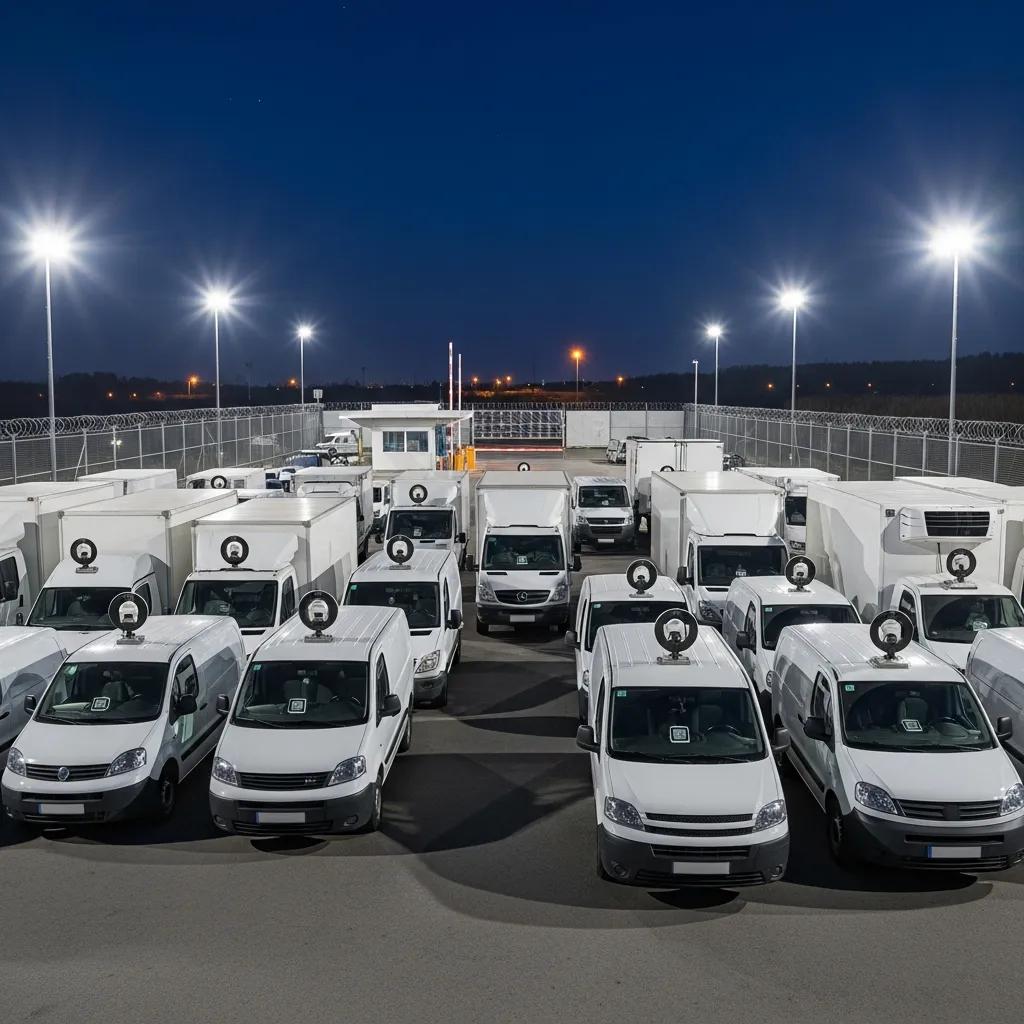
Compare Theft Protection Options for Ultimate Security
Fleet theft presents a significant and escalating challenge for businesses. This guide provides a definitive exploration of core anti-theft solutions, including advanced tracking, vehicle immobilization, sophisticated surveillance, intelligent alarms, and robust operational controls. We detail how each contributes to reducing recovery time, mitigating replacement costs, and safeguarding revenue. Fleet managers will gain critical insights into deployment tradeoffs and decision criteria to align solutions with their fleet’s unique needs. The article integrates concepts such as geofencing, remote engine shutdown, AI monitoring, and vehicle recovery services, offering a holistic perspective on modern fleet security.
Fleet Theft: A Growing Concern for Commercial Vehicle Security
The escalating rate of fleet theft is a critical concern, driven by commercial vehicles’ concentrated asset value, predictable routes, and periods of being unattended. Modern thieves employ sophisticated techniques like signal jamming, key-cloning, and cyber-attacks. This rising threat directly impacts a fleet’s bottom line through increased vehicle downtime, lost cargo, and higher insurance exposure. Understanding these trends is crucial for prioritizing technologies and policies that deliver rapid risk reduction and long-term ROI.
Economical Vehicle Anti-Theft: GPS, GSM & Alarm Systems
“Nowadays rate of vehicle theft is very advanced all through world… Therefore, protection of the vehicles with an intelligent, reliable, effective and economical system is very important… This cutting edge technology is capable to protect, monitor and set alarm within the less time.”
vehicle anti-theft system based on an embedded Platform, 2013
Recent reports (2023–2024) consistently indicate a concerning year-over-year increase in commercial vehicle thefts globally, particularly in urban centers. This surge establishes a higher baseline risk, leading to increased incident frequency and average financial loss per incident. The impact extends beyond immediate asset loss, encompassing significant service disruption, missed deliveries, and reputational damage. Strategic investments in theft protection, advanced detection, and rapid recovery technology are critical for substantial net savings.
Key Theft Protection Technologies for Fleet Security

Modern fleet security relies on sophisticated theft protection technologies for detection, deterrence, and intervention. Primary technologies include advanced GPS hardware trackers, robust immobilizers, comprehensive surveillance cameras, and intelligent alarm systems. A layered approach enables a spectrum of responses, from immediate alerts to physical interdiction. The table below provides a concise reference for typical features, complexity, and cost ranges. theft protection technologies
| Technology | Typical Features | Deployment Complexity | Typical Cost Range |
|---|---|---|---|
| GPS hardware trackers | Real-time location, tamper alerts, geofencing, historical routes | Medium | $50–$200 per unit + $10–$40/month subscription |
| Immobilizers / remote engine shutdown | Engine-disable relay, authorized restart workflows, safety interlocks | Medium | $100–$400 initial + service fees |
| Surveillance cameras (dash/cabin/cargo) | Forward/cabin/cargo video, live view, event tagging, cloud storage | Medium | $100–$500 per camera + storage/subscription |
| Advanced alarm modules | Vibration/door/tow/glass break sensors, cellular notifications, siren | Low–Medium | $50–$200 with monitoring fees |
This reference demonstrates where each technology fits within a comprehensive security plan, setting the stage for a deeper discussion of GPS tracking and immobilization mechanisms.
Smart Anti-Theft Systems: GPS, GSM, Tracking & Immobilization
“A Smart Anti-Theft System for Vehicle Security utilizes a combination of GPS and GSM technologies to enhance vehicle protection against theft. The developed system is designed for real-time tracking, sending alerts to vehicle owners, and immobilizing the vehicle in case of theft.”
A smart anti-theft system for vehicle security, P Singh, 2015
GPS Tracking and Vehicle Immobilizers
GPS tracking systems are a cornerstone of modern fleet security, providing continuous, precise location telemetry for rapid interception and generating immediate geofence and tamper alerts. This significantly reduces mean time to recovery (MTTR). Vehicle immobilizers are active control systems preventing unauthorized use by interrupting critical engine circuits or disabling fuel delivery. Remote engine shutdown modules extend this capability, allowing centralized commands to disable a running vehicle under strict safety protocols. When correctly deployed and integrated, immobilizers transform detection into direct operational response, halting theft and simplifying recovery.
Remote Engine Shutdown & SMS Theft Alerts for Vehicles
“The global auto theft rate is on the rise, which highlights the critical need for effective anti-theft policies… this article suggests a novel solution: the introduction of a theft intimation system that uses SMS technology to notify car owners in real- time and provide them the ability to remotely stop the engine, preventing theft attempts.”
Remote engine shutdown system with theft alert via sms for vehicle owners, PK Miniappan, 2024
Surveillance Cameras and Advanced Alarm Systems
Surveillance cameras and advanced alarm systems are indispensable for robust fleet security, deterring theft by increasing perceived and actual risk. They improve detection speed and preserve crucial forensic evidence. Cameras provide live view and recorded footage, while alarm systems combine various sensors (door, motion, vibration, tow) with cellular notifications for rapid breach awareness. Their combined value lies in deterrence, immediate detection, and irrefutable evidence for investigations and insurance claims.
Dash Cameras and Advanced Alarms
Dash cameras serve a dual and critical role: visible deterrents and continuous footage capture. This footage is invaluable for proving intent, documenting tampering, and providing irrefutable evidence. Advanced alarm systems provide immediate theft alerts through a sophisticated combination of sensors, local deterrents, and remote communication. They integrate various sensors, initiating a multi-layered response: an audible siren locally deters, while cellular networks send remote communications to monitoring centers or fleet dashboards. Integration with GPS tracking elevates alarms to actionable intelligence.
Comprehensive Security Strategies Beyond Technology

Truly comprehensive fleet security requires an integrated approach beyond technology, encompassing robust physical measures, meticulously defined operational policies, and people-focused controls. This holistic strategy creates a resilient defense by addressing vulnerabilities at every level. Key components include secure parking protocols, optimized route planning, thorough driver vetting, and clear accountability systems. These measures reduce exposure and mitigate internal risks.
Secure Parking, Geofencing, Driver Training, and Supply Chain Security
Secure parking environments integrate robust fencing, ample lighting, comprehensive CCTV coverage with live monitoring, and controlled access. Geofences establish virtual perimeters around safe zones, triggering immediate alerts for unauthorized movement. Driver training and robust accountability programs are paramount in addressing internal risks, establishing clear procedures, and implementing continuous monitoring to deter collusion or careless practices. Enhancing supply chain security involves robust trailer tracking, high-security cargo seals, optimized logistics to avoid high-risk areas, and strong partnerships with trusted carriers and law enforcement. Addressing vulnerabilities from origin to destination significantly reduces cargo loss.
Comparing Fleet Theft Protection Solutions: Features, Benefits & Costs
An effective decision framework for comparing anti-theft options involves systematic evaluation across feature sets, specific benefits (prevention, detection, response, recovery), and cost categories. This structured approach helps fleet managers determine optimal investments for their unique fleet profile and risk tolerance. The matrix below summarizes how various technologies map to their primary functions and typical value propositions.
| Device Category | Primary Function | Expected Benefit | Key Considerations |
|---|---|---|---|
| GPS Tracker | Real-time location & tamper alerts | Faster recovery, operational insights | Cellular coverage, battery life, covert installation |
| Immobilizer | Prevents engine start or enables remote shutdown | Stops unauthorized use, direct intervention | Safety protocols, professional installation |
| Dash/Cabin Camera | Evidence capture & live view | Supports investigations, deterrence, liability protection | Storage capacity, privacy, data management |
| Alarm Module | Immediate alerting on sensor triggers | Early detection and deterrence, rapid escalation | False positive reduction, sensor types |
Pros and Cons of Key Technologies
- GPS Trackers:
- Pros: Real-time location, historical data, geofencing, rapid recovery.
- Cons: Requires cellular connectivity, ongoing subscription, potential jamming.
- Immobilizers:
- Pros: Directly block engine operation, highly effective at stopping theft.
- Cons: Demands careful safety integration, professional installation.
- Surveillance Cameras:
- Pros: Irrefutable visual evidence, visible deterrent.
- Cons: Significant data storage, bandwidth, privacy concerns, higher initial cost.
- Advanced Alarm Modules:
- Pros: Cost-effective early detection, immediate alerts, audible deterrent.
- Cons: Can generate false positives, alert fatigue.
Layered Security: The Gold Standard
A layered security model is the gold standard for ultimate fleet protection, organizing controls into distinct yet interconnected phases: prevention, detection, response, and recovery. This framework maps technologies and policies to each layer, ensuring gaps in one area are compensated by strengths in another.
- Prevention: Physical measures (secure parking, CCTV), operational policies (key control), technological deterrents (visible immobilizers).
- Detection: GPS trackers, advanced alarm systems, AI-enabled monitoring for immediate alerts.
- Response: Dispatching security, live camera viewing, authorized remote engine shutdown.
- Recovery: Vehicle recovery services, law enforcement coordination, post-incident forensics.
Example stacks:
- Medium-Risk Urban Routes: Immobilizer + GPS tracker + dual-facing dashcam.
- High-Value Cargo Vans in Remote Areas: GPS tracker with satellite fallback + advanced alarm system with tilt/tow sensors + secure parking protocols + driver training.
Safety Track: Integrated Fleet Theft Protection Solutions
Safety Track is a premier provider of integrated telematics and security offerings, meticulously designed to enhance the layered security framework. Our platform seamlessly combines cutting-edge GPS tracking, live-viewing cameras, advanced AI-enabled monitoring, and robust remote immobilization options into a unified, intuitive operational workflow. These capabilities empower fleets to consolidate alerts, automate escalation, attach critical video evidence, and generate customizable metrics for informed decision-making and insurer reporting.
Unique Features and Proven Effectiveness
Safety Track offers key differentiators for coordinated theft response:
- Real-time Data and Customizable Alerts: Precise location data and granular notifications ensure immediate awareness.
- AI Monitoring and Anomaly Detection: AI automates anomaly detection, prioritizing critical events and reducing alert fatigue.
- Live-View Cameras: Integrated live-view cameras provide immediate visual context for any alarm or alert.
- Immobilization Integrations: Robust integrations permit controlled remote engine shutdown workflows, executed safely.
Safety Track maintains a comprehensive library of case materials illustrating deployment outcomes and tangible operational benefits, including significantly reduced recovery times and improved insurance claim resolution rates. These resources validate expected ROI and inform pilot design.
Emerging Trends and Advanced Technologies in Fleet Theft Prevention
The landscape of fleet theft prevention continuously evolves. Innovations center on AI-driven monitoring, hardening telematics systems against tampering/jamming, and developing multi-path telemetry for persistent tracking. AI monitoring revolutionizes alert prioritization by identifying anomalous routing, unexpected stops, and suspicious driver behavior. Telematics innovators deploy advanced device hardening and backup satellite/multi-carrier failover capabilities to increase system resilience. Sophisticated anti-jamming measures and hardware designs resisting key cloning and signal spoofing are becoming standard.
AI Monitoring and Telematics Innovations
AI monitoring fundamentally revolutionizes fleet security by automating anomaly detection and intelligently elevating suspicious events for rapid human review. Machine learning models flag deviations like unexpected detours or prolonged immobilization. AI systems also tag and prioritize video evidence by detecting suspicious actions. The latest innovations in telematics focus on enhancing resilience, stealth, and data integrity against sophisticated criminal methods. Key advancements include multi-path tracking, device hardening, anti-jamming/anti-spoofing, improved encryption, concealed trackers, and integrated APIs for data fusion. These advances collectively shorten recovery windows and significantly raise the bar for fleet management.
Measuring and Monitoring Theft Protection Effectiveness
Measuring the effectiveness of theft protection solutions is paramount for justifying investments and driving continuous improvement. This requires defining clear Key Performance Indicators (KPIs), instrumenting telematics and evidence systems to capture data, and establishing a regular reporting cadence. KPIs should quantify incident frequency, mean time to detection (MTTD) and mean time to recovery (MTTR), estimated downtime costs saved, and impact on insurance claims. Continuous monitoring is achieved through telematics dashboards, AI-generated incident summaries, and periodic theft protection. The table below clarifies these definitions and outlines practical measurement methods.
| Metric | Definition | How Measured |
|---|---|---|
| Theft incidents per 1,000 vehicles | Frequency of theft events normalized to fleet size | Aggregated incident logs, police reports, insurance claims |
| Mean time to detection (MTTD) | Average elapsed time from theft occurrence to first alert | Timestamped event logs from telematics |
| Mean time to recovery (MTTR) | Average elapsed time from detection to physical vehicle recovery | Timestamped alert-to-recovery records |
| Downtime cost saved | Estimated operational cost avoided due to faster recovery/prevention | Calculated from average revenue per vehicle-hour, avoided replacement costs |
| Reduction in insurance claims/premiums | Change in claim frequency, severity, and premium costs | Insurance statements, claim data reconciliation |
KPIs and Continuous Monitoring Tools
To effectively track theft prevention success, fleet managers should focus on robust KPIs such as Percent Reduction in Theft Incidents, MTTD, MTTR, Downtime Cost Saved per Incident, Ratio of Incidents Resolved with Video/Telemetry Evidence, and Reduction in Insurance Premiums/Claims. These KPIs offer a holistic view of security performance. Effective monitoring blends specialized telematics dashboards with tools for tracking operational security. Recommended tool categories include Fleet Telematics Dashboards, AI Incident Triage Platforms, Logging and Forensics Utilities, and Customizable Reporting Tools. A regular reporting cadence—such as weekly operational alerts, monthly KPI reviews, and quarterly comprehensive security audits—is essential for continuous improvement. Safety Track’s platform supports many of these monitoring and reporting workflows, enabling consolidated dashboards and customizable KPI exports.

Hannah Lang is a Social Media Marketing Specialist at Safety Track. She has her bachelor’s degree in Advertising and Public Relations from Grand Valley State University. With her passion for research, Hannah possesses a wealth of knowledge expanding across multiple industries and disciplines. Her efforts won her a Scholastic Art and Writing regional Gold Key award.