
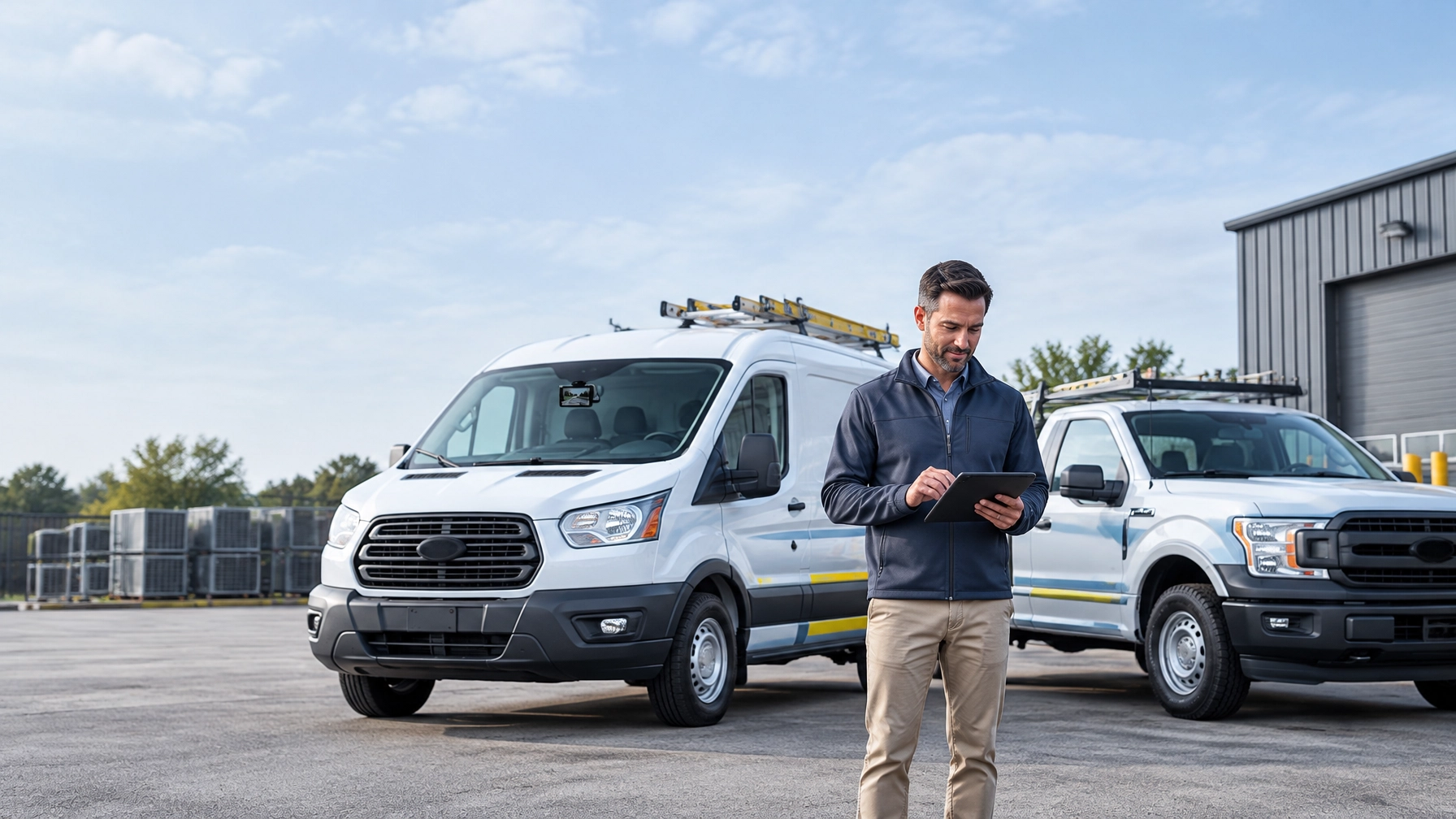
What Does a Fleet Camera Really Cost Per Vehicle? An Honest Breakdown
For a small business, a fleet dash camera is more than a device mounted on the windshield. The real cost per vehicle can include hardware, installation, connectivity, video storage, and fees for viewing or downloading footage.
That makes it easy to compare the wrong numbers. One quote may show a low monthly price but charge separately for installation or video access. Another may bundle services into one recurring rate. To budget accurately, fleet owners need to look at the full cost, and confirm what the plan includes.
Fleet dash camera cost per vehicle: the main cost categories
A connected camera system can have upfront charges, monthly fees, or both. Here are the line items to review when comparing quotes:
| Cost category | What can affect the price | What to ask |
|---|---|---|
| Hardware | Camera type, number of views, and whether it is purchased or included in a subscription | Is hardware included, financed, or billed upfront? |
| Installation | Self-installation, professional labor, vehicle access, and travel | What work and vehicles does the installation price cover? |
| Data and software | Cellular connectivity, platform access, alerts, and GPS features | Are data and software included in the monthly fee? |
| Video storage and retrieval | Local memory, cloud retention, live viewing, and remote access | How long is video retained, and how can the fleet retrieve it? |
| Additional fees | Extra users, downloads, activation, replacement, or contract terms | Are there charges per view, download, or export? |
The details vary by provider and configuration. A useful comparison starts with a written quote that separates one-time costs from recurring costs.
1. Hardware: one camera or a multi-view system?
The price of the camera depends on what the fleet needs to record. A forward-facing camera covers the road ahead. A dual-facing camera adds an in-cab view. Additional cameras can cover other angles, such as the sides or rear of a vehicle.
A 2026 cost guide gives indicative hardware ranges of $200–$400 for a forward-facing connected camera, $250–$450 for a dual-facing unit, and $500–$1,000 for some multi-camera configurations. These are market estimates, not guaranteed quotes; equipment and purchasing models vary. (See the guide’s cost breakdown.)
Some providers sell hardware upfront. Others include or finance it through a monthly subscription. Ask whether the quoted price covers every camera, mounting equipment, and any required gateway or accessories.

2. Installation: include the labor and vehicle time
Some cameras are designed for straightforward installation, but vehicle wiring and the fleet’s operating needs can affect the work involved. Professional installation can add about $100–$300 per vehicle, according to the same 2026 cost guide. Self-installation may reduce that expense if the fleet has the time and capability to complete it correctly.
For a small business, installation also has an operational cost: a van or light truck may be unavailable while the work is underway. Ask whether installation includes hardwiring, setup, testing, and travel to your location. Confirm whether the price changes for vehicles with different layouts or camera configurations.
Safety Track provides information about its fleet camera systems and installation options. The right setup depends on the vehicles, coverage needs, and how the fleet plans to use its footage.
3. Data and software: understand the monthly fee
Connected fleet cameras rely on a service plan for some combination of cellular connectivity, video access, software, and camera features. Industry pricing varies widely. The 2026 guide cited above estimates connected-camera subscriptions at roughly $25–$100 per vehicle per month, depending on the provider and what is included.
A low monthly price is not automatically the lowest total cost. Check whether the quote includes cellular data, platform access, GPS features, alerts, user accounts, and any live-video allowance. If the camera is an add-on to a separate fleet-tracking plan, include that base subscription in the per-vehicle calculation.
4. Video storage and retrieval: make sure the footage is usable
The storage model affects how long footage remains available and how easily a manager can retrieve it. A camera that records to a memory card may require someone to access the card and locate the right time period. A connected system may offer remote access, but the available features and retention period depend on the plan.
For example, RAM Tracking’s published pricing distinguishes an SD-card camera option from connected camera packages with cloud storage and remote video features. That is a useful reminder to compare what each package actually provides, not simply whether it is called a “dash cam plan.”
Ask these questions before signing:
- How many days or hours of footage are retained?
- Does video record continuously, on events, or both?
- Can authorized users review footage remotely?
- Is live viewing limited by minutes, data, or plan tier?
- Can the fleet retrieve footage directly, or must it request help from the provider?

5. Per-view, per-download, and other fees
Some cost surprises are not obvious in the headline price. A contract may include limits or separate charges for video access, user seats, extra storage, data use, activation, replacement equipment, or early cancellation. These terms differ by provider, so treat them as questions to verify, not assumptions.
Pay particular attention to per-view and per-download fees. If managers have to pay each time they review or save a clip, the cost of using the camera can rise when the fleet needs footage most. It can also make teams less likely to review video for coaching or incident follow-up.
Safety Track’s $99.95 per-vehicle plan is $99.95 per vehicle, per month and includes unlimited viewing and unlimited downloads, with no per-view or per-download fees. Customers have immediate control of their footage, without waiting for vendor retrieval. Confirm any other applicable hardware, installation, or service charges in the written quote so the full project cost is clear.
Learn more about Safety Track fleet cameras and the importance of direct access to fleet footage.
How much does a fleet dash cam cost per vehicle over a year?
The clearest starting point is to separate the monthly service from one-time expenses. For Safety Track’s $99.95 per-vehicle plan, the subscription totals $1,199.40 per vehicle for 12 months, before any applicable taxes or other quoted charges. A five-vehicle fleet would budget $499.75 per month, or $5,997 per year, for that plan.
Those figures describe the recurring plan price, not an assumption that hardware and installation are included. Add any separately quoted equipment, installation, or other services to calculate the complete first-year budget.
Use this simple formula:
First-year cost per vehicle = hardware + installation + 12 months of service + any separately priced features or fees
Then calculate the ongoing annual cost separately. This makes it easier to distinguish the launch investment from recurring operating costs and to compare proposals on equal terms.

A buyer’s checklist for an honest quote
Before approving a camera budget, ask each provider to confirm the following in writing:
- Hardware: Which camera models and views are included? Is hardware purchased, financed, or part of the subscription?
- Installation: What does installation cover, and are travel or vehicle-specific charges extra?
- Monthly service: Does the fee include connectivity, software, and GPS features, or are they separate?
- Storage: How long is footage retained, and what happens when the retention period ends?
- Access: Can your team review and download video immediately? Are viewing or download limits charged separately?
- Contract: What is the term, what happens if service is canceled early, and how can the fleet retrieve footage after cancellation?
- Scale: Does the per-vehicle rate change as the fleet adds vehicles, users, or camera views?
This checklist helps small fleets compare real costs rather than promotional starting prices. It also makes it easier to budget for routine use, not just the day a camera is installed.
Choose predictable access, not just a low starting price
The fleet dash camera cost per vehicle depends on more than the hardware. Installation, data, storage, video retrieval, and contract terms all affect the total. A detailed quote helps owners see where the money goes and avoid unexpected charges.
Safety Track’s $99.95 per-vehicle plan includes unlimited viewing and unlimited downloads, with no per-view or per-download fees. Fleet managers also get immediate control of their footage instead of waiting for vendor retrieval. Contact Safety Track to discuss a camera setup and budget for your vans and light trucks.

Tyler Schneider is the IT Director at Safety Track, overseeing the company’s technological infrastructure and innovations. With a strong background in information technology and systems management, Tyler ensures that Safety Track stays at the forefront of tech solutions in fleet management. His strategic expertise supports the seamless integration of technology across the company’s operations.