
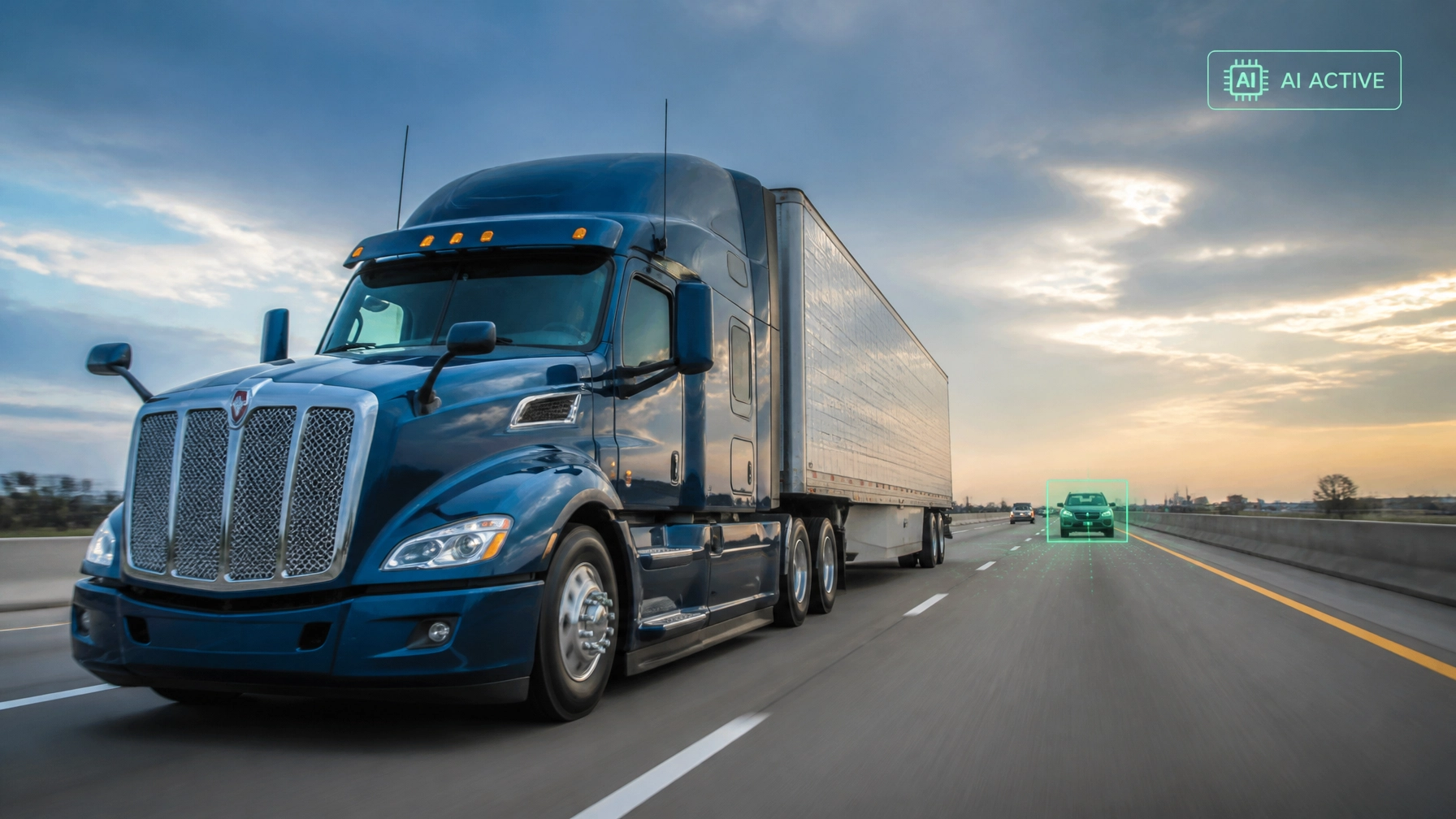
AI Dash Cameras vs. Standard Systems: Maximizing Your 2026 ROI
For fleet managers in 2026, the question is no longer whether to install cameras, but rather how much intelligence those cameras should possess. The landscape of commercial transportation has shifted. Rising insurance premiums, tighter margins, and a complex legal environment have made “good enough” technology a liability.
Standard dash cams have been the industry workhorse for a decade, providing a basic record of events. However, as we move through 2026, AI dash cameras for fleets are rapidly becoming the gold standard. While a standard system captures what happened, an AI-enhanced system works to prevent the incident from happening in the first place.
Choosing between a basic recording device and a comprehensive video telematics solution is a decision that impacts more than just safety: it dictates your bottom line.
Defining the Difference: Standard vs. AI-Enhanced
To understand the Return on Investment (ROI), we must first define the technical gap between these two systems.
Standard Dash Cam Systems are reactive. They function as high-definition digital witnesses. They record footage to a local SD card or a cloud server, often triggered by a “G-force” event like a hard brake or a collision. These systems are excellent for exonerating drivers after an accident occurs, but they offer little in terms of real-time intervention.
AI Dash Cameras for Fleets, on the other hand, are proactive. They utilize Edge Computing and Machine Learning to analyze the road and the driver’s behavior simultaneously. These systems don’t just wait for an impact; they identify the precursors to an accident: such as tailgating, distracted driving, or drowsiness: and provide immediate feedback to the driver.

The 2026 ROI Breakdown: Where the Money Is Saved
When calculating ROI for 2026, the numbers favor AI-enhanced systems by a significant margin. While the initial investment for AI hardware is higher, the multi-year savings in insurance, claims, and operational efficiency often lead to a faster payback period.
1. Drastic Reduction in Collision Frequency
Standard dash cams typically reduce collision frequency by about 20% to 30%. This reduction comes primarily from the “observer effect”: drivers are more cautious when they know they are being recorded.
In contrast, best dash cam for fleet vehicles featuring AI technology can reduce accidents by up to 60-70%. By alerting a driver the moment they look down at a phone or start to drift from their lane, the AI prevents the “near miss” from becoming a “total loss.” In an industry where a single heavy-truck accident can cost a company upwards of $100,000 in direct costs, preventing even one additional crash pays for the entire system across the fleet.
2. Slashing Insurance Premiums
Insurance carriers in 2026 have become incredibly data-driven. A standard camera might earn you a 5% to 10% discount on premiums. However, fleets utilizing advanced video telematics solutions are seeing premium reductions of 15% or more.
Carriers prefer AI systems because they provide “risk visibility.” When a fleet manager can prove they are actively coaching drivers based on AI-detected behaviors, they are viewed as a lower-risk client. For a deep dive into how this works, see our guide on why fleet camera systems are key to better renewals.
3. Faster Claim Settlements and Exoneration
Time is money during a claim. Standard systems require manual retrieval of footage, which can take hours or days. AI systems automatically tag and upload high-severity events to the cloud within minutes. This allows safety managers to confirm crashes and start insurance claims in minutes, often exonerating their driver before the police report is even finished.

Operational Efficiency: Fuel and Maintenance ROI
The benefits of AI dash cameras extend beyond the safety department. Because AI systems are integrated with vehicle diagnostics and GPS tracking, they provide a holistic view of fleet health.
- Fuel Savings: AI cameras detect aggressive driving patterns: such as rapid acceleration and excessive idling: that are invisible to standard cameras. By coaching these behaviors out of the fleet, managers can see up to 30% fuel savings.
- Reduced Wear and Tear: Hard braking and high-speed cornering don’t just cause accidents; they destroy tires and brake pads. AI systems flag these events, allowing for proactive maintenance before a mechanical failure occurs. Integrating maintenance and fleet camera systems ensures your trucks stay on the road longer.
Solving the “Admin Overload” Problem
One of the biggest hidden costs of a standard dash cam system is the “human ROI.” With standard cameras, safety managers must manually review hours of footage to find coachable moments. This is a massive drain on resources.
AI-powered systems solve this through automated coaching. The system filters out the “noise” and only presents the clips that actually matter. It ranks drivers by risk level, allowing managers to focus their limited time on the 5% of drivers who represent 95% of the risk. This automation reduces the administrative workload by roughly 50%, freeing up staff to focus on logistics and growth.

Driver Buy-In: The Cultural ROI
A common concern with moving to AI is driver pushback. However, when implemented correctly, AI systems actually improve driver retention. By providing objective data, these systems move the conversation from “I think you’re driving unsafely” to “The data shows three tailgating events today.”
This objectivity builds a culture of fairness. Drivers know that the same AI that flags their mistakes will also be their best defense in a “he-said, she-said” accident scenario. Building this safety culture with AI video telematics transforms the camera from a “spy” into a “co-pilot.”
Final Verdict: Which Is Better for Your 2026 ROI?
If your fleet operates in a low-risk environment with minimal miles, a standard system might suffice as a basic insurance policy. However, for most commercial operations in logistics, construction, and waste management, the financial case for AI is undeniable.
In 2026, the ROI of AI dash cameras isn’t just about avoiding costs: it’s about gaining a competitive edge. With higher insurance savings, significantly lower accident rates, and automated management tools, the best dash cam for fleet vehicles is one that thinks as fast as your drivers.

At Safety Track, we specialize in custom-tailored fleet management solutions that fit your specific operational needs. Whether you are looking to reduce insurance costs by 25% or cut accidents by 40%, our AI-enhanced systems are built to deliver measurable results.
Ready to see the ROI for your specific fleet? Contact us today to learn how our AI dash cameras can protect your drivers and your bottom line.

Tyler Schneider is the IT Director at Safety Track, overseeing the company’s technological infrastructure and innovations. With a strong background in information technology and systems management, Tyler ensures that Safety Track stays at the forefront of tech solutions in fleet management. His strategic expertise supports the seamless integration of technology across the company’s operations.