
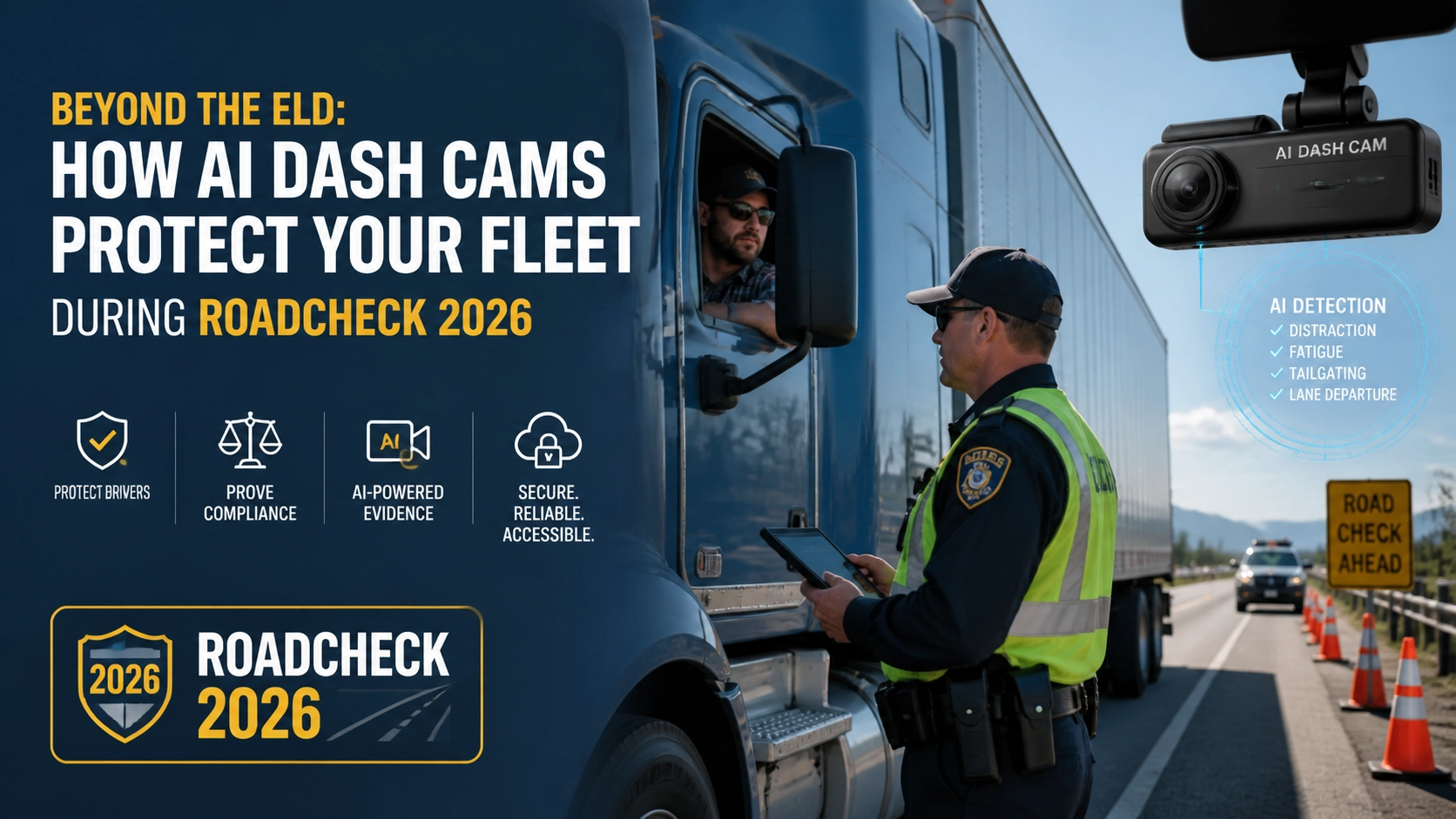
AI Dash Cameras: Ensuring Fleet Compliance & Safety at Roadcheck 2026
The commercial transportation industry is currently preparing for one of the most significant events of the year: the 2026 CVSA International Roadcheck. Scheduled for May 12–14, this 72-hour period of high-intensity inspections puts every fleet’s safety protocols under the microscope. In 2026, the Commercial Vehicle Safety Alliance (CVSA) has announced a dual focus that hits at the heart of modern fleet operations: ELD compliance (specifically tampering and falsification) and cargo securement.
For fleet managers, the stakes have never been higher. An Out-of-Service (OOS) order during Roadcheck does more than just delay a single shipment; it impacts CSA scores, increases insurance premiums, and damages a company’s reputation for reliability. While the Electronic Logging Device (ELD) is the regulatory standard for Hours of Service (HOS), it is no longer the only tool necessary for a successful inspection. Modern AI dash cameras for fleets have evolved into an essential “Co-Pilot,” providing the visual context and real-time data needed to navigate the complexities of Roadcheck 2026.
The 2026 Roadcheck Focus: Why Technology is the Best Defense
The CVSA’s decision to focus on ELD compliance and cargo securement is a direct response to industry trends. As ELD technology has become universal, the methods for bypassing or falsifying logs have become more sophisticated. Similarly, cargo-related incidents continue to be a leading cause of highway accidents. By leveraging a commercial dash cam system, fleet operators can provide a layer of transparency that traditional paper or basic digital logs cannot match.
Addressing ELD Tampering and Falsification
One of the primary concerns for inspectors in 2026 is “ghost driving” or the use of multiple driver profiles to circumvent HOS limits. A truck camera system with gps serves as an objective witness. When an ELD shows a vehicle in “sleeper berth” status, but the AI-enabled dash camera captures the vehicle moving through a busy intersection, the discrepancy is immediate.
Safety Track’s AI solutions integrate video data with telematics, ensuring that what is reported on the log matches the visual reality on the road. This synergy prevents drivers from making high-risk decisions that could lead to severe penalties during a roadside inspection. Furthermore, AI dash cams can identify the specific driver behind the wheel using facial recognition technology, ensuring that the person logged into the ELD is actually the person operating the vehicle.

AI as a Co-Pilot: Supporting the Driver, Not Just Monitoring
The philosophy of “AI as a Co-Pilot” is central to how Safety Track approaches fleet safety. Rather than being a “spy in the cab,” these systems are designed to support drivers when they are under the pressure of a roadside inspection. The Roadcheck period is notoriously stressful for drivers, who must ensure their paperwork, vehicle condition, and cargo are all in perfect order while maintaining tight delivery schedules.
Real-Time In-Cab Assistance
A commercial dash cam system equipped with AI provides real-time alerts that can prevent violations before they are ever seen by an inspector. For example, if a driver becomes fatigued or distracted: two factors that often lead to HOS violations or poor cargo checks: the AI provides an audible alert. This allows the driver to self-correct, pull over, or re-verify their logs before they reach a weigh station.
By positioning AI as a supportive tool, companies can improve driver buy-in. When drivers understand that the camera is there to exonerate them from false claims and help them pass inspections, the “big brother” stigma fades. You can read more about balancing technology and driver trust in our guide on fleet monitoring vs. employee privacy rights.
Mastering Cargo Securement with Visual Telematics
The second focus of the 2026 Roadcheck is cargo securement. Improperly secured loads are a major safety hazard, leading to spills, tip-overs, and structural damage to trailers. While traditional GPS tracking can tell you where a truck is, it cannot tell you if a strap has come loose or if a pallet has shifted.
The Role of Fleet Safety Cameras in Load Integrity
Advanced fleet safety cameras include multi-lens configurations that monitor both the road ahead and the cargo area. If a load shifts during a hard braking event or a sharp turn, the AI detects the movement and triggers an alert. This gives the driver the opportunity to pull over and re-secure the cargo before encountering an inspector.
During a Level I or Level II inspection, an officer will check for loose tie-downs, damaged webbing, and improper bracing. Having a digital record of the cargo’s status from the moment it was loaded provides proof of due diligence. This level of oversight is a key component of how AI fleet optimization tools transform your operations.

The Technical Edge: Why Your Truck Camera System with GPS Matters
Not all camera systems are created equal. To survive the 2026 Roadcheck, fleets need hardware that can withstand the rigors of long-haul trucking while providing crystal-clear evidence. A high-quality truck camera system with gps must offer more than just a video feed; it must provide actionable data.
High-Definition Evidence and Edge Processing
During an inspection, clarity is everything. If an inspector questions a driver’s behavior or a specific incident leading up to the stop, low-resolution footage is useless. Modern AI dash cams utilize edge processing, meaning the “thinking” happens on the device itself. This allows for instant event tagging and high-definition uploads to the cloud.
The integration of GPS data is equally critical. By timestamping every frame of video with precise coordinates, speed, and heading, the commercial dash cam system creates a comprehensive “truth-set.” This data is invaluable for defending against “falsification” citations, as it proves exactly where the vehicle was at any given moment. For more information on choosing the right hardware, visit our post on how to choose the best fleet camera system.
Financial Implications: The ROI of Roadcheck Readiness
The cost of a failed inspection is significantly higher than the investment in safety technology. According to the Federal Motor Carrier Safety Administration (FMCSA), an OOS order can cost a fleet thousands of dollars per day in lost revenue, not including the fines themselves.
Reducing Operational Costs Through Compliance
Proactive compliance is one of the most effective ways to protect your bottom line. Fleets that utilize AI dash cameras for fleets consistently see lower OOS rates during Roadcheck. This is because the technology acts as a constant pre-inspection tool. When drivers know their actions are being recorded and analyzed by AI, compliance with HOS and cargo standards naturally increases.
Furthermore, these systems contribute to long-term savings by reducing insurance premiums. Many insurers now offer discounts or specialized programs for fleets that implement verified fleet safety cameras. The reduction in risk translates directly into financial stability. Explore the full breakdown of these benefits in our article on how AI fleet solutions cut operational costs.

Preparing Your Drivers: Training and Coaching for 2026
Technology is only as effective as the people who use it. As Roadcheck 2026 approaches, fleet managers must use the data from their commercial dash cam system to coach drivers on inspection etiquette and safety protocols.
Data-Driven Coaching
Rather than general safety meetings, AI allows for personalized coaching. If the system flags a specific driver for frequent hard braking or recurring cargo shifts, managers can address those specific behaviors. This targeted approach is much more effective than traditional methods.
In the weeks leading up to May 12th, fleets should conduct “mock inspections” using video footage to show drivers what an inspector will look for. This builds confidence and ensures that when the driver is pulled over, they are prepared to present their ELD and demonstrate their commitment to safety. For a deep dive into building these programs, check out our resource on effective driver training programs for fleet safety.
Maintenance: Ensuring Your Technology is Roadcheck-Ready
An AI dash cam that fails during an inspection is a liability, not an asset. Just as an inspector will check your brake pads and tire tread, they will also check that your safety equipment is functional. In the context of the 2026 focus on ELDs, ensuring your truck camera system with gps is fully operational is a non-negotiable step in your spring maintenance routine.
Hardware and Software Audits
Before Roadcheck begins, perform a full audit of your camera systems:
- Lens Clarity: Ensure lenses are clean and free of cracks.
- Storage Integrity: Verify that SD cards or cloud storage connections are working perfectly.
- GPS Connectivity: Check that the GPS signal is strong and reporting accurate location data.
- Firmware Updates: Ensure your AI models are updated to the latest versions to catch the most relevant safety events.
The change in seasons can often impact hardware performance. We recommend following our ultimate spring maintenance checklist for commercial dash cam systems to ensure your fleet is ready for the road.

Beyond the Inspection: Building a Permanent Culture of Safety
While the CVSA Roadcheck is a high-visibility event, the goal for any professional fleet should be “Roadcheck readiness” 365 days a year. The technology used to pass an inspection in May is the same technology that prevents a catastrophic accident in November.
The Power of Continuous Visibility
Integrating AI dash cameras for fleets into your daily operations transforms your company culture. It shifts the focus from reactive management: dealing with accidents after they happen: to proactive safety. With features like live streaming, managers can provide immediate support to drivers in challenging weather or traffic conditions. Discover the advantages of this real-time visibility in our post on the benefits of a dash cam with live streaming.
By the time Roadcheck 2026 arrives, a fleet equipped with Safety Track technology shouldn’t feel the need to “scramble.” They should simply be continuing the high standard of safety they maintain every day. This consistency is what the National Highway Traffic Safety Administration (NHTSA) and other regulatory bodies look for when evaluating the overall health of the transportation industry.

Conclusion: Securing Your Fleet’s Future
The 2026 CVSA Roadcheck is more than a regulatory hurdle; it is an opportunity for elite fleets to demonstrate their commitment to the highest safety standards. By focusing on the dual priorities of ELD integrity and cargo securement, the CVSA is raising the bar for the entire industry.
Investing in a comprehensive commercial dash cam system and a robust truck camera system with gps is the most effective way to meet and exceed these standards. With AI as a co-pilot, your drivers are better supported, your cargo is better protected, and your business is better positioned for long-term success.
As we move through May, remember that compliance is not a destination but a continuous journey. By leveraging the power of fleet safety cameras and the expertise of Safety Track, you can face the 2026 Roadcheck: and every mile that follows: with total confidence. For more insights on the future of our industry, explore our analysis of fleet telematics trends for 2026.

Tyler Schneider is the IT Director at Safety Track, overseeing the company’s technological infrastructure and innovations. With a strong background in information technology and systems management, Tyler ensures that Safety Track stays at the forefront of tech solutions in fleet management. His strategic expertise supports the seamless integration of technology across the company’s operations.