
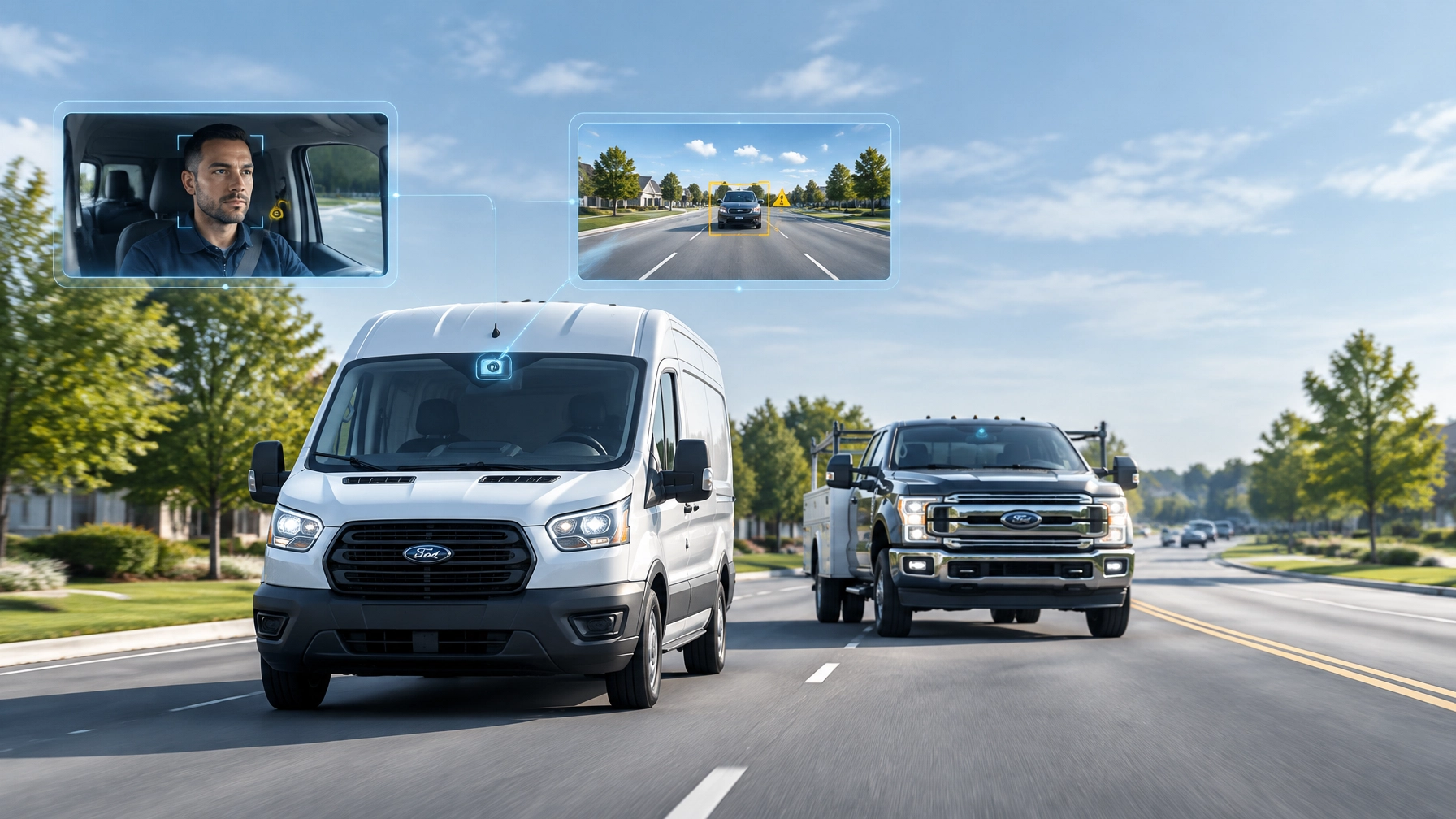
Edge AI Video Telematics: How Real-Time In-Cab Alerts Detect Distraction and Drowsiness
A distracted or drowsy driver can create a serious risk in seconds. For small and mid-size fleets, one preventable collision can affect insurance costs, vehicle availability, customer commitments, and driver safety.
Traditional camera systems often record video for later review. That footage can provide useful evidence, but it does not always help a driver correct risky behavior while it is happening. Edge AI video telematics changes that process by analyzing video inside the vehicle and delivering real-time in-cab alerts.
The camera can detect signs of distraction, phone use, eye closure, and head movement. It can then coach the driver immediately instead of waiting for video to travel to a cloud server and return as an alert.
What Is Edge AI Video Telematics?
Edge AI video telematics combines vehicle cameras, artificial intelligence, GPS data, and onboard processing. Instead of sending every video frame to the cloud for analysis, the camera or connected vehicle device analyzes important information locally.
In practical terms, the vehicle becomes the first layer of safety response.
An edge-enabled camera can:
- Monitor the driver’s face, eyes, and head position
- Detect extended eye closure or possible microsleep
- Identify phone use and other forms of distraction
- Recognize when the driver looks away from the road
- Deliver an audio alert inside the cab
- Save a short event clip for fleet review
- Upload event data and video without streaming everything continuously
This approach supports faster intervention and improves cellular data bandwidth optimization. It also helps fleets maintain useful safety coverage when cellular connectivity is limited.
Safety Track provides AI-enhanced fleet camera solutions that can be tailored to the needs of service fleets, delivery companies, contractors, transportation businesses, and other commercial operations. The exact detection features depend on the selected camera hardware and configuration.
How the NPU Processes Driver Behavior on the Camera
Modern AI cameras may include a neural processing unit, or NPU. An NPU is a specialized processor designed to run artificial intelligence models efficiently.
A standard processor handles many different computing tasks. An NPU is optimized for repetitive machine-learning operations, such as analyzing image patterns across many video frames. This allows the camera to evaluate driver behavior without sending every frame to a remote data center.
The NPU helps the camera process:
- Facial landmarks: The system identifies the driver’s face and key points around the eyes, nose, and mouth.
- Head pose. The system estimates whether the driver is looking forward, down, to the side, or away from the roadway.
- Eye behavior: The system monitors eye closure, blinking patterns, and prolonged periods with the eyes closed.
- Object detection: The system can identify a smartphone near the driver’s hand or face.
- Event classification: The system determines whether a pattern appears consistent with distraction or fatigue.
- Immediate response: The camera triggers a configured audio or voice alert and stores event information.

This local processing is central to edge computing video telematics. The camera does not need to wait for a cloud service to interpret every frame before taking action.
How Driver Monitoring Systems Detect Drowsiness
A driver monitoring system, or DMS, uses a driver-facing camera and computer vision models to assess signs of reduced attention. It does not diagnose a medical condition. Instead, it identifies observable behaviors that can indicate an immediate safety risk.
Eye-closure and microsleep detection
Microsleep refers to a brief, unintended episode of sleep or near-sleep. In a moving vehicle, even a few seconds of reduced awareness can create substantial risk.
AI fleet dash cam fatigue detection typically looks for patterns such as:
- Eyes remaining closed longer than a normal blink
- Frequent prolonged eye closures
- Changes in blinking behavior
- Repeated downward head movement
- A combination of eye closure and head drooping
- Reduced attention to the roadway over time
A single blink should not create a fatigue alert. Effective systems evaluate duration, repetition, and context to reduce unnecessary warnings.
Head pose and facial movement
Head pose provides another important signal. A driver who repeatedly nods forward, looks down for extended periods, or struggles to keep the head upright may require an immediate prompt to regain attention.
Some systems also evaluate yawning or other facial behaviors. The available detection categories vary by camera model, lighting conditions, vehicle configuration, and software settings.
The goal is not to label a driver. The goal is to recognize a pattern early enough for the driver to respond safely.
How AI Cameras Detect Distraction and Phone Use
Distraction can occur even when a driver’s eyes are open. Looking at a phone, reaching for an object, or turning toward a passenger can pull attention away from the road.
A DMS evaluates several signals together:
- Head direction
- Eye gaze
- Time spent looking away
- Hand position
- Smartphone location
- Driver posture
- Road-facing camera context
Phone-use detection can identify behaviors such as holding a smartphone near the face or looking down toward a device. The system can then issue an in-cab audio alert, such as a reminder to keep attention on the road.
This real-time coaching is more useful than a report delivered at the end of the day. The driver receives feedback at the moment when a safer decision can still be made.
Fleets should also establish clear privacy protocols before deploying driver-facing cameras. Written policies should explain what the system monitors, when video is recorded, who can access it, how long footage is retained, and how alerts are used in coaching.
Why Edge Processing Beats Cloud-Only Detection
Cloud-only video processing requires the vehicle to upload video before the platform can analyze it. That creates several challenges.
Cloud-only limitations
A cloud-only system may face:
- Delays caused by cellular upload times
- Higher data usage from continuous video transmission
- Reduced performance in weak-signal areas
- Increased storage and transfer costs
- Less reliable real-time in-cab intervention
Cloud platforms remain valuable for storage, reporting, analytics, and fleet-wide visibility. However, a cloud server is not the ideal first location for a safety alert that must reach a driver immediately.
The edge advantage
Edge processing allows the camera to detect risk locally. The system can issue an alert even when the vehicle is temporarily outside strong cellular coverage.
The camera then uploads only the relevant event clip and supporting information, such as:
- Vehicle location
- Time of the event
- Event category
- Driver or vehicle identifier
- Short video before and after the trigger
This event-based approach improves cellular data bandwidth optimization. Fleets avoid paying to continuously upload video that may never be reviewed.

Continuous video can still be useful for live monitoring or investigations. However, most routine safety workflows do not require every second of every trip to be uploaded. Event clips provide focused information while keeping bandwidth and storage requirements more manageable.
What Happens After an In-Cab Alert?
An alert is only the first step. The safety value increases when the event enters a consistent coaching workflow.
A typical process includes:
- The camera detects a risk pattern.
The NPU identifies possible drowsiness, phone use, or extended distraction. - The driver receives an immediate alert.
An in-cab audio prompt encourages the driver to look forward, put the phone down, or take an appropriate break. - The event clip becomes available to the fleet manager.
The manager can review the available footage through the platform rather than waiting for vendor retrieval. - The manager considers the surrounding context.
GPS data, road conditions, traffic, time of day, and the complete event sequence help create a fair assessment. - The event becomes a coaching moment.
The manager discusses the behavior with the driver and documents any needed follow-up.

The purpose of coaching should be correction and prevention, not automatic punishment. Managers can use video to reinforce safe behavior, identify recurring risks, and determine whether a driver needs additional training, a route adjustment, or a rest break.
Safety Track’s live video fleet camera systems give authorized users access to footage from inside and outside fleet vehicles. This immediate control helps managers review incidents, support drivers, and respond to claims without relying on a vendor to retrieve each file.
What Should Fleets Ask About Edge AI Cameras?
Before selecting an AI dash camera, fleet managers should ask:
- Does the camera process alerts locally or rely entirely on cloud analysis?
- Does the hardware include an NPU or comparable edge processor?
- Which DMS behaviors can it detect?
- Does it support eye-closure and microsleep detection?
- Can it identify phone use and extended head pose changes?
- Are in-cab audio alerts configurable?
- Are event clips uploaded automatically?
- Can managers access and download footage immediately?
- How are driver privacy and video retention handled?
- Does the platform connect video with GPS and driver behavior data?
- What happens when cellular service is weak?
- Is the subscription cost predictable?
For fleets that want broad access to video, Safety Track’s unlimited video plan is $99.95 per vehicle, per month. It includes unlimited video viewing and unlimited video downloads. This gives managers flexibility to review event context, preserve evidence, and support coaching without per-viewing or per-download charges.
Fleet owners can also review Safety Track’s fleet management solutions and request a custom fleet assessment.
Edge AI Turns Video Into Immediate Fleet Safety Support
Recording video after an incident is valuable. Detecting risk early and coaching the driver in real time is more powerful.
Edge AI video telematics places the first safety response inside the vehicle. An NPU processes visual information locally. A driver monitoring system evaluates eye closure, head pose, phone use, and distraction. An in-cab alert gives the driver an immediate opportunity to correct the behavior.
The cloud still plays an important role by storing event clips, supporting fleet analytics, and giving managers access to the evidence they need. By uploading focused events instead of continuous video, fleets also improve cellular data bandwidth optimization and control ongoing technology costs.
For small businesses and large operations alike, the right camera system should connect fast alerts with practical follow-up. That combination turns AI fleet dash cam fatigue detection from a passive recording feature into an active safety program.

Tyler Schneider is the IT Director at Safety Track, overseeing the company’s technological infrastructure and innovations. With a strong background in information technology and systems management, Tyler ensures that Safety Track stays at the forefront of tech solutions in fleet management. His strategic expertise supports the seamless integration of technology across the company’s operations.