
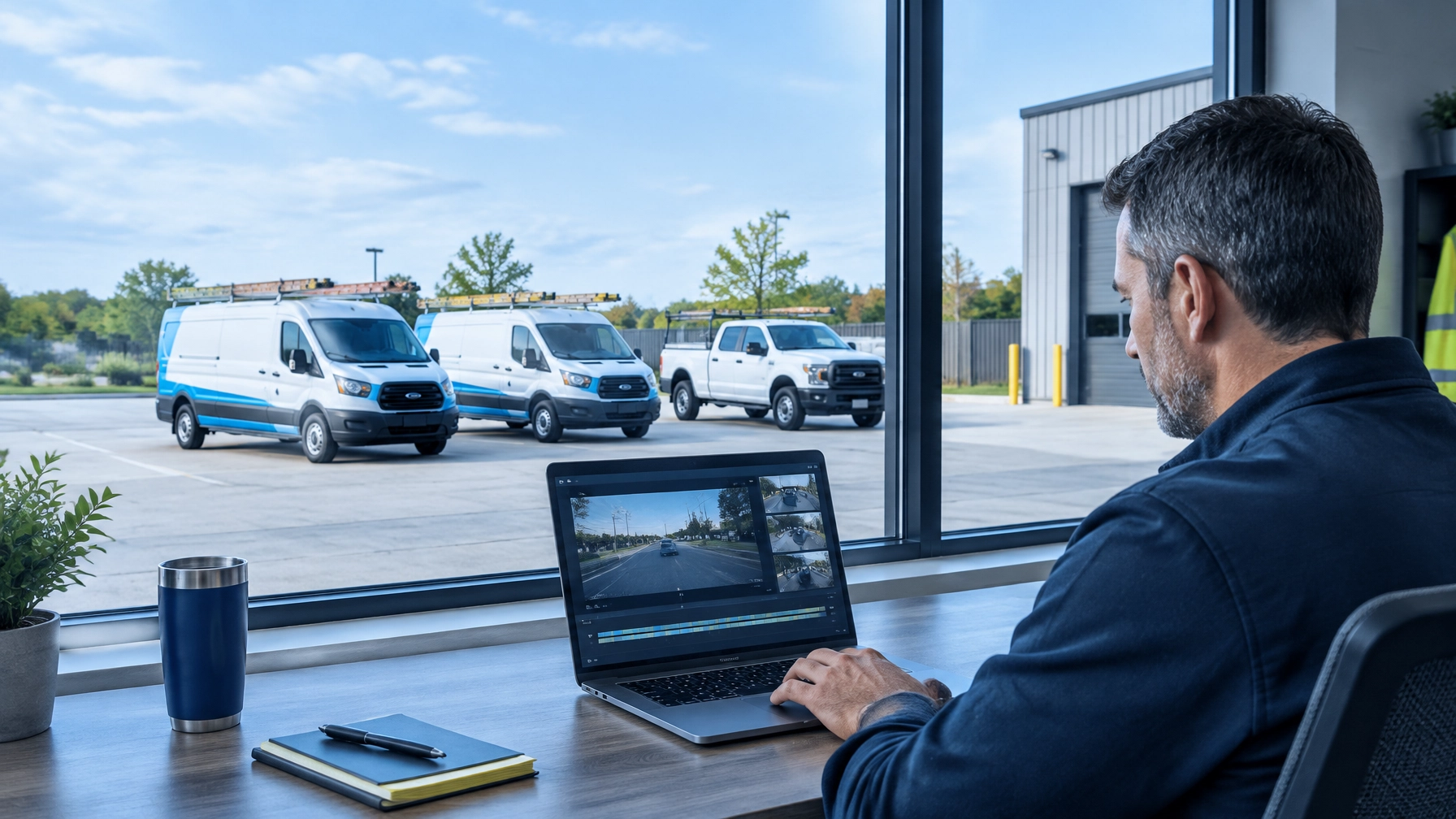
It’s Your Footage. Go Get It: Why Small Fleets Stop Waiting
A customer complaint arrives. A driver reports a collision. An insurance adjuster asks what happened.
The dash camera recorded the event. The footage exists. But the fleet owner cannot access it without contacting a vendor and waiting for someone else to retrieve the file.
For small businesses, that delay creates unnecessary work and risk. HVAC, plumbing, electrical, lawn care, and local delivery companies often operate with lean teams. The owner or fleet manager may handle dispatch, safety, customer service, maintenance, and claims.
Waiting days for fleet video is not a practical process.
The cameras are installed on the company’s vehicles. The video belongs to the company’s operations. Access should be immediate.
With Safety Track’s self-serve video platform, authorized users can manage their own footage, review available video, and download the clips they need without submitting a retrieval request. The $99.95 per month unlimited video plan includes unlimited viewing and unlimited downloads.
Small fleets can stop waiting and start managing their video directly.
Your Fleet Video Should Be Under Your Control
A commercial dash cam system does more than record the road. It creates a record of driver actions, traffic conditions, customer interactions, and incidents involving company vehicles.
That record only delivers value when fleet managers can access it quickly.
A vendor-controlled process may require several steps:
- Identify the vehicle involved.
- Estimate the date and time of the event.
- Call or email the provider.
- Submit a support ticket.
- Wait for the vendor to locate and send the footage.
- Request additional clips if the first file does not show enough context.
The process becomes even slower when a manager needs footage from multiple camera angles or a longer time period. A short clip may not show what happened before or after an incident.
Self-serve access removes that bottleneck. Fleet owners and managers can log in, locate the vehicle and time range, review the video, and download the relevant footage themselves.
The business keeps control of its evidence.
Small Fleets Cannot Afford Video Retrieval Delays
Large transportation companies may have dedicated claims departments and safety teams. Small businesses usually do not.
A two-truck plumbing company or a five-van HVAC operation may rely on one owner or manager to make decisions. That person needs answers quickly when a driver is accused of causing an accident or a customer disputes a service visit.
Immediate video access helps small fleets respond to:
- Collision reports
- False liability claims
- Customer complaints
- Property damage allegations
- Disputed delivery times
- Unsafe driving concerns
- Driver questions about an incident
- Insurance documentation requests
The faster a manager reviews the footage, the faster the company can determine what happened. Video can show vehicle position, traffic movement, driver behavior, road conditions, and the actions of other motorists.
That information helps replace assumptions with facts.

Self-Serve Access Makes Video Useful Every Day
Some fleets treat dash camera footage as an emergency resource. They look at it only after a collision.
A self-serve platform supports a broader safety and operations program.
Fleet managers can use video to:
- Review incidents while details are still fresh
- Compare footage with GPS location data
- Investigate harsh braking or rapid acceleration
- Coach drivers with specific examples
- Confirm what happened at a customer location
- Review near misses before they become accidents
- Preserve evidence for an insurance claim
- Share authorized clips with customers or adjusters
This approach turns fleet video into an active management tool. Managers do not have to wait for a major accident before reviewing what the cameras captured.
A short video clip can make a coaching conversation more productive. Instead of giving a general reminder to drive carefully, a manager can discuss the exact following distance, turn, backing maneuver, or distraction shown in the footage.
That creates clearer accountability and more practical driver improvement.
Faster Access Supports Better Claims Response
A claim can move forward before a fleet manager has time to gather every detail. The other driver may provide a statement. A customer may report damage. An insurer may request evidence.
When the fleet is still waiting for video, the company is responding with incomplete information.
Direct access changes the timeline. A manager can review available footage as soon as it is accessible in the platform. The manager can then download the appropriate clip and provide it to authorized parties.
Video may help establish:
- Whether the fleet vehicle was moving or stopped
- Which vehicle entered an intersection first
- Whether a driver maintained a safe following distance
- Whether another motorist changed lanes unexpectedly
- Whether a driver was operating within company policy
- Whether road, weather, or traffic conditions contributed to the event
Video does not replace formal claims procedures or legal advice. It gives the claims process a clearer factual record.
Safety Track’s video telematics solutions connect video with GPS and fleet data. This helps managers understand not only what the camera captured, but also where and when the event occurred.
Unlimited Viewing and Downloads for $99.95 per Month
Small business owners need predictable operating costs. Per-clip charges and restricted access can discourage managers from using their camera system fully.
Safety Track’s $99.95 per month unlimited video plan includes:
- Unlimited video viewing
- Unlimited video downloads
- Direct access to available fleet footage
- More flexibility for claims investigations
- More opportunities for driver coaching
- A predictable monthly expense
Unlimited viewing allows a manager to examine the full context of an event. The manager can review footage before and after a harsh-braking alert, compare different camera angles, or revisit a clip during a driver meeting.
Unlimited downloads also make the footage easier to use. One clip may go to an insurance adjuster. Another may support an internal incident report. A third may be used during a safety discussion.
The company should not have to choose which important use receives the only permitted download.

Choose Fleet Camera Systems Built for Direct Access
A fleet camera system should do more than store video. It should help the business manage risk, protect drivers, and respond to incidents without unnecessary steps.
When evaluating a system, small fleet owners should ask:
- Can authorized users access footage without contacting the vendor?
- Can managers search by vehicle, date, and time?
- Can users review footage remotely?
- Can managers download clips directly?
- Does the system connect video with GPS data?
- Does the plan include unlimited viewing and downloads?
- Can the system support forward-facing and driver-facing cameras?
- Can the solution grow with the fleet?
Safety Track’s fleet camera systems support real-time monitoring, remote playback, and connected visibility across commercial vehicles. Solutions can be tailored for HVAC, plumbing, electrical, lawn care, delivery, construction, and transportation operations.
The right system gives the fleet control over the information its cameras capture.
A Commercial Dash Cam System Should Work on the Fleet’s Schedule
A basic camera may record footage to local storage. That setup can force someone to locate the vehicle, remove a memory card, copy the file, and send it to the manager.
This creates delays and adds opportunities for mistakes. The vehicle may be working across town. The wrong time window may be selected. The footage may be overwritten before anyone reviews it.
A connected commercial dash cam system gives authorized users a more practical way to access and manage video remotely.
The system should support the fleet’s schedule, not the vendor’s retrieval queue.
For a small business, that difference matters. A fleet owner can review an incident from the office, a job site, or a mobile device. A manager can download evidence before meeting with a customer or speaking with an insurer.
The process becomes simple:
- Open the video platform.
- Select the vehicle.
- Choose the date and time.
- Review the footage.
- Download and share the appropriate clip.
Your fleet recorded the video. Your team should be able to access it.

Direct Video Access Protects Drivers and Customers
Fleet video is not only about reducing liability. It also helps businesses treat drivers and customers fairly.
A professional driver may be blamed for an incident caused by another motorist. A customer may report unsafe driving without seeing the full situation. A service company may need to confirm what happened when a vehicle arrived at a property.
Accessible footage gives managers a reliable way to review the facts.
If the driver acted appropriately, the video can support that driver. If the driver made a mistake, the footage can guide a focused coaching conversation. If the customer’s account differs from the recording, the company can respond with greater confidence.
This visibility supports stronger relationships. It shows drivers that cameras provide evidence and protection, not just surveillance. It also gives customers a clearer response when questions arise.
Stop Asking for Your Own Video
Small fleet owners have enough to manage. They should not have to chase a vendor for footage recorded by their own vehicles.
Self-serve video access gives the business more control over claims, coaching, customer communication, and day-to-day safety management. Unlimited viewing and unlimited downloads make that access practical for regular use.
For $99.95 per month, Safety Track helps small fleets use their video without waiting for vendor retrieval or limiting every review to a single clip.
The cameras are on the vehicles. The footage is yours. Go get it.
Contact Safety Track to learn how direct video access and unlimited video use can support a safer, more responsive fleet.

Tyler Schneider is the IT Director at Safety Track, overseeing the company’s technological infrastructure and innovations. With a strong background in information technology and systems management, Tyler ensures that Safety Track stays at the forefront of tech solutions in fleet management. His strategic expertise supports the seamless integration of technology across the company’s operations.