
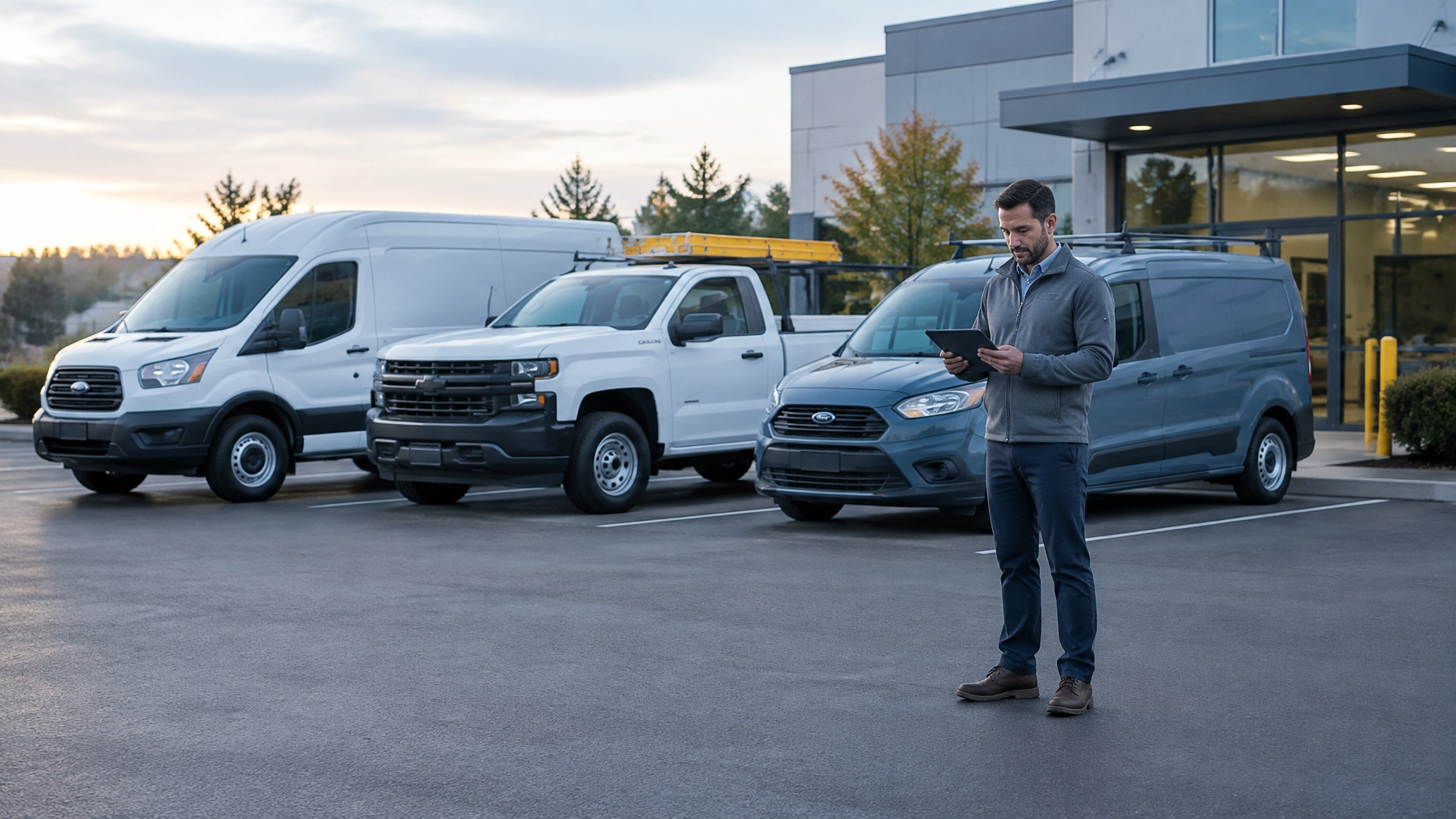
What Underwriters Want to See Before Your Renewal (And Where They Get It)
Renewal season is when commercial auto underwriters decide how they view a fleet’s risk. They review past losses, driver records, safety procedures, vehicle information, and the controls a business uses every day.
Good intentions are not enough. Underwriters price risk based on evidence.
A fleet owner who says, “Our drivers are careful,” provides a statement. A fleet owner who can show documented training, current motor vehicle records, driver coaching logs, telematics trends, and relevant dash camera footage provides proof.
That distinction matters for small businesses. A clear renewal file helps an insurance agent present the operation accurately and gives the carrier better information for its evaluation. It does not guarantee a specific premium, renewal decision, or coverage term. Those decisions remain with the insurance carrier.
Underwriters Start With Loss History
Most commercial auto underwriters begin with loss runs. These records typically show several years of claims activity, including accident frequency, claim severity, open reserves, litigation, and the current status of each loss.
The numbers matter, but the story behind the numbers matters too.
Underwriters may look for:
- Repeated backing, rear-end, or low-speed collisions
- A pattern of preventable driver-related incidents
- Large or unusual claims
- Open claims with significant reserves
- Litigation or disputed liability
- Trends that are improving, stable, or worsening
A loss run without context leaves important questions unanswered. A loss run supported by corrective action tells a more complete story.
For example, if a driver was involved in a backing incident, the renewal file should explain what changed afterward. The company may have introduced a spotter policy, required additional backing training, installed rear cameras, or added a documented coaching process.
A written summary should connect each significant incident to a specific response. This shows that management reviews losses and uses them to improve operations.
Industry underwriting discussions increasingly focus on this broader context rather than loss history alone. Fleet owners can review Safety Track’s fleet safety audit guide for additional preparation ideas.
A Written Safety Program Shows How Risk Is Managed
Underwriters want to see a safety program that is active, current, and enforced. A handbook that sits in a file cabinet carries less value than a program supported by signed acknowledgments, training records, and documented follow-up.
A small fleet safety program should address:
- Seat belt use
- Distracted driving and phone use
- Speed management
- Following distance
- Backing procedures
- Fatigue awareness
- Vehicle inspection requirements
- Accident reporting
- Drug and alcohol policies where applicable
- Disciplinary and corrective action procedures
The program should also explain who is responsible for enforcement. A policy becomes more credible when managers can show how they review violations, coach drivers, and respond to repeated issues.
Underwriters may also review whether employees acknowledge the policies. Signed driver handbooks, onboarding checklists, safety meeting records, and refresher training documents help demonstrate that expectations were communicated.
Small businesses do not need a complicated safety department to create this evidence. They need a repeatable process and organized records.
Driver Records and Training Records Matter
The people operating company vehicles represent a major part of the underwriting picture. Underwriters and agents may ask how drivers are selected, monitored, trained, and coached.
A renewal file may include:
- Current driver rosters
- Motor vehicle records, or MVRs
- Hiring standards and disqualifying violations
- License and certification information
- Driver qualification records where applicable
- New-hire orientation records
- Behind-the-wheel training
- Safety meeting attendance
- Refresher training
- Coaching records tied to specific events
A one-time training session does not demonstrate an ongoing safety culture. Underwriters want to see that the business monitors performance after onboarding.
Telematics can make that process more specific. Instead of documenting a general conversation about safe driving, a manager can record that a driver reviewed repeated speeding events, hard braking, tailgating, or distracted-driving alerts on a particular date.
The goal is not to punish every alert. A single event may have a reasonable explanation. The goal is to identify patterns, investigate them fairly, and document the response.

Video Telematics Turns Safety Statements Into Evidence
Dash cameras and video telematics give fleet managers a way to show what happened instead of relying only on statements.
Underwriters increasingly want to know:
- Which vehicles have cameras
- Whether cameras are forward-facing, driver-facing, or both
- How safety alerts are reviewed
- How managers use footage for coaching
- Whether video is connected to GPS and event data
- How incident footage is preserved
- Who can access and share recordings
Camera deployment alone is not the full answer. A system that records video but is never reviewed does not demonstrate much operational control.
A stronger process connects footage to action. For example:
- A telematics system identifies a harsh-braking event.
- A manager reviews the surrounding video and location data.
- The driver explains the circumstances.
- The manager determines whether coaching or further action is needed.
- The conversation and outcome are documented.
This creates a safety feedback loop. The business can track whether certain behaviors improve over time.
Video also helps during claims. Some commercial auto claims are exaggerated, and some are fraudulent. A portion of claims may involve disputed injury severity, inaccurate accounts of how a collision occurred, or allegations that are not supported by the available facts.
Video does not automatically determine liability. It does provide timely evidence that can clarify the sequence of events, show road conditions, identify the actions of other motorists, and protect a driver from an inaccurate allegation.
That is the mechanism behind Safety Track’s claim that video evidence can contribute to lower insurance costs. When questionable claims are challenged with clear evidence, the business may avoid unnecessary payouts, prolonged disputes, or inflated settlements. Actual insurance pricing remains carrier-specific and is never guaranteed.
Immediate Footage Access Helps During Renewal and Claims
Timing matters after an accident. It also matters when an underwriter or agent asks for supporting documentation.
A fleet should not have to wait for a vendor to retrieve footage before reviewing its own evidence. Authorized users need immediate control over available video so they can locate the vehicle, select the relevant time, review the full context, and download the file.
Safety Track emphasizes this direct access. Its fleet camera solutions support real-time monitoring and recorded video access for commercial vehicles.
The $99.95 per vehicle, per month unlimited video plan includes:
- Unlimited video viewing
- Unlimited video downloads
- Direct access for authorized users
- Easier claims documentation
- More flexibility for driver coaching
- Predictable monthly budgeting
A manager can download footage for an insurance adjuster, preserve a copy for internal records, and use another copy during a coaching session without waiting for vendor retrieval or rationing downloads.

Businesses should still follow their insurance carrier’s instructions for reporting claims and preserving evidence. They should also maintain clear policies for privacy, access permissions, and retention.
Maintenance Records Complete the Risk Picture
Driver behavior is only one part of fleet risk. Underwriters may also review whether vehicles are maintained and inspected consistently.
Useful documentation can include:
- Preventive maintenance schedules
- Repair orders
- Inspection records
- Tire and brake service
- Driver vehicle inspection reports
- Diagnostic alerts
- Records showing that defects were corrected promptly
Maintenance tracking helps show that the company is addressing equipment risks before they contribute to an incident.
Safety Track’s fleet management solutions combine GPS tracking, real-time monitoring, camera systems, and maintenance tracking. A custom-tailored approach helps small businesses organize the information that fits their vehicle types and operating model.
A Simple Pre-Renewal Checklist
Small fleet owners can begin preparing several weeks before renewal. The following checklist creates a practical starting point:
1. Request current loss runs
Ask the agent or carrier for updated loss information. Review each open claim and prepare a short explanation of corrective actions.
2. Organize driver records
Confirm that the driver roster is current. Gather MVRs, licenses, training acknowledgments, safety meeting records, and coaching documentation.
3. Update the written safety program
Review policies for distracted driving, speeding, seat belts, backing, fatigue, inspections, and accident reporting. Remove outdated procedures and document employee acknowledgment.
4. Prepare telematics and video results
Summarize the last six to twelve months of relevant data. Include event trends, driver coaching activity, improvements, and examples of footage that clarified an incident.
5. Review maintenance documentation
Confirm that inspection, repair, and preventive maintenance records are complete and easy to retrieve.
6. Ask the agent what the carrier wants to see
Every carrier has its own underwriting process. The agent can explain which documents, reports, or safety metrics would be most useful for the upcoming review.

Build the Renewal File Before It Becomes Urgent
Insurance renewal preparation should not begin after a claim or a carrier request arrives. The strongest evidence is created throughout the year through consistent monitoring, training, maintenance, and documentation.
Underwriters want to see how a fleet manages risk in practice. Driver records show who operates the vehicles. Safety policies show what the company expects. Telematics and video show what happens on the road. Coaching and corrective action show how management responds.
A small business does not need to promise that no accident will ever happen. It needs to demonstrate that the company identifies risk, responds to incidents, and uses evidence to improve.
At Safety Track, custom-tailored GPS tracking and AI-enhanced camera solutions help fleet owners maintain that visibility. Contact Safety Track to discuss a fleet management solution that gives authorized users immediate access to video, supports driver accountability, and helps organize the evidence needed before renewal.
Frequently Asked Questions
Do dash cameras guarantee lower commercial auto insurance premiums?
No. Dash cameras do not guarantee a lower premium or a particular renewal outcome. Video can provide evidence that helps clarify claims and demonstrate proactive risk management, but pricing decisions are made by the insurance carrier.
What video information should a fleet provide to an underwriter?
A fleet can provide camera deployment details, documented review procedures, driver coaching records, event trends, and examples of footage that clarified disputed incidents. Businesses should ask their agent which materials the carrier prefers.
Does Safety Track’s unlimited video plan include unlimited downloads?
Yes. The plan costs $99.95 per vehicle, per month and includes unlimited viewing and unlimited downloads.
Why is immediate video access important?
Immediate access lets authorized fleet managers locate, review, and download footage without waiting for a vendor to retrieve it. This supports faster claims response, more timely coaching, and better control of business records.

Tyler Schneider is the IT Director at Safety Track, overseeing the company’s technological infrastructure and innovations. With a strong background in information technology and systems management, Tyler ensures that Safety Track stays at the forefront of tech solutions in fleet management. His strategic expertise supports the seamless integration of technology across the company’s operations.