
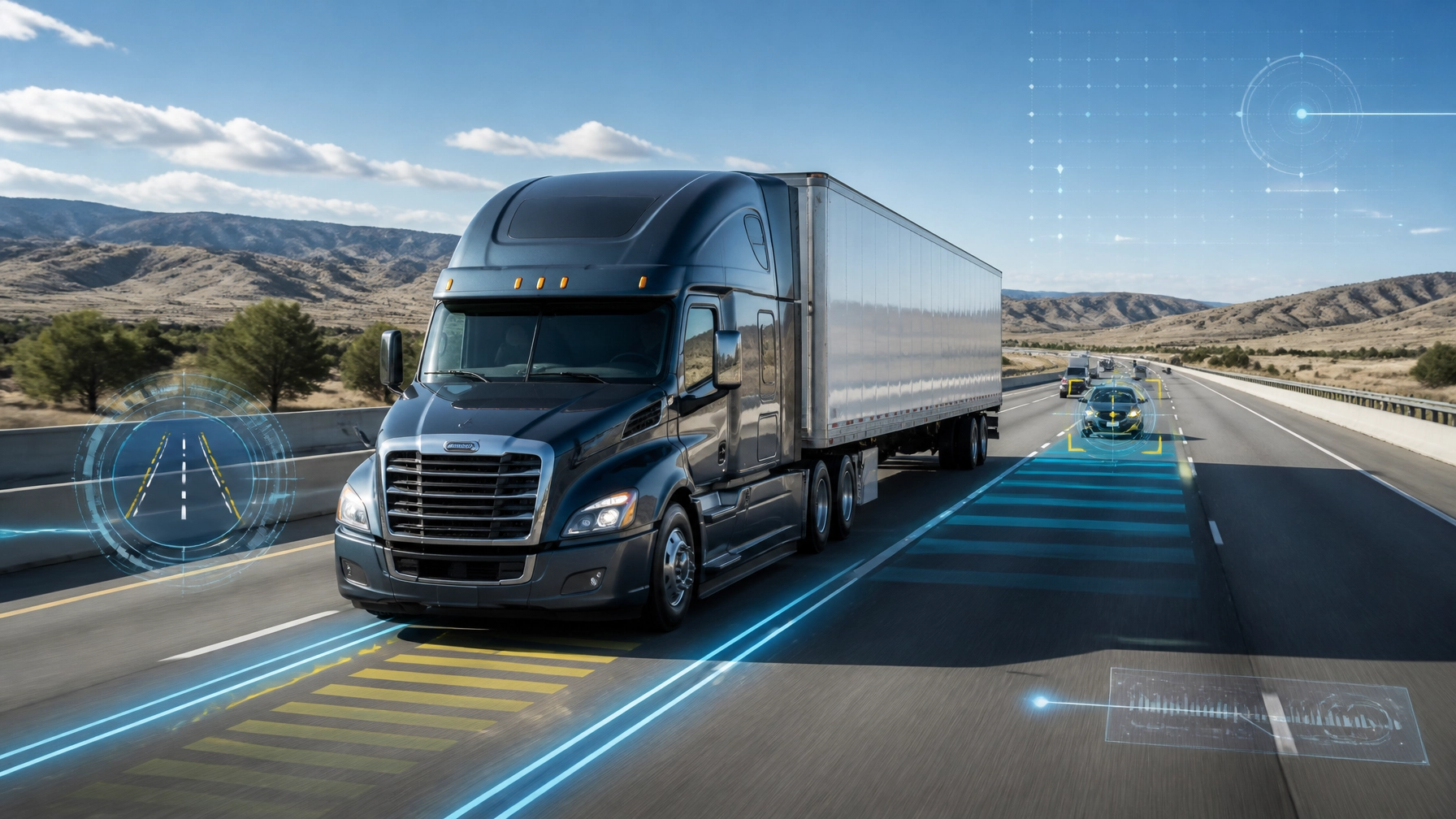
Stop Guessing: How AI Fleet Safety Cameras Catch What GPS Misses
For years, fleet managers have relied on GPS tracking as the backbone of their operations. It tells you where your trucks are, how fast they’re going, and when they’ll arrive. But in 2026, knowing where a vehicle is located is only half the battle. If your fleet is still relying solely on a breadcrumb trail of blue dots on a map, you are essentially flying blind to the most critical risks your drivers face every day.
Standard GPS telematics can tell you that a truck braked hard at an intersection. What it can’t tell you is why. Was the driver cut off by a passenger vehicle? Or were they looking down at a text message? This distinction is the difference between a high-risk driver who needs coaching and a professional driver who just saved your company from a multi-million dollar lawsuit.
The shift from basic GPS to AI fleet safety cameras is transforming fleet management from reactive guesswork to proactive prevention. By integrating computer vision and machine learning, these systems catch the subtle, high-risk behaviors that GPS simply cannot see.
The GPS Blind Spot: Why Location Data Isn’t Enough
GPS was a revolution for logistics, but as a safety tool, it has reached its natural limit. Traditional telematics systems track motion. They monitor the vehicle’s computer (ECU) to report on speed, idling, and G-force events like harsh braking or cornering.
The problem is that motion data is an “after-the-fact” indicator. By the time a GPS unit registers a harsh braking event, the dangerous behavior: be it tailgating or distraction: has already occurred. You are seeing the symptom, not the cause.
Furthermore, many of the most dangerous driving behaviors don’t trigger motion alerts at all. A driver can drift across lanes due to fatigue without hitting the brakes. A driver can spend five minutes scrolling through a phone while maintaining a steady speed. To a standard GPS system, this looks like a perfect trip. To an AI camera, it’s a disaster waiting to happen.
What GPS Tracks:
- Breadcrumb Trails: Historical and real-time location.
- Geofencing: Alerts when a vehicle enters or leaves a zone.
- Basic Behavior: Speeding and harsh acceleration.
- Maintenance: Engine fault codes and odometer readings.
What GPS Misses:
- Driver Intent: Why a maneuver was made.
- Visual Context: Traffic density, weather, and external hazards.
- In-Cab Behavior: Fatigue, distraction, and seatbelt compliance.
- Near-Misses: Dangerous situations that didn’t result in a hard brake.
The Power of the “Why”: How AI Sees the Invisible

An AI truck camera system with GPS combines the location-awareness of telematics with the visual intelligence of a human observer. This technology uses internal and external sensors to analyze thousands of data points every second.
1. Identifying Distracted Driving in Real-Time
Distracted driving is a leading cause of accidents in the transportation industry. While GPS might eventually flag a swerve, AI cameras detect the distraction the moment it starts. Using “edge computing,” the camera identifies when a driver’s eyes leave the road for more than a few seconds.
Whether the driver is checking a smartphone, eating, or reaching for an object in the passenger seat, the AI system can trigger an immediate in-cab audio alert. This “self-coaching” mechanism allows the driver to correct the behavior before an accident occurs, often without the fleet manager ever needing to intervene.
2. Fatigue Detection: Catching Micro-Sleeps
Driver fatigue is a silent killer. Unlike speeding, fatigue doesn’t show up on a spreadsheet until it’s too late. Modern AI safety cameras are trained to recognize the physical signs of drowsiness, such as:
- Excessive yawning.
- Heavy eyelid movements or prolonged blinking.
- Changes in head posture or “nodding off.”
By combatting driver fatigue with real-time monitoring, fleets can prevent the catastrophic “run-off-road” accidents that typically occur when a driver falls asleep at the wheel. GPS alone has no way of knowing if your driver is wide awake or struggling to keep their eyes open.
3. Near-Miss and Tailgating Analysis
Most fleets only review footage when a major incident occurs. However, for every actual crash, there are dozens of “near-misses”: situations where a collision was avoided by sheer luck.
AI cameras monitor following distance (tailgating) and lane departures. By flagging these near-misses, managers can identify high-risk patterns before they become expensive insurance claims. If a driver consistently follows too closely, even if they never crash, the AI will provide the data needed to coach that driver toward safer habits.
Bridging the Gap: The Best Dash Cam for Fleet Vehicles

Choosing the right hardware is essential for moving beyond basic GPS. The best dash cam for fleet vehicles isn’t just a recording device; it’s a dedicated safety processor.
At Safety Track, our AI-enhanced cameras are designed specifically for the rigors of the US trucking industry. We focus on “Custom Tailored Solutions” because a waste management fleet in a city has different needs than a long-haul logistics company traversing the Midwest.
Key Features to Look For:
- Dual-Facing Lenses: High-definition video of both the road and the driver.
- On-Device AI: Processing data locally on the camera ensures alerts are instant, even in areas with poor cellular reception.
- Integrated GPS: You shouldn’t have to manage two separate systems. The camera should provide all the location data your dispatchers need.
- Infrared Night Vision: Fatigue doesn’t just happen during the day. Driver-facing cameras must be able to see clearly in total darkness.
Moving from “Gotcha” to Growth: Data-Driven Coaching
One of the biggest hurdles in implementing camera systems is driver pushback. Many drivers view cameras as “Big Brother” looking for a reason to fire them. However, when used correctly, AI cameras are the driver’s best friend.
Video evidence is the most powerful tool a driver has to prove their innocence in an accident. In a “he-said, she-said” situation with a passenger vehicle, the truck driver almost always gets blamed by default. AI cameras change that narrative instantly by providing clear, indisputable proof of what happened.
Furthermore, AI-driven data allows for a move away from “blanket coaching.” Instead of calling a driver into the office for a general safety meeting, managers can use specific clips to discuss real-world scenarios. This is what we call moving from “gotcha” to “good job”: using technology to build a culture of accountability and professional pride.

Avoid “Ghost Coaching”
A common mistake is relying too heavily on automated alerts without human follow-up. Effective safety programs use AI to filter the noise, allowing managers to focus their time on the 5% of events that actually require a conversation. Understanding how to avoid ghost coaching risks is vital to maintaining driver trust and ensuring the technology actually leads to behavioral change.
The Bottom Line: ROI of AI Safety Technology
Investing in AI cameras isn’t just a safety decision; it’s a financial one. The costs associated with fleet accidents are skyrocketing: not just in terms of vehicle repairs, but in insurance premiums and legal settlements.
- Insurance Savings: Many underwriters now require video telematics data to provide the best rates. Showing that your fleet uses AI to actively manage risk can lead to significant premium reductions.
- Exoneration: A single false claim can cost a fleet hundreds of thousands of dollars. AI cameras pay for themselves the first time they prove your driver wasn’t at fault.
- Fuel Efficiency: AI cameras monitor behaviors like excessive idling and aggressive driving, which directly impact fuel consumption.
- Maintenance: By reducing harsh braking and erratic maneuvers, you extend the life of tires, brakes, and engines. Integrating maintenance tracking with camera systems ensures your trucks stay on the road longer.
Our clients typically see a massive reduction in accidents: up to 40%: within the first year of deployment. When you combine that with a 25% reduction in insurance costs, the ROI is undeniable.
Conclusion: Don’t Wait for the Accident
If you are only using GPS tracking, you are managing your fleet with one eye closed. You know where your assets are, but you have no visibility into the risks they encounter every minute they are on the road.

AI fleet safety cameras fill the gaps left by traditional telematics. They protect your drivers from fatigue and distraction, protect your company from false claims, and ultimately protect your bottom line. In an industry where margins are thin and liability is high, “guessing” is no longer an option.
At Safety Track, we specialize in helping fleets make the transition from basic tracking to total visibility. Our AI-enhanced systems are custom-tailored to your specific operations, ensuring you get the data you need without the “noise” you don’t.
Ready to stop guessing and start seeing? Contact Safety Track today for a custom demo of our AI safety solutions and see how we can help you reduce accidents and lower your operational costs.

Tyler Schneider is the IT Director at Safety Track, overseeing the company’s technological infrastructure and innovations. With a strong background in information technology and systems management, Tyler ensures that Safety Track stays at the forefront of tech solutions in fleet management. His strategic expertise supports the seamless integration of technology across the company’s operations.